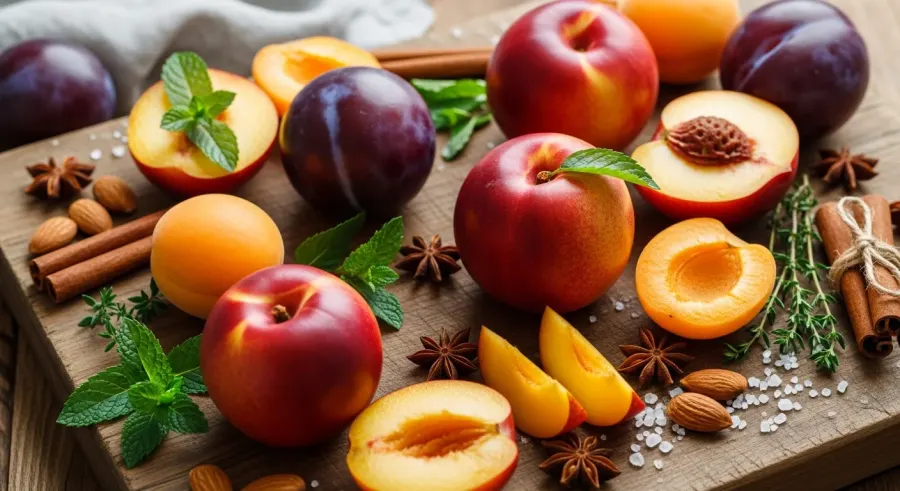
In Short
Thyme and tarragon bring out the natural floral notes in peaches and apricots, while basil requires a much lighter touch to prevent bruising. The real secret to elevating stone fruit often involves unexpected savory partners like raw tahini, roasted pork, and mascarpone.
Stone fruit has a very specific kind of sweetness. When you bite into a ripe peach or a late-summer plum, you are mostly tasting a complex mix of lactones and delicate floral compounds. Finding the right pairings means playing to those chemical strengths rather than just covering them up with more sugar. Some of the most interesting ways to eat stone fruit involve savory herbs, rich fats, and spices that push the fruit in an entirely different direction.
Thyme and peaches just make sense together
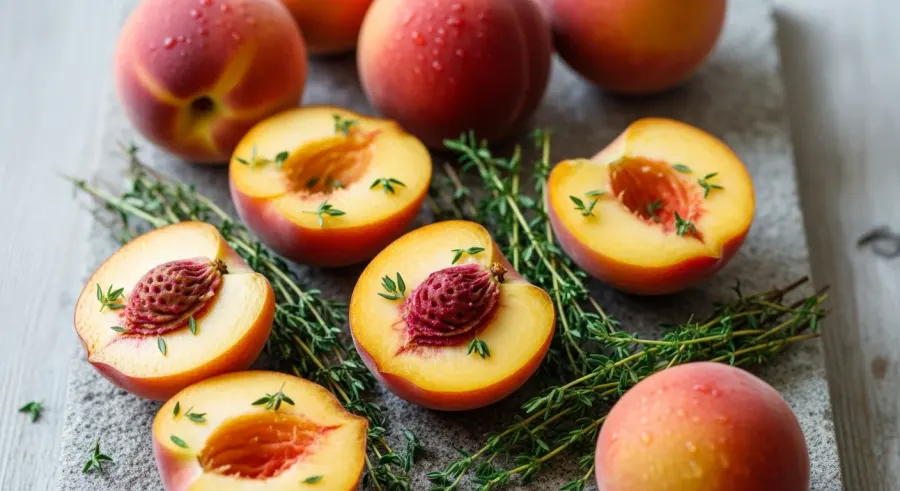
It sounds like something a fancy restaurant would invent just to be different, but the connection between thyme and peaches is rooted in basic chemistry. Both ingredients share a volatile compound called linalool. According to the Journal of Agricultural and Food Chemistry (2003), linalool provides that delicate, citrus-floral aroma you often notice right before you take a bite of a ripe peach.
When you introduce thyme to the mix, you're essentially doubling down on that floral note without adding more sugar. Different varieties of thyme will push the flavor in slightly different directions. Lemon thyme brings a bit of extra limonene, which brightens up a white peach perfectly. Standard winter thyme has earthier, woodier notes that ground the sweetness of a yellow nectarine.
The method matters just as much as the herb itself. Baking or grilling peaches with a few sprigs of thyme allows the gentle heat to coax the linalool out of the herb, bridging the gap to the fruit. You get a deeper, more resonant flavor that feels almost savory.
This works beautifully in a galette or a simple summer tart, but you have to watch the temperature. Linalool degrades quickly at very high heat. If you're grilling peaches on a barbecue, adding the thyme too early will just scorch the delicate leaves and release bitter, ashy compounds. Throwing the thyme on during the last minute of cooking is a much safer bet.
Wait, tarragon actually works with apricots?
Apricots are entirely different beasts from peaches. They lean heavily on a group of aromatic lactones and esters that give them a slightly sharp, highly concentrated profile. Tarragon brings estragole to the table, which is a phenylpropanoid compound that carries a distinct sweet-anise character.
Pairing estragole with apricot creates a surprising synergy. The slight licorice note of the fresh tarragon mellows the tartness of the apricot skin while elevating the fruit's natural sweetness.
You might test this by making a quick compound butter. Mashing a tablespoon of finely chopped fresh tarragon into half a cup of softened butter creates an excellent spread for toast topped with apricot jam. It also shines in savory applications. Roasting chicken thighs with dried apricots and tossing in a handful of fresh tarragon right as the pan comes out of the oven blends the savory poultry juices with the sweet-anise profile.
One major rule with this pairing is to entirely avoid dried tarragon. The drying process destroys the delicate estragole and leaves behind a dusty, almost medicinal flavor that easily overpowers the subtle fruit notes. Fresh tarragon has a much cleaner, greener profile that respects the fragility of the apricot.
Basil and mint need a gentle touch
A lot of people default to mint when they make a summer fruit salad. It makes sense on paper, but mint contains menthol, which triggers a cooling sensation on your palate. If your plums or nectarines are even slightly underripe, they will carry a lot of malic acid. Menthol amplifies that acidic sharpness, often making the fruit taste unripe or aggressively sour.
Basil is usually a much safer option for stone fruit. It contains methyl chavicol and, depending on the specific variety, a good amount of linalool. Sweet Genovese basil enhances the floral qualities of white peaches and sweet cherries, while Thai basil brings a spicy, clove-like note that holds up beautifully against dark, jammy plums.
Timing is the most important factor when working with these soft herbs. Adding them too early is a common mistake. The moment basil or mint sits in the acidic juice of a cut peach, the acid breaks down the cell walls of the herb. The leaves turn black, and the flavor muddies into something swampy. Tearing the leaves by hand instead of chopping them with a knife helps prevent premature bruising and keeps the aromatic oils intact until you're ready to eat.
Raw tahini is a massive sleeper hit
You probably associate tahini with hummus or savory salad dressings, but raw sesame paste is actually one of the best pairings for roasted stone fruit.
Look at the nutritional makeup of raw tahini per 100g (USDA FoodData Central): 570 calories, 17.81g protein, 48g total fat, 6.72g saturated fat, 26.19g carbohydrates, 9.3g fiber, 0g sugar, and 74mg sodium. That massive 48 grams of fat is exactly what you want when dealing with highly acidic, sugar-dense fruit.
When you roast a peach or a plum, the heat breaks down the fruit's cell walls and releases natural pectins. This creates a thick, concentrated fruit syrup in the bottom of the pan. Drizzling a tablespoon of raw tahini over the warm fruit allows that 48 grams of sesame fat to emulsify with the acidic fruit juices. The rich, slightly bitter sesame profile coats your palate, providing a smooth canvas that rounds out the sharp malic acid.
This combination works particularly well because the bitterness of the sesame seeds balances the concentrated sugars of the baked fruit. It offers a depth of flavor that standard heavy cream or vanilla ice cream just cannot match, leaning into a more complex, grown-up dessert profile.
Pork chops love a roasted plum
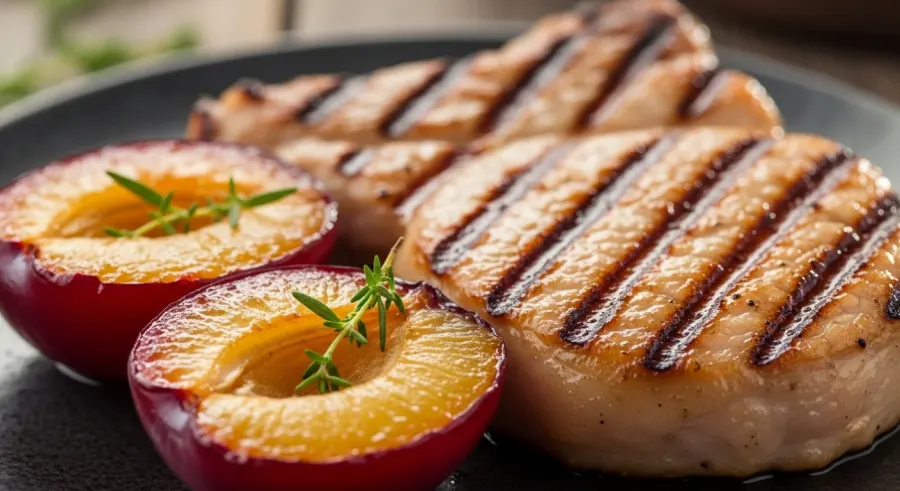
Pork and fruit is an old culinary trope, but stone fruit handles the job much better than pome fruits like apples or pears. Plums, in particular, hold their shape under heat and deliver a punchy acidity that cuts right through rich animal fats.
Searing a pork chop triggers the Maillard reaction, a chemical process that creates hundreds of new savory, roasted flavor compounds. The caramelized, slightly bitter crust of the meat needs a strong counterweight. A dark, slightly tart plum roasted in the same pan absorbs the rendered pork fat while contributing its own juices to deglaze the savory fond stuck to the bottom of the skillet.
The fat melting point of pork is relatively low, meaning it coats the mouth easily. The malic acid in the plum acts as a palate cleanser, washing away the heavy fat so every bite tastes fresh.
Sweeter fruits like white nectarines are less ideal for this application. They lack the necessary acid structure and often turn into a flat, sugary mush when exposed to savory pan drippings. Red plums, black plums, or firm cherries hold up much better and maintain the necessary sweet-sour tension.
Skip the yogurt and grab mascarpone
Breakfast bowls often pair sliced peaches with Greek yogurt, which is perfectly fine for a quick morning meal. But from a pure flavor-science perspective, it is a missed opportunity.
Yogurt is rich in lactic acid, a byproduct of the fermentation process. Stone fruit is packed with malic and citric acids. Stacking acidic dairy on top of acidic fruit can sometimes make the whole dish taste flat or overly sour, especially if the fruit was picked a few days too early.
Mascarpone cheese solves this problem beautifully. It has a much higher fat content than yogurt and a very mild, sweet dairy profile with almost no tang. It acts as a buffer rather than a competitor. Whipping mascarpone with a tiny bit of vanilla extract and serving it with fresh cherries or nectarines allows the fruit's natural acidity to shine without interference.
The dense, creamy texture of the mascarpone also provides a perfect physical contrast to the juicy, yielding texture of a ripe peach. It supports the fruit without trying to shout over it.
Cardamom changes the whole flavor profile
Most people reach for cinnamon or nutmeg when baking fruit, but green cardamom offers a much more interesting dynamic for stone fruit.
Cardamom contains eucalyptol and terpinyl acetate, compounds that give it a slightly medicinal, minty, and deeply floral aroma. When paired with the gamma-decalactone in peaches or the benzaldehyde (that distinct almond note) in cherries, cardamom elevates the fruit out of the standard pie-spice territory.
A very light dusting of ground cardamom over raw, macerated plums adds a warm, aromatic complexity that makes the fruit taste more vibrant. The spice has a slightly astringent quality that dries the palate just enough to make the juiciness of the fruit feel even more pronounced.
You only need a fraction of what you might use with cinnamon. Cardamom is potent, and adding too much will quickly make your dessert taste like a candle. A small pinch mixed into the sugar before tossing it with the fruit is plenty.
Black pepper is a surprising dessert trick
We are conditioned to think of black pepper exclusively as a savory seasoning for steaks and salads. But the active chemical compound in black pepper, piperine, has a fascinating relationship with fructose.
When you sprinkle a tiny amount of freshly ground black pepper over very ripe, sweet stone fruit, the piperine provides a mild background heat. This heat distracts the palate just enough to cut through the cloying, syrupy sweetness of an overripe peach or plum. It operates on the same principle as adding a pinch of salt to chocolate chip cookies. The contrast enhances the primary flavor.
For this to work, you have to use whole peppercorns ground right at the moment of serving. Pre-ground pepper from a shaker has lost all of its volatile floral oils and will just make the fruit taste dusty. Try macerating sliced strawberries or yellow peaches in a spoonful of sugar, a splash of balsamic vinegar, and exactly one twist of fresh black pepper. The result is deeply complex and surprisingly elegant.
Bottom Line
It takes a bit of trial and error to figure out exactly how much tarragon a batch of apricots can handle, or how long to leave a sprig of thyme in the oven. The fun part is just seeing how a single ingredient can completely change the way a familiar piece of summer fruit tastes.