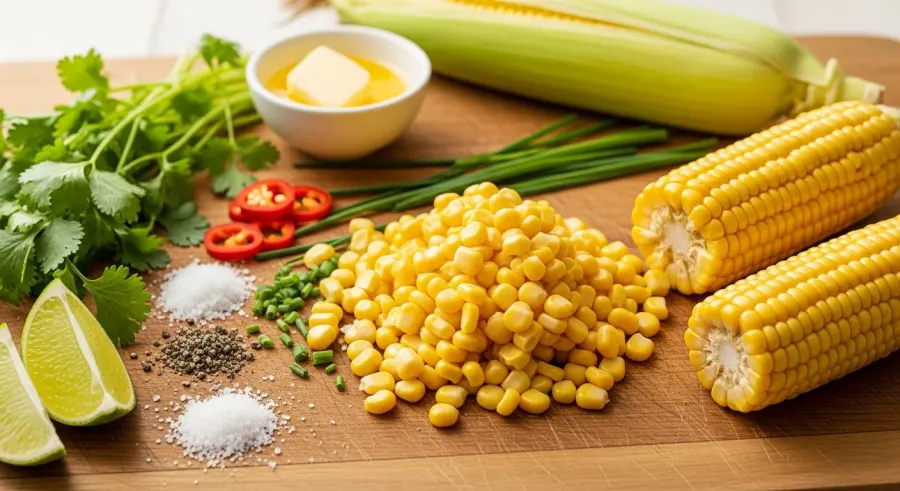
In Short
Sweet corn pairs best with savory, umami-rich ingredients like bacon and miso, or high-acid additions like lime and green chilies. The biochemical reasons why butter and garlic are mathematically perfect matches are detailed below.
I always thought of sweet corn as a side dish that just needed a pat of butter and a dash of salt. But if you look at its chemical makeup, corn is actually a flavor sponge waiting for the right molecular partner. It is packed with a very specific set of aroma compounds that play surprisingly well with intense, savory ingredients.
Why Butter Just Makes Sense
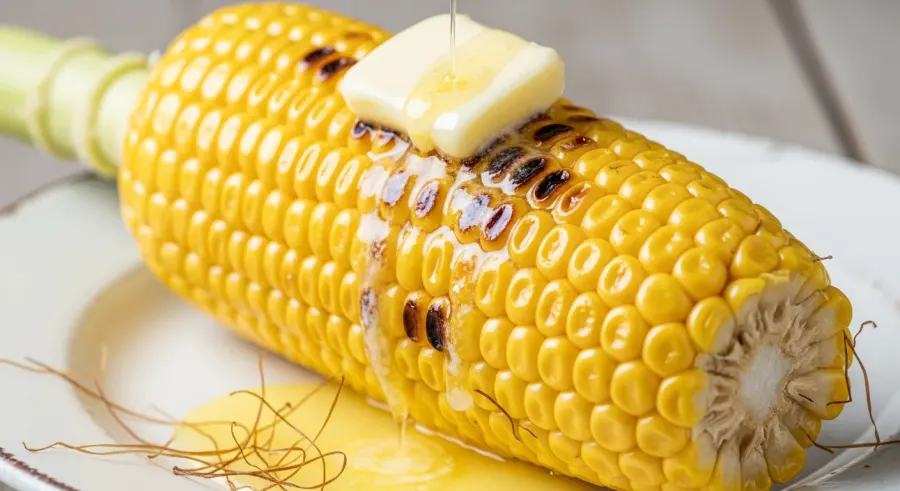
Most of us instinctively reach for butter when corn comes off the grill. There is a deep biochemical reason for this habit. Butter naturally contains diacetyl, a volatile organic compound that is literally the chemical responsible for its distinct flavor. By adding butter to sweet corn, you are providing a rich, creamy note that perfectly complements the vegetable's natural sweetness.
The physical interaction matters too. Corn kernels contain about 18.7 grams of carbohydrates per 100 grams, with very little fat (about 1.4 grams, according to the USDA). Fat changes everything. It coats the palate. It carries the corn's fat-soluble aroma compounds directly to your olfactory receptors. This is why boiled corn without fat tastes a bit hollow.
Brown butter takes this even further. As butter cooks, the milk solids brown via the Maillard reaction, yielding toasted notes that bridge perfectly with the pyrazines that form when corn kernels are charred. Tossing roasted corn in warm brown butter aligns the flavor profiles on a molecular level.
Bacon, Smoke, and Salt
Have you ever noticed how often pork and corn show up on the same plate in Southern cooking? The pairing relies on a very aggressive contrast. Sweet corn, especially modern super-sweet varieties, can contain high levels of sugar by dry weight when harvested at peak ripeness. That level of sweetness can easily become cloying if left unchecked.
Bacon brings smoke. The smoke is mostly made up of phenolic compounds from burning wood, plus an intense dose of sodium. Salt suppresses our perception of bitterness. It also enhances our ability to perceive sweetness. Meanwhile, the heavy animal fat grounds the whole bite. The fat coats the starch in the corn, preventing it from feeling dry or pasty.
A reliable method involves cooking the kernels directly in rendered pork fat. The sugars in the corn caramelize in the hot pan, creating a savory-sweet crust on the edges of the kernels. The contrast between the burst of liquid sugar from the corn and the salty crunch of the pork creates a perfectly balanced bite.
The Miso Paste Trick
Fermented soybeans might not be the first thing you associate with a summer cookout. White miso paste changes everything about how corn behaves on the palate. Corn has a relatively flat flavor profile when it comes to umami. You get plenty of sugar and starch, but very little savory depth.
Miso is loaded with glutamates. When glutamates hit the tongue alongside the natural sucrose in sweet corn, they trigger a hyper-palatable response in the brain. It is the same sweet-savory mechanism that makes teriyaki sauce so appealing, just pulled in a more earthy, fermented direction.
Heat management is crucial here. Miso burns easily due to its own high sugar content. Whisking a tablespoon of white miso with softened butter and smearing it on the cob during the last minute of grilling warms the paste without scorching it. The resulting glaze wraps the kernels in a savory layer that completely transforms the vegetable.
Why Jalapeños Always Work
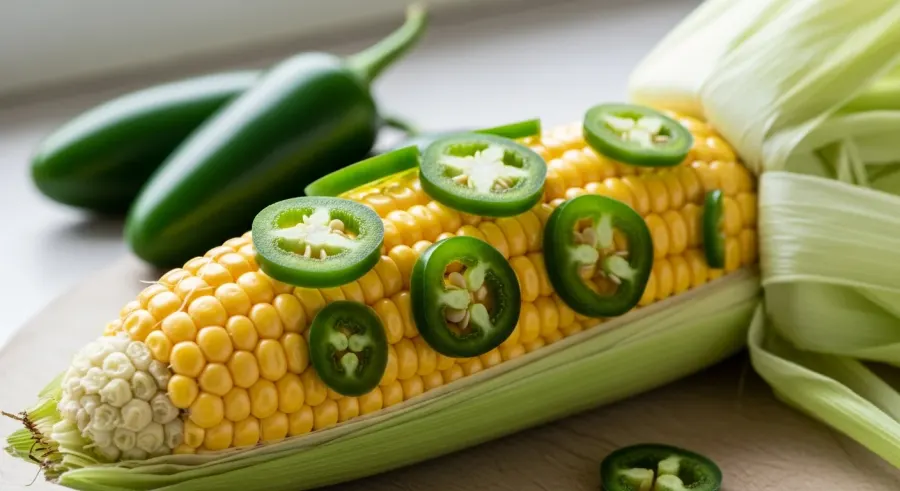
Hexanal is an aldehyde compound that smells exactly like freshly cut grass. It is highly concentrated in raw and lightly cooked sweet corn, giving it that vibrant, summery aroma. It also happens to be a major flavor component in green chilies, particularly jalapeños and poblanos.
Pairing sweet corn with green chilies links them through this shared grassy compound. They taste like they grew in the same soil. Meanwhile, the capsaicin in the chilies provides a physical distraction on the tongue, cutting right through the corn's heavy starch structure. The heat prevents the palate from suffering fatigue from the sugar.
Raw jalapeños work beautifully in a salad to highlight the crispness of the kernels. For cooked dishes, roasting poblanos until the skin blisters brings out their own sweetness, aligning perfectly with the roasted notes of the corn. A simple mix of charred corn and diced roasted poblanos needs almost nothing else.
Garlic and the Sulfur Connection
The dominant smell of cooked sweet corn is actually a sulfur compound. Dimethyl sulfide (DMS) is released when corn is heated, and it is the exact chemical that makes corn smell like corn (Journal of Agricultural and Food Chemistry, 1968). Building a dish around this ingredient requires finding partners that know how to play with sulfur.
Garlic, scallions, and onions are the kings of the sulfur world. Sautéing garlic breaks down its harsh allicin into softer, sweeter sulfur compounds that naturally harmonize with the DMS in the corn. This chemical overlap is why a simple corn sauté always feels incomplete until you toss in some diced shallots or the white parts of a scallion.
This connection works raw, too. Thinly sliced chives bring a sharp, oniony bite that contrasts the sweet milkiness of uncooked kernels. Keeping the quantities balanced is the only real rule, as you want to complement the DMS rather than drown it out.
The Lime Juice Fix
Acid is the missing puzzle piece in almost every corn recipe. Corn rests at a fairly neutral pH, usually hovering around 6.0 to 7.3. While this makes it comforting to eat, a plate of pure carbohydrates and sugar can start to feel flat and heavy after a few bites.
Lime juice drops the pH of the dish instantly. The citric acid brightens the heavier starch molecules and forces your salivary glands to activate. This physical reaction actually changes how you perceive the sugars in the vegetables. It is practically a mandatory addition for anything involving charred or grilled corn, where the bitter notes from the char need a bridge to the sweetness of the kernels.
Squeezing a lime over the bowl just before serving preserves that brightness. Adding acid too early to boiling water can actually make the skins of the kernels tough by interacting with the pectin in their cell walls.
The Cooling Power of Fresh Herbs
Sweet corn can sometimes feel heavy on the palate, especially when paired with the rich fats we usually cook it in. Cilantro brings a completely different set of aromatic compounds to the table. The primary flavor molecules in cilantro include various aldehydes that give it a soapy, citrus-like freshness.
When these aldehydes interact with the rich, buttery notes of cooked corn, they act as a palate cleanser. The contrast is jarring in the best way possible. The herbs sit entirely on the top notes of the flavor profile, leaving the heavy lifting of umami and sweetness to the corn itself.
Basil is another excellent candidate if cilantro isn't your favorite. Sweet basil contains linalool, a floral compound that meshes seamlessly with the faint floral notes of yellow corn varieties (which contain beta-ionone, a carotenoid-derived volatile). Tossing a handful of torn basil leaves into a bowl of warm corn and tomatoes changes the aromatic profile of the dish without any extra cooking.
Bottom Line
A single ear of corn holds a surprising amount of chemical potential. Once you map out its natural compounds—the grassy aldehydes and the sulfurous DMS—it becomes much easier to build a dish around it. You don't need a complex recipe, you just need to respect the chemistry.