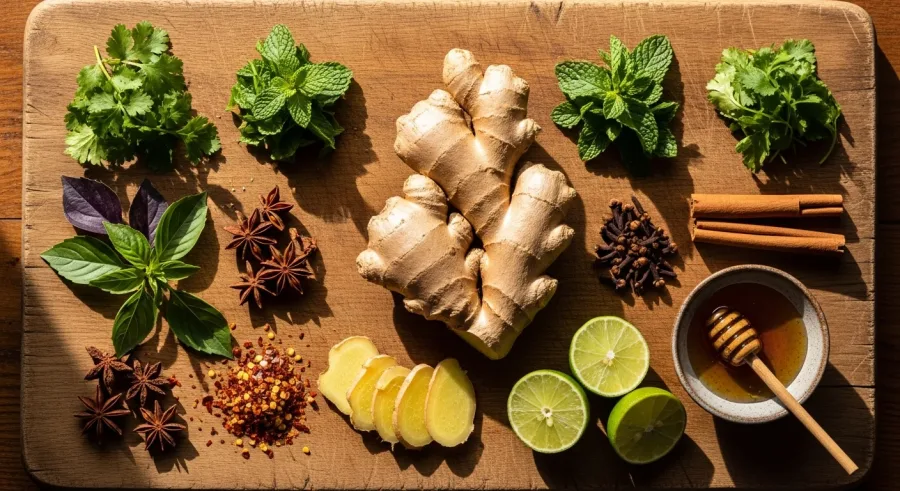
In Short
Ginger pairs best with tough meats, dairy, stone fruits, dark chocolate, and citrus depending on whether you use the fresh root's active enzymes or the dried spice's floral compounds. The chemical reasons why these specific combinations work so perfectly are below.
You can grate it into a stir-fry on autopilot, but ginger has a lot more going on under the surface. It gets its signature kick from a compound called gingerol, which hits the exact same heat receptors in our mouths as chili peppers. Understanding how that heat interacts with other molecules changes the way you actually cook with it.
Why It Makes Beef So Tender
Fresh ginger contains a very specific enzyme called zingibain. This is a cysteine protease, which is just a technical way of saying it physically breaks down proteins. It specifically cleaves the peptide bonds near proline residues in muscle fibers.
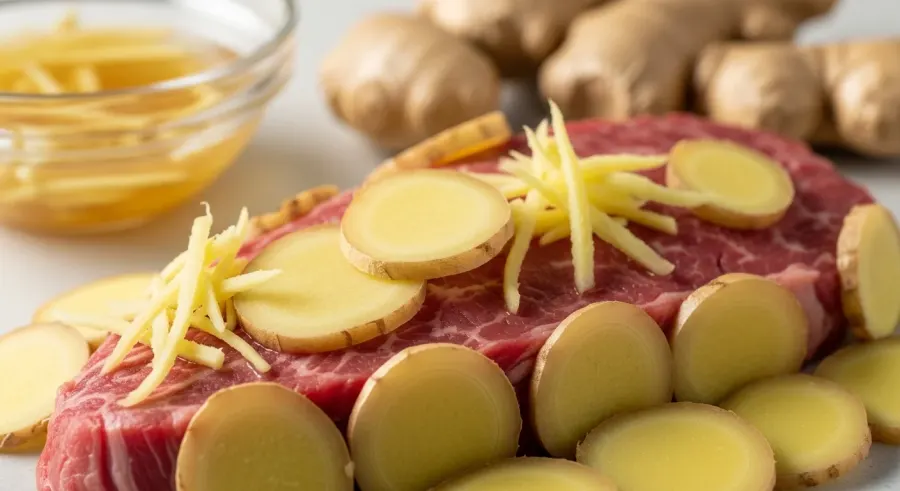
This is why fresh ginger pairs so beautifully with tough cuts of beef or pork. If you marinate a flank steak with a tablespoon of grated ginger, it doesn't just add a spicy, woody flavor. It actively alters the physical texture of the meat. Grating the ginger exposes more of the cell walls, releasing a higher concentration of the enzyme into your marinade, literally digesting the tough collagen while it sits in the bowl.
But there is a catch to this chemistry. If you leave the meat in the liquid for too long, the zingibain works too well. An overnight soak will turn the surface of the beef into mush. It is strictly a short-term pairing. Thirty minutes is usually the sweet spot for a standard preparation.
When looking at what to mix with ginger, you also have to keep the Maillard reaction in mind. When you sear that marinated meat, the natural sugars present in the ginger will start to brown rapidly once the pan hits 300 degrees Fahrenheit. Because of this, ginger marinades will caramelize much faster than plain oil and salt. Wiping off the excess grated ginger before the meat hits the hot skillet prevents those tiny fibrous pieces from burning and turning bitter.
The Dairy Trick That Actually Works
You might think throwing fresh ginger into a cream sauce or a milk-based dessert sounds harmless. Most of the time, this ends in total disaster.
That exact same zingibain enzyme that tenderizes your flank steak will rapidly coagulate the casein proteins found in milk. Casein proteins normally float around in little clusters, naturally repelling each other so your milk stays perfectly liquid. Zingibain comes in and snips off the hairy outer layers of those clusters. Without that protective layer, the proteins crash into each other and form a gel. If you try to make a cold ginger smoothie, you get a lumpy, separated mess.
There are two ways around this. You can boil the ginger juice first. High heat denatures the enzyme, effectively killing it and leaving you with safe, sweet ginger flavor that won't ruin your cream.
Or, you can lean entirely into the chemistry. In southern China, cooks heat milk to exactly 70 degrees Celsius and pour it directly over raw ginger juice. At this precise temperature, the enzyme works at peak efficiency and curdles the milk on purpose (Journal of Dairy Science, 2011). The result is a famous, naturally set pudding called ginger milk curd that has the wobbly, delicate texture of a panna cotta. If the milk is too cold, the enzyme is sluggish. If it goes above 75 degrees Celsius, the enzyme dies. Precision is everything here.
Why Garlic Is the Perfect Opposite
In Western cooking, we usually pair ingredients that share identical flavor compounds. Butter, cream, and vanilla all share heavy, sweet aromatic molecules, so they naturally blend together.
Research published in Scientific Reports (2011) analyzed over 50,000 global recipes and found that East Asian cuisines do the exact opposite. They actively avoid overlapping flavors. Ginger and garlic are the ultimate example of this negative food pairing. They do not share many major volatile compounds at all. Instead of blending into a single flavor, they sit on totally opposite ends of the sensory spectrum and fight for different territory on your tongue.
The sharp, sulfurous notes of garlic provide a deep, heavy, savory anchor. Meanwhile, the bright, citrusy molecules in ginger lift the profile up. When you fry equal parts minced garlic and ginger in a wok, the oil hits 350 degrees Fahrenheit. The water in both aromatics evaporates instantly, concentrating their distinct volatile compounds without allowing them to merge into a single muddy flavor. This high-contrast base is strong enough to support heavy soy sauces and fatty meats without getting lost in the mix.
Matching Pears and Stone Fruit
Ginger is not entirely aggressive. Underneath the pungent heat, it actually contains a significant amount of geraniol. This is a sweet, floral monoterpenoid compound that you also find in high concentrations in roses and palmarosa oil.
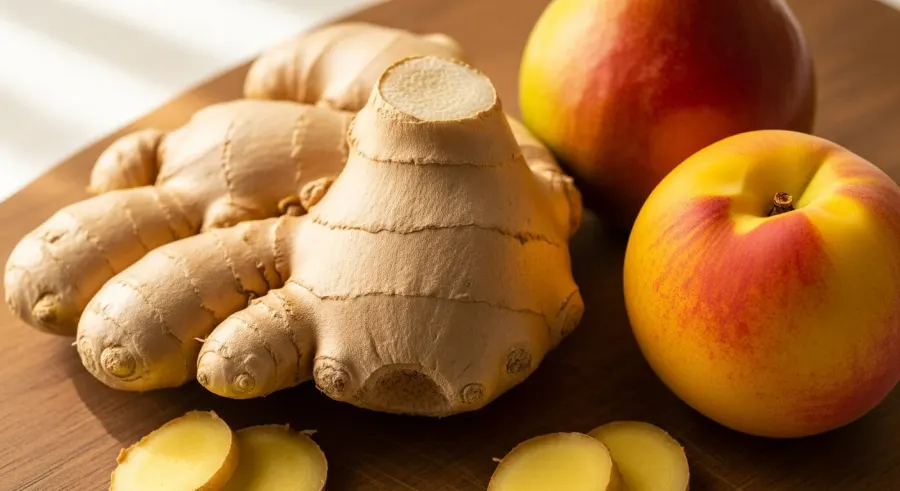
This molecular overlap makes ginger a brilliant match for orchard and stone fruits. When you pair it with peaches or plums, the geraniol creates a chemical bridge to the lactones, which are the compounds that make peaches smell so peachy.
Ground ginger is often a better choice than fresh for this specific pairing. During the drying process, the spicy gingerol compounds convert into shogaol. Shogaol is technically more pungent, but it also registers as much warmer and sweeter on the palate. A half teaspoon of ground ginger folded into a peach cobbler or a pear tart highlights the fruit's natural floral notes beautifully. Baking concentrates the lactones in the fruit while the shogaol provides a spicy backbone. The spice cuts directly through the heavy, sometimes cloying sweetness of baked fruit, keeping the whole dessert from feeling flat.
Balancing Out Dark Chocolate
Matching spices with chocolate can be complicated because cacao is already highly chemically complex. A standard dark chocolate bar contains hundreds of different flavor compounds generated during the roasting process.
A ginger and chocolate pairing works beautifully here because of how it tricks your nervous system. Its heat activates our TRPV1 receptors. Those are the exact same transient receptor potential channels in our mouths that are designed to warn us when we are eating something physically boiling hot. The gingerol forces those channels open, sending a false heat signal directly to the brain.
When you pair that sensory heat with the high fat content of cocoa butter in a 70 percent dark chocolate, you get a fascinating physical reaction. The ginger hits first with a sharp, warming bite. Then, the dense cocoa butter coats the tongue, slowly washing away the gingerol and leaving behind a rich, soothing bitterness.
Candied ginger is the easiest way to pull this off. You can fold chopped pieces directly into a dark chocolate brownie batter. You just have to use a heavier hand than you might normally expect. The sheer volume of fat in the chocolate will mute a significant portion of the spice.
Mellowing Out Soy Sauce
When exploring ginger flavor pairings, adding it to salty, umami-rich liquids like soy sauce or miso is one of the oldest and most reliable tricks in cooking.
Fermented soy products are absolutely loaded with free glutamates. These are the molecules that bind to the umami receptors on your tongue, giving food that deep, mouth-coating savoriness. But pure umami can sometimes feel a bit heavy or flat on the palate if it does not have any contrasting elements to keep it in check.
Gingerol provides the necessary chemical interference. The heat from the ginger stimulates your pain and temperature receptors just enough to wake up your palate. This sensory cross-talk actually makes the savory notes of the soy sauce taste more pronounced and complex to your brain.
When you simmer thin slices of ginger in a soy-based braising liquid, the chemistry shifts again. Over long periods of heat, the gingerol slowly breaks down into a compound called zingerone. Zingerone is much milder, sweeter, and less pungent. This is why a slow-braised pork belly cooked with ginger and soy sauce tastes deep and mellow rather than aggressively spicy. Two or three thin slices of the root are usually plenty for a whole pot of braised meat.
Bottom Line
Ginger really isn't just a background aromatic that you throw into a pan out of habit. It is a highly active, structurally transformative ingredient. Paying attention to whether you are using its protein-cleaving enzymes, its heat-triggering compounds, or its floral notes gives you complete control over the final plate.