In Short
Almonds, pork, basil, and goat cheese all complement peaches by matching their organic acids and volatile lactones. The science behind these combinations (and why shaving raw fennel over a peach changes the whole dish) is below.
You bite into a perfectly ripe peach over the sink, and it just tastes like summer. We usually stop right there, assuming the flavor is so complete on its own that it feels almost disrespectful to mess with it. But peeling back the chemical layers of this fruit reveals a whole network of peach flavor pairings that go way past throwing them into a pie crust.
The Secret In The Pit
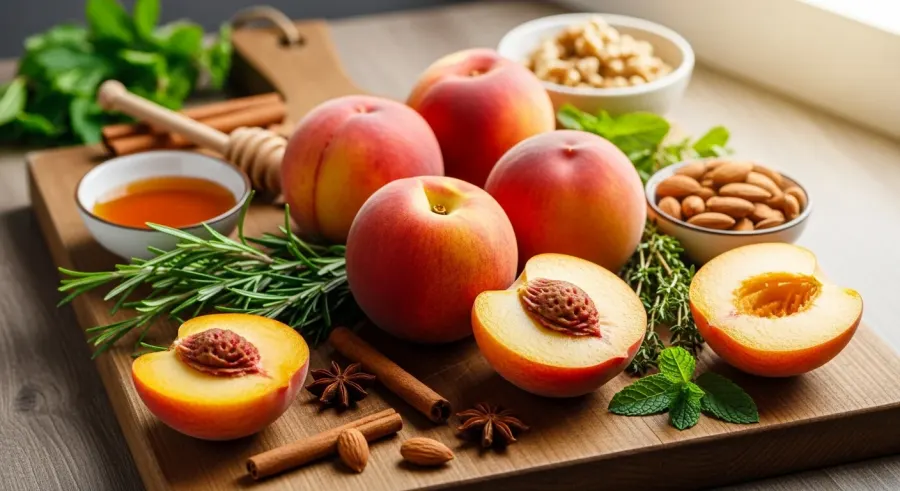
Did you know a peach pit basically smells like an Italian bakery? Peaches and almonds belong to the same botanical family, known as Prunus, which also includes cherries and plums. Because they are close genetic cousins, they share a distinct aromatic compound called benzaldehyde. This molecule is exactly what gives marzipan its signature aroma.
When you pair peaches with almonds, you aren't just putting two random ingredients together on a plate. You are completing a flavor loop. The nuts echo the subtle, bitter-sweet notes naturally hiding deep inside the fruit. A 2014 study in the Journal of Agricultural and Food Chemistry notes that aldehydes and lactones are the primary drivers of peach aroma, and highlighting them makes the fruit taste more like itself. Toasting the almonds first is non-negotiable. Raw almonds are too milky and mild. Heating them brings their essential oils to the surface and adds a crunchy texture that contrasts the soft flesh of the fruit.
This pairing also changes depending on the fruit. White peaches have less acid and more floral notes, making the almond pairing even more pronounced. Yellow peaches have higher acidity, which balances the rich oil of a marcona almond beautifully.
A simple way to test this is tossing sliced peaches in a skillet with a teaspoon of almond oil and a handful of slivered almonds. Heating everything just until the nuts begin to brown and the fruit warms through draws out the oils. Adding a tiny splash of amaretto liqueur at the end amplifies the benzaldehyde even further.
Fatty Meats Need The Acid
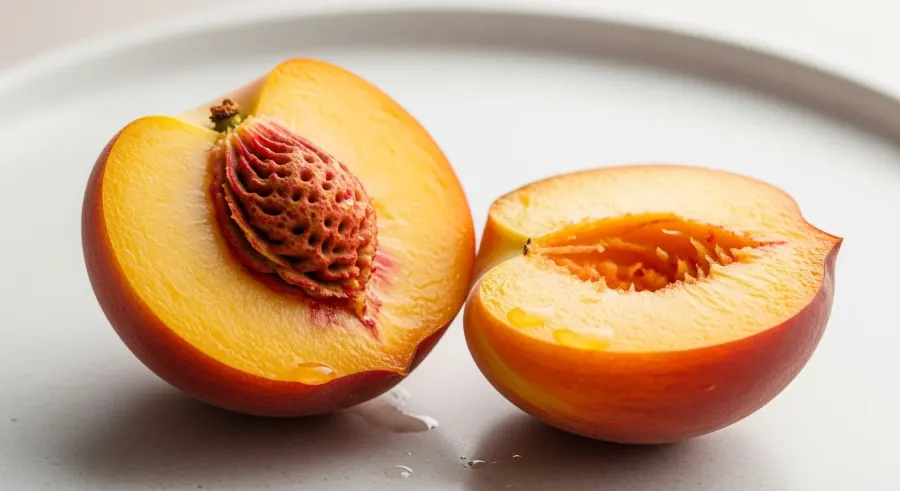
Pork chops and peaches just make sense, but not for the reason most people think. It is a purely structural relationship. Raw yellow peaches contain significant amounts of malic and quinic acid, bringing a bright, sharp undertone to all that natural sucrose (USDA FoodData Central).
When you cook a fatty cut of pork or duck, the rich lipids melt and coat your tongue. This fat tastes wonderful, but it can quickly feel heavy and fatigue your palate. The malic acid in the peach slices right through that fat barrier, cleansing your mouth between bites. It functions almost like a palate cleanser built right into the meal. At the same time, browning the meat triggers the Maillard reaction at around 300°F (150°C), creating savory, roasted flavor compounds. These deep notes provide a grounding contrast to the peach's volatile sweet compounds, specifically gamma-decalactone, which is the exact molecule responsible for that distinct peach smell.
You have to be careful with the cut of meat, though. This works brilliantly for fatty cuts like pork belly or shoulder. Skip it for a lean pork tenderloin. Without the rendered fat to balance the acid, the fruit just ends up tasting sharp and out of place alongside the dry meat.
A great application for savory peach recipes is grilling bone-in pork chops and serving them with a fresh salsa made from diced peaches, minced jalapeño, and a squeeze of lime juice. The ambient heat from the resting meat will slightly soften the salsa, melding the savory meat juices with the fruit.
Herbs That Do Not Take Over
It feels weird to mix a savory green leaf with a sweet summer fruit. It feels like mixing a salad with a dessert. But peaches carry a handful of green aroma compounds, mostly hexanal and (E)-2-hexenal. These are the exact same molecules that make freshly cut grass smell so potent and vibrant.
Because the peach already has this subtle botanical baseline, it accepts fresh herbs seamlessly. Basil brings out the sweetness, while rosemary anchors the fruit with piney, woody notes. The success of these pairings depends entirely on how you apply the temperature. If you are using rosemary, it needs heat. The resinous oils in rosemary are tough and aggressive when raw, but roasting them softens their edges and allows them to seep into the fruit. Basil, on the other hand, should never see the inside of an oven when paired with peaches. Heat destroys basil's delicate floral top notes, leaving it tasting like muddy tea leaves.
You can roast peach halves with a single sprig of rosemary at 400°F (200°C) for about 15 minutes until they start to slump. If you prefer basil, simply tearing the fresh leaves over raw peach slices with a pinch of flaky sea salt and a drizzle of olive oil works perfectly.
Wait, Fennel Makes Sense?
Smell does most of the heavy lifting when we eat. Much of what we perceive as flavor actually comes from our nose, not our tongue. Your taste buds are really only checking for basic categories like sweet, salty, sour, bitter, and umami. When you look closely at the peach flavor profile, you find subtle floral and spice notes hiding just under the heavy fruitiness.
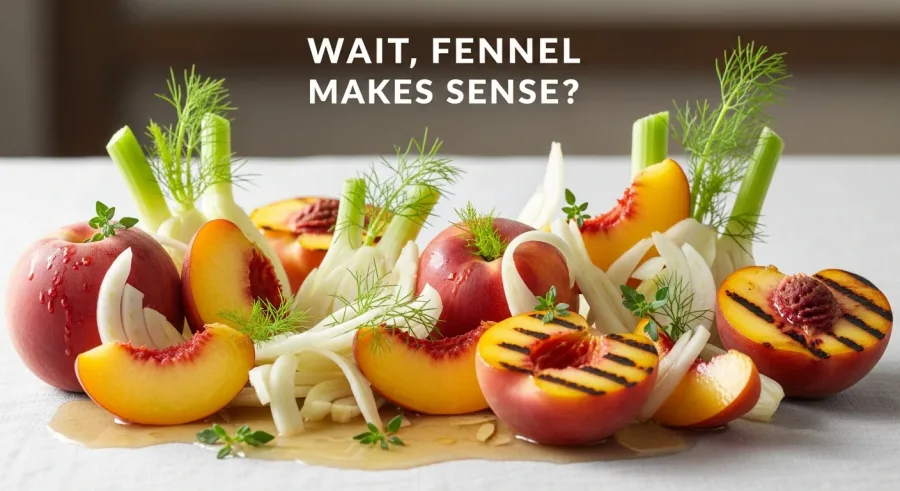
Fennel bulb contains anethole, an organic compound that gives the vegetable its distinct licorice flavor. While licorice and peach might sound like a chaotic combination, the anethole actually acts as a bridge between sweet and savory. When you shave raw fennel paper-thin and toss it with sweet peach slices, the cool, bracing nature of the fennel tempers the heavy, syrupy sugar of the peach. It turns a one-dimensional sweet ingredient into a complex, refreshing dish. The texture also plays a massive role here, pairing the dense crunch of the raw bulb with the juicy, dripping fruit.
This only works with the right fruit texture. If the peaches are slightly under-ripe and firm, they hold up to the crunch of the fennel. If you have an over-ripe, bruising peach, skip the raw salad. The texture will turn to mush against the crisp vegetable.
Shaving one fennel bulb on a mandoline and mixing it with two sliced peaches, a glug of good olive oil, and a splash of white balsamic vinegar creates a quick side dish. The acid in the vinegar lightly pickles the fennel while pulling the juices out of the peach.
The Dairy That Actually Works
We usually drown summer fruit in heavy cream. It looks great in photos, but it often mutes the very flavors you are trying to highlight. Heavy whipped cream coats the palate in milk fat, which physically blocks your taste buds from picking up the delicate esters in the peach.
A more effective approach is using dairy with its own acidic backbone. Goat cheese contains capric and caprylic acids, giving it a funky, sharp tang. This tanginess matches the peach's own acidity rather than suffocating it. When you pair a sweet, ripe peach with a tart cheese, the contrast tricks your brain into perceiving the peach as even sweeter than it actually is. Mascarpone also works because it has a slight lactic tang, but goat cheese provides a sharper, more aggressive contrast.
This depends heavily on the dairy's fat content. A skim-milk ricotta will just make the peach taste watery and sad. You need the dense, high-fat tang of a proper goat log or a rich mascarpone to stand up to the fruit.
A practical way to eat this is smearing soft goat cheese heavily on a piece of toasted sourdough bread. Topping it with thick slices of raw peach, a few cracks of black pepper, and a very light drizzle of hot honey makes a perfect lunch.
Smoke and Dark Sugars
Heat changes everything. If you have ever caramelized a peach on a hot grill, you know the sugar structure transforms fast. Peaches contain around 8 grams of sugar per 100 grams, much of it sucrose (USDA FoodData Central).
When subjected to high heat, this sucrose breaks down and forms new, complex caramel compounds. The fruit loses its bright, fresh qualities and takes on a darker, richer profile. This is exactly where bourbon comes in. Bourbon is aged in charred oak barrels, which imparts vanillin and toasted wood notes into the liquor over several years. Combining a caramelized peach with the vanilla and smoke of bourbon creates a deep, resonant flavor profile that feels much heavier and more suited to a late-night dessert than a bright summer afternoon.
This works beautifully for fresh yellow peaches, but skip the bourbon glaze if you are dealing with white peaches. Their delicate floral structure gets completely steamrolled by the aggressive oak notes.
Placing halved yellow peaches cut-side down in a hot cast-iron skillet with a knob of butter for three minutes builds a great crust. Pulling the pan off the heat and deglazing it with an ounce of bourbon lets the residual heat evaporate the harsh alcohol while leaving the oak and vanilla flavors behind.
Bottom Line
We get so used to thinking of fruit as just a snack that we forget it operates by the exact same chemical rules as a piece of steak or a handful of herbs. You do not need a culinary degree to start matching lactones with lactic acid or benzaldehyde with toasted nuts. You just need to look at what the ingredient is already doing and find something else in your kitchen that speaks the same language. Sometimes that means reaching for a bottle of amaretto, and sometimes it just means putting a pork chop on the grill.