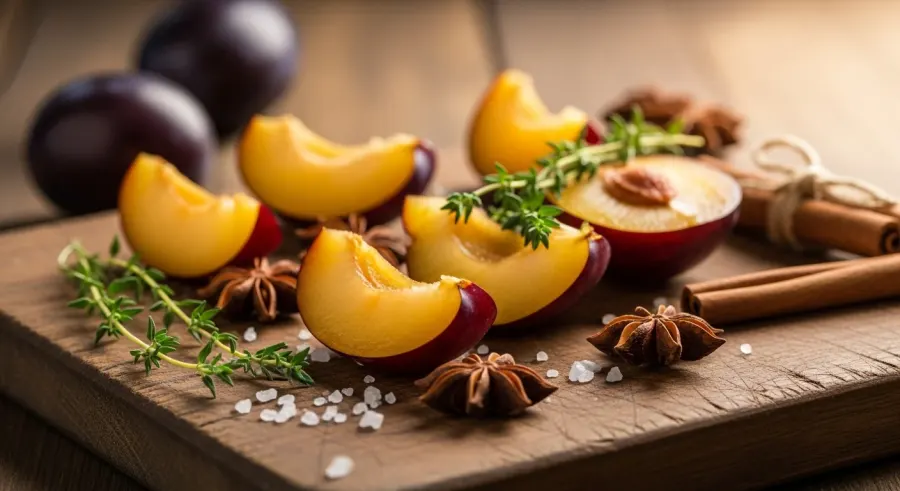
In Short
Plums share chemical compounds with almonds and vanilla, and bridge beautifully with floral spices like star anise. They also carry enough natural acidity to cut through fatty meats like pork or heavy dairy, making them surprisingly versatile in both sweet and savory dishes.
Plums are quiet overachievers in the kitchen. Depending on how much heat you apply, they can lean dark and jammy or bright and sharply acidic. Figuring out what to put next to them is mostly a matter of matching those shifting moods. A rock-hard plum straight from the fridge demands entirely different companions than a soft, overripe one sitting on the counter.
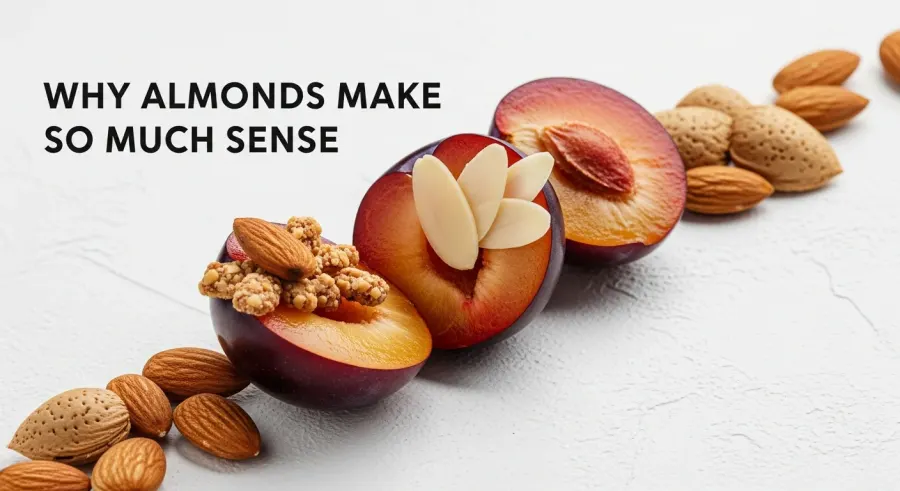
Why Almonds Make So Much Sense
Ever noticed how a fresh plum pit smells faintly of amaretto? That is not your imagination playing tricks on you. Both almonds and plums belong to the Prunus genus, and they share a heavy dose of a compound called benzaldehyde (Compound Interest, 2015).
Benzaldehyde provides that distinct bitter-cherry aroma. When you pair plum with almond, you are essentially reuniting chemical cousins. This works beautifully in baking. A frangipane tart with sliced plums on top is a classic because the almond paste reinforces the fruit's natural backbone, grounding the brighter fruit notes with a deep, nutty richness.
Using toasted flaked almonds adds a necessary textural crunch to soft, stewed plums. But if you want to push the aroma forward, a single drop of almond extract in a plum compote bridges the gap perfectly. It deepens the flavor profile far more than vanilla alone, leaning into the stone fruit's inherent woody qualities.
The Classic Match With Pork
Fatty cuts of meat demand acidity. Pork, in particular, has a mild, underlying sweetness that meshes perfectly with stone fruits.
When a plum hits a hot pan, its malic acid concentrates while its natural sugars caramelize. At 46 calories and 9.92g of sugar per 100g (USDA FoodData Central), plums bring enough sweetness to aid the Maillard reaction on the meat's surface without turning dinner into dessert. The fruit essentially acts as a natural deglazing agent, lifting the rich fond off the bottom of a roasting pan and turning it into a balanced sauce.
Roasting halved plums skin-side down in the same pan as a pork tenderloin allows the fruit to break down just enough. Letting them cook at 400°F for about 20 minutes ensures the juices mingle with the pan drippings. This creates a natural glaze that cuts right through the richness of the pork fat, balancing the heavy protein with bright, tart fruit notes.
Star Anise Deepens the Jam Notes
Spicing stone fruit usually begins and ends with cinnamon. Cinnamon is fine, but star anise pulls out a completely different dimension of the fruit.
Plums contain damascenone, an aroma molecule responsible for that sticky, cooked-fruit smell you associate with preserves. Star anise carries anethole, a licorice-scented compound that creates a complex, savory bridge when heated alongside damascenone. It pushes the plum away from tasting like generic fruit syrup and gives it a sophisticated, almost wine-like depth.
You only need one star anise pod to change an entire batch of fruit. Simmering a single pod with chopped plums and a splash of water for 30 minutes makes a complex, aromatic compote. Pulling the pod out before serving is always a good idea so nobody accidentally bites into the hard spice.
Softening the Tartness With Dairy
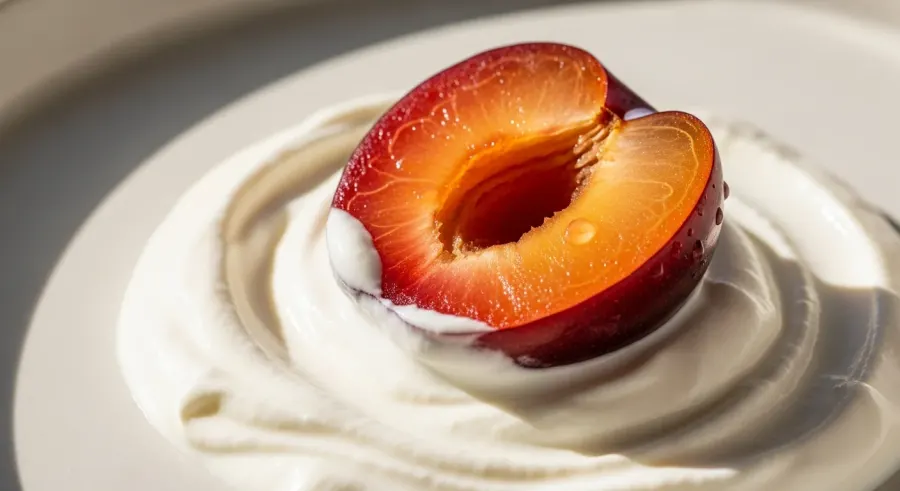
The skin of a plum can be bracingly sour, even when the flesh inside is yielding and sweet. Heavy cream, mascarpone, or a simple scoop of vanilla ice cream smooths out those sharp edges.
There is a biochemical reason this feels so natural. Plums contain gamma-decalactone, an aroma compound famous for smelling exactly like peaches and cream (Compound Interest, 2015). By adding actual dairy to the plate, you amplify a note that already exists naturally within the fruit's chemical structure.
This pairing is highly situational. It works wonders for a raw plum salad topped with a dollop of crème fraîche. However, if you are dealing with severely underripe plums, the high acid content might curdle thin dairy. Sticking to high-fat options like mascarpone or butter is safer if the fruit is particularly tart, as the fat coats the tongue and buffers the harshness of the acid.
A Surprising Kick From Black Pepper
Fruit and pepper might sound like a mistake on paper. In practice, it creates a deeply savory profile that works for both meat glazes and simple afternoon snacks.
Plums contain linalool, a floral, slightly citrusy compound that is also a major player in lavender and coriander. Black pepper brings its own floral heat via aromatic terpenes. When combined, the pepper suppresses our perception of the plum's sourness and pushes those subtle floral notes forward.
Cracking fresh black pepper over raw plum slices with a drizzle of olive oil and a pinch of flaky salt takes less than a minute to prepare. The salt alters the osmotic pressure, drawing out the plum's juices to mix with the oil, while the pepper completely reframes the fruit as a savory appetizer rather than a sweet treat.
Bringing Out the Earthy Side
Fresh herbs are usually reserved for citrus or berries, but woody herbs interact beautifully with the dense, fleshy texture of a plum. Thyme and rosemary are the most reliable choices here.
Like black pepper, thyme leans heavily on linalool and earthy terpenes. It grounds the fruit, preventing it from tasting overly bright or cloying. Tossing two whole sprigs of fresh thyme into a simmering plum reduction during the last ten minutes of cooking infuses the liquid with a subtle, woodsy aroma that feels tailored for the colder months.
Skipping delicate herbs like basil or cilantro is usually the right call. They oxidize too quickly, and their high water content gets completely lost against the heavy, jammy texture of cooked plums. The sturdy, woody stems of thyme or rosemary hold up much better to the heat and acidity.
Walnuts and the Power of Tannins
While almonds match the plum's internal chemistry, walnuts offer something completely entirely different: friction.
Plums carry 11.42g of total carbohydrates per 100g (USDA FoodData Central), much of which develops into deep, syrupy sweetness as the fruit cooks. The papery skin of a walnut is packed with astringent tannins. When you eat them together, the dry, slightly bitter quality of the walnut acts as a brake on the plum's sugar, keeping the pairing from becoming exhausting to eat.
Toasting the walnuts first is non-negotiable. Raw walnuts can taste dusty, but a quick pan-toast at medium heat releases their natural oils and crisps them up. Folding those toasted pieces into a warm plum crumble provides a necessary textural snap against the soft, yielding fruit.
Bottom Line
Finding the right pairing usually just comes down to looking at what the fruit needs in a specific moment. A rock-hard plum might need the gentle heat of an oven and a star anise pod to find its footing, while a perfectly ripe one only asks for a little black pepper and salt to shine.