In Short
Prosciutto is famous for a reason, but salty cheeses, fresh herbs, and warm spices bring out cantaloupe's best features. The secret lies in a specific sugar receptor on your tongue and the melon's naturally high concentration of aromatic esters.
You have probably had a slice of warm cantaloupe at a summer picnic and thought it was just fine. But this melon is carrying a lot of aromatic potential under that netted rind. It turns out that pairing it with the right fats, salts, and herbs shifts it from a watery side dish into something entirely different.
The Science Behind Cured Pork
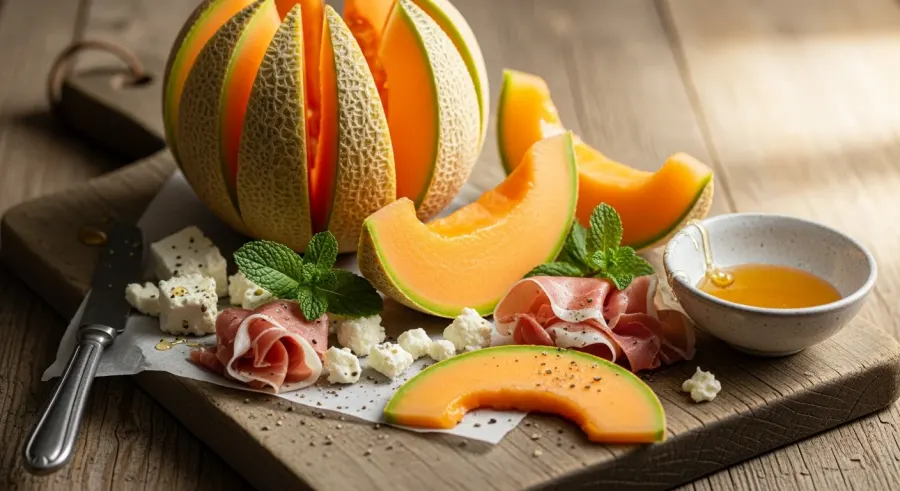
Prosciutto and melon is a classic Italian appetizer, but the reason it tastes so good comes down to human biology. Cantaloupe is about 90 percent water (USDA FoodData Central) and carries a delicate, sweet profile. Prosciutto provides cured, dense fat. When you eat them together, the fat coats your palate, giving the melon's volatile flavor compounds something to cling to.
Then there is the salt.
When sodium hits your tongue alongside glucose, a specific sugar receptor called SGLT1 activates. A 2011 study in the Proceedings of the National Academy of Sciences found that this receptor transports glucose into sweet taste cells more effectively when salt is present. The salt in the cured meat does not just contrast with the cantaloupe. It physically changes how your taste cells register the sweetness.
Texture plays a massive role here, too. A properly cured piece of jamón or prosciutto is sliced paper-thin so it practically melts on the tongue. Cantaloupe, on the other hand, is structurally rigid due to its internal water pressure. You get a delicate, dissolving fat against a crisp, hydrating crunch. Wrapping one thin slice of cured pork around a one-inch melon cube takes seconds and requires zero cooking.

Pairing It With Salty Cheeses
If you do not eat meat, dairy is the next best way to anchor the fruit. Feta, halloumi, and fresh mozzarella all provide that essential fat and salt, but they bring lactic acid to the table too.
Cantaloupe is notoriously high in esters. These are the same flavor compounds that give pineapples and strawberries their fruity aroma. According to a 2001 study in the Journal of Agricultural and Food Chemistry, esters increase progressively as a cantaloupe ripens. But without a grounding element, all those fruity esters can taste a bit cloying.
There is a chemical reason dairy helps. Many of the aromatic compounds in cantaloupe are fat-soluble. Because the melon itself contains virtually no fat, those flavors wash away quickly. Introducing the dairy fat from a fresh mozzarella ball gives those compounds a vehicle. They bind to the milk fat and linger on your palate long after you swallow.
The tang of a sharp feta cuts right through that syrup-like quality. Searing halloumi slices for two minutes per side in a hot pan before resting them on cold melon wedges creates a brilliant temperature contrast. The cheese is salty and chewy, while the melon is crisp and hydrating.
Why It Works So Well With Cucumber
Sometimes you want to lean into the fresh, vegetal side of the fruit instead of the sweet side. Cantaloupe is a member of the Cucurbitaceae family. That makes it a botanical cousin to cucumbers, honeydew, and watermelon.
Because they are related, they share specific chemical traits. Both cantaloupe and cucumber contain high levels of aldehydes—compounds that register as green or fresh to our noses. The specific compound responsible for much of this is called nonadienal, which is famous for smelling exactly like a freshly cut cucumber.
Beaulieu and Grimm (Journal of Agricultural and Food Chemistry, 2001) noted that these aldehydes are highly concentrated early in the melon's growth. Even as the fruit sweetens and matures, that crisp vegetal undertone remains.
Tossing equal parts diced cantaloupe and cucumber together amplifies those shared green aldehydes. It makes a highly refreshing base for a summer salad. A splash of white wine vinegar ties them together perfectly.
Throwing Fresh Herbs Into The Mix
Herbs are a reliable way to make melon taste less like a fruit salad and more like a savory dish. Mint, basil, and cilantro are the standard choices here.
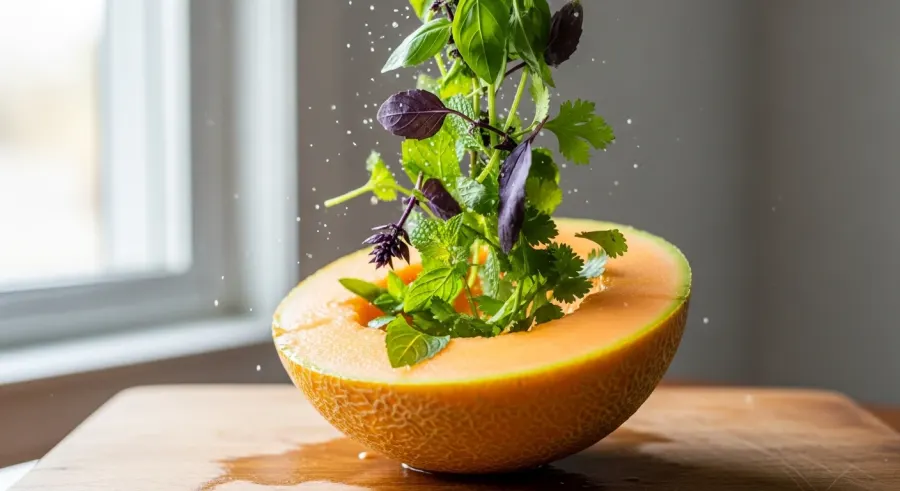
Mint contains menthol, which triggers the cold receptors in your mouth. This makes the melon taste even colder and more refreshing than it actually is. Basil brings a subtle anise or licorice note that pulls out the earthier undertones of the melon rind. Cilantro adds a citrusy bite.
Tarragon is another brilliant option. It contains estragole, an organic compound that delivers a warm, sweet-spice flavor. When paired with melon, tarragon bridges the gap between sweet and savory without requiring any salt at all.
A popular method involves tearing three or four large mint leaves and scattering them over a cup of chilled melon right before serving. Tearing the leaves at the last second prevents the delicate herbal oils from oxidizing and turning brown.
A Quick Squeeze Of Lime
Most fruits you eat have a sharp acidic backbone. Apples have malic acid. Lemons have citric acid. Cantaloupe, however, is relatively low in acid.
Because it sits closer to a neutral pH (often around 6.1 to 6.5), a very ripe melon can sometimes taste flat. Introducing an external acid forces your salivary glands to work, which completely brightens the flavor profile. Lime juice is the easiest fix.
Squeezing a wedge of fresh lime over a bowl of sliced cantaloupe balances the roughly thirteen grams of natural sugar it contains per cup. It gives the fruit the acidic snap it naturally lacks.
Adding Heat Completely Changes Things
Spicy elements completely alter how you experience a watery fruit. Chili flakes, jalapeño slices, and Mexican Tajín seasoning (a blend of chili peppers, lime, and salt) are excellent companions for cantaloupe.
Capsaicin, the chemical that makes chilies hot, triggers TRPV1 receptors on your tongue. This receptor is designed to detect physical heat, but capsaicin tricks it into firing. Your brain responds by releasing endorphins to manage the burn.
When you immediately follow that heat with the high-water, high-fructose crush of a cold melon, the fire is quenched instantly. Dusting a bowl of melon with a quarter teaspoon of chili-lime seasoning creates a rolling hot-and-cold sensation. It is a sensory loop that makes it very difficult to stop eating.
Wait, Ginger And Warm Spices?
This is the pairing that catches most people off guard. Warm spices like ginger, cardamom, and clove are usually reserved for baked goods or heavy winter squash.
But remember, cantaloupe is technically a squash too. Ground ginger contains an active compound called zingerone, which merges beautifully with the sulfur-containing esters found in the melon. Some communities, like the Pennsylvania Dutch, have long traditions of making spiced cantaloupe preserves by boiling the fruit with vinegar and warm spices.
You do not have to boil it to see why it works. Grating a tiny amount of fresh ginger over raw melon and letting it sit for ten minutes allows the spicy oils to infuse into the fruit's juices. It adds a deep, humming background note to a fruit that is usually known for being bright and simple.
Bottom Line
Cantaloupe doesn't have to be a lonely wedge on a breakfast plate. By treating it almost like a vegetable and introducing salt, acid, and heat, the fruit becomes a much more versatile ingredient. It turns out that a quick glance at the spice cabinet is often all it takes to elevate a simple summer melon.