In Short
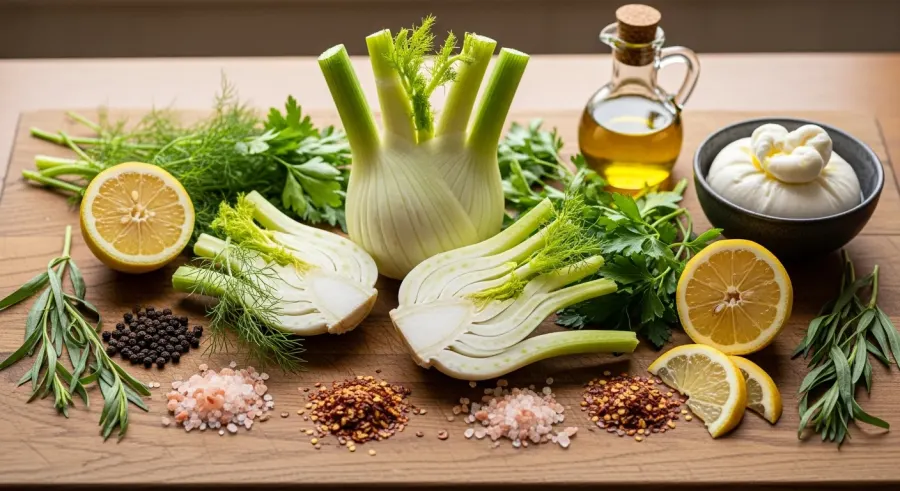
Fennel's dominant licorice flavor (anethole) pairs beautifully with rich pork, bright citrus zest, and fatty dairy. Why its flavor completely transforms when roasted—and why you should always pair it with orange peel—is below.
You know what vegetable gets an unfair reputation? Fennel. People chop into it, smell the strong licorice scent, and panic a little. I used to do the exact same thing until I learned how its flavor compounds actually behave in a pan. Fennel is remarkably adaptable once you know what to match it with.
Why It Always Ends Up in Sausage
Ever notice how almost every traditional Italian sausage has those little greenish seeds in it? That is fennel. And there is a strict biochemical reason for this marriage.
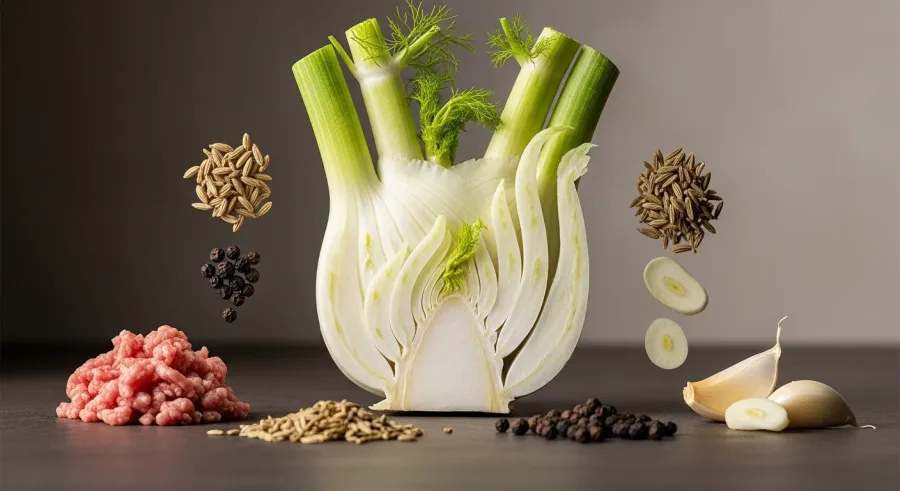
Pork fat is exceptionally heavy. It coats the palate and dulls the taste buds after a few bites. Fennel steps in as a necessary foil to all that richness. The primary aroma compound in fennel is trans-anethole, which gives the plant its signature licorice scent. Anethole is fat-soluble and acts as a palate cleanser, cutting right through heavy lipids. Heritage pork fat has a natural sweetness that binds perfectly with the earthy, sweet notes of the fennel bulb and seeds.
A fatty pork shoulder rubbed with toasted fennel seeds and roasted at 325°F for three hours is a perfect showcase for this interaction. If you are making a slow braise, chopping the fennel bulb into thick wedges and nestling them around the meat allows the vegetable to absorb the rendering fat. This softens the bulb until it practically melts.
This pairing fails if lean pork tenderloin is cooked fast over high heat, however. Without enough fat to carry the anethole, the fennel just tastes harsh and out of balance. You need the slow rendering of lipids to make the chemistry work.
The Magic of Citrus Zest
Raw fennel can be a bit aggressive if you aren't expecting it. The licorice flavor jumps straight out of the bowl. But citrus completely changes the equation, taking the vegetable from medicinal to deeply refreshing.
The secret isn't actually the acidic juice. It is the essential oils hiding in the peel. Citrus peels contain D-limonene, a volatile compound that interacts with the anethole in fennel. This interaction enhances your perception of sweetness and minimizes the sharp, medicinal notes that some people dislike. When shaving a bulb paper-thin for a salad, tossing it with orange zest rather than just the juice is always the better move.
Grapefruit segments also do a brilliant job here, offering a bitter edge that complements fennel's herbaceous qualities. You get the crunch of the raw bulb, the pop of the citrus vesicles, and a mellowed-out anise vibe.
Simmering orange juice and fennel for an hour turns the whole pot bitterly metallic, though. Keeping the citrus raw and fresh, added at the very end with a few tablespoons of olive oil, preserves the delicate volatile oils. If you can find bergamot—a highly aromatic citrus often used in Earl Grey tea—its floral zest pairs with fennel fronds to create a truly distinct flavor profile.
Cheese and Cream Soften the Blow
Exactly zero people instinctively think of pairing licorice and cheese. It sounds like a culinary mistake. Yet baking fennel in a pool of heavy cream or dusting it with aged parmesan is one of the most effective ways to prepare it.
This comes down to how milk fats behave on a molecular level. Fat globules in dairy actively encapsulate anethole, slowing its evaporation rate. This means the flavor releases slowly on your tongue instead of hitting your sinuses all at once. According to USDA FoodData Central, a 100g serving of fennel contains 7.3g of carbohydrates. A long stint in the oven allows these natural sugars to caramelize while the sharp fenchone compounds—which give fennel a slightly camphor-like edge—soften entirely.
A fennel gratin with Gruyère and heavy cream takes about 45 minutes at 400°F to reach the right texture. The dairy mellows the anise flavor into a savory, nutty background note. Soft, high-moisture cheeses like mascarpone or fresh goat cheese also blend beautifully with roasted fennel, creating a rich spread for crusty bread.
Low-fat milk is a poor substitute here. Without a high lipid content to protect the emulsion, the dairy will simply split and curdle against the vegetable's natural moisture, leaving you with a watery, broken sauce.
Apples Bring the Right Kind of Acid
Sometimes a dish just needs crunch. Both fennel and apples offer a satisfying, watery snap, but they bring completely different acid profiles to the cutting board.
Apples contain high amounts of malic acid, which is tart, bright, and mouth-watering. Fennel is fundamentally earthy and sweet, relying on a compound called estragole for its aromatic depth. When you put them together, the malic acid acts as a spotlight for fennel's herbal notes, brightening the overall profile. The two ingredients fill in each other's flavor gaps perfectly.
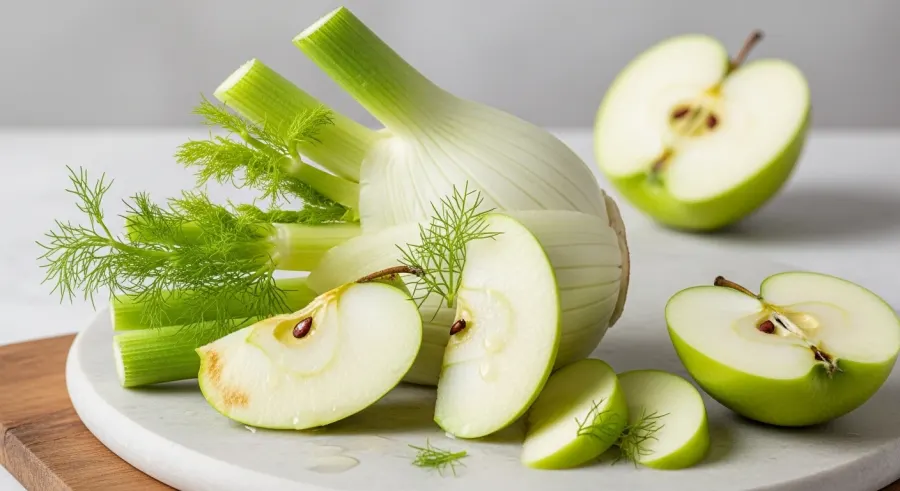
Granny Smith apples are the absolute workhorse for this pairing. Their high acidity tames the fennel, especially when dressed with a simple mustard vinaigrette. Slicing both the fruit and the vegetable to the exact same thickness—about an eighth of an inch—ensures they blend properly in the bowl. Adding toasted walnuts introduces a fat source that helps carry the fat-soluble flavor compounds across your palate.
This is a dish that demands to be eaten immediately. Sliced apples and fennel both oxidize, turning a sad shade of brown if they sit in the fridge overnight.
A Very Weird Strawberry Trick
Most fruit pairings for this vegetable lean heavily toward fall and winter produce. Summer fruits, however, have a hidden affinity for it.
Strawberries are a prime example. The combination of shaved raw fennel and fresh strawberries sounds disjointed on paper, but it actually works beautifully. The deep, jammy sweetness of a ripe strawberry needs an herbal counterweight to prevent a salad from tasting like dessert. Fennel provides that savory, structured anchor.
If you add a splash of aged balsamic vinegar, the acetic acid bridges the gap between the fruit and the vegetable. The flavor pairing works via chemical similarity, balancing the fruit's natural esters with the fennel's estragole.
Tossing a cup of quartered strawberries with a cup of shaved fennel fronds and bulb, finished with flaky salt, makes a fantastic side for grilled chicken. The one strict rule here is ripeness. Out-of-season, watery strawberries will just make the fennel taste like wet lawn clippings. You need the concentrated sugar of peak-summer fruit to stand up to the anise notes.
Treating It Like Fancy Celery
A traditional French mirepoix relies on celery, carrots, and onions to build a foundation. In regional Italian cooking, fennel often steps in to replace or supplement the celery. It provides the same fibrous texture and moisture, but with a much more complex aromatic ceiling.
When cooked down slowly in olive oil over medium-low heat, fennel undergoes the Maillard reaction, browning and sweetening alongside the onions. The sustained heat breaks down the volatile compounds responsible for the sweet licorice aroma. What is left behind is a deep, savory vegetable baseline that celery simply cannot achieve.
This is the perfect way to start a seafood stew or a rich tomato sauce. Sweating diced fennel and onions until they are translucent and soft takes about 15 to 20 minutes. Rushing the process over high heat is a very common mistake. If the fennel scorches, the burnt sugars turn harshly bitter, and the flavor cannot be rescued, regardless of how much stock or wine is added to the pot later.
Seafood and Briny Flavors
There is a reason fennel is served with fish in nearly every coastal Mediterranean town. Seafood inherently carries briny, oceanic notes that can sometimes border on muddy, depending on the catch.
Fennel acts as an aromatic broom, sweeping those muddy flavors away. The estragole and anethole in the bulb share chemical overlaps with the volatile compounds found in fresh herbs like tarragon and dill—both classic seafood pairings. When paired with a white fish like cod or halibut, the anise flavor lifts the mild protein without overpowering it.
Steaming mussels in a broth of white wine, garlic, and thinly sliced fennel takes less than ten minutes. The vegetable melts into the broth, sweetening the salty liquor released by the bivalves.
Pairing raw fennel with delicate raw fish, like in a crudo, requires a very light hand. Thick chunks of raw bulb will completely overwhelm the delicate texture of sashimi-grade fish. It must be shaved transparently thin to work.
Bottom Line
Fennel doesn't have to be the loudest ingredient in the kitchen. Once you understand how acid brightens it, fat mellows it, and heat transforms its sugars, it becomes just another reliable tool for building flavor. The next time a recipe calls for celery, dropping in half a fennel bulb instead might just change the entire profile of the dish.