In Short
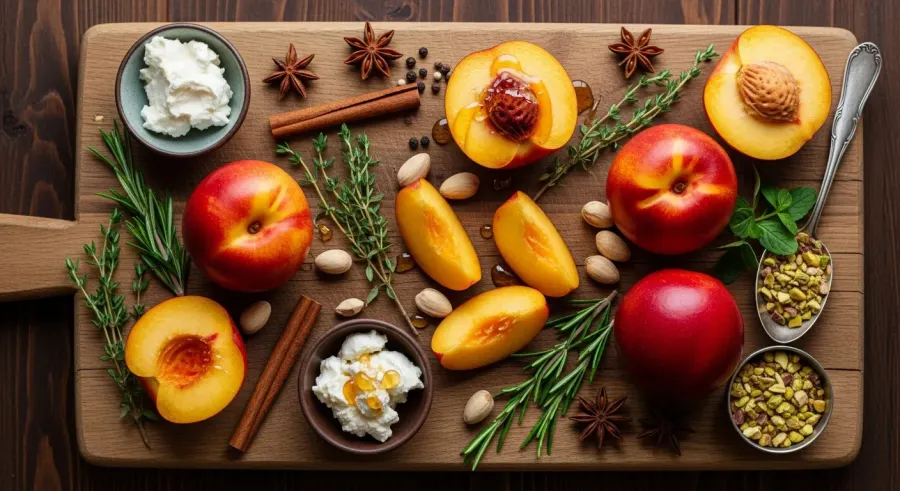
Nectarines pair beautifully with almonds, fresh basil, burrata, and fatty pork. The secret lies in matching their specific flavor compounds—like benzaldehyde and linalool—with ingredients that either mirror their floral notes or provide a rich, fatty canvas for their natural lactones.
Biting into a perfectly ripe nectarine over the sink is a profound summer experience. But restricting this fruit to plain snacking leaves a lot of flavor on the table. At just 44 calories per 100 grams, with almost zero fat (0.32g) and a modest 7.89 grams of sugar (USDA), nectarines rely almost entirely on volatile aromatics to deliver their heavy flavor punch. Understanding how these chemical structures interact with other foods opens up an entirely new way to cook with them.
Why Almonds Make Sense
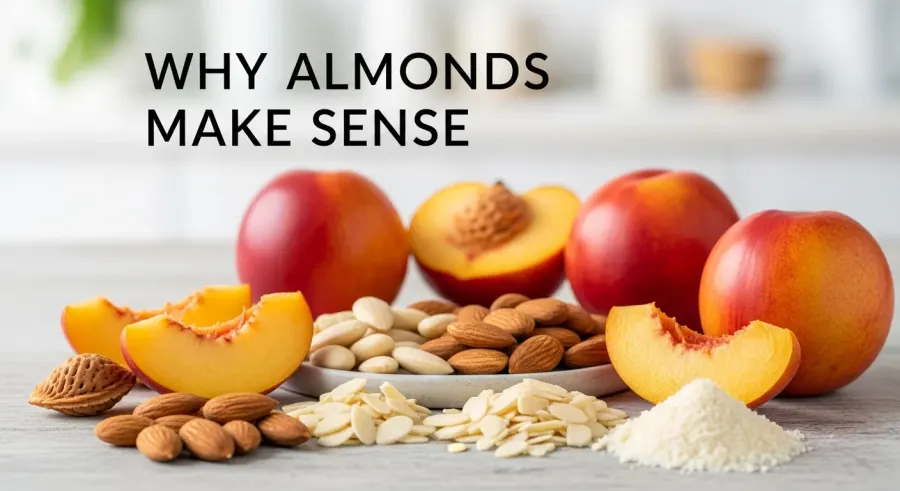
You might not expect it, but nectarines, peaches, cherries, and almonds all belong to the exact same botanical genus—Prunus.
Because of this shared ancestry, they contain a volatile flavor compound called benzaldehyde. This compound provides that distinct, slightly bitter, woody aroma you associate with amaretto or almond extract. Bringing these two ingredients together in the kitchen is basically just reuniting long-lost botanical cousins. The shared chemical baseline means they harmonize without fighting for dominance on your palate.
Tossing sliced nectarines with toasted Marcona almonds creates a deep, resonant flavor loop. The textural contrast does a lot of heavy lifting here too. Soft, yielding stone fruit flesh needs a hard, snapping crunch to keep a dish from feeling mushy. If you happen to be baking, using a dash of almond extract in a nectarine tart will amplify the fruit's natural aroma far better than vanilla ever could.
Pork, Duck, and Rendered Fat
Lean chicken breast usually gets completely lost when paired with strong, acidic fruit. Fatty meats like pork shoulder, duck breast, or even thick-cut bacon provide exactly what nectarines need to shine in a savory context.
The science here comes down to lactones. These are the organic compounds responsible for that classic peachy, floral aroma in stone fruits (Journal of Agricultural and Food Chemistry, 2003). Lactones are highly fat-soluble. When the rendered, hot fat from a pork chop mixes with the juices of a seared nectarine, the fruit's aroma literally blooms and coats your palate.
The fruit also serves a mechanical purpose in the dish. Nectarines contain malic and citric acids, which act as a natural palate cleanser against heavy, rich meats. Pan-searing a pork chop and dropping nectarine wedges into the skillet for the final four minutes of cooking allows the fruit to blister in the pan drippings. The natural sugars caramelize via the Maillard reaction, bridging the gap between sweet and savory perfectly.
Why Burrata Works So Well
We all know fresh cheese and fruit look pretty on a charcuterie board together. But there is a very specific mechanical reason why burrata and mascarpone elevate nectarines far better than a sharp cheddar or aged gouda.
As we established, nectarines are packed with volatile organic compounds that need fat to carry them to our olfactory receptors. The high butterfat in a torn ball of fresh burrata provides a rich, blank canvas. It catches delicate floral notes before they evaporate into the air. Low-moisture, aged cheeses usually contain too much salt, which simply crushes the subtle nuances of the fruit.
Serving temperature matters immensely for this pairing. Cold cheese straight from the fridge mutes flavor perception. Allowing a ball of burrata to sit at room temperature for thirty minutes before covering it in raw nectarine slices and a grassy olive oil ensures the butterfat is soft enough to actually absorb the fruit's aroma.
Fresh Basil and Mint
Herbs alter the entire profile of this fruit. Fresh basil and nectarines share a specific terpene called linalool.
This is the exact same compound that gives sweet basil its floral, slightly spicy scent. Tossing them together is not just a modern culinary trend; it is basic, undeniable flavor chemistry. The two ingredients mirror each other chemically, creating a bridge that tastes both sweet and savory simultaneously.
Mint works through a slightly different mechanism. The menthol in fresh mint leaves provides a cooling sensation on the tongue, which actually tricks your brain into perceiving the nectarine's natural fructose as even sweeter than it is. Chopping a handful of fresh basil or mint and folding it into diced nectarines with a squeeze of lime juice makes a highly aromatic salsa. This mixture cuts right through rich foods like grilled fish or roasted vegetables. (This shared terpene profile is also exactly why basil-nectarine cocktails go down so easily on a hot afternoon).
Wait, Tomatoes Actually Work?
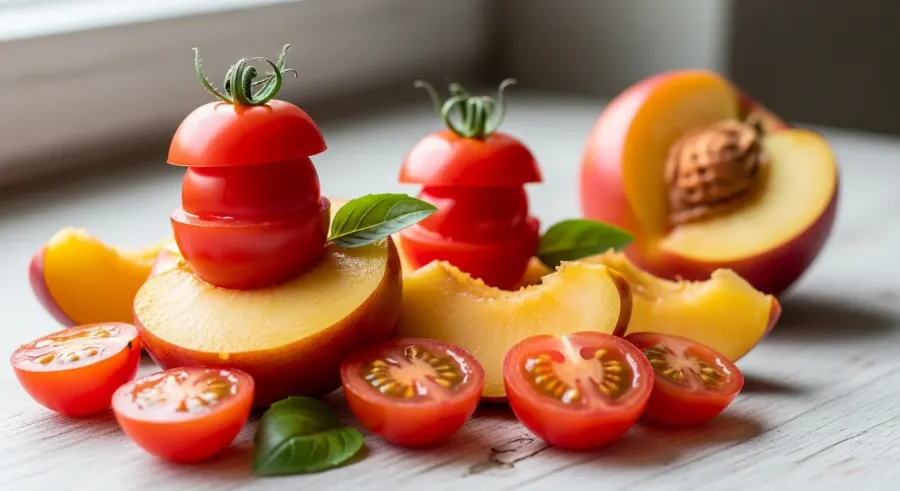
Would you put a nectarine in a Caprese salad? You probably should.
Nectarines and tomatoes share a surprising amount of overlap in their C6 volatile compounds. These specific compounds are responsible for the green or grassy notes we associate with fresh, vine-ripened produce. When you combine them on a plate, the tomato highlights the nectarine's earthy, vegetal undertones. In return, the nectarine masks the tomato's sharpest acidity with its natural sugars.
The USDA notes that raw nectarines contain about 7.89 grams of sugar per 100 grams, which is just enough to round out a highly acidic heirloom tomato. Texture is key for making this combination work. Choosing firm, slightly under-ripe nectarines ensures they mimic the bite of a fresh tomato perfectly. Chopping equal parts of both, then tossing them with good olive oil, flaky sea salt, and a splash of white balsamic vinegar yields a salad that confuses and delights the palate in the best way possible.
Black Pepper and Warm Spices
People tend to treat nectarines like fragile, delicate things that can only handle a dusting of powdered sugar. In reality, their robust flavor can stand up to aggressive, pungent spices.
Cardamom, fresh ginger, and black pepper all contain sharp, woody aromatic profiles that provide a brilliant contrast to the heavy, sweet lactones in the fruit. A heavy grind of black pepper on a raw nectarine slice immediately makes it taste like a savory component. The piperine in the pepper bites the tongue just enough to keep the fruit's sweetness from becoming cloying.
If you happen to be baking them into a crumble or a pie, swapping the usual cinnamon for ground cardamom changes the entire dish. Cardamom contains a compound called cineole, which carries eucalyptus and citrus notes. These notes pull out the hidden floral characteristics of the nectarine's flesh, making the fruit taste brighter and more complex even after spending an hour in a hot oven.
The Balsamic Vinegar Trick
Acid needs sugar, and sugar needs acid. Nectarines already contain a delicate balance of malic and citric acids, but introducing acetic acid—specifically in the form of aged balsamic vinegar—pushes the fruit into entirely new territory.
The aging process of traditional balsamic vinegar takes place in wooden barrels. Over years, the wood imparts vanillin and deep, resonant caramel notes into the vinegar. These woody, vanilla aromas latch onto the nectarine's own fruity lactones. Young, thin balsamic is often too sharp and watery for this job. You want a vinegar with some viscosity, something syrupy that clings to the skin of the fruit.
Drizzling a thick, high-quality balsamic over grilled nectarine halves creates a dessert that requires zero actual cooking skills. The heat from the grill breaks down the fruit's cell walls, making it softer and juicier, while the vinegar provides a dark, tangy counterpunch to the caramelized sugars.
Balancing Bitter Salad Greens
Sweet fruit needs a foil to keep it grounded. Arugula, radicchio, and endive all possess a sharp, bitter, peppery bite that can easily overwhelm a standard salad bowl.
But when you introduce slices of ripe nectarine, the entire dynamic shifts. The natural fructose in the fruit acts as a buffer against the bitterness. Our taste buds process sweet and bitter signals simultaneously, and a strong sweet input will physically suppress the perception of harsh, bitter compounds. This is why you might put sugar in black coffee.
A salad built on a foundation of spicy arugula, topped with juicy nectarines and dressed in a simple lemon vinaigrette, feels perfectly balanced. The fruit tempers the aggressive greens, while the greens prevent the fruit from tasting like a fruit salad. Tossing in some toasted almonds from our first section brings the whole thing together into a cohesive, science-backed dish.
Bottom Line
Pairing nectarines comes down to understanding what they already hold inside. You are just balancing their natural sugars with fat and matching their floral compounds with similar aromatics. Once you view them outside the constraints of a dessert menu, they easily become one of the most reliable and versatile tools in a summer kitchen.