In Short
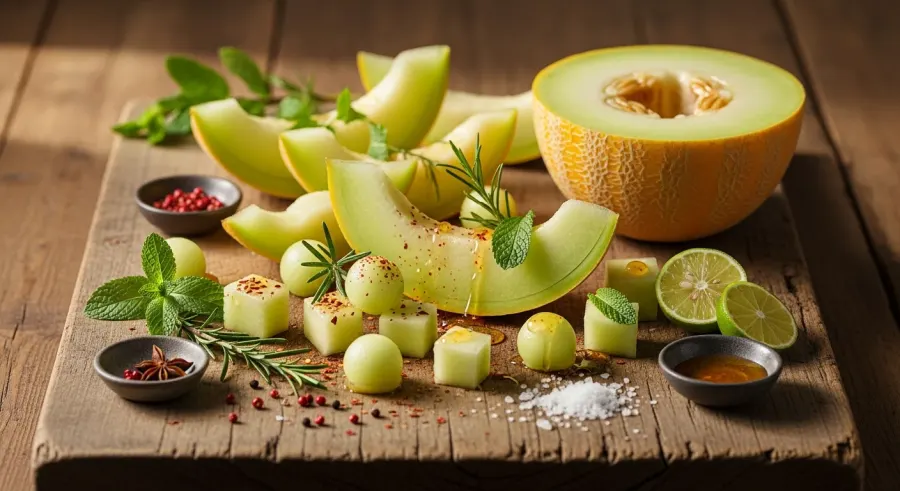
Prosciutto, feta cheese, cucumber, balsamic vinegar, mint, and fresh ginger all pair perfectly with honeydew melon. Why this specific fruit needs heavy salt and acid to taste its best (and why it shares a chemical fingerprint with cucumbers) is below.
Honeydew is the most misunderstood fruit in the grocery store. We treat it like a sweet dessert when we should be treating it like a blank canvas for salt, acid, and heat. The secret to making it taste good has nothing to do with buying a better melon, and everything to do with understanding its bizarre chemical makeup.
Why It Smells Like Cucumber
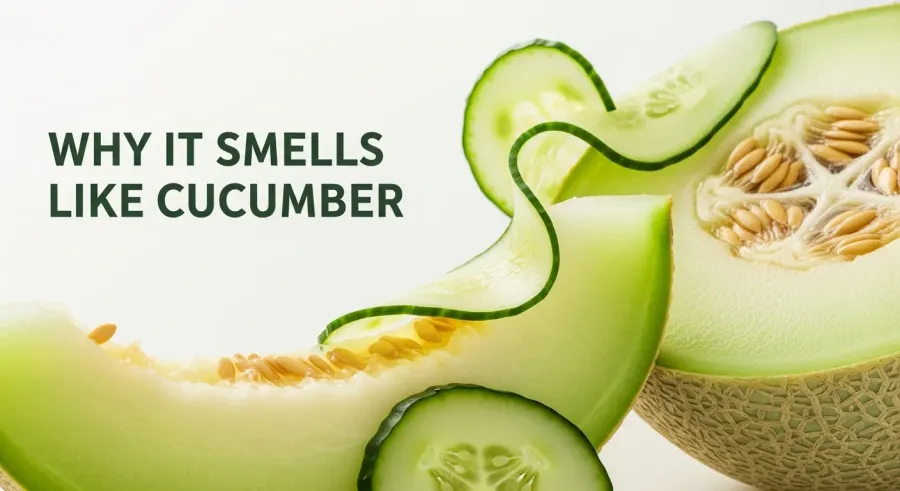
Honeydew gets a bad reputation as the dense, flavorless filler fruit at the bottom of a continental breakfast bowl. But biochemically, a ripe honeydew has a highly specific and delicate profile. If you have ever thought a slice of it tasted oddly like a cucumber, your palate is spot on. The dominant aroma compound in honeydew is (E,Z)-2,6-nonadienal (Flavour and Fragrance Journal, 2009). This is a nine-carbon straight-chain aldehyde that literally gives cucumbers their signature green, fresh smell. They are in the same botanical family (Cucurbitaceae), so they share this exact molecular fingerprint.
Because honeydew lacks strong acidity—it is mostly water and about 8.1g of sugars per 100g (USDA FoodData Central)—it acts like a blank canvas. To make it taste good, you have to build around that sweet, cucumber-adjacent base.
When honeydew is picked too early, it never fully develops these essential aroma compounds. It just tastes like crunchy water. A good pairing relies on starting with a melon that actually smells floral at the rind. If you cannot smell anything, the pairings will fall flat because there are no volatile compounds for the other ingredients to interact with.
Why Prosciutto Makes Perfect Sense
Ever wonder why Italian restaurants drape cured pork over melon slices? It comes down to basic tongue mechanics and lipid interactions. Honeydew has practically no salt, clocking in at around 18mg of sodium per 100g (USDA FoodData Central). Prosciutto brings an intense wave of sodium chloride and savory amino acids resulting from the curing process.
When these two hit your palate together, the salt from the meat actually suppresses any latent bitterness in the melon and amplifies the perception of sweetness. This is a documented sensory phenomenon where low levels of sodium alter how our sweet receptors fire. The fat in the prosciutto also plays a massive structural role. Many of honeydew's lighter floral aroma compounds, particularly phenylethyl alcohol, are fat-soluble. The soft pork fat coats your mouth and physically traps those melon aromas, making the flavor linger far longer than if you ate the fruit bare.
This works beautifully with delicately cured meats, but it fails completely if you try to substitute something heavy like bacon. The aggressive wood smoke and harsh rendered fat of bacon obliterate the melon's fragile aldehydes. A whisper-thin slice of prosciutto wrapped around a wedge of melon provides the exact right balance of fat, salt, and raw fruit, with zero cooking required.
Cucumbers Are Basically Melon Cousins
Since honeydew and cucumbers share those specific nine-carbon aldehyde compounds, combining them is a literal match at the molecular level. They amplify each other's fresh, green notes without fighting for dominance. You are essentially taking two ingredients that speak the exact same chemical language and letting them hang out in the same bowl.
Handling the texture requires a bit of attention. Both of these ingredients are highly water-dense. If you just chop them up and toss them together, the structure breaks down and you end up with a puddle of fruit soup at the bottom of your dish. Drawing out a little moisture from the cucumber first with a pinch of kosher salt helps maintain a crunchy texture that contrasts nicely with the softer, yielding flesh of the melon.
This pairing thrives when you keep the surrounding ingredients minimal. Adding high-acid vegetables like tomatoes will ruin the synergy, introducing a mushy texture and a totally different acid profile that overwhelms the delicate melon notes. Sticking to equal parts cubed honeydew and English cucumber keeps the focus on that shared green, fresh flavor profile.
Balsamic Vinegar Fixes The Acid Problem
Zero is roughly the amount of tartness you get from a ripe honeydew. Its pH hovers around 6.0 to 6.7, which is barely acidic at all. Because there is no natural acidic backbone to balance the fructose, the fruit can taste flat and cloying after a few bites.
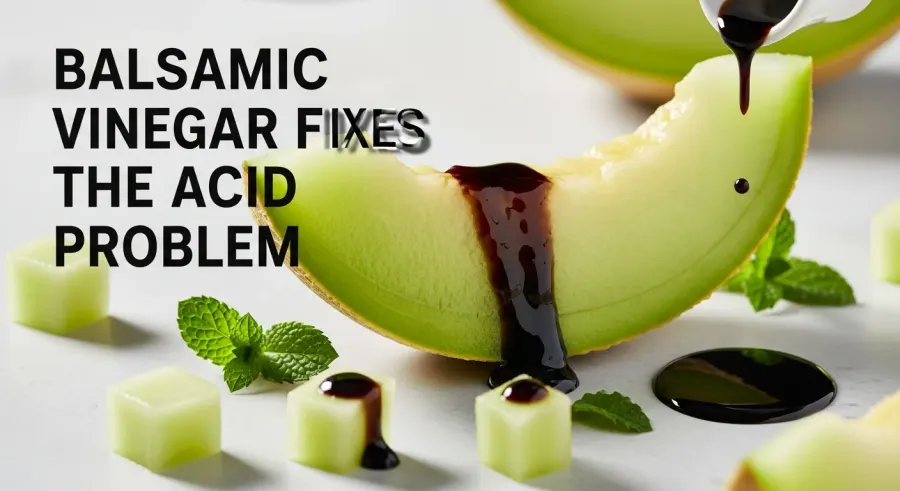
Acetic acid is the simplest fix. Introducing balsamic vinegar brings a necessary tang that cuts right through the heavy sweetness. The complex, woody notes of an aged balsamic also help to ground the melon's lighter, fleeting esters. The chemistry here relies on contrast. The high-sugar, low-acid environment of the fruit desperately needs the low-pH bite of the vinegar to force your salivary glands into action.
If you want to push this interaction further, heat changes the dynamic entirely.
Grilling honeydew slices over high heat for about two minutes per side caramelizes its natural sugars, initiating a rapid Maillard reaction on the surface. When you brush a balsamic glaze over the hot melon, the heat drives off some of the sharpest volatile acids in the vinegar, leaving behind a rich, syrupy finish that pairs perfectly with the newly developed caramel notes of the fruit. Alternatively, a single teaspoon of dark balsamic over cold chunks works just as well for a raw preparation.
Mint and Basil Work Hard Here
Herbs do more than just make a plate look nice or add a pop of color. Mint contains menthol, a compound that physically triggers the cold-sensitive TRPM8 receptors in your mouth. This creates a literal cooling sensation that tricks your brain into thinking the water in the melon is even colder and more refreshing than its actual temperature. It is a biological hack that elevates a basic fruit salad into something much brighter.
Basil operates on a completely different pathway. It carries eugenol, the exact same compound found in cloves, which adds a warm, almost peppery background note. This warmth contrasts sharply with the honeydew's straightforward sugar profile. When you use basil, you are bridging the gap between fruit and savory food, which makes it the ideal herb if you are adding dairy or olive oil to the dish.
Cilantro is another option that shares aldehyde compounds with the melon itself. While some people are genetically predisposed to think cilantro tastes like soap, from a purely chemical standpoint, it is a perfect match for honeydew. Tearing about five fresh leaves right before serving prevents the cut edges from oxidizing, ensuring the volatile oils land on the fruit rather than evaporating into the air.
The Ginger Trick Nobody Uses
This happens to be a pairing that consistently catches people off guard. Honeydew has a very gentle, rounded flavor profile that fundamentally lacks bite. It is soft, sweet, and quiet.
Fresh ginger brings gingerol, a chemical compound that delivers a sharp, pungent heat directly to the palate. When you introduce this raw heat to the melon, it forces your taste buds to wake up. The spice slices right through the dense sugar and prevents the fruit from becoming fatiguing to eat. It also bridges beautifully with the melon's natural phenylethyl alcohol, a compound that gives honeydew its sweet-floral aroma (Flavour and Fragrance Journal, 2009).
The key is using raw ginger rather than dried. When ginger is cooked or dried, the gingerol converts into shogaol, which has a deeper, heavier spice that can easily overpower the melon. Grated fresh ginger (about half a teaspoon per two cups of diced honeydew) mixed with the fruit and left to sit in the fridge for ten minutes allows the spicy juices to naturally permeate the flesh without masking the melon's natural flavor.
Why Feta Works Better Than Ricotta
Sometimes a fruit salad needs a savory anchor so it does not feel like dessert. Feta cheese works with honeydew for the exact same reasons prosciutto does—it supplies a massive dose of sodium to counter the inherent sugar of the fruit.
But feta also brings lactic acid. This gives you a tangy, creamy contrast that cured meats simply cannot provide. The crumbly, dry texture of the cheese physically breaks up the soft, slippery bite of the melon. If you compare this to a softer cheese like ricotta, the difference is obvious. Ricotta is too bland and lacks the necessary salt and acidic punch, leading to a pairing that feels heavy and washed out.
Sheep's milk feta in particular carries a unique fat profile, rich in short-chain fatty acids like capric acid. This provides a sharper, more pronounced tang that cuts through the melon much more effectively than mild cow's milk alternatives. A quarter cup of brine-stored feta crumbled over a few large fruit slices gives the exact right ratio of salt, fat, and sweet hydration.
Bottom Line
Honeydew does not have to be the sad, overlooked filler at the bottom of a fruit cup. When you treat it less like a standalone dessert and more like a foundation for contrasting flavors, its entire profile shifts. The lack of natural acidity and salt becomes an advantage, giving you the freedom to build a dish that leans as savory or as spicy as you want it to be.