In Short
Basil, oregano, thyme, and tarragon are the undisputed best herbs to pair with tomatoes, but spices like cinnamon and vanilla can create surprisingly sophisticated flavor matches. The secret lies in matching volatile compounds like eugenol—and why you should never cook your fresh basil is explained below.
Have you ever wondered what actually makes a tomato taste like a tomato? It is a strange, delicate balance of umami, fruitiness, and sharp acidity. Finding out what herbs go with tomatoes isn't just about picking green leaves at random; it is about knowing which chemical compounds naturally want to hang out together on a plate.
Wait, Why Do Tomatoes Need Help?
A raw, sun-ripened tomato is already a masterpiece, but chemically, it is a bit of a high-wire act. Tomatoes are over 94% water by weight (USDA FoodData Central), which means their flavor compounds have to work exceptionally hard to be noticed. Despite that water content, they are packed with glutamic acid. This is the exact same amino acid that gives soy sauce, seaweed, and aged parmesan their deep umami flavor. At the same time, tomatoes contain a sharp mix of citric and malic acids, along with fructose and glucose for sweetness.
Then there is the aroma. According to research published in the Journal of Agricultural and Food Chemistry (2003), enzymes in tomatoes called lipoxygenases break down unsaturated fatty acids to create volatile compounds like hexanal and cis-3-hexenol. Those specific chemicals are responsible for the signature green or grassy smell you get when you slice into a fresh heirloom on a summer afternoon.
Because the tomato has so many different elements competing for attention—umami, acid, sugar, and green aromatics—it acts like a blank canvas for certain herbs. But you have to know whether you are trying to enhance the natural sweetness, mask the acidity, or deepen the savory umami.
Why Basil Always Works
We all know the caprese salad is a classic, but the reason basil and tomato go so well together actually comes down to a specific chemical compound called eugenol. Eugenol is a highly aromatic phenol that naturally smells quite a bit like cloves.
Tomatoes naturally produce a very tiny amount of eugenol on their own as they ripen. In a vacuum, that trace amount can sometimes taste slightly medicinal or harsh to the human palate. But when you introduce fresh sweet basil, which is absolutely loaded with eugenol as well as sweet floral compounds like linalool, you create a chemical bridge. The brain stops reading the tomato's eugenol as a harsh outlier and starts perceiving it as part of a lush, herbaceous bouquet.
There is one major catch with this pairing. Heat destroys basil's volatile compounds almost instantly. Dropping fresh basil into a simmering pot of marinara for two hours evaporates all the delicate linalool, leaving behind limp, bitter leaves. Tearing fresh basil by hand (to avoid bruising the edges) and scattering it over tomatoes right before serving preserves those delicate oils. For a cooked application, dried basil offers a sturdier, earthier profile, though it lacks the bright floral punch of the fresh leaves. If you want a slightly spicier pairing, Thai basil contains even higher concentrations of eugenol and stands up slightly better to heat, making it perfect for tomato-based curries.
When to Pull Out the Oregano
If basil is the undisputed king of raw tomatoes, oregano and thyme are the best options for roasting.
Tossing a pint of cherry tomatoes in olive oil and sliding them into a 400°F oven fundamentally changes their chemistry. The heat triggers the Maillard reaction, the natural sugars caramelize, the water evaporates, and the umami becomes deeply concentrated. Delicate, water-rich herbs simply cannot survive this harsh environment. Thyme and oregano, however, are woody herbs packed with completely different phenols—specifically thymol and carvacrol.
These compounds are remarkably resilient to high temperatures. More importantly, they are oil-soluble, meaning they need fat to bloom properly. Mixing oregano with olive oil and coating the tomatoes before roasting allows the carvacrol to infuse into the oil and penetrate the skin of the fruit as it blisters. The result is a savory, woodsy flavor that complements the newly concentrated sugars of the tomato.
A practical rule of thumb is to use about one teaspoon of dried oregano or thyme for every pound of fresh tomatoes destined for the oven. They will easily withstand a 45-minute stint in the heat and emerge tasting warm, earthy, and perfectly matched to the heavy, savory notes of the shriveled fruit.
Tarragon Does Something Weirdly Good
Tarragon is one of those herbs that often ends up stranded in the back of the crisper drawer after a single recipe. It contains estragole, which is the exact compound responsible for that polarizing black licorice or anise flavor.
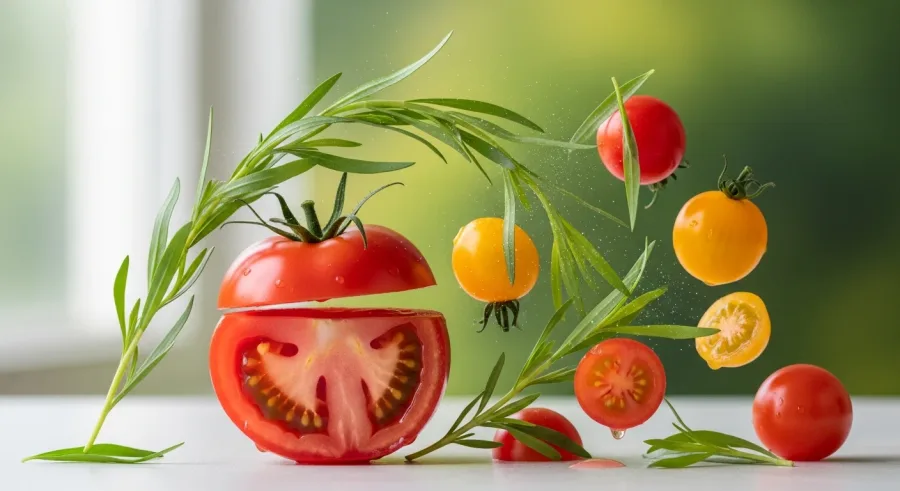
Pairing licorice notes with tomatoes sounds like a culinary mistake until you try it with the right variety. Yellow and orange tomatoes, like the popular Sun Gold cherry tomatoes, typically have lower perceived acidity and higher fructose levels than standard red beefsteaks. When paired with these sweeter, fruitier tomatoes, the estragole in the tarragon latches onto the sugar rather than fighting the acid. It brings out a subtle, jammy quality in the fruit.
This works best when the application is kept raw and gentle. Halving a handful of sweet yellow cherry tomatoes and tossing them with a splash of white wine vinegar, a pinch of flaky salt, and half a teaspoon of finely minced fresh tarragon allows the vinegar to provide the missing acid. The tarragon elevates the natural fruitiness of the tomato into something deeply elegant, often seen in classic French vinaigrettes and summer salads.
Mint Actually Makes Sense Here
People tend to mentally categorize mint strictly for desserts, mojitos, or perhaps a roast leg of lamb. But botanically, the tomato is a berry, and treating it like a fruit opens up some fascinating flavor pairings that Western cuisines often overlook.
Mint gets its signature flavor profile from menthol and carvone, which create a literal, physical cooling sensation on the tongue. Because raw tomatoes are highly acidic, the cooling effect of the mint creates a sharp, refreshing sensory contrast. It provides the culinary equivalent of stepping out of a hot sauna into a cool pool. The contrast actually makes the tomato taste sweeter without adding any sugar.
This pairing is foundational in many Middle Eastern and Levantine dishes. In a simple cucumber and tomato salad, a tablespoon of fresh chopped spearmint provides a totally different experience than standard savory herbs. The addition of crumbled feta cheese or a dollop of whole-milk yogurt helps carry the mint oils across the palate, softening the bite of the raw tomato and binding the flavors together through dairy fat.
Dropping Cinnamon into the Sauce
Food network analysts and flavor scientists often point out that successful culinary pairings frequently rely on cultural history as much as shared chemistry. Cinnamon and tomato is a perfect example of a pairing that seems wrong on paper but works flawlessly in practice.
Anyone who has ever eaten an authentic Greek moussaka or a deeply spiced Moroccan tagine has likely eaten tomatoes simmered with cinnamon. Cinnamon contains cinnamaldehyde, a compound heavily associated with sweet, comforting baked goods in many Western palates.
When a warm spice enters a savory tomato sauce, it plays a fascinating psychological trick on the palate. The brain detects the cinnamaldehyde and automatically expects sweetness, which actively decreases the diner's perception of the tomato's acidity. It achieves the exact same goal as adding a spoonful of processed white sugar to a pot of marinara, but with much more depth and complexity. Dropping just a quarter teaspoon of ground cinnamon or a whole cinnamon stick into a pot of chili or a slow-cooked ragu achieves a richer, more balanced flavor without the explicit, forward taste of the spice itself.
The Vanilla Bean Secret
Vanilla is perhaps the most unconventional pairing for tomatoes, but it remains a genuine secret weapon among flavor chemists and high-end chefs.
While grocery store aisles train us to associate vanilla strictly with sugary desserts, real vanilla extract is richly complex. It contains over 200 distinct flavor compounds, including subtle notes of earth, smoke, and leather. The primary compound, vanillin, is an absolute master at smoothing out harsh, acidic edges in savory dishes.
When added to a tomato dish, vanilla acts as a mediator. In a creamy tomato bisque, a single drop of pure vanilla extract bridges the gap between the sharp malic acid of the tomatoes and the heavy richness of the cream. It amplifies the umami without making the soup taste like a pastry. High-end restaurants sometimes use a scraped vanilla bean in clear tomato water to enhance the perceived sweetness of the dish. Restraint is the entire game here. Only a fraction of a scraped pod or the smallest drop of high-quality extract is needed to permanently change the profile of the sauce.
Bottom Line
It turns out that figuring out what to pair with a tomato is mostly about knowing whether you want to match its energy or calm it down. You can stick to the shared chemistry of basil, lean into the sturdy warmth of oregano, or play a clever trick on your palate with a pinch of cinnamon. The next time you slice into a fresh heirloom or simmer a pot of sauce, you have a few more scientific tricks to rely on.