In Short
Blackberries pair beautifully with rich meats like pork, earthy herbs like thyme, and roasted flavors like dark chocolate. Why their specific tannin structure and chemical makeup makes them the perfect match for a steak is below.
Blackberries are usually pigeonholed into pies, jams, and morning smoothies. But if you look at their actual flavor chemistry, they have a lot more in common with a robust red wine than a simple summer fruit. They are packed with complex acids, structural tannins, and volatile alcohols that can hold their own against heavy, savory ingredients.
Steaks, Pork Chops, and Beef
Tannins are what give a good Cabernet Sauvignon that dry, mouth-puckering finish. Blackberries are absolutely loaded with these exact same polyphenols. When you eat a raw blackberry, those tannins bind directly to the proteins in your saliva, causing a distinct drying sensation on your tongue.
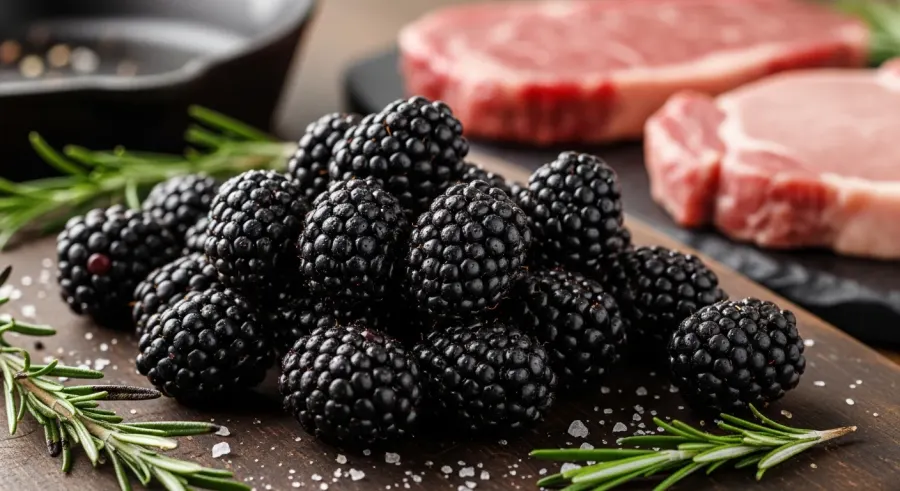
But introduce a fatty, protein-rich cut of meat like a ribeye or a thick pork chop, and the chemistry completely flips. The tannins bind to the meat proteins instead of your mouth. This interaction softens the berry's astringency while simultaneously cutting through the heavy fat of the beef. The malic acid in the fruit acts like a natural degreaser for your palate.
You can easily build a pan sauce by simmering two cups of fresh blackberries, a quarter cup of balsamic vinegar, and a splash of beef stock. Let it reduce over medium heat until it gets thick and syrupy. Spoon it directly over a seared tri-tip or roasted pork tenderloin. Just keep this treatment away from delicate white fish like flounder or cod. The aggressive tannins will completely overpower the mild seafood, leaving you with a metallic, bitter finish.
Roasted Coffee and Chocolate
Food pairings frequently rely on shared aromatic molecules. Blackberries contain high concentrations of an aroma compound called 5-hydroxymethylfurfural. This exact same molecule develops heavily when coffee beans and cocoa are roasted.
Because they share this fundamental structural backbone, pairing blackberries with dark, roasted flavors creates a seamless aromatic bridge. The fruit brings the sharp, bright tartness, while the chocolate or espresso provides a deep, earthy floor for the berry to stand on. It feels cohesive because, on a molecular level, they are speaking the exact same language.
Temperature plays a big role in making this work. Try dropping a few room-temperature blackberries over a scoop of cold espresso gelato. The temperature contrast makes the shared furfural compounds pop vividly. You can also pair them with a 70% dark chocolate bar. Avoid white chocolate, though. White chocolate lacks the roasted cocoa solids, meaning it has significantly fewer of these roasted compounds. It leans heavily on sugar and fat, which ends up clashing awkwardly with the acidic berry.
Lemon Thyme and Sweet Basil
If you have ever noticed a grassy, almost citrus-like undertone in a fresh blackberry, you were tasting a compound called 2-heptanol. This specific alcohol makes up a significant portion of a blackberry's volatile aroma profile (ACS Food Science & Technology, 2025).
It carries a distinct, green, lemon-like scent that evaporates quickly at room temperature. When you pair blackberries with herbs that possess similar citrus profiles—like lemon thyme, sweet basil, or even a subtle mint—you amplify that 2-heptanol. The herbs pull the berry away from its jammy, dessert-like sweetness and push it into a bright, savory direction.
Heat destroys these delicate herbs quickly. If you drop fresh basil into a boiling blackberry reduction, it will turn black and taste like bitter lawn clippings. Always add your fresh herbs at the very end, right before serving, to preserve those volatile oils. Tossing fresh, halved blackberries with torn basil, a drizzle of olive oil, and a pinch of flaky sea salt works beautifully as a side salad for grilled chicken.
Goat Cheese and Heavy Cream
Acidity always needs a buffer. Blackberries carry a sharp mix of malic and citric acids, which can feel harsh on an empty palate. High-fat, lactic dairy acts as a mechanical coating mechanism for your mouth.
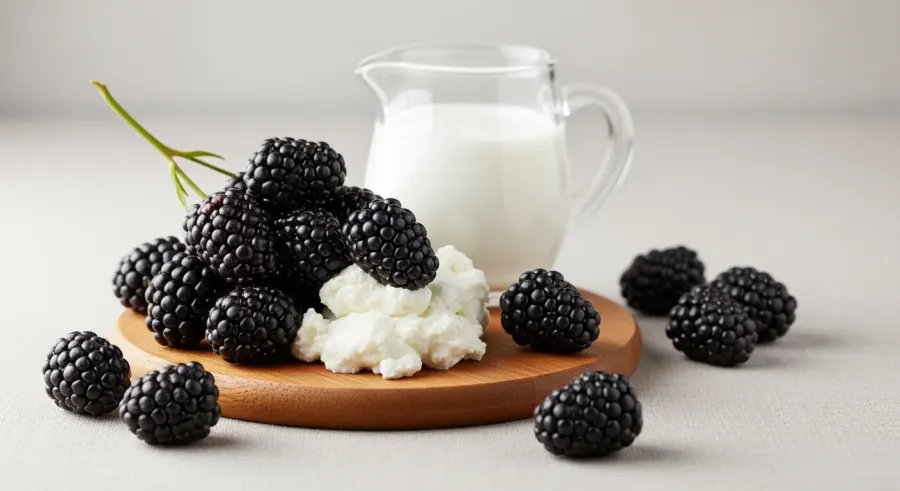
Goat cheese is particularly effective. Goat milk has smaller fat globules than cow's milk, which means it dissolves quickly on the tongue. This delivers a fast hit of creaminess that matches the rapid punch of the berry's acidity. The distinct tang of the goat cheese also mirrors the tartness of the fruit, creating a really nice parallel flavor structure.
Mascarpone and whole-milk ricotta achieve a similar buffering effect, though they lean sweeter and much more neutral. Spreading an ounce of room-temperature goat cheese on a piece of toasted sourdough, topping it with three or four halved blackberries, and finishing it with a crack of black pepper is one of the easiest lunches you can make.
Toasted Hazelnuts and Almonds
Roasting nuts triggers the Maillard reaction, a browning process that creates a host of toasted flavor compounds. These deeply savory notes anchor the bright, fleeting acidity of the fruit.
Hazelnuts and almonds are especially well-suited for this. Their natural oils carry the berry's fat-soluble aroma compounds across your palate, physically extending the amount of time you taste the fruit. Humans also crave textural variety. Eating a bowl of soft berries and smooth yogurt can cause palate fatigue because your brain gets bored of the uniform texture. Adding toasted almonds introduces an acoustic crunch that wakes up your senses.
Make sure to toast them. Raw, un-toasted nuts taste dusty and flat. You just need a dry skillet over medium heat for a few minutes until they smell fragrant. Walnuts can work, but their papery skins sometimes contain a high amount of their own tannins, which can occasionally create an overly bitter clash with the berry.
Roasted Beets and Root Veggies
Root vegetables rarely share a plate with fresh berries, but beets are a notable exception. Both ingredients share deep, earthy flavor profiles, yet they sit on completely opposite ends of the texture and sweetness spectrum.
Beets contain a compound called geosmin, which is responsible for that distinct fresh dirt flavor. This earthy baseline grounds the airy tartness of the blackberries perfectly. The slow roasting process is critical here because it concentrates the natural sugars in the beets, allowing them to stand up to the acidic fruit.
You want to cube the beets into one-inch pieces and roast them at 400 degrees Fahrenheit for about 40 minutes. Let them cool slightly so they do not instantly cook the fruit. Tossing warm roasted beets with fresh blackberries, a little olive oil, and some crumbled feta bridges the gap between sweet and savory seamlessly.
Orange Zest and Lemon Peels
It might seem completely counterintuitive to pair an already acidic berry with a lemon or an orange. You are not actually doing it for the acid, though—you are doing it for the aromatic oils hidden in the citrus peel.
Citrus peels are loaded with limonene, a volatile compound that smells bright, floral, and deeply sweet. Using just the zest, rather than the juice, adds all of those beautiful floral notes to the blackberry without making the dish overly sour. The oils from the zest bind with the natural sugars in the blackberry, lifting the whole flavor profile.
Pouring raw lemon juice directly over blackberries just makes a sharp, mouth-puckering bowl of fruit. But grating a teaspoon of fresh orange zest over a bowl of berries transforms them. It is a very quiet adjustment that changes the entire character of the fruit.
Bottom Line
When you stop treating blackberries strictly as a sugary dessert ingredient, an entirely new layer of cooking opens up. Their high tannin structure and complex acids make them one of the most versatile tools you can keep in the kitchen. The next time you sear a heavy steak, brew a dark espresso, or slice into a log of goat cheese, try adding a handful of these dark berries to the plate. The chemistry works perfectly, and the flavor will follow suit.