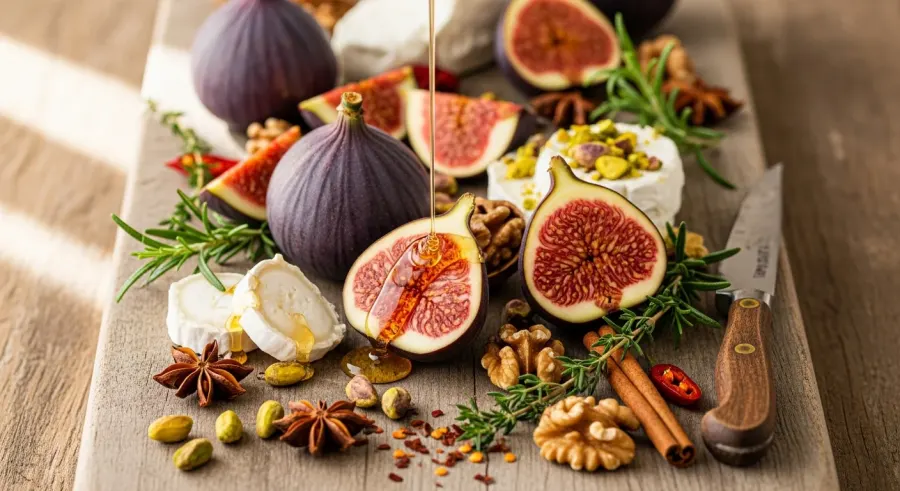
In Short
Prosciutto, funky cheeses, and balsamic vinegar balance the fig's heavy sugar load, but coffee might be the best surprise pairing of all. The exact chemical reasons these combinations work (and which cheeses to avoid entirely) are below.
Figs are strange little things. They lack the sharp acidity of a strawberry and the crisp snap of an apple, relying almost entirely on a dense, honey-like sweetness. Figuring out how to serve them is mostly an exercise in building contrast. If you just eat them plain out of the basket, palate fatigue sets in by the third bite. The trick is treating the fruit less like a dessert and more like a canvas for salt, fat, and bitterness.
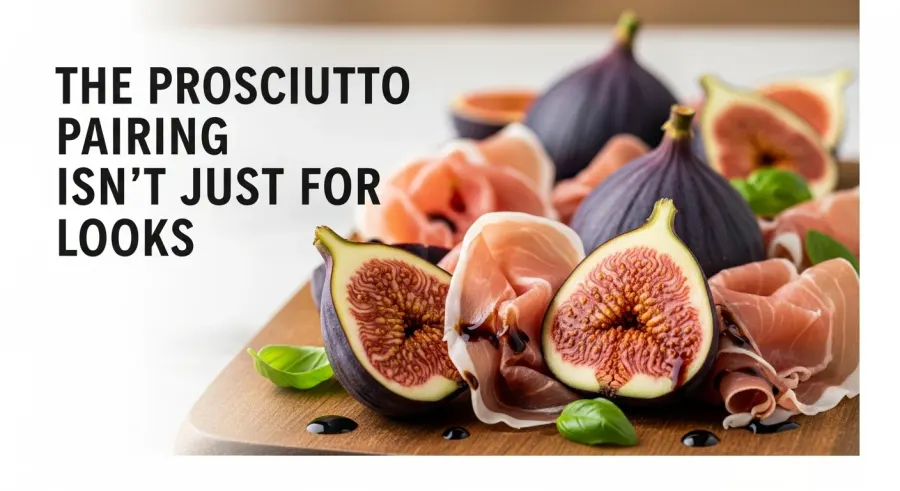
The Prosciutto Pairing Isn't Just for Looks
Ever wonder why every fancy restaurant wraps their figs in cured pork? It comes down to basic sugar-salt contrast, but there is some actual science at play. Raw figs pack 19.18 grams of carbohydrates and just 0.3 grams of fat per 100 grams (USDA FoodData Central, 2019). They are essentially pure energy. Cured meats like prosciutto, jamón ibérico, or speck bring the missing fat and a heavy dose of umami through naturally occurring glutamates.
When you bake them together, the pork fat renders and coats the fruit, creating a bridge between the savory meat and the sugary interior. The thickness of the meat matters immensely here. If the prosciutto is sliced too thick, it turns into a leathery blanket that overpowers the delicate fruit and becomes difficult to chew. You only need half a paper-thin slice per fresh fig.
Halve the fruit, wrap it tightly so the meat adheres to the sticky flesh, and bake at 400°F for about 8 minutes. The edges of the pork will crisp up while the center of the fig softens into a concentrated jam. If you cannot find good prosciutto, extremely thin pancetta works, but you will need to increase the bake time by a couple of minutes to properly render the extra fat.
Why We Lean on Funky Cheeses
Dairy fat is a reliable cheat code for fruit. But not just any cheese works with a fig. You need something with a sharp, lactic tang to cut through the heavy texture, which is why blue cheese, goat cheese, and whipped feta are the standard recommendations.
A 2024 sensomics analysis identified vanillin and furfural as key characteristic flavor compounds in fig extracts (Food Science, 2024), giving them a slightly sweet, baked aroma that begs for a pungent cheese to ground it. The moisture content of the dairy matters just as much as the flavor. This pairing works brilliantly for soft, spreadable cheeses, but you should skip the hard, aged cheddars or dry parmesans. The brittle texture of an aged cheese just splinters awkwardly against the soft seeds of the fruit, creating a disjointed bite.
Temperature is also a factor. Cold cheese directly out of the fridge suppresses the volatile flavor compounds you are trying to highlight. I usually plan for about two ounces of room-temperature goat cheese or gorgonzola for every four fresh figs. Just smear the cheese heavily onto a toasted piece of sourdough bread and press the quartered figs directly into the dairy so they hold their place.
Balsamic Vinegar Fills the Acid Gap
With a pH that can hover near 6.0, fresh figs lack the sharp acidic bite you usually expect from fruit. If you eat too many of them plain, they start to taste flat and one-dimensional on the palate. Balsamic vinegar acts as a corrective lens, adding a sharp acetic bite that causes your salivary glands to activate, which physically changes how you perceive the sweetness of the fruit.
The darker and older the balsamic, the better, because the barrel-aging process creates syrupy, caramelized compounds that mirror the fig's natural sugars. That said, pouring raw, thin grocery-store balsamic straight from the bottle usually just makes the fruit wet and sour. You need to alter the texture.
Reduce half a cup of inexpensive balsamic vinegar on the stove over low heat for about 10 to 12 minutes until it coats the back of a spoon. Drizzle just a teaspoon of that warm reduction over a plate of fresh figs. It fixes the acid imbalance immediately without turning the fruit into a pickle. This specific preparation also makes an excellent side dish for roasted pork tenderloin, where the vinegar helps cut through the heavy fat of the main course.
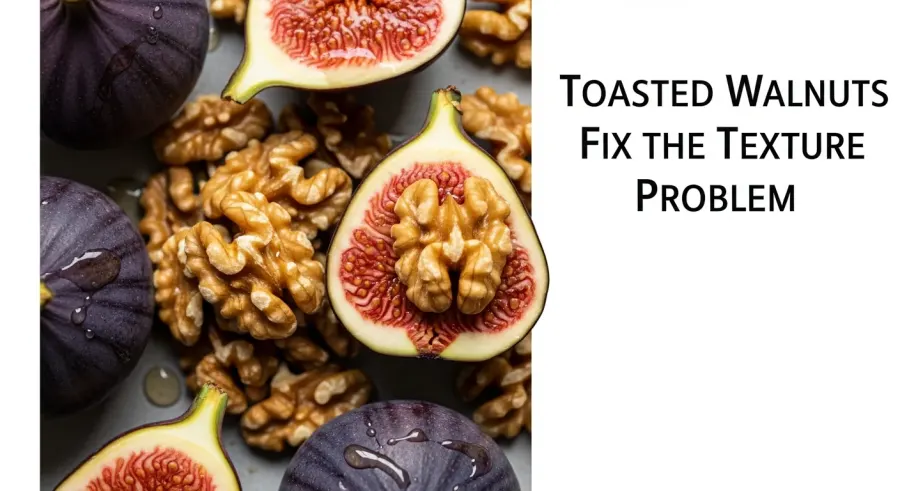
Toasted Walnuts Fix the Texture Problem
Roasting nuts creates a family of flavor molecules called pyrazines, which are responsible for that warm, earthy aroma that fills a kitchen. Figs desperately need that earthiness to balance their floral notes.
Because the fruit is nearly 80% water (USDA FoodData Central, 2019), throwing raw nuts onto a fig plate often results in a soggy, muted mess. I have ruined enough salads to know that raw walnuts just taste a bit like damp dust next to a ripe, juicy fig. But when you toast walnuts, pecans, or pistachios at 350°F for 5 to 7 minutes, the natural oils release and the texture tightens up into a rigid crunch. That snap provides the exact structural contrast a mushy fig requires.
Almonds are particularly clever here, as they share benzaldehyde—a compound that gives a cherry-like aroma—with certain fig varieties, creating a continuous flavor profile. To put this together, chop the toasted nuts finely while they are still warm. Press them directly into the exposed flesh of a halved fig so they stick to the natural syrup. This keeps the nuts from rolling off the plate and guarantees both textures in every single bite.
Wait, What About Espresso?
This one sounds completely wrong until you actually try it. Coffee is fiercely bitter, loaded with tannins and chlorogenic acid, while figs are overwhelmingly sweet.
Pouring a hot shot of espresso over a bowl of fresh figs acts a bit like an Italian affogato, but without the ice cream. The heat of the coffee lightly blanches the skin of the fruit, softening the pectin, while the bitterness acts like a volume knob, turning down the cloying sweetness of the interior. A light, fruity Ethiopian roast might get lost here, but a dark, oily Sumatran or traditional Italian roast brings the necessary punch to stand up to the fruit.
It works wonderfully for breakfast or a very light afternoon dessert. Just pull a standard two-ounce shot of hot espresso and pour it directly over three halved fresh figs in a shallow bowl. Eat it immediately with a spoon before the fruit breaks down completely. You can add a small dollop of mascarpone to bridge the gap if the coffee is too harsh. Do not try this with dried figs, though. The leathery skins of dried fruit will just sit in the liquid and turn rubbery.
Woodsy Herbs Anchor the Plate
Most people reach for mint when they plate fruit, but this specific ingredient actually prefers something a bit more aggressive. The skin of a fresh fig contains distinct green, grassy volatiles that latch perfectly onto hearty, woodsy herbs like fresh thyme and rosemary.
Rosemary contains a compound called eucalyptol, which provides a cooling sensation on the palate that contrasts nicely with the dense, warm sweetness of the fruit flesh. A tiny sprinkle of fresh thyme leaves rubbed between your fingers releases enough essential oils to completely change how the fruit tastes, pulling it firmly into savory territory. It takes zero cooking time.
Just strip a few thyme leaves off the stem and scatter them over your plate of sliced figs. Keep the quantities extremely low — maybe ten tiny leaves total for an entire plate — otherwise, it tastes like you dropped your snack in a pine forest. If you want to integrate the flavors more smoothly, gently warm a quarter cup of honey with a sprig of rosemary for five minutes on the stove. Let it steep, pull the herb out, and drizzle the infused honey over the fruit.
Black Pepper and Good Olive Oil
Treating a piece of fruit like a steak takes a little bit of confidence. Freshly cracked black pepper contains piperine, an alkaloid that triggers the physical heat receptors on your tongue. When paired with the heavy sugar load of a ripe fig, this mild heat creates a physical tingle that distracts your palate from the sweetness.
Add a generous pour of robust, peppery extra-virgin olive oil, and the polyphenols in the oil provide a slight bitter finish that cleans the mouth. Quarter the figs, arrange them flat on a serving plate, drizzle heavily with the oil, and use a coarse grind on your pepper mill. You want actual texture from the pepper flakes.
Avoid pre-ground pepper entirely for this application. The volatile terpenes in black pepper evaporate within a few days of being crushed, leaving behind a dull powder that adds dustiness rather than heat. A pinch of flaky sea salt on top of the oil ties the whole plate together, making it an ideal starter for a summer dinner party when you don't actually feel like turning on the stove.
Bottom Line
Finding the right match for a fig really just comes down to knowing what the fruit is missing. It has plenty of sugar and water, but it needs structure, fat, and a hit of acid to actually taste like a complete dish. Once you start looking at the fruit as an ingredient that requires balancing rather than a standalone snack, you realize how flexible it actually is. It holds up just as well to a heavy pork roast as it does to a quick cup of coffee.