In Short
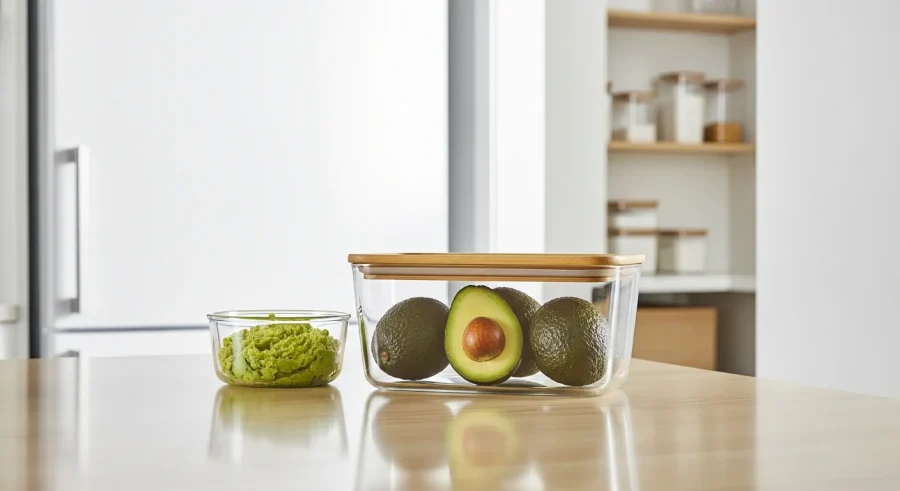
Keep them at room temperature until they yield to gentle pressure, then immediately transfer them to the fridge to pause the ripening process. Skip the viral water hack unless you want a side of Listeria with your guacamole—what actually prevents browning safely is below.
Everyone has played the avocado waiting game. You stare at a rock-hard green sphere for four days, look away for five minutes, and suddenly it is a mushy brown mess. Nailing the timing isn't just about luck—it is about knowing exactly how to manipulate temperature and oxygen.
Waiting Out the Room Temperature Phase
Unripe avocados are stubborn. They require ambient warmth to soften, but too much heat will simply cause them to rot before they ever get creamy. The ideal environment for a hard, green avocado is a countertop sitting between 65°F and 70°F (18°C to 21°C). Anything warmer than 77°F (25°C) can trigger uneven softening, where the outside feels mushy but the inside remains rigid.
Avocados are climacteric fruits, meaning they do not actually ripen while attached to the tree. Growers can leave them hanging for months as a form of natural storage. The clock only starts ticking once they are harvested. At normal room temperature, a rock-hard avocado takes about five to ten days to become edible.
You can manipulate this timeline by trapping the gases the fruit naturally produces. As they sit on your counter, avocados release ethylene, a gaseous hormone that triggers the ripening process. If you leave them in a bowl, that gas dissipates into the kitchen. If you place them in a loosely closed paper bag, the ethylene concentrates around the fruit, cutting the waiting time by a day or two. Tossing an apple or a banana into the bag accelerates things even further, as both are heavy ethylene producers.
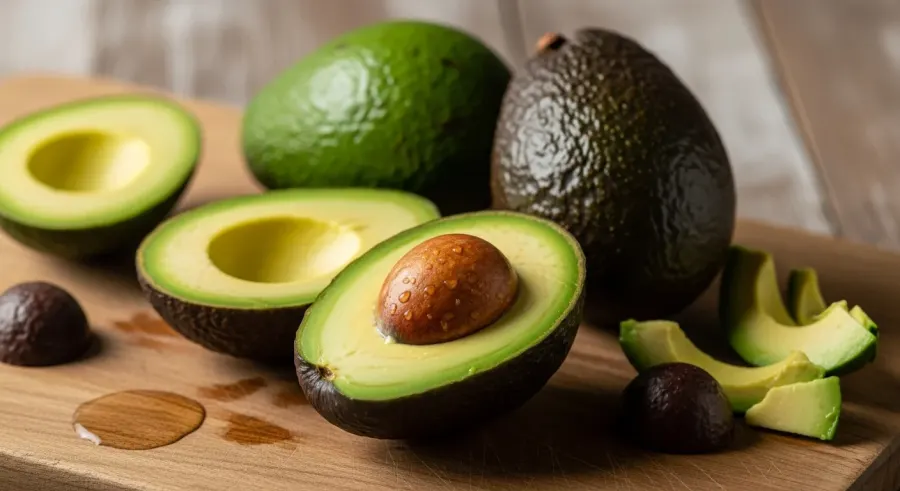
You are looking for a slight yield to gentle pressure in the palm of your hand. Poking them with your fingertips is a common mistake, but it actually causes localized bruising in the delicate flesh. Waiting for a natural yield across the whole fruit is much safer.
Timing the Refrigerator Transfer
Timing the move to cold storage is everything. If you put a completely hard avocado in the fridge, it might never ripen properly. The cold effectively damages the cellular mechanisms that allow the fruit to soften, leading to a condition called chilling injury. The result is a rubbery texture and pale, greyish spots inside.
But once the fruit yields to gentle pressure, the refrigerator becomes your best tool for preservation. Commercial packers and the Hass Avocado Board recommend storing ripe avocados at 38°F to 42°F (3.3°C to 5.6°C). At this precise temperature range, the ripening process practically pauses. Moving a perfectly ripe avocado to the crisper drawer buys you an extra three to five days of ideal texture.
The crisper drawer is important because it manages humidity. Avocados lose moisture through their porous skins, and the dry circulating air of a modern refrigerator will cause them to shrivel. Keeping them in the drawer maintains a slightly more humid microclimate.
If you purchase unripe avocados in bulk, you can stagger their ripening. Leave one or two on the counter for immediate use, and place the rest in the fridge while they are still hard. The cold will stall them. When you need them, pull them out and let them sit at room temperature for a few days to resume the normal ripening process. This technique gives you a steady supply without the panic of having six avocados turn mushy on the exact same afternoon.
Why They Turn Brown So Fast
A perfectly green half can transform into brown sludge before you even finish your lunch. This aggressive color change is a biological defense mechanism powered by an enzyme called polyphenol oxidase.
When you slice into the fruit, you slice straight through its cell walls. This damage exposes the enzyme to oxygen in the air. The two react instantly, converting the natural phenolic compounds in the avocado into dark melanin pigments. This is the exact same chemical process that causes apples to brown when bitten.
A very common strategy is leaving the wooden pit in the unused half to prevent browning. This trick is largely a myth. The pit does absolutely nothing to neutralize the enzymes or alter the chemistry of the fruit. The only reason the flesh beneath the pit stays green is that the pit itself acts as a physical barrier, blocking oxygen from touching that specific circular patch. The rest of the exposed avocado will brown just as quickly.
To stop the reaction, you have to either alter the surface pH or completely cut off the oxygen supply. The enzymes require a specific pH range to function. Brushing the exposed surface with lemon or lime juice introduces ascorbic acid, dropping the pH and temporarily halting the browning process.
The Water Storage Hack You Should Skip
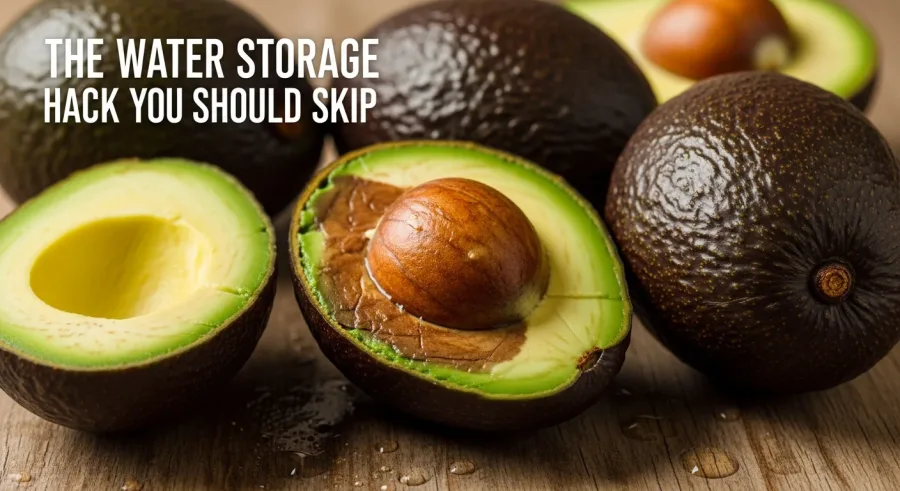
Social media occasionally popularizes terrible food safety ideas. A few years ago, a trend circulated suggesting that submerging cut or whole avocados in a container of water in the fridge would keep them perfectly green for weeks. Visually, the trick works flawlessly because water completely insulates the flesh from ambient oxygen.
The reality is much less appetizing. The FDA issued a direct warning against this practice in 2022 after investigating the microbial risks. The thick, bumpy outer skin of an avocado is known to occasionally harbor harmful pathogens. In federal sampling, the FDA found Listeria monocytogenes on nearly 18 percent of tested avocados, and Salmonella on just under 1 percent.
When you place the fruit in a water bath and leave it in the fridge for several days, you create an ideal environment for those pathogens to multiply. Even if you wash the skin first, microscopic bacteria can remain trapped in the deep ridges.
The most concerning part of the FDA warning noted that bacteria can actually infiltrate right through the skin into the edible flesh. This means the pathogens multiplying in your storage water are slowly being pulled directly into the avocado you plan to eat. No amount of green flesh is worth a bout of listeria, making dry storage methods the only truly safe option.
Keeping Sliced Halves and Guac Green
If water is out, you need better ways to store open halves and mashed guacamole. The goal is always to create a tight oxygen barrier.
For a cut half, the simplest method is pressing a sheet of plastic wrap or a reusable silicone hugger directly against the flesh. Wrapping the whole avocado loosely will not work, because the wrap must be completely flush against the green surface, leaving zero air bubbles. Alternatively, you can lightly brush the exposed face with olive oil. The oil creates a lipid seal that oxygen cannot penetrate, and it will not alter the flavor profile as drastically as heavy lemon juice.
Another highly effective trick involves red onions. If you store your avocado half in a sealed airtight container with a large chunk of cut red onion, the fruit will stay vibrant for a day or two. The onion emits volatile sulfur compounds—the same types of gases that make your eyes water. These gases act as a powerful natural preservative and slow down oxidation without making the avocado taste like onions.
Guacamole requires a different approach because the surface area is entirely exposed and mixed. The best restaurant trick is the water-shield method, which is entirely different from the dangerous whole-avocado water soak. Pack your guacamole tightly into a container, smoothing the top flat with a spoon. Gently pour a half-inch of cold water or lime juice directly over the top to create a liquid seal. Because the guacamole is dense and high in fat, the water will simply sit on top without mixing in. When you are ready to eat, pour the water down the drain, give the dip a quick stir, and serve.
Freezing Actually Works (Mostly)
Produce does not have to end up in the trash just because you missed the freshness window. You can freeze avocados, but there is a major compromise regarding texture.
Avocados have a high water content. When placed in a freezer, that water turns into jagged ice crystals that puncture and destroy the delicate cell walls. Once thawed, the structural integrity of the fruit is gone. The result is a slightly mushy, sometimes grainy texture that is frankly terrible for slicing on toast or tossing into a salad.
It is, however, excellent for applications where the avocado will be pureed anyway. Frozen avocado blends beautifully into green smoothies, acting as a thickener. It also works perfectly for creamy salad dressings or blended soups.
To freeze them properly, avoid throwing the whole fruit into the freezer. The freezing process will ruin the skin and make the pit nearly impossible to remove safely. Instead, scoop out the ripe flesh and either cut it into chunks or mash it completely. Toss the chunks or puree with a small splash of citrus juice to prevent oxidation during the freezing process. Pack the prepared avocado into an airtight freezer bag, squeezing out as much ambient air as possible before sealing. Stored this way at 0°F (-18°C), they will maintain their flavor for three to six months. Thaw them overnight in the refrigerator when you are ready to use them.
Knowing When It Is Actually Bad
Sometimes a bruise is just a bruise. It is perfectly safe to trim away a small, isolated brown spot from an otherwise pristine green avocado. Those dark spots are usually just localized physical damage from rough handling during transport.
True spoilage looks and smells systemic. If you slice into the fruit and find a network of dark, stringy fibers running through the flesh, the fruit is past its prime. These fibers are the vascular bundles that supply water to the fruit, and they darken dramatically as the avocado over-ripens. While technically safe to eat, the texture is woody and unpleasant.
If the skin feels completely deflated and deeply indented under your fingers, the flesh inside has likely turned into a greyish, watery mess. At this stage, bacterial decay has usually set in.
Your sense of smell is the ultimate test. Avocados are prized for their high fat content, and fat goes rancid when exposed to heat and age. If you detect a sharp, sour, or slightly chemical odor that resembles old oil or fermentation, the lipids have broken down completely. No amount of salt, cilantro, or lime juice will fix rancidity. At that point, the only option is the compost bin.
Bottom Line
The line between perfectly creamy and completely ruined is famously thin, but temperature control takes away most of the guesswork. Once you stop treating them like a countertop decoration and start treating them like a ticking clock, you will throw away a lot fewer halves.