In Short
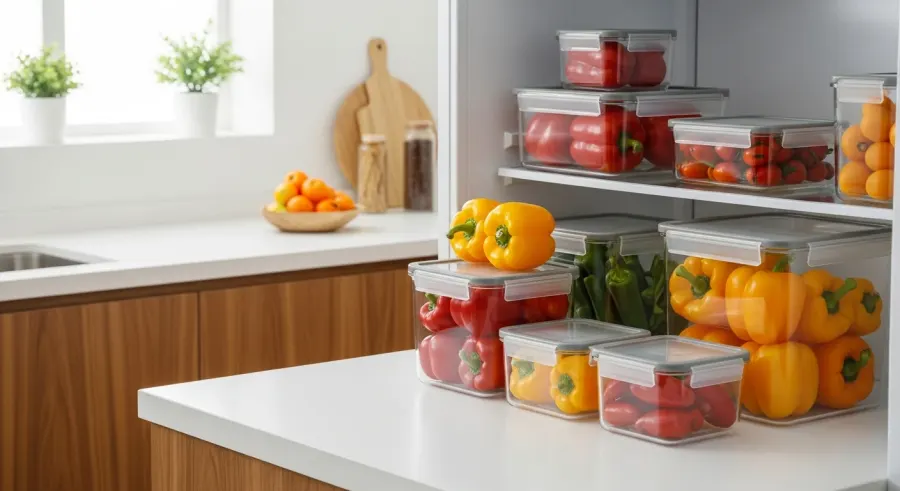
The best method is keeping them whole and unwashed in a sealed plastic bag in your fridge's crisper drawer, which provides the high humidity they need. Why this specific environment prevents premature wrinkling—and why the color of your pepper changes its cold tolerance—is below.
Most of us just toss our produce into the fridge and hope for the best. But sweet peppers have a surprisingly specific set of environmental demands. Understanding how they react to temperature and humidity makes the difference between a crisp, firm vegetable and a sad, wrinkled one sitting at the bottom of a drawer.
The Problem With Fridge Temperatures
Most home refrigerators are set between 37°F and 40°F. Bell peppers, however, prefer a slightly warmer microclimate. According to postharvest research from the University of California, Davis, the absolute optimal temperature for storing fresh-peppers is 45°F (7.5°C). At this precise baseline, they maintain maximum shelf life for 3 to 5 weeks.
The complication is that storing them at standard home fridge temperatures induces a physiological disorder known as chilling injury. This isn't a vague drop in quality. Chilling injury manifests as physical damage to the plant's cell structure. At a microscopic level, the cold causes the cell membranes to lose their natural fluidity, leading the internal lipids to solidify.
This breakdown leads to the classic chilling injury signs that appear after about two weeks of cold storage. You might notice surface pitting, a darkening around the interior seed cavity, and a strange softening of the flesh that happens without any actual water loss to the air.
Room temperature storage is an alternative, but it comes with a steep trade-off. Keeping peppers on a kitchen counter at 68°F avoids cold damage entirely, but the ambient air causes rapid moisture evaporation. A fresh pepper left out in the open will begin to shrivel and lose its crunch within a week.
How Plastic Bags Actually Help
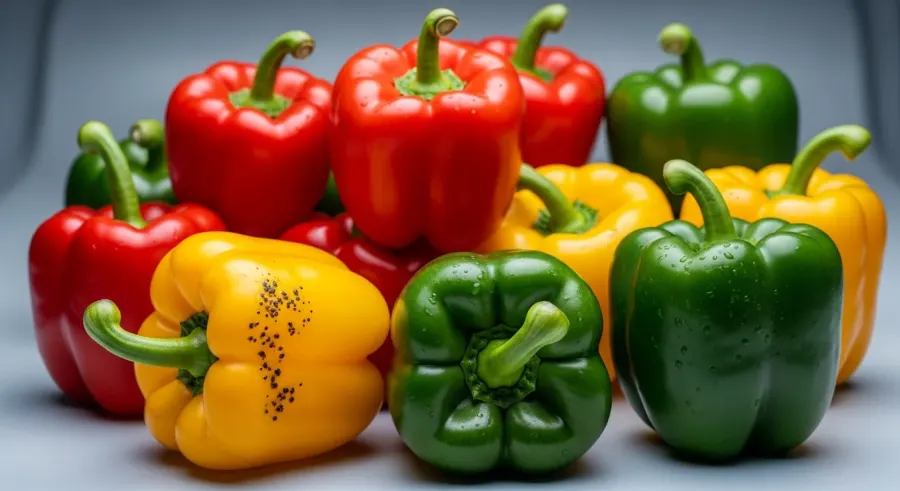
A raw bell pepper is mostly water, and protecting that moisture dictates how long do peppers last. The relative humidity required to keep them crisp is high—ideally around 95% (UC Davis). This explains why a loose pepper left on a fridge shelf usually transforms into a wrinkled, leathery shell within a few days. The dry, circulating air of the refrigerator pulls moisture directly through the pericarp (the outer skin).
Packaging provides a necessary barrier. Postharvest packaging research indicates that sealing peppers in polyethylene materials, like standard zip-top or freezer bags, significantly reduces moisture loss compared to paper bags or naked storage.
Retaining this water weight also protects the nutritional profile. A 100g serving of raw red bell pepper provides 26 calories, 6g of carbohydrates, 2.1g of fiber, 1g of protein, and extremely low fat (0.3g total), alongside 4.2g of sugar and 4mg of sodium (USDA FoodData Central). When a pepper dehydrates, it loses more than just its appealing texture. Studies show that peppers stored in plastic bags maintain higher levels of ascorbic acid (vitamin C) and phenolic compounds during cold storage than those left exposed to drier air.
What Happens When You Cut Them
Slicing a pepper fundamentally alters its biological clock. Once the protective outer skin is breached, the internal moisture is directly exposed to the surrounding environment. A cut bell pepper degrades exponentially faster than an intact one.
When halved or diced, the exposed flesh acts as a magnet for both airborne bacteria and ambient odors lurking in the refrigerator. The expected shelf life drops from several weeks down to just two to three days. To mitigate this rapid decline, the cut pieces require a physical shield. Wrapping the segments tightly in food film or sealing them in an airtight glass container traps the escaping moisture.
Interestingly, leaving the stem and seeds attached to an unused half can accelerate mold growth. The seed cavity holds extra moisture, creating a damp microclimate that fungi thrive in. Removing the seeds and the spongy white pith before storing the leftover portion results in a cleaner, drier surface that resists rot for an extra day or two.
Getting the Crisper Drawer Right
Not all spaces in a refrigerator operate exactly the same way. Most modern fridges feature humidity-controlled crisper bins designed specifically to manage airflow.
For storing bell peppers, utilizing the high-humidity crisper drawer settings (which closes the vent entirely) is the optimal strategy. Closing the air vent traps the natural moisture that the produce releases, creating a local environment that hovers close to the 95% relative humidity target that peppers crave. When the vent is left open, the refrigerator’s fan continuously pulls dry air through the bin, stripping the moisture from the skin of the vegetables.
The single caveat to the closed-vent strategy is condensation. If liquid water begins to pool at the bottom of the drawer, it creates a breeding ground for bacterial soft rot. Placing a dry paper towel at the base of the bin absorbs excess standing water while allowing the air above it to remain suitably humid.
Green vs. Red Bell Peppers
The color of the pepper changes how it handles the cold. Sweet bell peppers are typically green when immature, eventually turning red, yellow, or orange as they remain on the vine to ripen. This maturation process alters both their chemical makeup and their physical resilience.
Because green peppers are harvested earlier in their developmental cycle, they are substantially more sensitive to cold damage. When exposed to temperatures below 41°F, a green pepper will develop pitting and water-soaked lesions much faster than a fully ripened red one. The ripening process alters their cellular chemistry; mature red peppers develop more resilient cell membranes that make them naturally more tolerant to cold damage without suffering from chilling injury as quickly.
If space in the warmer produce bin is limited, green peppers are the ones that most desperately need that protected environment. The red or orange ones can survive a bit of temperature fluctuation on a main shelf.
What Freezing Does to the Nutrients
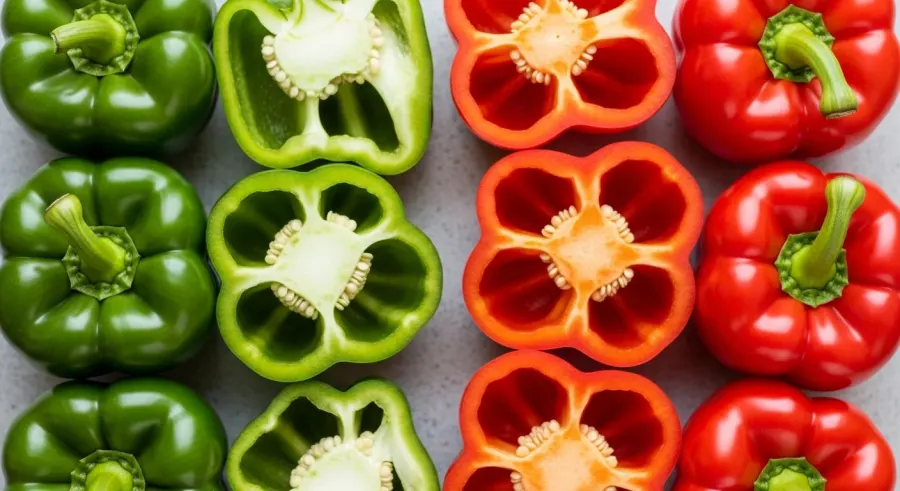
Freezing is the only environment that extends shelf life into the territory of months rather than weeks. When properly prepared—washed, cored, chopped, and frozen flat before being transferred to an airtight container—freezing bell peppers allows them to last 8 to 12 months at 0°F (-18°C).
The sub-zero temperature halts enzymatic activity and microbial growth completely, but it does alter the physical structure. The water inside the plant tissues expands as it turns to ice, rupturing the rigid cell walls. This is why a thawed pepper never regains its raw crunch and is best suited for cooked applications like stir-fries or soups.
The freezing process also impacts the bioactive compounds. While freezing preserves the bulk of the macronutrients perfectly, research indicates it causes a measurable decrease in vitamin C and certain antioxidant flavonoids compared to the fresh state. Blanching is sometimes recommended for other vegetables before freezing to lock in color, but it can cause further loss of water-soluble vitamin C in peppers. Packing them raw is the standard approach for home preservation.
When They Are Actually Spoiled
Spoilage usually follows a predictable pattern of moisture loss followed by opportunistic fungal growth. The earliest visual cue of decline is a slight wrinkling of the skin. A shriveled pepper is entirely safe to eat, though you probably won't want it in a raw salad. It still functions perfectly well in a roasted dish or a slow-cooked stew.
True spoilage is marked by structural breakdown. Soft, water-soaked patches on the walls of the vegetable indicate that the cell membranes are actively collapsing. These soft spots are often accompanied by a distinct, slightly sour odor.
Fungal infections are the final stage of decay. The stem is often the first part to show age, turning from a vibrant green to a limp, brownish-grey. Because the stem is the point of detachment from the plant, it remains a vulnerable entry point for bacteria. The most common issues are Botrytis rot and Alternaria black rot, which frequently appears around the stem end as a dark, sunken lesion. Once mold visibly breaches the surface or the interior seed cavity turns black, the vegetable should be discarded.
Bottom Line
A bell pepper's lifespan is entirely dictated by its battle against evaporation and cold damage. Finding the balance between trapping its natural moisture and protecting its delicate cell structure takes a bit of deliberate organization in the kitchen. Recognizing how they react to their environment transforms storage from a guessing game into a predictable process.