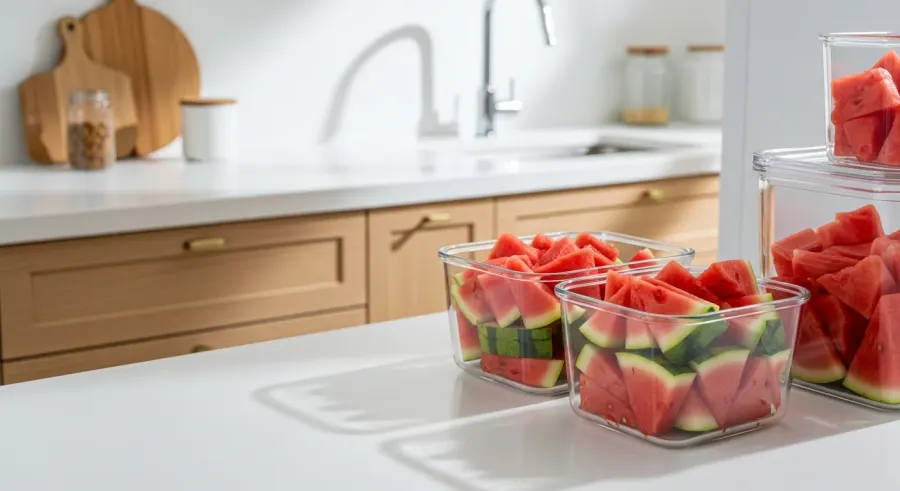
In Short
Cut watermelon belongs in the fridge and lasts 3 to 5 days in an airtight container, but whole watermelons actually prefer the kitchen counter. Why the crisper drawer damages uncut fruit (and how to keep slices crisp) is explained below.
Finding room for a massive melon in the refrigerator is a logistical headache. It turns out you do not even need to try. The way we treat this fruit usually runs completely backward to what it actually needs to stay fresh.
The counter is actually perfect
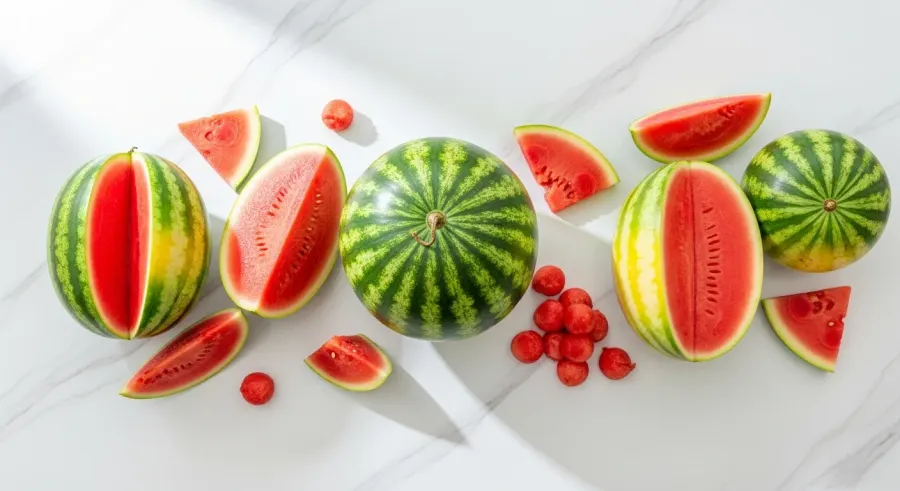
A whole watermelon is essentially a sealed, self-sustaining ecosystem. That thick green rind protects the flesh so thoroughly that the fruit simply doesn't require immediate chilling. Most people wrestle with clearing off a refrigerator shelf the second they get home from the grocery store, but the fruit prefers the ambient temperature of your kitchen.
There is a fascinating biological process happening inside that shell. Even after being severed from the vine, a watermelon is still alive and actively synthesizing nutrients. When researchers looked into the ideal storage conditions, they found that room temperature is heavily favored. A 2006 study by USDA researchers published in the Journal of Agricultural and Food Chemistry tested melons at different temperatures and found that lycopene levels actually increased by up to 40% when the fruit was kept around 70°F (21°C) for two weeks. Beta-carotene levels jumped by up to 139%.
Lycopene is the antioxidant compound that gives the flesh its bright red pigment. The fruit literally gets better, sweeter-looking, and more nutritious just sitting in a bowl on your kitchen island.
You can keep a whole, uncut watermelon at room temperature for about 7 to 10 days without any drop in quality. If you happen to have a cool pantry, a basement, or a root cellar that hovers around 55°F (13°C), that is the absolute sweet spot. Down there, an uncut melon can easily last two to three weeks, just waiting until you are ready to carve into it.
What cold does to the rind
Cold environments cause tangible stress to tropical and subtropical fruits. Watermelons are highly sensitive to temperatures that dip below 50°F (10°C), which is significantly warmer than a standard appliance setting.
When a whole melon sits in a 38°F refrigerator for more than a few days, it begins to experience chilling injury. The physical signs are subtle at first but compound over time. The rind might develop small dark pits, and the vibrant red flesh can fade to a dull pink or pale orange. You may also notice off-flavors developing as the cold environment completely halts the natural ripening and nutrient-building processes.
The cell walls take on damage, which alters the internal structure before you even slice it open. The melon essentially goes dormant and slowly degrades.
If your house is extremely warm during a summer heatwave (say, 85°F indoors with no air conditioning) that changes the math slightly. High heat will accelerate spoilage faster than standard room temperature. In that specific scenario, finding the coolest dark corner of your home is ideal, or you might have to accept the fridge as a compromise to prevent rotting. Otherwise, you can just leave it on the counter all week. Moving it to the refrigerator about four to twelve hours before serving gives you a perfectly chilled fruit without causing any cellular breakdown.
Keeping cut slices crisp
Once a knife breaks the surface of the rind, the protective barrier is gone. The sterile flesh is suddenly exposed to oxygen and environmental bacteria, meaning the clock starts ticking immediately.
The primary rule for how to store cut watermelon is to get it cold quickly. The U.S. Food and Drug Administration advises that cut fruit should be refrigerated within two hours to prevent harmful bacterial growth. Once it is sliced, cubed, or halved, the refrigerator becomes absolutely mandatory.
Cut pieces will last 3 to 5 days in the fridge. The main challenge during this window is preserving the texture. For context on why it turns mushy so fast, the USDA FoodData Central notes that 100 grams of raw watermelon carries 30 calories, 7.55 grams of carbohydrates, 6.2 grams of sugar, 0.61 grams of protein, 0.4 grams of fiber, 0.15 grams of total fat, 0.02 grams of saturated fat, and 1 milligram of sodium. The vast majority of the remaining weight is pure water.
Because of that extreme moisture content, the pieces begin weeping liquid almost instantly. Storing cubes in a deep bowl means the bottom layer ends up submerged in its own juice, turning slimy by the second day.
The fix is using a wide, shallow glass or plastic airtight container. Placing a folded paper towel at the bottom before adding the fruit allows the excess juice to drain away, keeping the cubes elevated and crisp. If you are storing a large, unsliced half, pressing a sheet of plastic wrap directly against the exposed red flesh limits air contact and stops the surface from drying out.
The freezer changes the texture
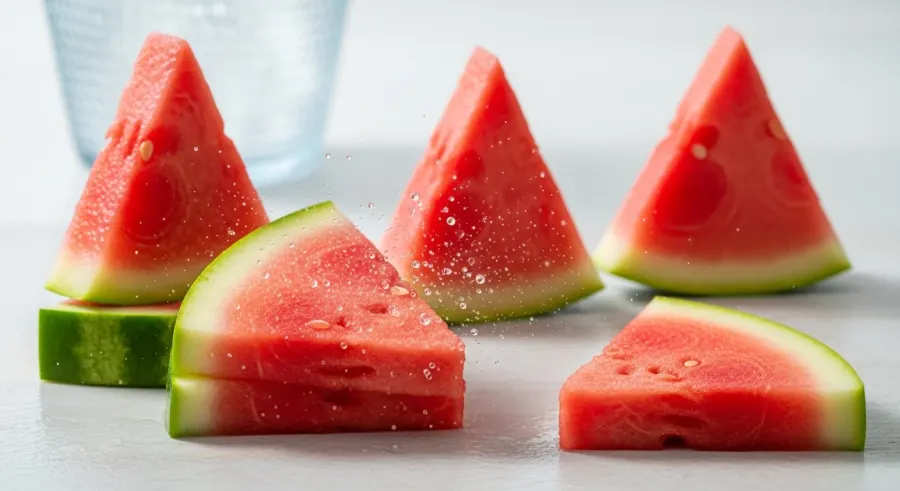
A twenty-pound fruit yields far more food than most households can reasonably finish in four days. Freezing the leftovers is an effective preservation method, though it fundamentally alters the physical structure of the fruit.
When the water inside the plant cells freezes, it expands. That expansion shatters the delicate cell walls. Once the fruit thaws, it will never regain its crisp snap. Instead, it becomes soft, mealy, and mushy, making it pretty unpleasant to eat raw (nobody wants a mushy fruit salad).
The trick is to lean into that texture change and use the frozen pieces exactly like ice cubes.
To prep them, slice the flesh into chunks and remove any stray seeds. Line a baking sheet with parchment paper and arrange the pieces so they are not touching each other. Slipping that sheet into the freezer for three or four hours freezes them solid. Afterward, you can transfer the chunks into a resealable freezer bag. This tray-freezing step prevents the high-moisture cubes from fusing together into a giant, solid block of red ice.
These frozen chunks hold their flavor for 8 to 12 months. They are perfect for dropping directly into a blender for smoothies, margaritas, or a summer gazpacho, where the broken-down cellular texture actually helps create a smoother puree.
The sour smell to watch for
Even with the best storage methods, fruit eventually spoils. Identifying a melon that has turned is mostly a sensory exercise rather than strict calendar counting.
The earliest warning sign is the aroma. Fresh watermelon possesses a very faint, grassy, sweet scent. If you open your container and notice a tangy, sour, or slightly boozy smell, the fruit has begun to ferment. Yeast and bacteria thrive in the high sugar environment, and a vinegar-like odor means they have already taken over the flesh.
Visually, look for subtle changes in the texture. The cubes should not appear slimy or overly stringy. If the red flesh seems to be pulling away from the seeds in a web-like pattern, or if you spot yellowing patches inside the red interior, the fruit is past its prime and should be tossed.
For whole melons, checking the exterior rind is your best metric for freshness. Fuzzy mold spots—which can appear green, white, or black—indicate deep spoilage. If the rind feels soft to the touch, gives way under light pressure, or sounds completely dull and flat when tapped, the interior is likely rotting. The high moisture content allows mold spores to travel far beyond the visible fuzzy patch, making it unsafe to simply cut away the bad half.
Bottom Line
A heavy, sweet melon is one of the easiest fruits to manage once you understand its boundaries. The thick rind does almost all the protective work for you right up until the moment you slice it. Figuring out how to navigate that transition from the kitchen counter to the cold crisper drawer means you never have to waste a single wedge.