In Short
Keep fresh favas in their unshelled pods in the crisper drawer, where they’ll last up to 10 days. The reason you should never leave them on the counter—and exactly how long you have to blanch them before freezing—is below.
You just brought home a heavy, beautiful bag of fresh fava beans. Now comes the pressure of keeping them crisp until you actually have the time to peel them. Favas demand a bit of effort, and keeping them stored properly means that effort won't go to waste on mushy, flavorless beans.
Keeping Them on the Counter
If you set your farmer’s market haul in a woven basket on the kitchen island, it looks fantastic. It also guarantees your beans will degrade very fast. Fresh fava beans are highly perishable, and room temperature acts like a fast-forward button on their aging process.
Vegetables are technically still breathing after they are harvested. In a warm kitchen, fava beans respire rapidly. They start burning through their natural energy reserves to stay alive. Fresh favas contain about 9.2 grams of sugar per 100 grams (USDA). When they sit at 70°F, they rapidly convert those sugars into starch. Instead of a buttery, sweet bite, you end up with a chalky, mealy texture.
Heat also encourages the thick outer pods to sweat. That moisture gets trapped on the fuzzy surface of the pod, creating a perfect environment for bacterial growth. Unless you are planning to shell and cook them within a few hours of bringing them home, the counter is the worst place for them. They need the cold to survive the week.
The Fridge Strategy That Works
Your refrigerator’s vegetable crisper is the ideal spot, but how you prep them makes all the difference. The most important rule is to leave them exactly as they are. Avoid washing them, and resist the urge to shell them ahead of time.
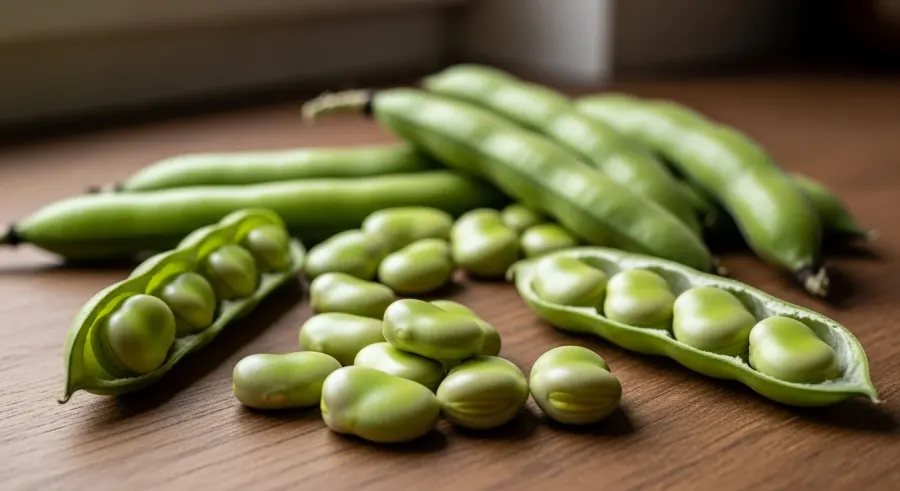
Fava beans come with their own natural humidors. The thick, padded outer pod protects the delicate inner beans from drafts and temperature swings. If you introduce water to the fuzzy exterior of the pod by washing it, that moisture will sit there and invite mold.
You are aiming for a sweet spot of 34°F to 40°F (1°C to 4°C) with a high relative humidity around 90% to 95%. To get this right, place the unwashed pods inside a perforated plastic bag or a standard paper bag. If you only have regular zip-top bags, just poke a few holes in the sides. This allows just enough ethylene gas and moisture to escape so they do not rot, while retaining enough humidity to keep the beans plump. Stored this way, fresh pods will stay in great shape for 7 to 10 days.
If you get ambitious and shell them a day before you plan to cook, the clock speeds up. Shelled beans have lost their armored pod and will dry out rapidly. You have to mimic that lost humidity by keeping them in an airtight container with a very lightly dampened paper towel draped over them. Even then, you only have about 48 hours before they start turning rubbery.
How to Freeze Favas for Months
Sometimes you end up with a massive harvest and there is simply no way you can eat them all before they spoil. Freezing is your best backup plan. When done right, it extends their lifespan up to six months.
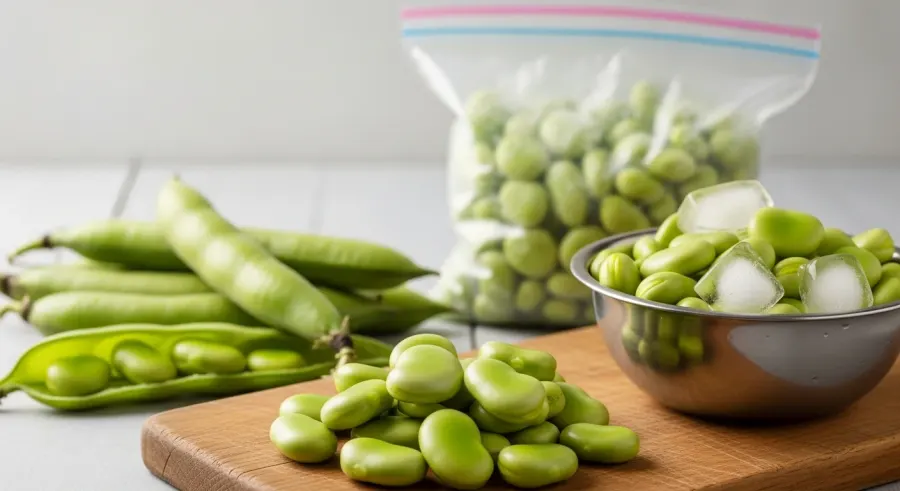
The process requires some manual labor up front. First, extract the beans from the large pods. Dropping them directly into a freezer bag raw will not work well; blanching them first is required.
Boiling them for about three minutes neutralizes natural enzymes like lipoxygenase and peroxidase. If you skip this, those enzymes continue to function even in the freezer, causing the beans to develop an unpleasant, cardboard-like 'beany flavor'.
After three minutes of boiling, use a slotted spoon to plunge them immediately into a bowl of ice water. The sudden temperature drop stops the cooking process dead in its tracks.
Once they are cool, you have to tackle the second skin. Each individual fava bean is encased in a waxy, pale green jacket. Squeeze the edge of the jacket and the bright green inner bean will pop right out. Freezing them with this jacket on is a bad idea, as the freezer turns that skin excessively tough and chewy.
After peeling, pat the bright green inner beans completely dry with a towel. Spread them out in a single layer on a baking sheet and put that in the freezer. This prevents them from fusing into a solid block of ice. Once the beans are frozen solid on the tray, transfer them to a freezer-safe bag, squeeze out as much air as possible, and label it with the date.
The Long Game with Dried Beans
Fresh favas are a fleeting spring and summer crop, but dried fava beans shift the storage rules entirely. If you allowed the pods to mature fully on the plant and dry out, or if you simply bought a bag of dried favas, the refrigerator is no longer your friend.
Dried beans require a stable, cool, and dark environment—ideally a pantry that stays below 70°F (21°C). Moisture is the enemy here. If your kitchen is highly humid, the beans can absorb water from the air and eventually sprout mold.
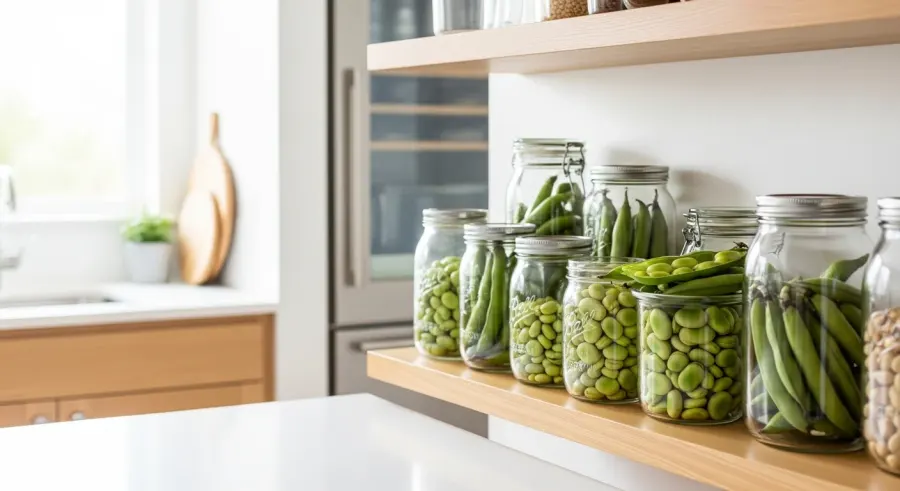
To prevent this, transfer dried beans from their flimsy plastic retail bags into heavy glass jars with tight-sealing lids. Mason jars work perfectly. This not only locks out ambient humidity but also protects your harvest from common pantry pests like weevils.
Under these conditions, dried fava beans will remain safe to eat for two to three years. As they sit in long-term storage, their cellular structure continues to harden. A bean that has been sitting in a jar for three years will require significantly more soaking time and a much longer simmer than one stored for only a few months.
Signs They Have Gone Bad
Knowing when to throw in the towel on aging favas saves you from a ruined meal. Evaluating them comes down to sight, touch, and smell.
Let’s talk about the spots first. Fava pods are famous for developing black or dark brown specks. Many people see these and assume the entire batch is covered in mold. A few black speckles are usually just cosmetic oxidation, often caused by minor bruising during transit or wet growing seasons. The beans tucked inside are usually perfectly fine.
However, if those dark spots turn into large, sunken patches that feel wet or mushy, moisture has caused bacterial rot. At that point, the pod is compromised.
When you open a questionable pod, check the beans themselves. Healthy fava beans are firm and vibrant green. If they look shriveled, feel soft and mushy, or have a slimy coating, they are done for.
Your nose is the final judge. Fresh favas have a very mild, grassy aroma. If you detect a sour, musty, or vinegar-like odor, the 7.92 grams of protein per 100g (USDA) and the natural sugars have begun to break down and ferment. Throw them in the compost.
Bottom Line
Dealing with fava beans is a labor of love, and making sure they survive the wait in your kitchen just requires a little temperature management. When you treat the pods as the natural armor they are, you buy yourself plenty of time to enjoy the harvest without rushing.