In Short
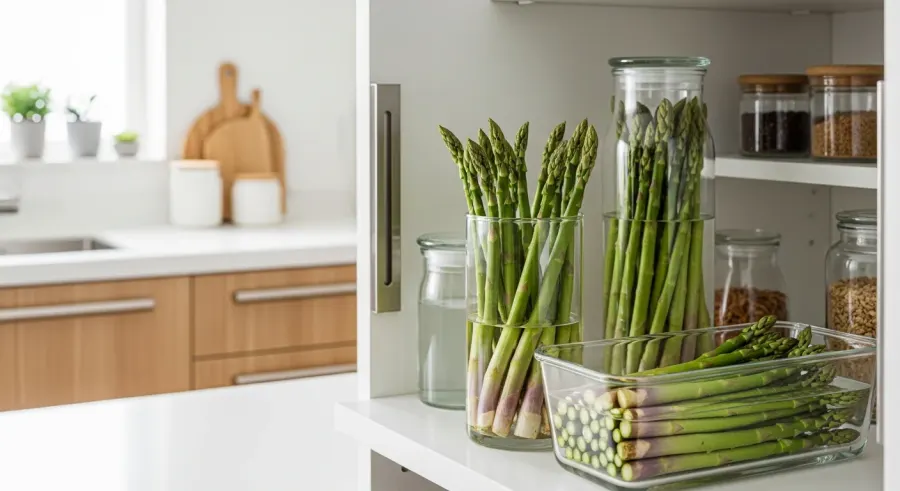
Store fresh asparagus upright in a jar with an inch of water, loosely covered in the fridge, to keep it crisp for up to 14 days. If you are moving stalks to the freezer, blanching them first is a mandatory step to protect their texture.
Asparagus has a notoriously short window between perfectly crisp and sadly wilted. The moment it gets harvested, it starts losing moisture and turning its natural sugars into starch. Fixing this isn't difficult, but it requires treating the spears more like a bouquet of cut flowers than a standard vegetable.
Treat It Like a Cut Bouquet
Fresh asparagus stalks are essentially still alive when you bring them home from the market. They are rapidly trying to pull water from roots that are no longer attached. Giving them a dedicated water source is the easiest way to keep them crisp.
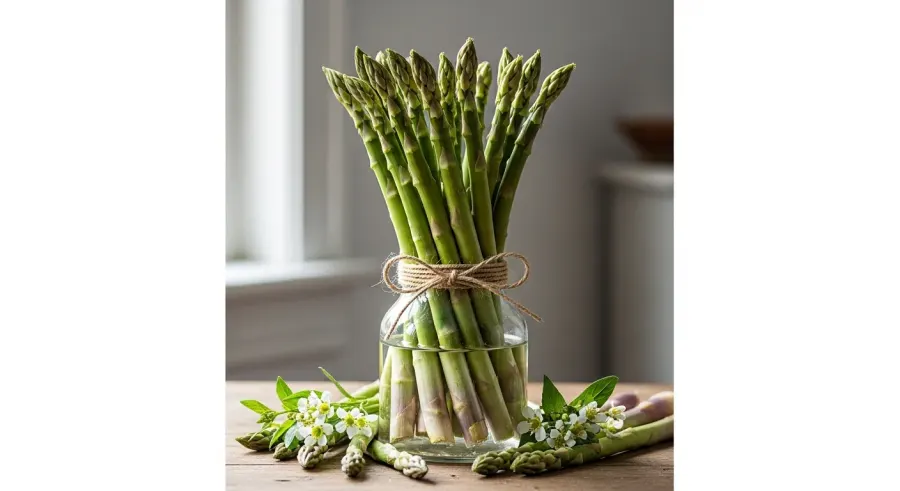
The moment asparagus is harvested, the cut ends dry out and seal themselves off. Trimming about an inch off the woody bottom of the stems reopens that vascular pathway. A heavy mason jar or a sturdy drinking glass filled with one to two inches of cold water works perfectly for this. Stand the bunch upright inside the glass, ensuring only the freshly cut ends are submerged. Filling the jar too high is a common mistake that causes the softer middle sections of the stem to turn to mush.
Most grocery stores sell asparagus bunched with a rubber band. Leaving the rubber band on actually helps hold the stalks upright in the glass and keeps the bundle manageable, just as long as it isn't snapping the stems. To achieve maximum longevity, drape a loose plastic produce bag over the top of the stalks. Asparagus thrives in 95 to 100 percent humidity, and the plastic bag acts as a miniature greenhouse to trap moisture around the delicate tips.
Storing the jar on a lower shelf in your fridge, ideally where the temperature sits between 32°F and 36°F (0-2°C), yields fantastic results. Instead of surviving a measly three days loose in the crisper drawer, your asparagus will stay snappy and sweet for a solid 10 to 14 days. Just keep an eye on the water and refresh it if it starts looking cloudy.
The Damp Paper Towel Trick
Not everyone has enough vertical clearance in their refrigerator for a tall, leafy bouquet of greens. If your shelves are cramped or you have a habit of knocking tall containers over, there is another highly effective method that allows the stalks to lay flat.
A simple alternative is to run a few paper towels under the tap until they are completely soaked, then wring them out thoroughly so they are damp rather than dripping. Taking your trimmed asparagus, wrap the wet towels securely around just the bottom ends. A major failure point here is wrapping the entire stalk. The fragile, leafy tips of the asparagus hate sitting in direct moisture and will quickly rot if covered in a wet cloth.
Sliding the wrapped bundle into a large zip-top plastic bag helps maintain the environment. Squeezing out the excess air is helpful, but leaving a tiny corner unsealed allows the vegetables to breathe slightly. This method works by creating an isolated microclimate. Modern refrigerators pull moisture out of the air to prevent frost buildup, which is exactly why loose produce shrivels up so fast. The damp paper towel provides a localized water source for the stems to drink from, while the bag prevents the fridge fan from evaporating that moisture.
This technique easily matches the jar method, keeping the spears vibrant and crunchy for up to two weeks. Just be mindful of your drawer neighbors. Keep the bundle far away from apples, cantaloupes, or avocados, as those fruits emit high levels of ethylene gas. Asparagus is sensitive to ethylene, and exposure will cause the stalks to turn yellow and go limp regardless of how well you wrapped them.
Why Room Temperature Ruins Them
Leaving your grocery haul on the kitchen counter is the fastest way to ruin your dinner plans. The moment stalks hit room temperature, they undergo rapid and irreversible cellular changes.
Asparagus has one of the highest respiration rates of any harvested vegetable. When left in a warm environment, it loses its internal water content rapidly. More importantly, the natural sugars that give fresh asparagus its subtle sweetness immediately begin converting into starch. This is a natural survival mechanism for the plant, but for a cook, it means the development of tough, woody tissue known as lignin. The longer the spears sit above 40°F, the more fibrous they become.
If left out on the counter, the vegetable will noticeably deteriorate in a single day. The stems will lose their snap, bending like rubber hoses, and the flavor will shift from sweet to bland and grassy.
You also lose out from a nutritional standpoint. According to USDA FoodData Central, a 100-gram serving of raw asparagus provides 5.6mg of Vitamin C, along with small amounts of fiber and protein. Water-soluble vitamins like Vitamin C degrade significantly faster at room temperature. The safest approach is to put the vegetable in the cold the minute you walk through the door, unless you plan to chop and cook it within an hour or two of bringing it home.
The Mandatory Step for Freezing
Can you just toss a bundle of raw stalks straight into the freezer to deal with later? You could, but you would end up pulling out a mushy, flavorless mess a few months down the road.
Freezing asparagus properly requires a bit of prep work. Produce naturally contains active enzymes that cause changes in color, flavor, and texture over time. While freezing slows these enzymes down, it does not stop them entirely. If you freeze asparagus raw, those enzymes continue to degrade the vegetable, leaving you with pale, tough stalks that taste like old grass when thawed. To stop the enzyme activity dead in its tracks, you have to blanch the asparagus first.
The process begins by bringing a large pot of water to a rolling boil. The National Center for Home Food Preservation provides exact guidelines based on thickness: boil small, thin spears for exactly two minutes, medium spears for three minutes, and thick, large spears for four minutes.
The second the timer goes off, use tongs to plunge the stalks immediately into a large bowl of ice water. This shocking process halts the cooking instantly. You should leave them in the cold water for the exact same amount of time you boiled them.
Once chilled, thoroughly drying the spears with a clean kitchen towel is a crucial detail. Any leftover water droplets will form ice crystals in the freezer, acting like tiny knives that puncture the plant's cell walls and cause freezer burn. Arranging the dry stalks in a single layer on a baking sheet to flash-freeze them prevents the vegetables from clumping into a giant block. Once they are rock solid, transfer them to a freezer-safe bag. Prepared this way, they maintain their quality for 8 to 12 months.
Knowing When to Let Go
Sometimes life gets busy, and a carefully prepped jar gets pushed to the back of the fridge and forgotten. Asparagus does not age gracefully, and it will let you know very clearly when its time has passed.
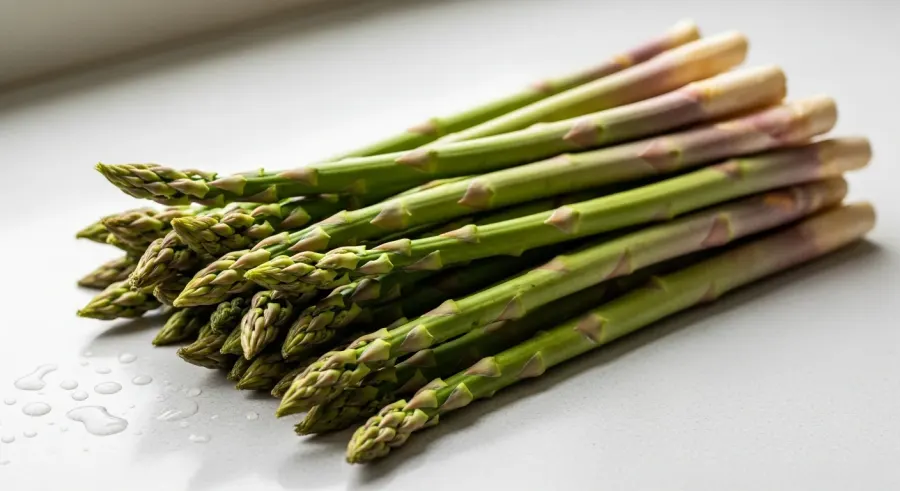
The first sign of spoilage always shows up at the delicate tips. Because the tip is the most active growing point of the plant, it contains the softest tissue and decays first. A fresh tip is tight, dry, and slightly purplish or dark green. A rotting tip will begin to feather open, turn a sickly dark color, and develop a mushy, slimy film. If you touch the top and it leaves a slick residue on your finger, the decay process has started.
The lower stalks will also lose their vibrant coloring, shifting from bright green to a dull, muted olive or gray-green. You will likely notice a distinctly foul, sour odor when you open the bag or pull the jar out of the fridge.
If the tips are slimy but the lower stalks still feel somewhat firm, you might be tempted to just chop off the bad parts and roast the rest. It is better to just toss the bunch. Once the rot sets in at the top, the flavor of the entire spear is severely compromised and will taste bitter. Conversely, if the cut bottoms of the stalks simply look a little dried out or split, but the rest of the spear is firm and smells fresh, they are perfectly safe. You snap off the tough bottoms before cooking anyway.
Bottom Line
Storage methods only really matter if you start with quality produce. Taking ten seconds at the grocery store to inspect the ends—making sure they are plump and slightly moist rather than completely split and chalky—is the easiest way to guarantee the stalks actually survive their time in your fridge. Good prep just buys you the time you need to decide how you want to serve them.