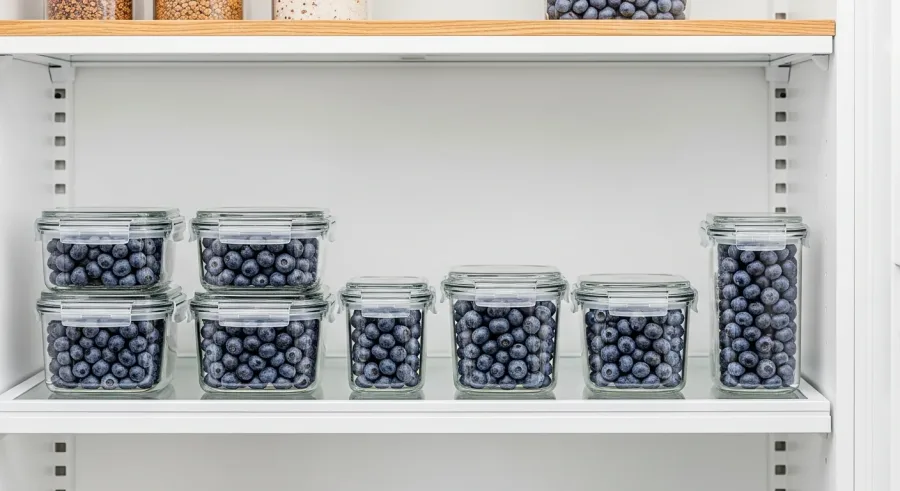
In Short
Keep them unwashed, dry, and in a breathable container lined with a paper towel in the fridge for up to two weeks. Why washing them in vinegar is a bad idea (and the real reason they get mushy) is below.
I used to bring home a pint of produce, put it on a fridge shelf, and find fuzzy white mold three days later. It turns out these delicate fruits are very sensitive to moisture and trapped air. Once you understand what they actually want, you can keep them crisp for two solid weeks.
Do They Last on the Counter?
Leaving fruit out in a pretty bowl looks great in a kitchen. For these specific berries, it is a fast track to ruin.
At standard room temperature—anything around 68 to 72 degrees Fahrenheit—blueberries behave as if they are in an oven. They are living organisms that continue to respire after harvest, meaning they consume their own stored sugars and convert them into carbon dioxide, water, and heat. The warmer the room, the faster they respire.
Within 24 to 48 hours on a counter, you will notice the skins starting to wrinkle. That is pure water loss. Their thin waxy cuticle offers minimal barrier protection compared to thicker-skinned fruits like apples. Once that moisture evaporates into the dry air of your kitchen, the berry loses its signature snap. If your house happens to be humid, the ambient moisture provides a perfect breeding ground for surface bacteria to multiply.
Unless you plan on finishing the entire container by the afternoon, they belong in the refrigerator.
The Fridge Trick Nobody Does
Commercial growers have a very specific protocol for maintaining freshness. They drop the temperature of the harvest to roughly 32 to 36 degrees Fahrenheit (0 to 2 degrees Celsius) almost immediately after picking. Our home refrigerators generally hover around 37 to 40 degrees Fahrenheit, which is slightly warmer, but you can still get 10 to 14 days of shelf life with a minor adjustment to how you store them.
Most people just toss the plastic clamshell straight onto a fridge shelf.
Instead, open that container and place a folded paper towel at the bottom. Pour the unwashed berries back in on top. That single paper layer actively manages the micro-climate inside the box. It absorbs the inevitable condensation that forms when the cold fridge air fluctuates—like when you open the door to stare blankly at your groceries.
You want to keep the local humidity around the fruit balanced. The berries need enough ambient moisture so they do not shrivel, but they cannot sit in physical puddles of water. The vented holes in the original clamshell are actually crucial here. They allow a slow transfer of oxygen. Research published in Postharvest Biology and Technology (2014) highlights how temperature control deficiencies and trapped moisture directly cause firmness loss and decay. If you were to seal the berries in a completely airtight glass jar, the carbon dioxide they exhale would get trapped, forcing them into anaerobic respiration. That gives them an unpleasant, fermented flavor.
Proper cold storage also protects their structural integrity. When you prevent them from breaking down, you get the full benefit of their nutritional profile. According to the USDA FoodData Central parameters you might be tracking, a 100g serving contains 57 calories, 0.7g of protein, 0.3g of total fat (0.03g saturated), 14.5g of carbohydrates, 2.4g of fiber, 10g of sugar, and 1mg of sodium. If they turn to mush in the back of the crisper drawer, all of that goes straight into the compost bin.
Wait, Should I Wash Them First?
You have probably seen a hundred videos suggesting a baking soda or vinegar bath to extend the shelf life of your produce. Skip it entirely for blueberries.
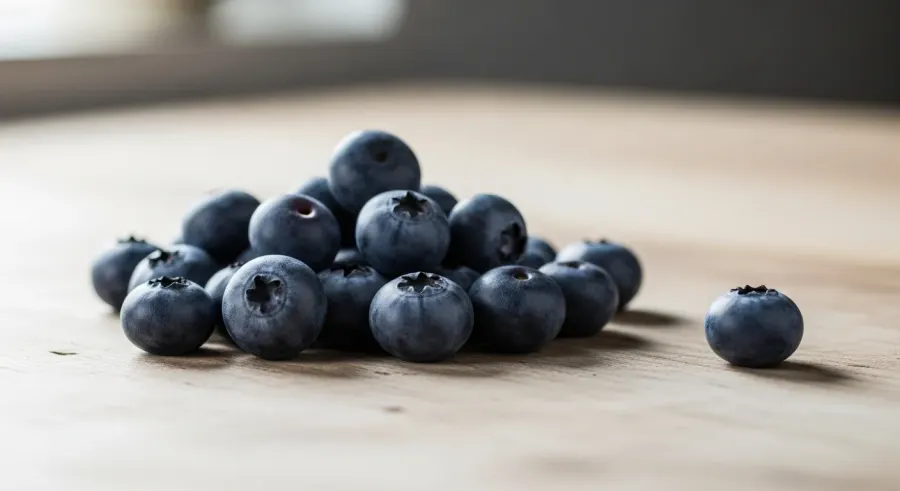
Look closely at a fresh pint and you will notice a powdery, silvery-white coating on the skins. That is called the "bloom." It is a naturally occurring epicuticular wax that protects the fruit from insects and environmental stress while retaining internal moisture. Washing the berries strips away that protective layer.
Worse, introducing water creates a major risk for mold. Blueberries have a tiny depression at the top called a stem scar. Water pools in that little divot and is very difficult to dry completely. A report from the University of Georgia College of Agricultural and Environmental Sciences points out that any residual moisture drastically increases decay rates in cold storage. Keep them completely dry until the minute you are ready to eat them.
There is another hidden danger in your kitchen: ethylene gas.
Blueberries emit a very low amount of ethylene themselves, but they are highly sensitive to it. If you store your pristine, unwashed container right next to a bunch of ripening bananas or some apples, the ethylene from those heavier fruits will drift over. That exposure triggers enzymes in the blueberries, specifically polygalacturonase, which rapidly breaks down their cellular walls and makes them soft and mushy long before their time. Give them their own designated space away from gas-producing fruits.
Freezing Them the Right Way
Sometimes you overestimate how much fruit you can eat in a week. Freezing is an excellent backup plan, and they hold their quality beautifully for 10 to 12 months at 0 degrees Fahrenheit (-18 degrees Celsius).
You just have to avoid the giant ice block scenario.
If you toss an entire pint container directly into the freezer, the natural moisture on the outside of the skins will freeze the berries together into a solid brick. You will need an ice pick to get a handful out for your oatmeal.
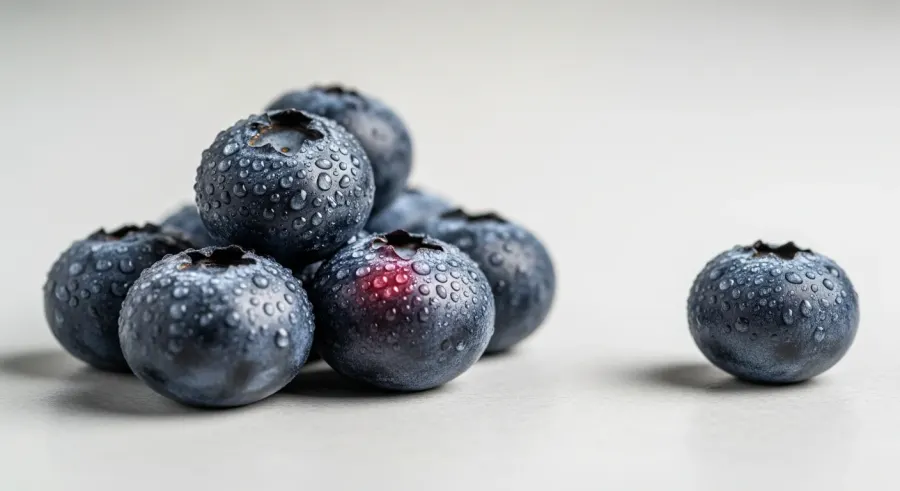
Instead, give them a quick rinse to remove dirt—this is the only time you should wash them before storage—and then dry them with extreme care. Roll them gently over a dry kitchen towel until there is zero visible water left. Next, spread them out on a rimmed baking sheet in a single layer. Make sure they are not touching each other.
Place the baking sheet in the freezer for about two hours. This flash-freezing method freezes each berry individually. Once they are rock solid, pour them all into a heavy-duty freezer bag or a silicone pouch. Press out as much ambient air as possible to prevent freezer burn. When you want to use them in baked goods like muffins, fold them into the batter while they are still completely frozen so they hold their shape and bleed less purple juice.
What Does a Bad Berry Look Like?
Spoilage usually broadcasts itself through texture long before it changes the smell or taste.
A healthy berry has a taut skin and a firm snap when you bite into it. When a berry starts to feel soft, spongy, or looks deflated and heavily wrinkled, it is breaking down. A few wrinkled berries will not hurt you, but their texture is usually mealy and unpleasant.
Then there is the mold. The most common culprit is a gray mold called Botrytis cinerea, which thrives on delicate skins even in the cool environment of your refrigerator. It looks like fuzzy white or gray patches growing near the stem scar.
You need to be proactive. The easiest way to prevent mass spoilage is to do a quick inspection before you even put them in the fridge. Pick through the pint and pull out any squished, leaking, or moldy berries. Mold spores travel fast in close quarters, and one bad piece of fruit will ruin an entire pint within 48 hours if it physically touches the others.
If you open the container and get a whiff of something sour, alcoholic, or fermented, the natural yeasts have taken over and the batch is a loss.
Bottom Line
Buying a flat of fresh fruit shouldn't feel like a race against the clock. When you manage the ambient moisture and keep the temperature steady, they last long enough for you to actually enjoy them. It just takes an extra thirty seconds of prep when you get home from the grocery store.