In Short
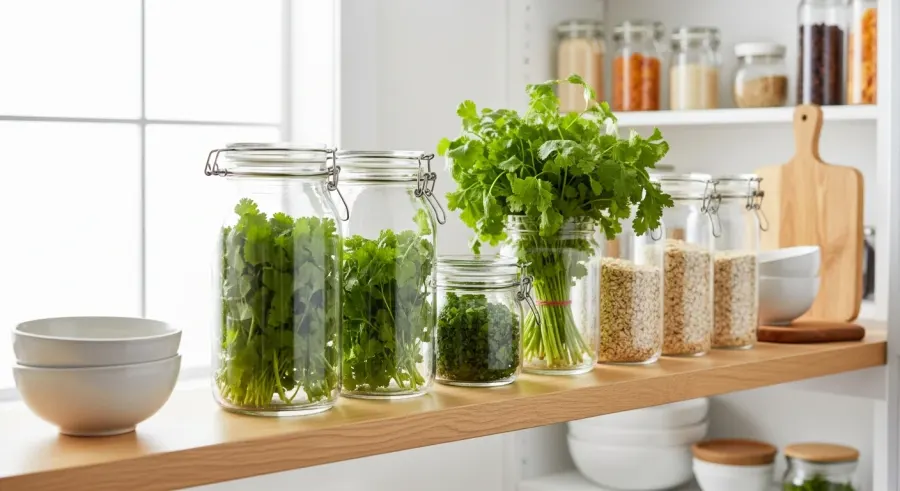
Treat it like a bouquet of cut flowers in a glass of water to keep it crisp for up to three weeks. Why rolling the stems in wet paper towels is a flawed backup plan (and what actually causes that brown crisper-drawer slime) is explained below.
You buy a vibrant, green bunch on Tuesday, and by Friday it looks like wet compost. Cilantro is famously fragile, wilting almost the second it leaves the grocery store. Keeping it crisp is not about luck, but rather understanding exactly how the plant draws in moisture.
The Countertop Is a Ticking Clock
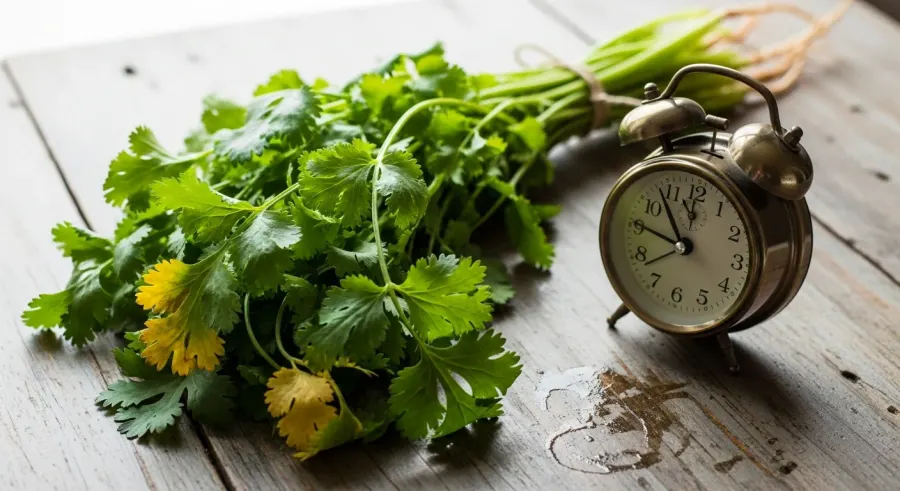
Most herbs despise warm kitchens, and this specific plant is highly sensitive to ambient heat. Leaving your fresh bunch sitting directly on the counter without any water means it will wilt within a few hours. The physical structure of the leaves simply cannot hold onto hydration when exposed to warm, dry indoor air.
If you take the time to trim the ends and stand the stems upright in a jar of fresh water, it might survive a day or two at room temperature. Because the root system was removed during the harvest, the cut stems have to do all the heavy lifting of pulling up liquid against gravity.
The core scientific problem is transpiration. The remarkably thin stems and broad, flat leaves lose moisture rapidly through their microscopic pores. Without a cool environment to slow down the plant's natural respiration rate, it frantically burns through its remaining stored energy trying to stay alive. The leaves always droop first, losing their structural integrity, followed shortly by the main stems folding over the side of the glass jar. For any preservation timeline longer than 48 hours, moving the bundle into a climate-controlled space is strictly necessary to prevent total collapse.
The Fridge Method That Actually Works
Cold air is absolutely essential for long-term preservation, but standard refrigerator environments are exceptionally dry. The appliance's compressor continuously pulls ambient humidity out of the air to prevent internal frost buildup, which spells disaster for moisture-loving leafy greens. If you want to know how to store fresh cilantro for the long haul, treat the bundle exactly like a fresh bouquet of cut flowers.
Snipping about an inch off the bottom of the main stems opens up fresh, unbruised tissue, allowing the plant to drink efficiently. You can place the freshly trimmed bunch upright in a tall glass or a wide mason jar with about an inch of fresh, cold water at the bottom.
The most critical step in this entire process is the cover. Dropping a thin plastic produce bag loosely over the top of the leaves acts like a miniature greenhouse tent. This barrier traps the ambient humidity evaporating from the water glass directly around the leaves without suffocating them. Stored in a standard fridge set between 34°F and 40°F (1°C to 4°C), this simple vase setup keeps the herb visibly crisp for two to three weeks. Changing the water every two to three days prevents cloudy bacterial buildup in the bottom of the glass.
You could also use a secondary, lower-profile approach: rolling the unwashed stems in a slightly damp paper towel and slipping them into a sealed zip-top bag. That specific method usually buys you seven to ten days of freshness. It works fine for short-term use if you lack vertical shelf space, though the damp paper towel eventually traps too much surface moisture directly against the delicate leaves, accelerating the decay process.
Wait, Can You Freeze It?
Putting delicate leafy greens into a sub-zero environment completely destroys their internal cellular structure. The water naturally present inside the plant cells expands into microscopic, jagged ice crystals, which physically puncture the fragile cell walls from the inside out. When the plant eventually thaws on your counter, those damaged walls collapse completely, leaving you with a dark green, weeping mush instead of crisp foliage.
This physical transformation means frozen leaves completely fail as a fresh garnish for tacos, salads, or finishing plates. However, they work perfectly well stirred into warm broths, blended into rich curries, or processed into citrus marinades where physical texture no longer matters.
Chopping the leaves and stems into small, uniform pieces and packing them into standard ice cube trays is the reliable preservation fix. Topping each individual compartment with a neutral cooking oil or a splash of filtered water before freezing creates a protective barrier. This liquid shield keeps the harsh, circulating freezer air away from the delicate plant tissue, preventing severe freezer burn.
Once the cubes freeze completely solid, popping them out and transferring them to a heavy-duty silicone or plastic freezer bag frees up your tray and keeps the portions easily accessible. These frozen flavor cubes stay viable and aromatic for three to six months, allowing you to bypass the notoriously short refrigerator shelf life entirely.
Why It Turns Into Brown Slime
Moisture control requires a delicate, ongoing balance between proper hydration and total suffocation. A tight, completely sealed plastic bag creates immediate condensation that pools directly against the fragile leaves. This standing water provides an ideal breeding ground for microscopic bacteria and mold spores. This trapped moisture is the exact reason you so often find a puddle of dark brown, foul-smelling slime at the absolute bottom of your crisper drawer.
Washing the bunch as soon as you get home from the grocery store is a remarkably common mistake. Introducing excess tap water to the textured leaves right before putting them into a dark, enclosed, cold space almost guarantees premature rotting.
Healthy leaves are bright green, perky, and visually distinct from one another. Once they begin shifting to a pale, washed-out yellow or a dark, translucent brown, the spoilage process has officially started. The physical texture turns distinctly mushy and sticks to your fingers. Even more noticeably, the crisp, soapy-citrus aroma sours into a sharp, deeply unpleasant odor strongly resembling ammonia.
Picking out a few early yellow leaves can sometimes save the rest of the green bunch if you catch the color shift quickly enough. Once the dark slime sets in and the foul odor develops, the entire bunch is permanently compromised and belongs directly in the outdoor compost bin.
The Risk of Getting Too Cold
While refrigeration is mandatory for extending shelf life, pushing the temperature too low creates an entirely different set of problems. Herbs grown in mild climates are highly susceptible to chilling injury when exposed to near-freezing temperatures.
The ideal sweet spot for your refrigerator is between 34°F and 40°F (1°C to 4°C). If the bunch gets pushed all the way to the very back of the top shelf, where cold air vents actively pump out freezing blasts, the leaves will suffer immediately.
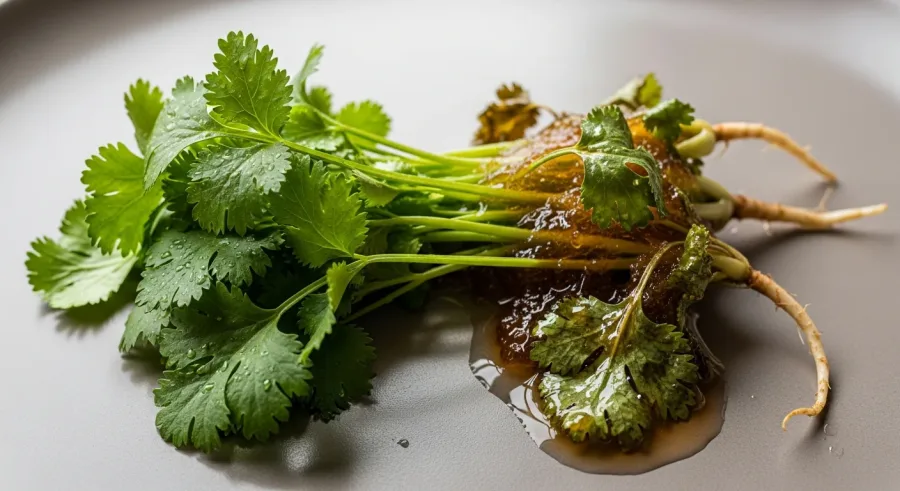
Chilling injury manifests as dark, water-soaked patches on the leaves that eventually turn black. The plant tissue essentially collapses under the stress of extreme cold, even if actual ice crystals never form. Keeping the jar closer to the middle of the fridge or inside the door prevents this specific type of physiological damage.
It is a delicate balancing act. You want the environment cold enough to suppress respiration and slow down the degradation of the plant, but warm enough to avoid shocking the delicate cellular membranes. Monitoring where your fridge naturally develops back-wall frost helps you find the safest zone for delicate produce.
Does the Nutrition Change Over Time?
A fresh bunch packs substantial nutritional utility into a very small, lightweight package. The overall nutrient profile is surprisingly dense for a common culinary herb. According to the USDA FoodData Central database, a standard 100-gram serving contains just 23 total calories, alongside 2.8 grams of dietary fiber, 3.67 grams of carbohydrates, 0.52 grams of total fat, and 2.13 grams of protein. It is also completely free of saturated fat (registering at a negligible 0.01 grams) and carries only 46 milligrams of naturally occurring sodium.
But the simple passage of time degrades those internal benefits, even if the plant still looks perfectly green and appetizing on your shelf. The cold refrigerator environment slows down physical decay, but it does not stop the invisible chemical breakdown of volatile compounds.
Research published in the Journal of Food Science and Technology (Gao et al., 2017) confirms that extended cold storage time has a significantly detrimental effect on the ascorbic acid (vitamin C) and phenolic contents of fresh coriander leaves. The powerful antioxidants begin to slowly degrade the longer the plant sits severed from its original root system.
Eating the herb within the first three to five days of purchase ensures the highest possible nutritional yield for your body. Relying on the water-glass storage method is excellent for preserving the culinary texture and visual appeal, but you have to accept the reality that a three-week-old leaf simply holds fewer intact vitamins than a freshly harvested one.
Bottom Line
A little extra effort on grocery day saves you from throwing out half a bunch of rotten herbs later in the week. By managing moisture and temperature, that fragile bundle can outlast the vegetables you bought it to flavor.