In Short
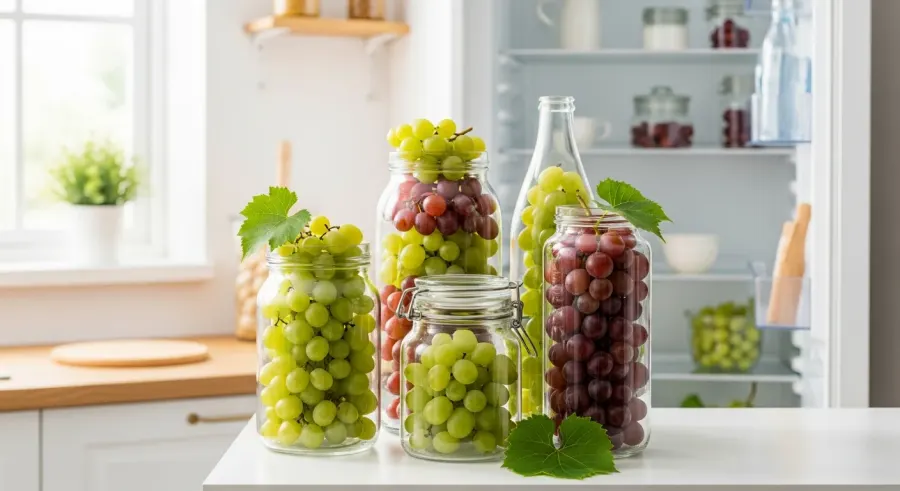
Keep fresh grapes unwashed, attached to their stems, and inside their original perforated packaging in the back of your crisper drawer. Why early washing accelerates gray mold (and the one trick for meal preppers who absolutely need to wash them ahead of time) is below.
You bring home a beautiful, taut bunch of green grapes, leave them on the counter, and two days later they look like deflated balloons. It happens constantly. Grapes are mostly water packaged in a semipermeable skin, making them vulnerable to rapid temperature swings and moisture loss.
The Kitchen Counter Mistake
A bowl of fresh produce sitting in the middle of the kitchen island looks beautiful. It is also the fastest way to ruin a fresh purchase. Grapes continue to respire after they are picked from the vine, constantly breaking down their own stored sugars just to survive. Warmer environments accelerate this breathing process dramatically.
When left sitting at average room temperature, fresh grapes only last about two to three days before the stems turn brittle and the berries begin to soften. As the stems dry out, they pull moisture directly from the fruit itself, leading to a sad, wrinkled texture. Leaving them out is perfectly fine if the entire bunch will be eaten in a single afternoon. For anything longer than 48 hours, cold temperatures are entirely necessary to pause the aging process.
Why You Shouldn't Wash Them Yet
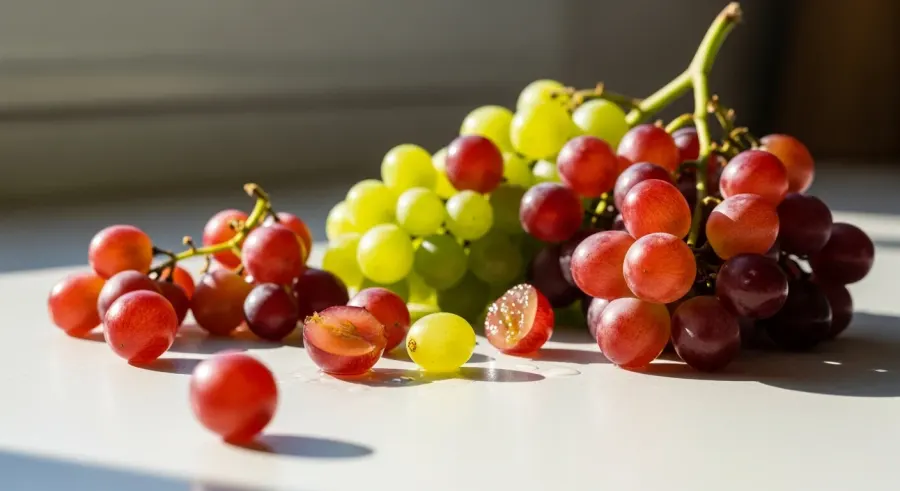
Water accelerates decay. Washing produce the second it comes out of the grocery bags might feel productive, but doing this to grapes practically guarantees a shorter shelf life. Surface moisture gives fungal spores exactly what they need to thrive.
There is usually a chalky, white film on the skins when you buy them. This is called the bloom, a naturally occurring cuticular wax that the plant produces to protect against moisture loss and pests. Scrubbing this wax off before storage removes the fruit's primary defense system. Rinsing is best saved for the exact moment the fruit is eaten. If a few get wet in transit from condensation, patting them completely dry with a paper towel before putting them away prevents widespread rot.
The Fridge Setup That Actually Works
Commercial growers know exactly how to treat a newly harvested cluster. According to postharvest data from the University of California, Davis, the optimal storage temperature for grapes is between 30 and 32°F (-1 to 0°C) with 90 to 95 percent relative humidity. Since grapes have a high sugar content, their freezing point is actually lower than pure water, usually around 27°F. This means they can handle temperatures just at or slightly below freezing without turning to ice.
A home refrigerator usually hovers around 35 to 40°F. While this is warmer than commercial storage, it still dramatically slows respiration. The crisper drawer is typically the best spot. The fruit stores best in its original perforated plastic bag or a ventilated clamshell. Those specific vents allow just enough airflow to prevent condensation from building up inside, while still protecting the fruit from the dry, circulating air of the main fridge compartment. They can easily last up to two weeks in this environment.
Why the Stems Matter So Much
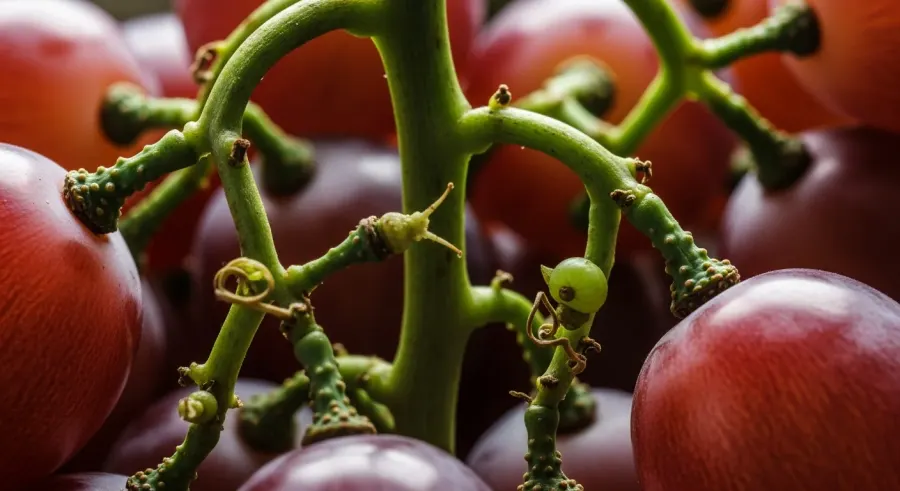
It is easy to notice how quickly a grape turns mushy when it falls off the vine in the bag. Tearing the fruit away from its cap stem creates an open microscopic wound. This tiny tear becomes an immediate entry point for oxygen, bacteria, and mold spores.
The stems actually have a respiration rate approximately 15 times higher than the berries themselves (University of California, Davis, 1998). They act as the lifeline of the cluster. Keeping the fruit firmly attached limits moisture loss. Using a pair of kitchen shears to snip off small clusters rather than plucking individual pieces keeps the main vine intact. This protects the rest of the bunch and extends the overall crispness of the supply.
The Vinegar Trick for Meal Preppers
Sometimes food needs to be prepped and ready for the week. For households with young kids who need grab-and-go snacks, leaving fruit unwashed is highly inconvenient. If the grapes must be washed ahead of time, standard rinsing under the tap will not work.
The surface pH has to change to fight off early mold. A quick bath of one part distilled white vinegar to three parts water helps neutralize bacteria. The true failure point for most people here is the drying phase. The fruit must be perfectly, completely dry before hitting the cold air of the fridge. They can be laid out on a clean kitchen towel for an hour and patted gently. Once completely dry, storing them in a glass container lined with a paper towel while leaving the lid slightly cracked provides the right balance of protection and airflow.
How to Tell When They're Gone
Distinguishing between natural protective coatings and actual decay takes a little practice. The most common pathogen to attack this particular fruit is Botrytis cinerea, often called gray mold. It thrives in tight clusters where airflow is poor and moisture gets trapped.
Any berry showing a fuzzy, gray or green patch needs to be removed immediately. Gray mold spreads rapidly through physical contact, creating what the agriculture industry calls a nest, where one bad piece infects everything touching it. Shriveling is a sign of dehydration rather than bacterial rot, but severely wrinkled skin usually means the texture will be unpleasant when eaten raw. A strong, sour, or vinegar-like smell indicates active fermentation. When the natural sugars break down to that point, the batch is no longer salvageable.
Freezing Them for Later
When the bag cannot possibly be finished before the contents turn soft, the freezer serves as a brilliant backup plan. Freezing fundamentally changes the cellular structure of the fruit. As the water inside freezes, the ice crystals expand and puncture the delicate cell walls.
Because of this structural damage, thawed grapes will never regain their original crunch. They become soft and leak juice as they come to room temperature. Therefore, they are best eaten while still fully frozen. They act as miniature popsicles, or they can be dropped directly into smoothies or glasses of wine to chill the drink without watering it down. The best preparation involves washing and drying the fruit, pulling them off the stems, and freezing them in a single layer on a parchment-lined baking sheet. Once solid, they can be transferred to a freezer-safe bag with the excess air pressed out. They easily keep for 10 to 12 months at 0°F.
Bottom Line
Managing fresh produce often feels like a race against the clock. By simply keeping moisture away and understanding the protective role of the stem, the odds shift in your favor. It takes almost no extra effort to slide the unwashed bag directly into the back of the crisper drawer, but that small adjustment easily doubles the window you have to enjoy them at their absolute best.