In Short
The best method is keeping them unwashed in a loosely closed or perforated plastic bag in the fridge's crisper drawer for 5 to 7 days. For anything longer, blanching and freezing is required. Why standard fridge temperatures actually cause them to brown is below.
It happens to the best of us. You buy a gorgeous handful of crisp green beans, put them in the fridge, and three days later they are limp and spotted with brown. It feels like a personal failing, but it is actually just a mismatch of environments. Green beans are surprisingly finicky about temperature, humidity, and airflow. Unlike carrots or potatoes that can sit quietly in a dark corner for weeks, green beans are highly active after they are picked. They are constantly breathing, releasing moisture, and reacting to the other produce around them. Learning how to store fresh green beans properly is entirely possible once you understand what they need.
Wait, Is the Fridge Too Cold?
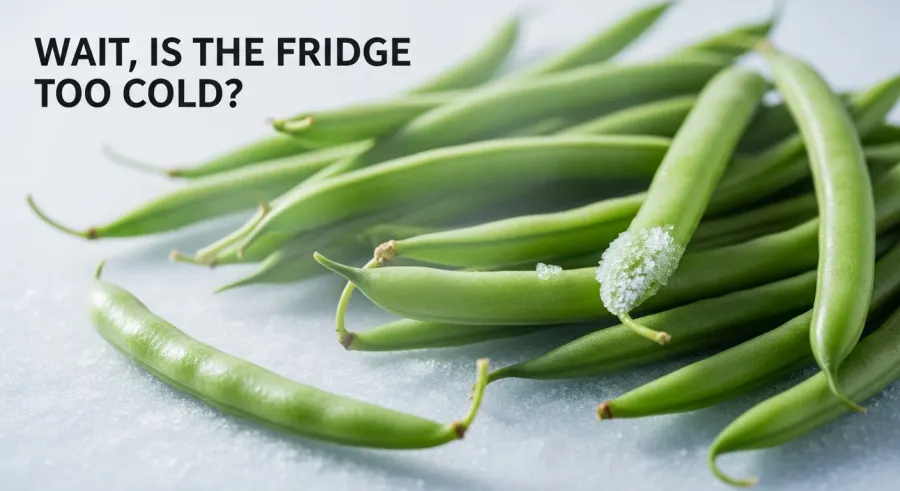
Green beans are technically a warm-weather crop. Because of this, they suffer from a physiological disorder called chilling injury when exposed to typical refrigerator temperatures. The ideal storage temperature for a fresh green bean is between 41°F and 45°F, according to the UC Davis Postharvest Technology Center. The main compartment of a standard home refrigerator usually sits much colder, around 35°F to 38°F.
When green beans sit at 35°F for too long, their cell structures experience stress. This cold stress manifests physically as water-soaked spots on the pods. Over a few days, those spots turn brown and the cellular breakdown invites decay. This is the primary reason a bag of beans tossed on the top shelf often looks sad and pitted before the end of the week. The cold environment is actively working against their tropical genetics.
The Crisper Drawer Strategy
If you want to store green beans in the fridge without ruining them, the crisper drawer is your best option for short-term storage. It stays slightly warmer than the top shelves and is specifically designed to hold onto humidity. Humidity is a critical factor here. Green beans need about 90 to 95 percent relative humidity to maintain their snap.
If they lose just 5 percent of their water weight, the pods begin to shrivel and look wrinkled. A perforated plastic bag is the ideal vessel to maintain this balance. The small holes allow just enough airflow to prevent condensation from building up on the inside of the plastic, while trapping enough ambient moisture to keep the beans hydrated. Stored this way in the crisper, they usually last 5 to 7 days, and sometimes up to 10 days if the drawer's humidity is perfectly stable. Adding a dry paper towel to the bag can also act as an insurance policy, absorbing any stray condensation that forms.
Why You Shouldn't Wash Them Yet
It is a common instinct to wash produce the moment you get home from the store. With green beans, this is a fast track to spoilage. Tap water introduces an unpredictable amount of moisture to the exterior of the pod. Even if you pat them dry with a towel, microscopic water droplets remain trapped in the tiny crevices near the stem and along the seam.
This residual water creates a humid microclimate inside the storage bag. Excess water dissolves the natural epicuticular wax on the skin and provides a breeding ground for spoilage microbes like Pseudomonas fluorescens. This is what leads to that dreaded slimy texture. Leaving them completely unwashed until the exact moment you are ready to trim and cook them is the safest bet. If they are visibly covered in garden dirt, you can gently brush them off with a dry cloth, but keep them away from the sink.
Leaving Them on the Counter
You might wonder if you can just leave them out in a bowl. While keeping them at room temperature successfully avoids chilling injury, it introduces a completely different problem. Green beans have a very high respiration rate. They actively consume oxygen and release carbon dioxide and heat after harvest.
At room temperature, they burn through their internal energy reserves very quickly. The pods wilt and turn yellow within a day or two. There is also a steep drop-off in structural quality. Leaving them at room temperature causes rapid wilting and premature aging, where the pods develop tough, stringy fibers. They really only belong on the kitchen counter if you plan to cook them that same evening.
Keep Them Away from Fruit
This is a small detail that ruins a lot of good produce. Green beans are highly sensitive to ethylene gas. Ethylene is the invisible ripening hormone produced by fruits like apples, bananas, and pears (and yes, avocados too).
If you store your beans right next to a batch of apples in the fridge, the ethylene causes the beans to lose their chlorophyll rapidly. They turn from vibrant green to a dull yellow-green and start to brown. According to agricultural data, exposure to even small amounts of ethylene can drastically reduce green bean shelf life, even at proper temperatures. Give them their own dedicated space in the vegetable drawer, far away from any fruit.
How to Freeze Them Properly
Freezing is the only practical way to keep green beans for months. But throwing a bag of raw, whole beans straight into the freezer rarely ends well. They become mushy upon thawing. They also develop a bizarre, cardboard-like flavor because the enzymes that cause maturation are still active even at freezing temperatures.
If you need to freeze fresh green beans, you cannot skip the prep work. The trick is to blanch them first. Boiling the trimmed beans for 2 to 3 minutes, then immediately plunging them into a bowl of ice water stops the enzymatic activity dead in its tracks. This process locks in the bright green color and protects the vitamins.
After they cool in the ice bath for the same amount of time they boiled, drying them thoroughly is crucial. You can lay them out on a clean kitchen towel and pat them dry. Any moisture left on the outside turns into jagged ice crystals, which rupture the delicate cell walls during freezing. Once completely dry, spread the beans out on a baking sheet and freeze them for about an hour. This prevents them from clumping. After that initial freeze, they can be packed into a freezer-safe bag with the air pushed out. They maintain their best quality for 10 to 12 months at 0°F.
What About Haricots Verts?
You will often see haricots verts sold in small plastic clamshells. These French green beans are bred to be longer, thinner, and more tender than standard snap beans. Because they are thinner, they have a higher surface-area-to-volume ratio, which means they lose moisture faster than regular beans.
The storage rules are exactly the same, but the timeline is accelerated. Haricots verts usually only last 3 to 5 days in the fridge. The clamshells they come in are usually ventilated, so you can store them directly in that original packaging inside the crisper drawer. Just keep an eye on them, as they will go limp much quicker than thicker varieties.
When to Cut Your Losses
Sometimes you just forget they are hiding in the back of the drawer. You can spot bad green beans by their texture first. A fresh bean has a distinct, audible snap when bent in half. If it bends silently and feels rubbery, it has lost too much internal moisture.
Minor limpness is still perfectly safe to cook (though the texture won't be great if served raw). If the pods feel slimy, show patches of fuzzy white mold, or smell distinctly sour, bacterial decay has taken over. At that point, there is no saving them, and they just need to go in the compost bin.
Bottom Line
Green beans are alive long after they are picked, constantly breathing and reacting to their environment. Giving them the right balance of cool air and humidity is just a matter of working with their nature rather than against it. They might be a bit more sensitive than a root vegetable, but a good crisper drawer and a simple plastic bag go a long way in keeping them perfectly crisp.