In Short
Soft herbs like cilantro and parsley thrive in the fridge when treated like cut flowers, but basil will literally turn black if it gets too cold. How to control moisture and temperature to keep your grocery store herbs crisp for weeks is below.
I used to buy a beautiful bundle of cilantro on a Sunday, only to throw away a bag of green slime by Thursday. It happens to everyone. The trick to keeping fresh herbs vibrant isn't buying fresher plants—it mostly comes down to understanding that different stems want completely different environments.
Treating soft herbs like cut flowers
If you look closely at parsley, cilantro, dill, or mint, they are essentially just thirsty flowers without the petals. They have high water content and thin cell walls, which makes them highly sensitive to moisture loss once harvested.
If you toss them in the crisper drawer in their original plastic produce bag, the dry air of the refrigerator acts like a slow dehydrator. The leaves transpire, releasing water vapor into the air. Without a constant supply of water from a root system, they wilt in a matter of days.
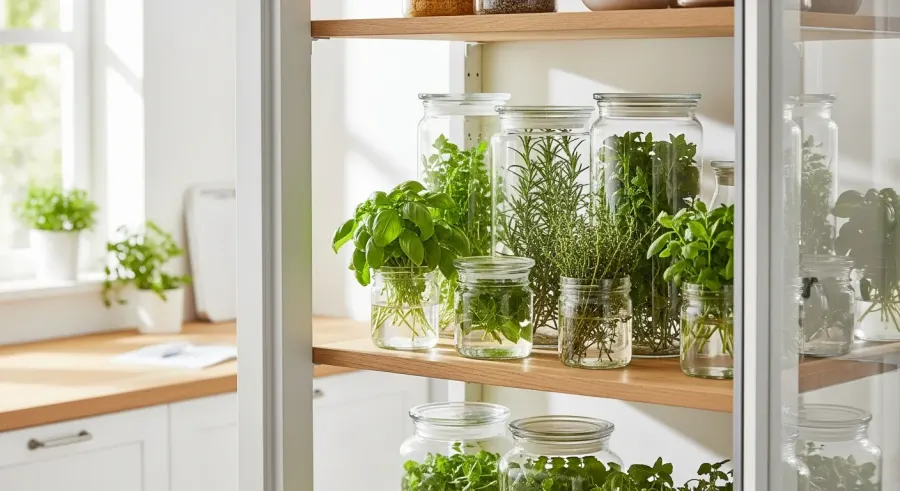
The best way to keep them crisp is to snip about half an inch off the bottom of the stems. This exposes fresh vascular tissue, allowing the plant to drink again. You can then place the bunch in a glass jar with an inch or two of fresh water.
Draping a plastic bag loosely over the top creates a miniature greenhouse. It traps humidity around the leaves while still allowing a little airflow at the bottom so condensation does not build up and cause rot. Your fridge normally sits between 35°F and 40°F (1.6°C to 4°C). The USDA notes that this temperature range is ideal for slowing down decay and respiration in most fresh produce.
You can easily get two to three weeks out of cilantro or parsley this way, provided you change the water every few days if it starts looking cloudy. Dill is slightly more fragile and might only give you a week and a half, but the method still prevents it from turning into green mush. (Spoilage usually shows up as yellowing leaves or a swampy smell from the water, at which point the bunch is done for.)
Why basil turns black in the cold
Basil breaks all the standard storage rules. It is a tropical plant by nature, and it genuinely hates your refrigerator.
When exposed to temperatures below 54°F (12°C), basil suffers from what botanists call chilling injury. The cold physically damages the plant's cell membranes. According to findings in the journal Food Chemistry (2016), this temperature drop not only causes the leaves to rapidly oxidize and turn black, but it also destroys the volatile compounds responsible for basil's signature sweet aroma.
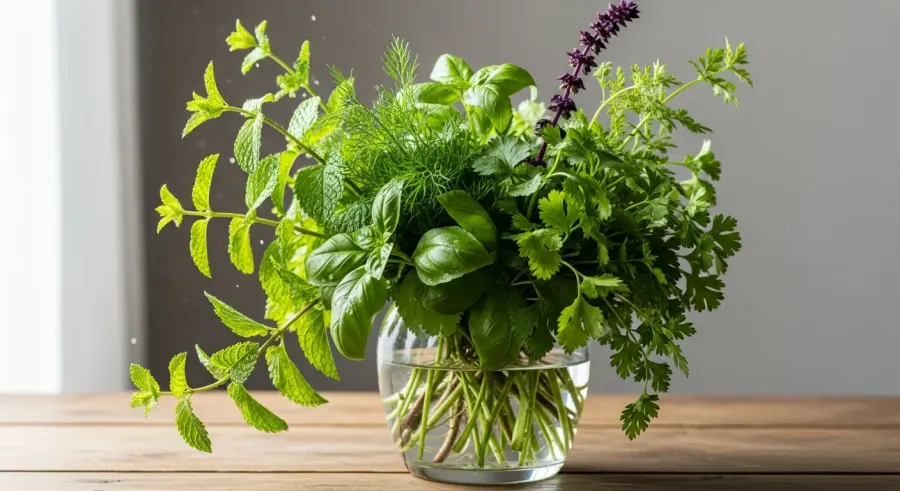
Your basil will fare much better on the kitchen counter. You can trim the stems and put them in a jar of water just like you would with parsley, but leave the setup at room temperature. A standard indoor climate of 68°F to 72°F (20°C to 22°C) is perfectly safe for this herb.
Keep it out of direct sunlight. A sunny windowsill might look like a great spot for a green plant, but cut herbs no longer have the root system required to pull up enough water to handle the heat of direct sun. The leaves will scorch and wilt within hours.
Stored in a shady spot on your counter, a fresh bunch can last one to two weeks. You do not even need to cover it with a plastic bag unless you live in an exceptionally dry climate. Just keep an eye out for limp stems or fuzzy mold developing just above the water line, which are the first signs the plant has run its course.
Rolling up the woody stems
A rigid, bark-like stem completely changes how a plant absorbs water. Woody herbs like rosemary, thyme, sage, and oregano do not drink well from a glass, so the jar method usually fails them completely. The stems just sit in the water and eventually rot.
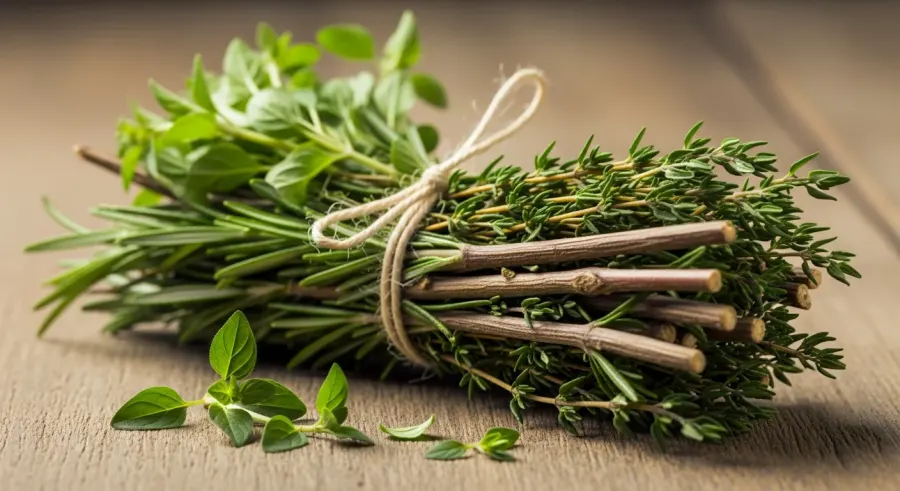
Instead, these herbs prefer a moderately damp environment without sitting in actual puddles. A highly reliable strategy is to wet a paper towel and wring it out until it is barely damp. You do not want it dripping wet, or the excess moisture will encourage bacterial growth.
You can lay the sprigs out flat, roll them up gently in the towel, and slide the bundle into a zip-top bag or an airtight glass container. (This exact approach also works perfectly for chives, which lack stems and cannot stand up in a jar.)
This goes in the warmest part of your fridge. The crisper drawer or the upper door shelves are usually ideal, as they tend to hover closer to 39°F (4°C) rather than the freezing temperatures often found near the back of the bottom shelf. The damp towel provides just enough ambient humidity to keep the leaves from drying out, while the plastic prevents the fridge's compressor from pulling that moisture away.
You can usually get three weeks of shelf life from this method. When woody herbs finally go bad, they either dry out completely and lose their scent, or they develop patches of white mold from too much trapped moisture.
The paper towel trick for plastic boxes
Those clear plastic clamshell boxes from the grocery store are highly convenient, but they are also a common culprit for premature spoilage.
The problem with clamshell packaging is condensation. As the herbs experience temperature fluctuations from the grocery store to your car to your fridge, water vapor condenses on the inside of the plastic lid. That moisture then drips back down onto the delicate leaves. When leaves sit in stagnant water in a cold environment, they break down quickly.
You do not have to completely re-home the herbs, but opening the box and making a small adjustment extends their life significantly. Taking a single dry paper towel, folding it in half, and pressing it gently against the bottom or top of the herbs inside the box works wonders.
The dry paper towel acts as a moisture regulator. It absorbs the condensation before it has a chance to pool on the leaves. For soft herbs that are already prone to rot, a dry towel is the perfect buffer. This tiny intervention can significantly extend the shelf life of store-bought boxed herbs, taking them from a few days to over a week in a standard fridge.
Freezing for the long haul
There is usually a point where you realize you simply cannot eat an entire bunch of tarragon before it goes bad. That is when the freezer becomes your best option for preserving what is left.
Throwing a whole bunch of herbs directly into a freezer bag works in an absolute emergency, but it is far from ideal. The delicate leaves usually suffer from severe freezer burn, turning black and shattering into flavorless dust after just a month.
A much more reliable method is freezing chopped herbs in liquid. If you pack chopped herbs tightly into an ice cube tray and pour liquid over the top, you create a protective barrier. The liquid forms an airtight seal, shielding the plant tissues from oxygen and frost.
You have a few choices for the liquid. Neutral oil or olive oil is particularly good at trapping the fat-soluble essential oils in robust herbs like rosemary, thyme, and oregano. If you freeze them in oil, you can drop the cube directly into a hot pan as the base for a sauce or a roast. Water works better for soft herbs like mint or parsley that might end up in a soup or a broth.
The cubes pop right out once frozen solid. You can store them in a freezer bag at 0°F (-18°C), and they will maintain their flavor for up to six months. Just remember that frozen herbs will be completely limp and soggy once thawed, so this trick only works for cooked applications, not for fresh garnishes.
Bottom Line
It takes a few extra minutes when you get home from the store, but snipping stems and grabbing a glass jar changes the whole trajectory of your groceries. You end up throwing away far less food, and you actually have vibrant ingredients ready to go when you start cooking dinner. The freezer cube method alone ensures that your summer thyme can still flavor a winter stew months later.