In Short
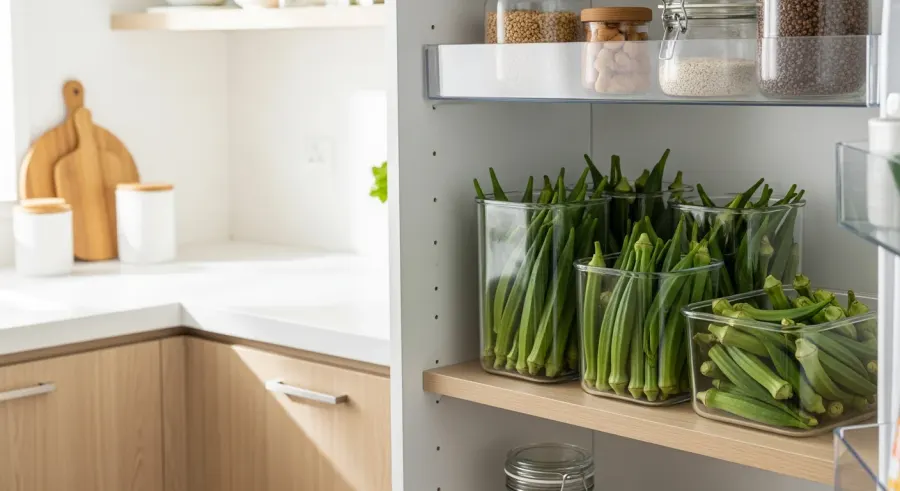
Store unwashed fresh okra in a paper bag (or wrapped in paper towels inside a perforated plastic bag) in the warmest part of your fridge for up to four days. To store it longer, you need to navigate its sensitivity to the cold—the exact steps for freezing it without ruining the texture are below.
You bring home a basket of bright green pods, toss them in the refrigerator, and two days later they look bruised and feel entirely soft. Okra is a notoriously fragile vegetable that breathes heavily and hates the cold almost as much as it hates sitting in a warm kitchen. Finding the exact sweet spot to keep it crisp takes a minor adjustment to how you handle your produce.
Wait, your fridge is actually too cold
Most standard home refrigerators are set to around 37°F (3°C) to keep milk safe and leftovers intact. Okra, being a warm-weather crop harvested in the heat of summer, prefers a cozy storage environment of 45°F to 50°F (7°C to 10°C). When you put these delicate pods into a standard fridge, they experience a rapid physiological stress response known as chilling injury.
It happens directly at the cellular level. A 2020 study published in The Horticulture Journal found that cold temperatures cause okra pods to accumulate hydrogen peroxide and suffer from oxidative stress, largely because their natural antioxidant defenses are too weak to handle the chill.
The visible result of this cellular breakdown is surface pitting. You will start to see dark, water-soaked lesions and black ribs on the outside of the pod, while the seeds inside begin to turn brown.
This temperature mismatch is the primary reason your okra seems to age five years in a single weekend. The cold environment damages the tissue, and once that tissue breaks down, decay sets in quickly. Commercial distributors actually have to maintain highly specific climate-controlled environments during transit to prevent this exact type of damage.
A 2025 study in the Journal of the International Society for Southeast Asian Agricultural Sciences tracked okra exported from the Philippines to Japan. When shipping temperatures fluctuated significantly and dropped too close to freezing, the pods showed noticeably higher ethylene production and respiration rates upon arrival, leading to poor visual quality and loss of firmness.
Since you cannot easily raise the temperature of your entire refrigerator just to accommodate a single vegetable, you have to find a workaround.
The paper towel trick for the crisper
Because the main shelves are too chilly, you have to create a microclimate for the pods. The crisper drawer is naturally the warmest zone in most refrigerators, making it the safest place for cold-sensitive produce to rest.
But temperature is only half the equation. Vegetables are technically still alive after harvest, meaning they continue to take in oxygen and release carbon dioxide, heat, and moisture. According to the UC Davis Postharvest Technology Center, okra has an exceptionally high respiration rate. It breathes fast and sweats out water. If you just toss the pods into a sealed plastic bag, that moisture gets trapped. The water sits on the skin, encouraging bacterial growth and causing the pods to rot prematurely.
Water is the enemy of fresh okra.
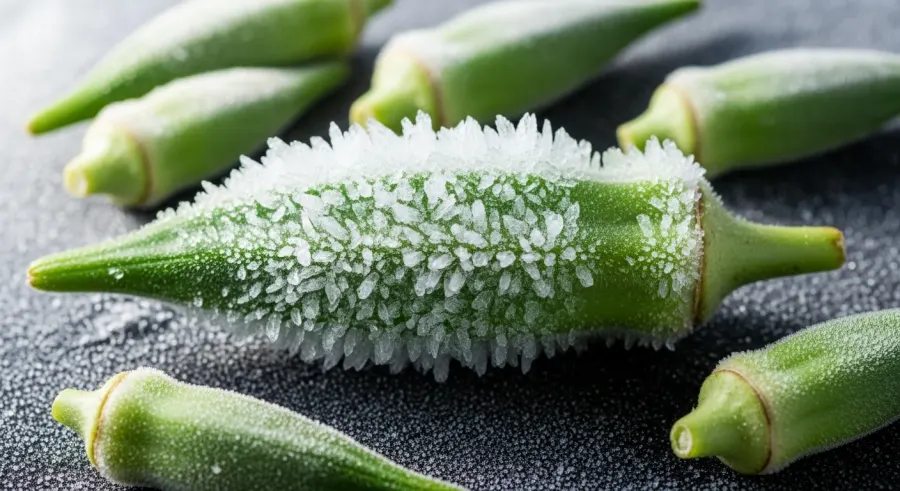
To fix this, do not wash the pods before storing them. Any extra surface moisture will only speed up decay. Instead, wrap the unwashed okra loosely in a dry paper towel. Place that bundle inside a perforated plastic bag or a standard brown paper bag.
The paper towel absorbs the excess moisture the okra releases as it breathes, while the perforations in the plastic (or the porous nature of the paper bag) allow just enough airflow to prevent a humid micro-swamp from forming.
Using this method in the crisper drawer usually buys you three to five days of crisp, vibrant storage. After that window, chilling injury will inevitably catch up with them.
Leaving them on the kitchen counter
Can you just skip the refrigerator entirely? You can, but only for a very narrow window of time.
At room temperature, the high respiration rate we just talked about goes into overdrive. In a warm kitchen hovering around 75°F (24°C), the pods will burn through their stored energy quickly. They dehydrate rapidly, fading from a vibrant, bright green to a dull, washed-out olive color.
The loss of water also changes the texture from snappy to tough and fibrous. Within a day or two on the counter, they become unmarketable and unpleasant to eat.
If you are just keeping them out for the afternoon before cooking dinner, keep them spread out in a shallow bowl or basket. Piling them up traps the heat they generate as they breathe, which only speeds up the dehydration process. You also need to keep them out of direct sunlight, which acts like a magnifying glass for moisture loss.
How to freeze them for next season
For anything lasting longer than a few days, the freezer is your only viable long-term option. Properly frozen okra holds its quality for 10 to 12 months, and freezing effectively locks in the baseline nutrition, including the 33 calories and 3.2 grams of fiber per 100 grams found in fresh pods (USDA FoodData Central).
You cannot just throw raw okra into a freezer bag and hope for the best.
Raw vegetables contain active enzymes that cause changes in color, flavor, and texture even at sub-zero temperatures. To stop these enzymes from turning your frozen pods into dull, tough chunks over the winter, you have to blanch them first.
The National Center for Home Food Preservation recommends a specific timing protocol. Bring a large pot of water to a rolling boil. Wash the pods, trim the stems carefully so you do not cut into the seed cells, and sort them by size. Drop the small pods into the boiling water for exactly three minutes. The larger pods need four minutes.
Once the time is up, immediately transfer the pods to a bowl of ice water for the same amount of time they spent boiling.
Water conducts heat away from objects twenty-five times faster than air, which is why a proper ice bath stops the internal cooking process immediately. If you skip the ice and just let them sit on the counter to cool, the residual heat will continue to soften the pods, leaving you with mushy okra before it even hits the freezer.
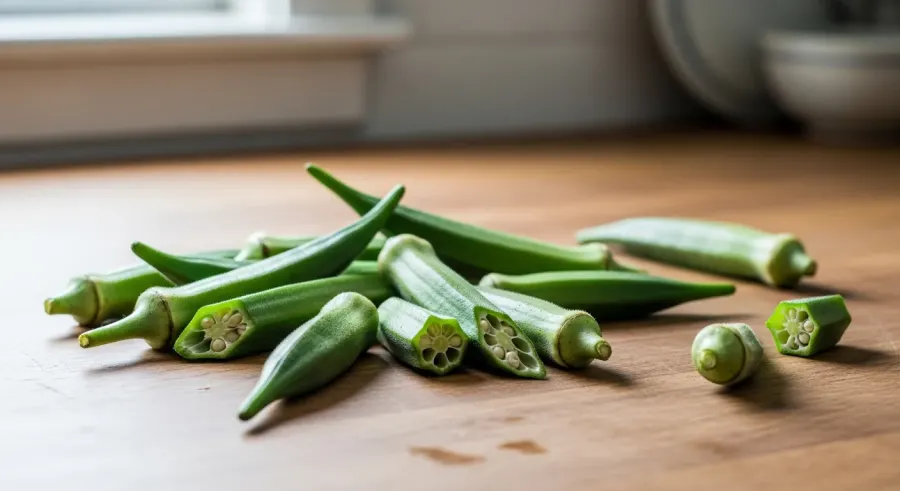
The next step is the most critical for texture. You must dry the blanched pods thoroughly. If you freeze them while they are wet, the surface water forms sharp ice crystals that puncture the cell walls, leading to extreme mushiness when they thaw. Lay them out on a clean kitchen towel and pat them completely dry.
Slice them into rounds or leave them whole, then spread them in a single layer on a parchment-lined baking sheet. Place the sheet in the freezer for a few hours. This flash-freezing step ensures the pieces freeze individually rather than clumping together into a giant block. Once they are solid, transfer them to an airtight freezer bag and squeeze out as much air as possible.
How to tell if they went bad
Fresh pods usually have a firm snap when you bend the tip, a vibrant color, and small, tender seeds inside. Because the vegetable degrades rapidly, the signs of spoilage are mostly visual and textural, appearing right on the surface.
The earliest sign of decline is a slight limpness. If the pod bends like rubber instead of snapping, it has lost too much moisture. This does not make it unsafe to eat, but the texture will be woody and fibrous.
True spoilage looks different. You will notice distinct dark brown or black spots creeping along the ridges of the pod. As covered earlier, this is often the delayed result of chilling injury. Once those dark spots turn soft and mushy, bacteria have started to break down the tissue.
You might also feel a slippery, slimy coating on the outside of the skin, completely separate from the internal mucilage the plant is known for when cooked. This external slime is a clear indicator of bacterial rot. If they smell sour, feel sticky on the outside, or show patches of white or gray fuzzy mold, discard them.
Bottom Line
Understanding how a vegetable responds to its environment shifts how you handle it. Okra just wants to be kept warm enough to avoid tissue damage, but dry enough to hold off decay. Balancing those two things gives you a few extra days of quality, which is usually all you need to plan a meal.