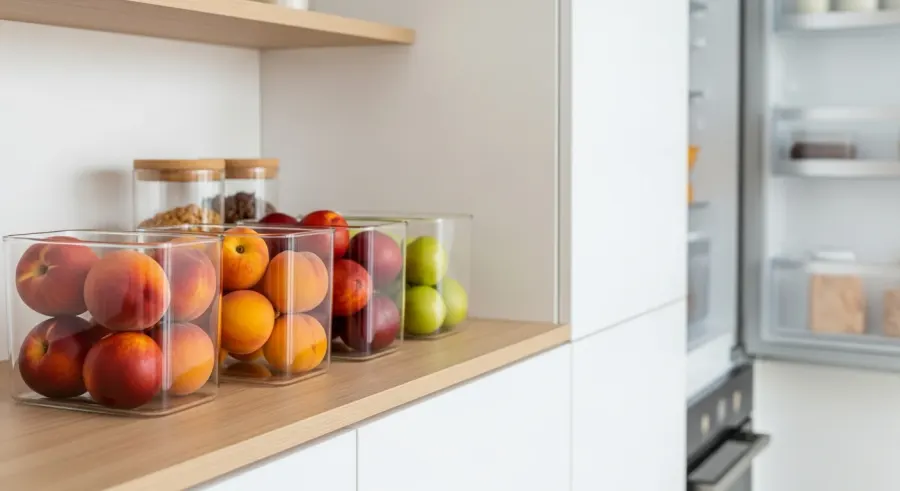
In Short
Keep them on the counter stem-side down until fully soft, and only use the fridge for a few days once they are completely ripe. Putting unripe stone fruit in the refrigerator permanently damages its cell walls, turning the flesh dry, woolly, and flavorless.
You just bought a flat of beautiful, fragrant summer fruit. It is tempting to immediately load them into the crisper drawer to make them last longer. Doing that is the fastest way to permanently ruin their texture.
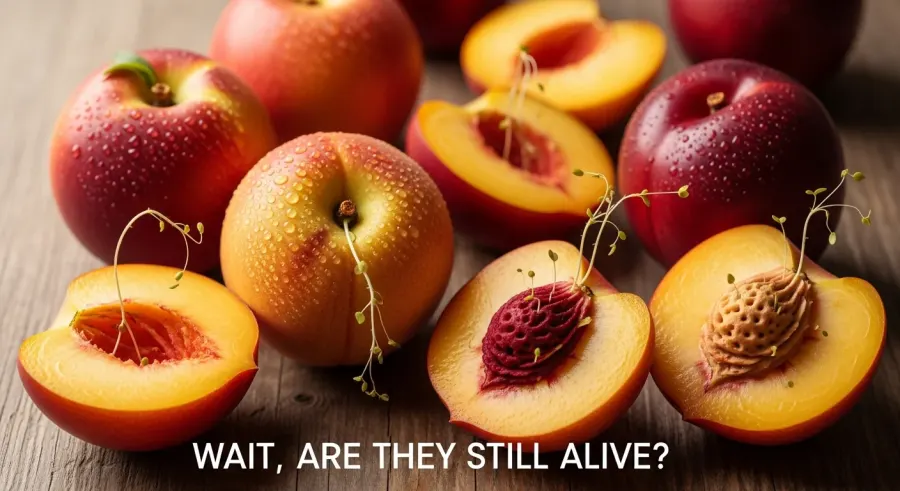
Wait, Are They Still Alive?
Understanding how to store fresh peaches and nectarines starts with one fundamental biological fact: the fruit is still alive. Unlike strawberries or grapes, which are non-climacteric and stop changing the moment they are plucked from the stem, peaches are climacteric. They continue to undergo drastic physiological changes off the tree.
This ongoing life cycle is driven by ethylene, a gaseous plant hormone. As the fruit sits on your counter, it inhales oxygen and exhales ethylene. This gas acts as a biological signaling mechanism, telling the fruit's internal enzymes to get to work. Starches are actively converted into simple sugars. Acids neutralize. Most importantly, complex carbohydrates called pectins—which act as the glue holding plant cell walls together—begin to dissolve.
This breakdown of pectin is what transforms a rock-hard sphere into a dripping, tender dessert. But this entire sequence is highly sensitive to temperature. If you interrupt the enzymes before they finish their job, the chemical cascade derails. The fruit does not just pause; it breaks.
Leaving Them on the Counter
The ideal environment for unripe stone fruit is a dry, well-ventilated space at standard room temperature, ideally between 68°F and 72°F.
Positioning matters. They stay safest when stored resting on their shoulders. The shoulder is the flattened area around the stem indent, which is structurally the strongest part of the fruit. By resting them stem-side down, the weight distributes evenly, protecting the delicate, pointed bottom from bearing the pressure.
Piling them in a fruit bowl creates pressure points, and pressure points become brown bruises within hours. They need to sit in a single layer with ambient airflow to prevent moisture from building up on their fuzzy skins, which invites fungal growth.
Depending on the maturity of the fruit when purchased, countertop ripening usually takes 1 to 3 days. A ripe peach will perfume the entire corner of the kitchen. Pressing very gently near the stem provides the final check. If the flesh gives way slightly, the pectin has broken down sufficiently, meaning the fruit is ready.
The Paper Bag Trick
Sometimes ripe fruit is needed quickly, and the natural physiological clock moves too slowly. You can manipulate the local atmosphere using a brown paper lunch bag.
Placing firm peaches inside the bag along with an apple or a very ripe banana, then folding the top shut, creates a localized feedback loop. Bananas are heavy ethylene producers. Trapping that concentrated gas in a confined space forces the peaches to absorb the ripening signal at a massively accelerated rate.
The banana's ethylene triggers the peach to produce its own ethylene, compounding the effect. Check the bag every morning, as the rapid ethylene buildup can take a fruit from firm to overripe quickly. This technique easily cuts the waiting period in half, turning a three-day wait into a 24-hour turnaround.
Plastic bags fail at this because they are completely impermeable to moisture. As the fruit respires, it releases water vapor. In a plastic bag, that moisture condensates on the skin and creates a humid microclimate that breeds rapid rot. Paper is porous enough to let the humidity escape while corralling the heavier ethylene molecules.
The Refrigerator Danger Zone
This is the most common mistake people make with summer fruit. Commercial agricultural specialists refer to the temperature range between 36°F and 50°F (2°C to 10°C) as the 'killing zone' for peaches. The average home refrigerator is calibrated to sit right at 38°F.
Placing a firm, unripe peach into this chilling band triggers a physiological disorder known as chilling injury. The cold temperatures effectively paralyze the enzymes responsible for normal ripening, but they do so unevenly. The pectin fails to break down properly, causing water molecules inside the fruit to bind with the cell walls in abnormal ways.
The consequence is mealiness. A chilled peach might look perfectly normal on the outside, but the interior flesh becomes dry, woolly, and devoid of juice. The flavor compounds also fail to synthesize, leaving a bland, gritty bite that feels like chewing on a wet sponge.
The fridge is not completely forbidden, but situational timing is everything. Stone fruit survives refrigeration only after it has reached peak ripeness on the counter. Once the pectin has successfully dissolved and the fruit is fully soft, the danger of chilling injury passes. Moving a perfectly ripe peach to the crisper drawer pauses its decay, providing an extra 3 to 5 days of viable shelf life. It helps to let it sit on the counter for thirty minutes before eating, as the cold suppresses the aromatic oils that provide its flavor.
Freezing Them for Winter
If a massive crate from the farmer's market is too much to finish, the freezer serves as the best preservation tool. Freezing whole fruit leaves the skins intact, which become unpleasantly tough when thawed. Worse, the internal water expands into sharp ice crystals that shred the cell walls, and ambient oxygen causes rapid enzymatic browning.
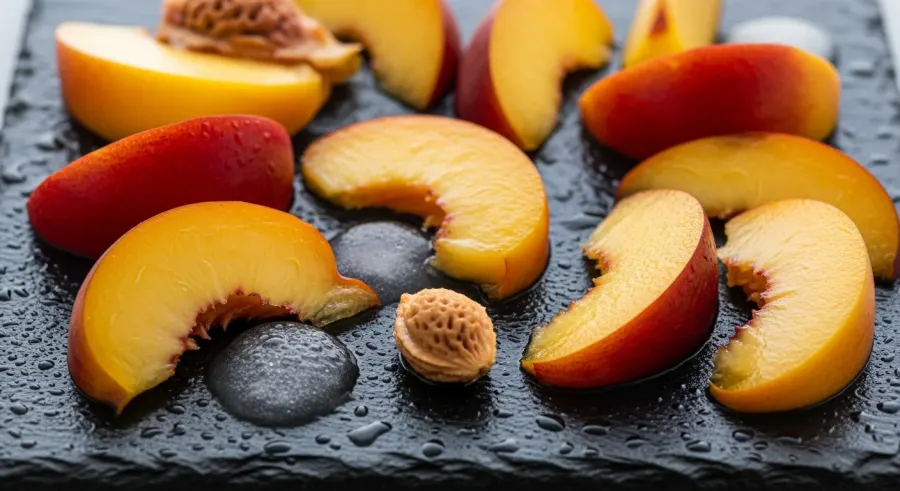
The correct method starts with blanching. Dropping whole peaches into a pot of boiling water for 30 to 60 seconds, then immediately moving them to an ice water bath, causes thermal shock. This separates the skin from the flesh, allowing it to peel away effortlessly.
Once peeled and sliced, the fruit needs protection from the air. Coating the slices in a tablespoon of lemon juice or a commercial ascorbic acid powder dissolved in water prevents oxidation, ensuring the flesh stays vibrant yellow or white.
Arranging the treated slices in a single layer on a parchment-lined baking sheet and freezing them solid for four hours prevents them from fusing into an unusable brick. Finally, the frozen slices go into an airtight, heavy-duty freezer bag with as much air squeezed out as possible.
Properly processed, they retain their quality for 10 to 12 months. Freezing also preserves their nutritional profile remarkably well. A 100g serving of fresh peaches holds 39 calories, 9.54g of carbohydrates, 1.5g of fiber, and 8.39g of sugar (USDA FoodData Central). Freezing halts the degradation of these macronutrients, meaning a slice thawed in December offers the exact same energy and fiber as it did in July.
How to Know When They Are Gone
Stone fruit has a notoriously narrow window of perfection. Recognizing the signs of genuine spoilage prevents an unpleasant bite of fermented mush.
Wrinkling acts as the first visible indicator that a peach is past its prime. As the fruit respires and loses water through its skin, the surface begins to shrivel near the stem. A slightly wrinkled peach is still safe to eat, but the texture will be noticeably drier.
Bruises do not necessarily indicate rot. A dark, soft indent just means the fruit took a physical impact, and the bruised section can simply be carved away.
True spoilage is unmistakable. The entire fruit must go in the compost if patches of white or grey fuzzy mold appear, usually forming in the stem cavity or across a split in the skin. Mold spores penetrate much deeper into the porous flesh than is visible on the surface.
Another clear failure state is oozing. If the fruit actively weeps sticky juice onto the counter without being cut, the cellular structure has completely collapsed. A healthy fruit smells like floral sugar, while a spoiled one takes on a sharp, alcoholic, or vinegary aroma as naturally occurring yeasts begin fermenting the sugars inside.
Are Nectarines Handled Differently?
Nectarines are essentially the exact same species as peaches, just expressing a recessive gene that eliminates the fuzzy skin. Because they lack that protective layer of fuzz, nectarines are slightly more susceptible to rapid moisture loss and surface bruising.
Their biochemical storage rules remain identical. They suffer from the exact same chilling injury in the 36°F to 50°F range, and they respond to ethylene gas in a paper bag with equal speed.
The only practical difference involves washing. The fuzz on a peach traps moisture, making it highly prone to rot if washed before storage. Nectarines have a smooth, waxy skin that repels water slightly better, but it is still safest to delay rinsing either fruit until the exact moment they are sliced.
Bottom Line
Fruit is a living thing, reacting constantly to the air and temperature around it. Treating a peach less like a pantry staple and more like a fragile, breathing object makes the difference between a disappointing, mealy bite and one that actually tastes like summer.