In Short
Raspberries spoil rapidly, but a quick vinegar wash and thorough drying can extend their fridge life from two days to over a week. How their hollow core sabotages their freshness (and why standard clamshell packaging accelerates the mold process) is below.
Raspberries seem to have a self-destruct timer that activates the moment you leave the grocery store. They are notoriously fragile, prone to mold, and sensitive to minor temperature shifts. Beating the clock just requires a slightly different approach to how you handle them when you get home.
The Original Packaging Dilemma
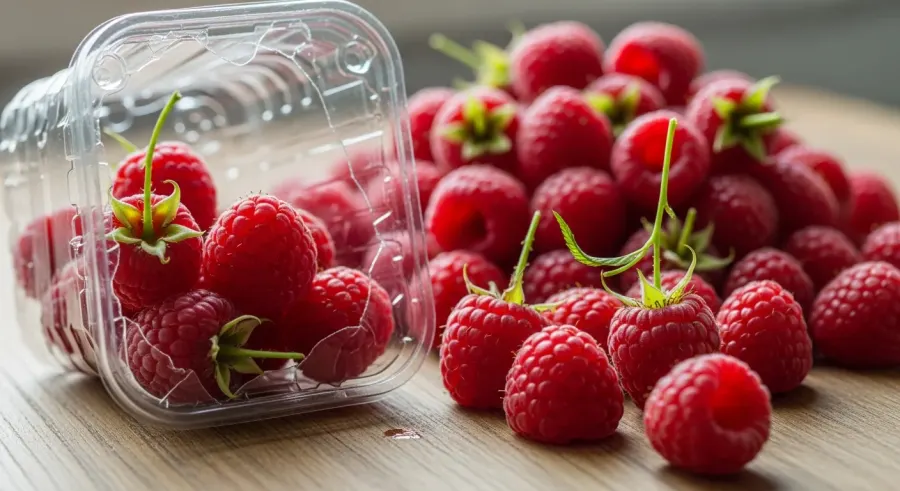
Most raspberries are sold in clear plastic clamshell containers with small slits cut into the sides. These containers are designed for shipping and retail display, prioritizing physical protection during transit over long-term freshness in your kitchen. The slits provide minimal ventilation, but often not enough to counteract the natural respiration of the fruit.
Leaving the berries in this original packaging on the kitchen counter is the fastest route to spoilage. At room temperature, a fresh pint of raspberries will rarely last more than a single day. The ambient heat accelerates their biological clock, causing them to respire heavily. The moisture they give off hits the plastic walls, condensates, and drips right back onto the fruit. This stagnant, damp environment is exactly what airborne pathogens need to multiply.
Transferring them out of this packaging as soon as you get home gives you a chance to intervene. Even if you choose not to wash them immediately, moving them to a wider, shallower container where they have room to breathe reduces the risk of crushing and limits the trapped moisture.
Why They Spoil So Fast
A raspberry isn't actually a single fruit in the botanical sense. It is an aggregate fruit, formed from a cluster of tiny, individual juice sacs called drupelets that are bound together around a central plug. When the berry is harvested, that plug stays attached to the plant. This leaves behind a hollow core.
This unique anatomy is entirely responsible for their fragile nature. Without a solid center to provide structural integrity, their paper-thin outer skins bruise under the slightest pressure. A bruised drupelet leaks water and natural sugars, immediately providing fuel for the microscopic bacteria and mold spores that naturally exist on farm produce.
On top of these physical vulnerabilities, raspberries possess an unusually high respiration rate. All produce continues to take in oxygen and give off carbon dioxide, heat, and water vapor after harvest. Raspberries respire so aggressively that they generate their own micro-climate. Without intervention, they quite literally "breathe" themselves into a state of rapid decay.
Sorting and the One-Bad-Apple Rule
Before any storage method can work, the fruit needs to be sorted. A single moldy or leaking berry in the middle of a pint acts as a catalyst for the rest of the container. Because the berries are packed tightly together, mold spores jump easily from a decaying berry to its healthy neighbors.
Emptying the container onto a clean countertop or a dry kitchen towel allows you to inspect the haul. Any berries that are already showing signs of white fuzz, or those that have collapsed into a jam-like consistency, need to be separated from the firm ones. Even a berry that simply looks a bit too dark or feels overly soft should probably be eaten immediately rather than stored.
This quick sorting process interrupts the chain reaction of spoilage. It also gives you an opportunity to remove any hidden moisture that might have pooled at the bottom of the original plastic clamshell, ensuring that you are only putting dry, intact fruit into your refrigerator.
The Vinegar Wash That Works
Moisture is universally considered the enemy of fresh berries. Standard culinary advice dictates that you should avoid washing them until the exact moment you plan to eat them. However, a proactive vinegar wash actually extends their shelf life significantly by neutralizing the mold spores that hitch a ride from the field.
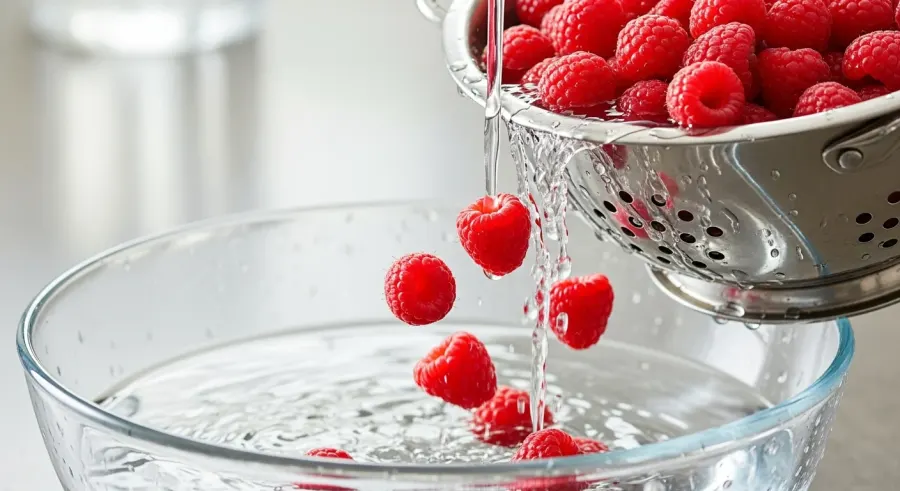
The process requires mixing one part standard white vinegar with three parts cool water in a large bowl. You simply submerge the raspberries in the solution for one to two minutes. The low pH of the vinegar effectively kills the spores. As long as the fruit gets a gentle rinse with plain cool water immediately afterward, the berries will not absorb any sour, acidic flavor.
The crucial step happens after the bath. The berries must be completely, utterly dry before they go into the cold environment of the refrigerator. Spreading them out in a single layer on a paper towel-lined baking sheet works well. Setting them upside down so water drains entirely out of the hollow core is even better. Depending on the humidity in your kitchen, it can take a few hours for the ambient moisture to evaporate. Taking this extra time up front can stretch their baseline freshness from two days to over a full week.
Finding the Right Fridge Setup
Commercial packers and distributors manage a highly controlled cold chain. They aim to keep raspberries between 32°F and 34°F (0°C to 1°C) in an environment with high relative humidity. Most standard home refrigerators operate much warmer than that, usually hovering around 37°F to 40°F (3°C to 4°C).
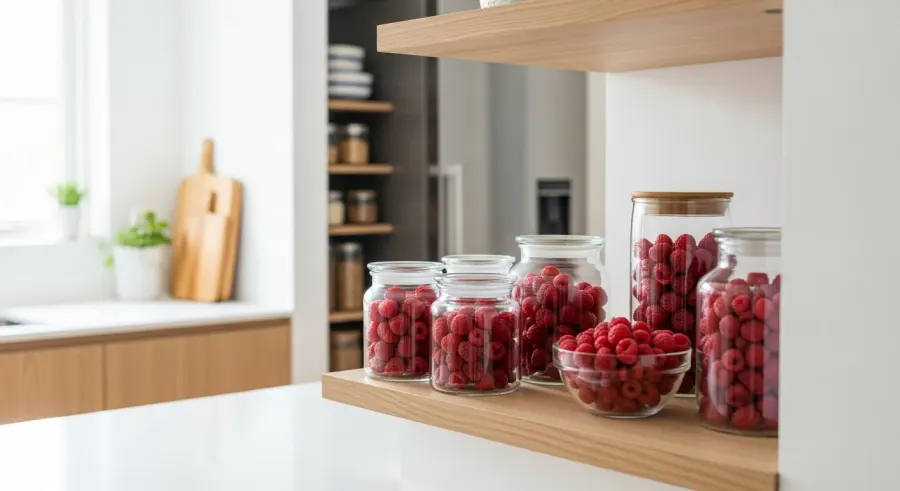
We cannot replicate a commercial storage facility perfectly, but adjusting the immediate environment around the berries makes a noticeable difference. Once your berries are washed and bone-dry, moving them into a glass container or an airtight storage box lined with a fresh paper towel creates a stable microclimate. The rigid glass protects the delicate drupelets from getting crushed by heavier groceries, while the paper towel absorbs any condensation that naturally forms as the refrigerator runs its cooling cycles.
Placement inside the appliance matters too. The very back of the bottom shelf is usually the coldest spot in a fridge, and pushing berries back there can be risky. Raspberries will sustain irreversible chill damage and turn immediately mushy if their temperature drops below 30°F (-1°C). Finding a middle shelf where the temperature remains steady is usually a safer bet.
Freezing for the Long Haul
Sometimes you end up with more berries than a single household can realistically consume in a week. Raspberries handle the freezing process quite well, preserving almost their entire nutritional profile. A standard 100-gram serving maintains its 52 calories and 6.5 grams of fiber (USDA) straight through the deep freeze.
Freezing them properly requires a little bit of staging so you do not end up with a solid, unusable block of fruit. The standard method involves laying the unwashed, or washed and thoroughly dried, berries in a single layer on a parchment-lined baking sheet. Placing the entire sheet in the freezer for a few hours allows the individual berries to freeze rock solid independently.
Once they are firm, you can transfer the loose berries into a freezer-safe silicone bag or a rigid airtight container. Removing as much ambient air from the bag as possible helps prevent freezer burn. They will maintain excellent quality for 10 to 12 months. It is worth noting that their cellular structure breaks down during the freeze, so they won't have the firm snap of a fresh berry when thawed. This makes them better suited for smoothies, baked goods, or quick jams than for eating out of hand.
When to Let Them Go
Spoilage is sometimes obvious, but other times it sneaks up in the form of subtle physical changes. Fuzzy white or gray mold is the most visible sign that a raspberry is completely done. Because mold spores spread through direct contact, a single fuzzy berry usually means the surrounding ones are already compromised.
Color shifts offer an earlier warning sign. Fresh, healthy raspberries hold a vibrant, bright red hue. As they deteriorate and their internal sugars begin to break down, they often shift to a dull, bruised-looking purple. This color change happens long before the mold sets in, signaling that the fruit is passing its prime.
Texture is the final indicator. If the berries are actively leaking juice into the bottom of the storage container or feel excessively soft and mushy to the touch, their cellular walls have collapsed. While they might not be strictly unsafe to eat if there is no visible mold present, the flavor profile usually flattens out. They take on a slightly fermented, sour undertone that lacks the sharp sweetness of fresh fruit.
Bottom Line
Managing delicate fruit often feels like a balancing act between moisture control and temperature. Accepting that a raspberry's very structure makes it fragile helps make sense of the careful handling required. Taking a few extra minutes to wash and dry them properly turns a highly perishable ingredient into a reliable daily snack.