In Short
Keep stalks unwashed and loosely wrapped in the crisper drawer to maintain freshness for up to four weeks, or freeze chopped pieces for up to a year. Avoid washing them before storage, and always remove the toxic leaves immediately.
You just bought a beautiful bunch of pink stalks and now you're wondering where they belong. Storing rhubarb is actually pretty forgiving, provided you understand how it handles moisture.
The First Thing You Have to Do
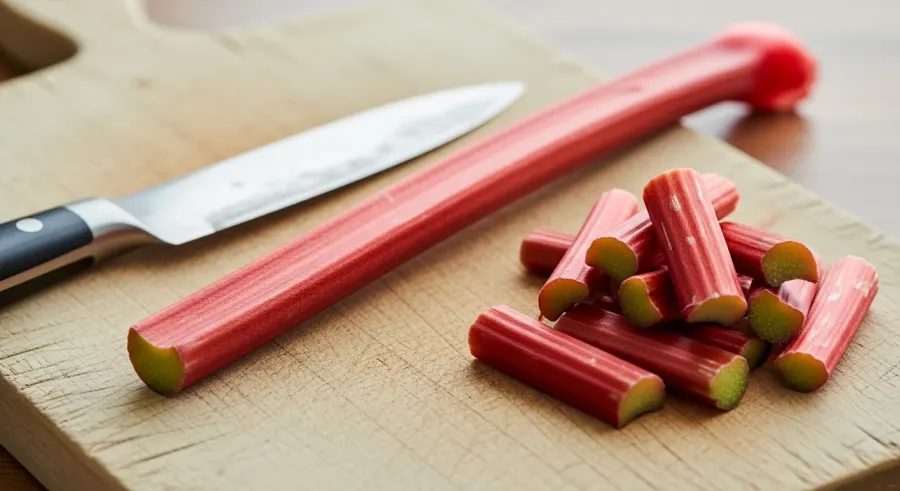
Before storing your fresh rhubarb, the leaves need to go. They contain dangerously high levels of oxalic acid, which can cause severe health issues. Toxicity aside, leaving the greens attached is a storage disaster because the leaves actively pull moisture out of the stalks. Firm stems will turn rubbery in a day or two if the foliage stays on. Snip them off, leaving exactly a quarter-inch of the base attached to the stalk, and toss the greens straight into the compost bin. Leaving that tiny piece of the leaf base actually extends the market life and prevents the stalk from splitting open (WFLO Commodity Storage Manual, 2018). If left in freezing conditions with the leaves still attached, the oxalic acid can actually migrate down into the edible stalk (University of Connecticut), ruining the entire harvest.
Can You Just Leave It on the Counter?
If you plan to bake a pie tomorrow, the kitchen counter is a completely acceptable temporary home. The stalks just need to stay unwashed and uncovered in a cool, dry spot.
Rhubarb is highly porous. Because of this unique vascular structure, it loses moisture rapidly at room temperature. You can usually tell it is drying out when the vertical ribs along the outside become sharply pronounced. Without the high humidity of a cold environment, the stems go limp and start to shrivel by day three or four.
Keeping the stalks whole rather than cutting them into pieces slows down this dehydration process slightly. A warm or sunny kitchen means you should probably skip the counter entirely. The ambient heat accelerates enzymatic breakdown, causing the bright pink or green colors to fade and the texture to soften prematurely.
The Mason Jar Trick for the Fridge
When you want maximum crispness without taking up the entire produce drawer, storing rhubarb upright in water works beautifully. This method mimics the plant's natural field conditions and keeps the vascular tissue hydrated.
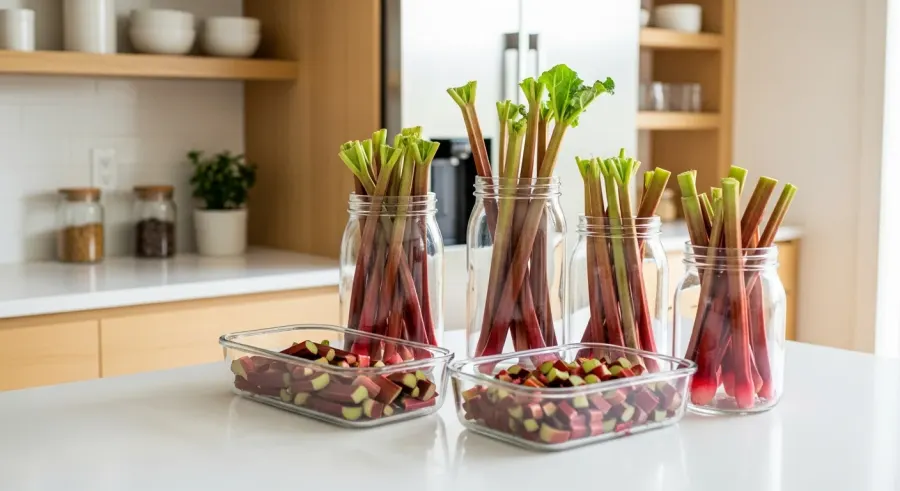
Trimming the bottom ends slightly creates a fresh cut, similar to prepping a bouquet of flowers. The stalks can then be placed vertically in a tall glass jar filled with about one inch of cold water. Submerging the entire stalks is a bad idea, as sitting completely in water invites decay. Loosely covering the top of the jar and the exposed stalks with a reusable silicone lid or a loose plastic bag traps the local humidity.
Placed in the refrigerator at standard temperatures between 34°F and 37°F, this setup easily extends the life of the stalks to a week or more. The water just needs to be changed every couple of days to prevent any bacterial growth at the base of the stems.
Keeping Stalks in the Crisper Drawer
The standard crisper drawer is where rhubarb really thrives for the long haul. It can last two to four weeks under the right conditions.
Washing the stems right away is a common mistake. Scrubbing can damage the surface, which drastically increases moisture loss. Plus, lingering water drops invite Botrytis cinerea, a gray mold responsible for much of retail rhubarb spoilage.
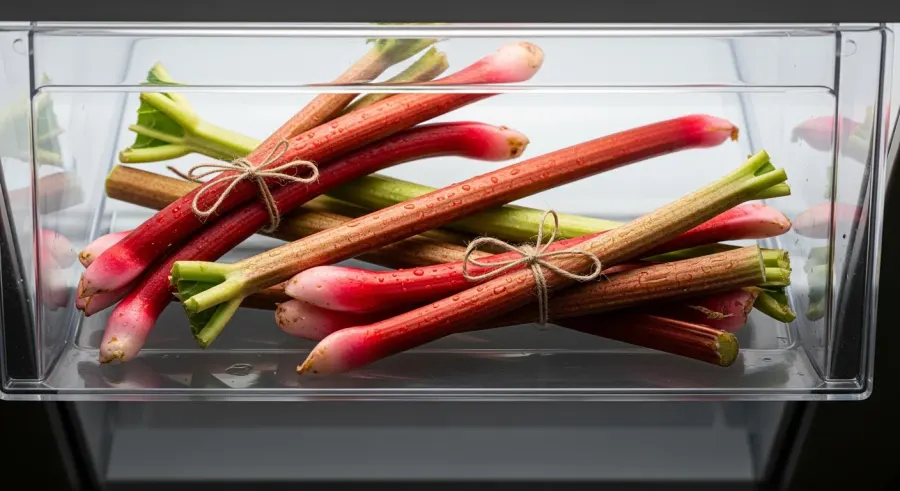
The best approach involves wrapping the dry, unwashed stalks loosely in aluminum foil or slipping them into a plastic bag with a few holes poked in it. Foil works especially well because it folds easily without creating an airtight seal, allowing for micro-ventilation. This specific packaging traps the 90% to 98% humidity the plant craves while allowing ethylene gas to escape. Ethylene is a ripening hormone that causes produce to age quickly.
Because rhubarb is highly sensitive to this gas, keeping it away from heavy ethylene producers like apples, bananas, and avocados is critical. Exposure to these fruits can increase the respiration rate of the rhubarb, significantly reducing its shelf life. The crisper drawer is ideal because it allows you to isolate the stalks while maintaining the preferred temperature hovering around 32°F to 36°F (0°C to 2°C).
Wait, Should You Blanch Before Freezing?
Sometimes you end up buying way too much at the farmer's market. It happens to everyone. Freezing is an excellent option for long-term storage, keeping the stalks viable for up to a year.
For this method, the stalks require a thorough wash, complete drying, and chopping into half-inch pieces. You can freeze them completely raw by spreading the pieces out on a parchment-lined baking sheet. Freezing them in a single layer for three or four hours prevents them from fusing into a giant, unusable block of ice. Once they are solid, transfer the pieces into a freezer-safe bag, squeeze out as much air as possible, and seal it. Removing the oxygen is what ultimately prevents freezer burn.
If preserving the brightest color and firmest texture is a priority, blanching them first helps. Dropping the pieces into boiling water for one minute, then immediately plunging them into an ice water bath, stops the internal enzyme activity that causes browning and flavor loss over time.
Raw freezing works so well, though, that many home cooks skip the boiling water to save time. It is worth noting that freezing inherently changes the cellular structure. The water inside the plant expands as it turns to ice, bursting the cell walls. When thawed, the rhubarb will release considerable moisture and have a softer texture. This makes frozen rhubarb perfect for compotes, jams, and sauces, but less ideal for dishes where you want distinct, firm pieces.
How to Tell When It Actually Goes Bad
Fresh rhubarb is firm, crisp, and snaps cleanly when bent. As it ages, the texture gets limp and bendy. A slight rubberiness does not mean it is dangerous to consume, but the lack of structure won't hold up in a baked tart. You can still cook slightly soft stems down into a jam where the texture breaks down anyway.
True spoilage looks distinctly different from simple dehydration. Dark, water-soaked, translucent spots running lengthwise on the stalk usually indicate an issue like anthracnose. If the stalk becomes muddy green, greasy, or wet and mushy, it has likely developed bacterial soft rot.
Over-matured or poorly stored rhubarb can also become pithy inside, developing a dry, hollow, or stringy core that lacks flavor and moisture. Any visible fuzzy gray mold, black specks in the center of soft spots, or a slimy surface texture means the batch belongs in the trash.
Does Storage Change the Nutrition?
The storage method rarely impacts the basic nutritional value. Rhubarb is primarily water and dietary fiber, making it a very light addition to meals before the sugar is added.
According to USDA FoodData Central, a 100-gram serving of fresh rhubarb provides 21 calories. It contains 4.54 grams of carbohydrates, 1.8 grams of fiber, and 1.1 grams of naturally occurring sugar. It offers barely any fat (0.2 grams total, with 0.05 grams saturated) or protein (0.9 grams), and a minimal 4 milligrams of sodium.
Freezing or refrigerating preserves these base macronutrients perfectly well. As the stalks sit in the fridge and slowly lose moisture through transpiration, those nutrients just become slightly more concentrated by weight. The signature tartness remains completely intact regardless of whether it sits in the crisper drawer for a week or the freezer for six months.
Bottom Line
It is funny how much of food storage just comes down to managing moisture. Rhubarb is practically begging to dry out the moment it leaves the ground, so giving it a humid, cold environment is the kindest thing you can do for it. Once you know how to keep it happy, keeping those bright pink stalks around for weeks is effortless.