In Short
Keep fresh strawberries in an airtight glass jar in the fridge to stretch their shelf life up to two weeks. The famous vinegar-wash trick actually works, but if you skip the crucial drying step, you'll ruin the fruit faster than doing nothing at all.
It always feels like a race against the clock when you bring a beautiful, bright basket of strawberries home. Berries are famously delicate, and their aging process starts the exact second they are picked. Fortunately, keeping them plump and sweet for a week or more isn't about luck—it just comes down to controlling a little bit of moisture and knowing exactly where to put them.
Why they fade so fast on the counter
Sitting at room temperature is rough on delicate fruit. A strawberry breathes, and its metabolic activity spikes as the surrounding air gets warmer. When these berries are picked on a farm, they hold something called "field heat." Commercial growers rush to cool them down immediately after harvest, because the faster the internal temperature drops, the longer the fruit survives. At 68°F, a strawberry degrades ten times faster than it does at 32°F (UC Davis Postharvest Technology Center).
If you plan to eat the whole basket by tomorrow afternoon, leaving them on the kitchen counter is perfectly fine. They might even taste a little more fragrant and sweet when they aren't chilled, as the volatile aroma compounds are more active at room temperature. But beyond 48 hours, you will start noticing dark, sunken spots and a dull, matte skin instead of that glossy red finish. It is a very short window.
How to get a week out of them
Most of us just toss the plastic clamshell right into the produce drawer. The problem is those containers are highly vented. They let in too much air, which causes the fruit to shrivel, while also failing to protect the berries at the bottom from getting crushed.
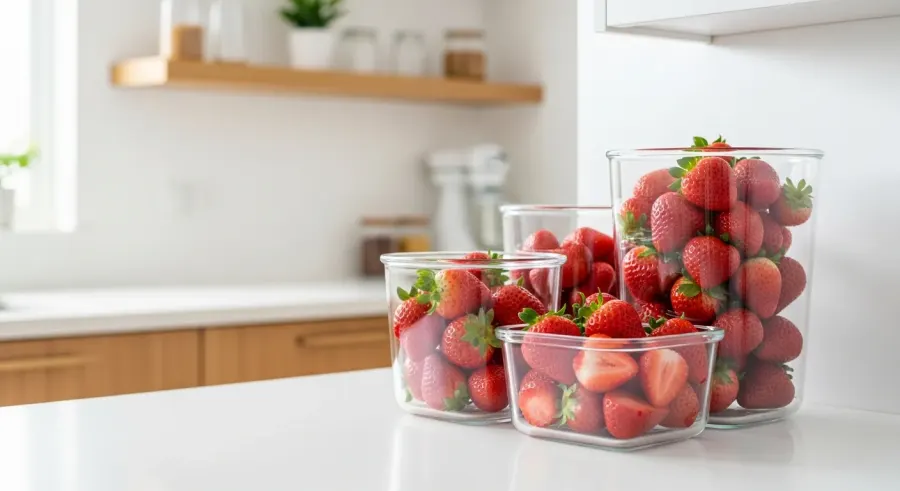
To maximize their fridge life, transfer unwashed strawberries into a glass mason jar or a sturdy airtight container. Place a single dry paper towel at the bottom. The glass limits air circulation to slow down the aging process, while the paper towel absorbs the ambient condensation that causes rot. Storing them this way in the coldest part of your fridge—ideally between 32°F and 36°F (0-2°C)—will routinely keep them fresh for five to seven days. You can often stretch that to two weeks if the berries were pristine when you bought them. If you notice the paper towel getting damp mid-week, just swap it out for a dry one.
Does that vinegar trick actually work?
You have probably seen people online dunking their produce in diluted white vinegar. The technique is legitimate. It just comes with a major physical catch.
A solution of one part white vinegar to three parts water helps eliminate surface mold spores that cause rapid decay. You soak the berries for about five minutes, gently moving them around in the bowl. After that, rinse them thoroughly under cold running water in a colander so they do not taste like salad dressing, and lay them out. The catch is the drying phase. If you put damp strawberries into a sealed jar, the trapped moisture will cause them to rot almost overnight. They have to air-dry completely on a clean towel or paper towels before they go into the fridge. Some people even set up a small fan to speed up the process. If you are generally short on time or counter space, it is much safer to skip the wash entirely and just rinse them right before eating.
Leave those green stems alone
It is tempting to prep your fruit by slicing off the green tops before packing them away. Try to resist doing this until the very last minute.
The leafy green calyx acts as a natural protective seal for the fruit. Removing it exposes the interior flesh to air, accelerating oxidation and water loss. The strawberry will dry out, lose its structural integrity, and turn mushy. The only time you should hull them is if you are about to eat them, blend them, or put them into the freezer. For regular fridge storage, keeping the stems intact is your best defense against premature spoilage.
What happens to the vitamin C?
A standard 100g serving of fresh strawberries carries about 32 calories, 7.7g of carbohydrates, and 4.9g of sugar (USDA FoodData Central). They are primarily prized for their high vitamin C content, but that nutrient profile shifts depending on where the fruit sits.
Cold environments protect the vitamins. Research published in the Journal of Hygienic Engineering and Design (2015) tested strawberries at various temperatures and found a steep drop-off at room temperature. Fresh berries held around 60mg of vitamin C per 100g. After five days on a counter, that plummeted to just under 8mg. Berries kept in a cold fridge maintained about 43mg over the same period. Protecting the fruit's physical structure helps, too. Bruising or cuts expose the flesh to oxidation, speeding up nutrient loss.
Freezing them for later
Ice crystals change the cellular structure of delicate fruits. A thawed strawberry will never have the firm snap of a fresh one, because the expanding water breaks the cell walls from the inside. Freezing works beautifully for smoothies, baked goods, or making jam, but you should avoid it if you want sliced fruit for a fresh salad or a yogurt topping.
To freeze them properly, wash the berries thoroughly and slice off the green stems. Lay them out on a baking sheet lined with parchment paper, making sure they do not touch each other. Put the sheet in the freezer for a few hours until the berries are rock solid. This individual freezing step prevents them from fusing together into a giant, unusable block of ice. Once they are fully frozen, transfer them to a freezer-safe bag or container. Squeeze out as much excess air as possible to prevent freezer burn, and they will hold their flavor for 8 to 12 months.
When to finally toss them
Even with perfect storage habits, organic matter eventually gives up. A strawberry past its prime usually tells you through its physical texture first.
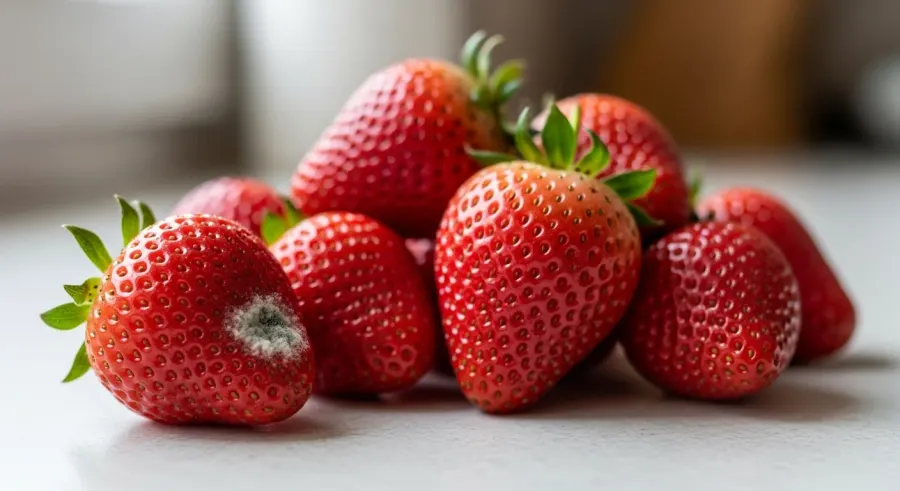
Healthy berries are firm, dense, and glossy. When they begin to spoil, the skin turns dull and develops a dark, maroon color that looks slightly bruised. They will feel noticeably soft or mushy under light pressure, and they might start leaking dark juice into the bottom of the container. Any white or gray fuzzy mold means the berry is done for. Because mold spores travel easily from one piece of fruit to the next, removing the affected fruit immediately prevents it from contaminating the rest of the jar. If the fruit just looks slightly wrinkled but has no mold or sour, fermented smells, it is still perfectly safe to eat. You might just prefer cooking it down into a quick jam, tossing it into oatmeal, or blending it rather than eating it raw.
Bottom Line
Finding a forgotten, moldy carton of fruit at the back of the fridge is just a frustrating waste of money. Taking three extra minutes when you get home from the store to move those berries out of their plastic shell and into a lined glass jar changes the entire timeline. They get to stay bright and firm, and you get to actually eat the food you bought.