In Short
Keep fresh morels unwashed in a paper bag in the refrigerator for up to a week. For long-term storage, they must be cooked before freezing or fully dehydrated. The reason you can never freeze them raw (and the exact temperatures needed to dry them) is detailed below.
Finding a patch of wild morels feels like winning a tiny, woodland lottery. But these sponge-like fungi are delicate, and handling them wrong is the fastest way to turn your prize into a slimy mess. Let's walk through exactly how to maintain their texture, whether you plan on eating them tonight or saving them for a snowy day in December.
How to keep them fresh in the fridge
Moisture is the single biggest threat to a harvested mushroom. The iconic honeycomb structure of a morel is beautiful, but every little pit and ridge acts as a trap for water. This is the main reason you should never wash them before storage. If you run them under the tap, you are just accelerating the rotting process.
When you bring them inside, simply brush off any obvious dirt with a dry pastry brush or a paper towel. Then, transfer them into a standard brown paper lunch bag. Paper is highly effective because it absorbs excess ambient moisture while still allowing the fungi to breathe. Fold the top of the bag over loosely.
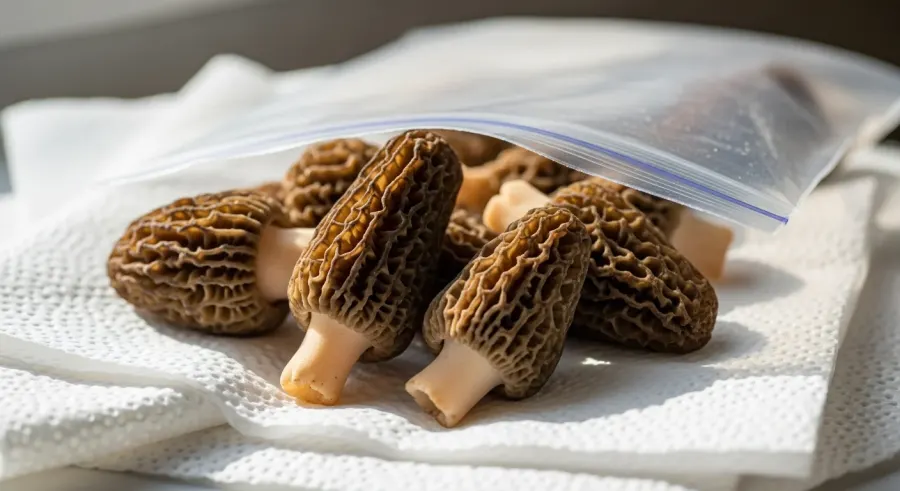
Plastic bags are a terrible idea. Condensation builds up on the inside of the plastic, drips back down onto the mushrooms, and creates localized pools of dampness that breed bacteria.
Keep the paper bag in the main compartment of your refrigerator. Usually, these shelves maintain a steady temperature between 35°F and 38°F. Avoid tossing them into the crisper drawer. Crisper drawers are specifically designed to trap humidity to keep leafy greens crisp, but humidity is exactly what turns a firm morel into mush. Under ideal conditions, they will last about 3 to 7 days, though their flavor is best if consumed within the first 48 hours.
Wait, can you freeze them?
People often try to freeze raw morels and end up ruining their entire harvest. When you freeze a mushroom without cooking it first, the water inside its cells expands into jagged ice crystals, rupturing the delicate cellular walls. When thawed, you get a puddle of murky water and a gummy, rubbery shell. Furthermore, freezing them raw allows certain enzymes to remain active, which can lead to a distinctly bitter taste.
You have to cook them first. The Cooperative Extension Service recommends blanching or sautéing to deactivate those destructive enzymes before the mushrooms ever see the freezer.
To blanch them, bring a large pot of water to a boil. Add a teaspoon of lemon juice per pint of water—the slight acidity helps preserve their color. Drop the mushrooms in for 3 minutes if they are sliced, or 5 minutes if they are whole. Scoop them out, drain them thoroughly, and plunge them immediately into an ice bath to stop the cooking process. Pat them entirely dry with a clean towel.
Alternatively, you can sauté them in a skillet with a little butter or neutral oil just until they soften. This cooks out their native water.
After cooking and cooling, use the flash-freeze method. Lay them out on a parchment-lined baking sheet so they do not touch. Freeze them solid for about two hours. Once they are firm, transfer them to a freezer-safe zip-top bag and squeeze out as much air as possible. Sautéed morels hold up well for about 9 months, while blanched ones can last up to a year. When you are ready to use them, do not thaw them. Just drop the frozen pieces directly into your hot pan or simmering soup.
Drying them out for next winter
Dehydrating is usually the best bet if you want to keep them around for months. The hollow stems and thin walls actually make them perfect candidates for drying because warm air can circulate freely right through the center of the mushroom.
If you have a standard food dehydrator, set the temperature between 110°F and 125°F. It helps to slice larger morels in half vertically. This ensures they dry evenly and gives you a chance to double-check for dirt or tiny insects hiding inside the hollow cavities. Lay the pieces on the dehydrator trays in a single layer with a little breathing room between them.
The process usually takes anywhere from 4 to 10 hours depending on ambient humidity and the size of the pieces. You are looking for a cracker-dry texture. If they bend at all, they are not done. They need to snap cleanly in half.
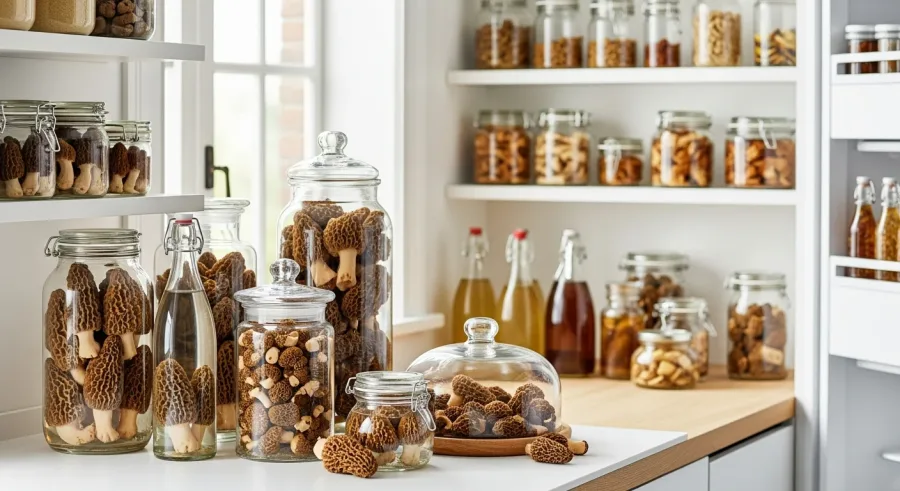
Once dried, store them in an airtight glass jar in a dark, cool cupboard. Light degrades their quality over time. If you live in a particularly humid climate, tossing a food-safe desiccant packet into the jar provides an extra layer of protection.
Whether you freeze or dry them, the base nutritional profile holds up remarkably well. According to the USDA FoodData Central, a 100-gram serving of raw morels delivers just 31 calories while providing 3.12 grams of protein and 2.8 grams of fiber. Drying simply removes the water weight, concentrating those core nutrients into a smaller physical footprint.
When it comes time to cook, soak the dried pieces in warm water or vegetable broth for 20 to 30 minutes until they plump back up.
Can they just sit on the counter?
There are very few scenarios where leaving these out at room temperature ends well.
Fungi possess a notoriously high respiration rate and a highly delicate cellular structure. This means they act like living, breathing organisms even after harvesting, consuming their own stored energy and breaking down fast.
Leaving them sitting out on a kitchen island at a typical 70°F accelerates this breakdown. Within 12 to 24 hours, they lose their characteristic spongy bounce and start to wither. The rapid moisture loss is quickly followed by enzymatic decay.
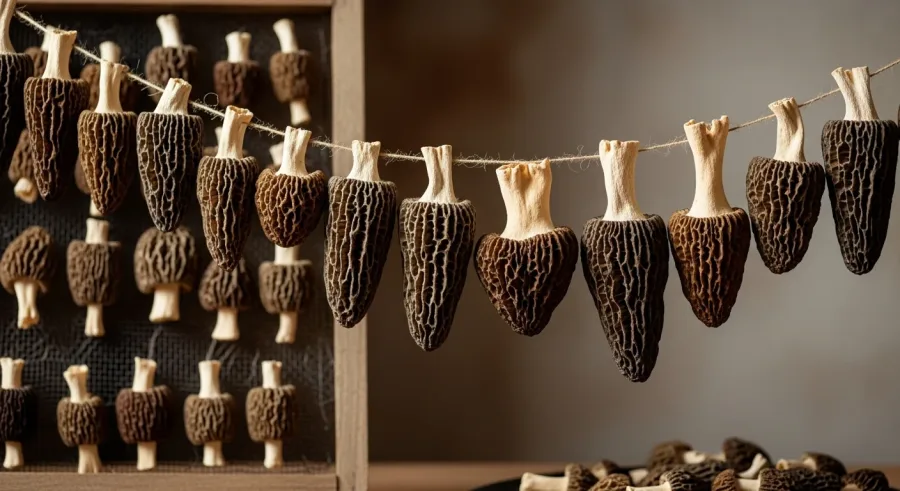
The only exception to the cold-storage rule is if you are actively preserving them using an old-fashioned air-drying method. Some foragers string them up with a needle and thread, hanging them in a warm, arid, breezy room until they shrivel. But unless you have the right climate for that, getting them into the refrigerator or a dehydrator should be your immediate priority.
How to know if they went bad
Your senses will give you a clear answer long before you even take a bite.
Fresh morels smell faintly of the forest floor. The scent is earthy, nutty, and clean. If you open your paper bag and are met with a sour, ammonia-like, or distinctly fishy odor, the batch is too far gone.
Visually, pay attention to the color and structural integrity. The intricate ridges of the cap should hold their shape. If the honeycomb structure looks collapsed, or if you spot dark, wet spots spreading across the surface, bacterial decay has taken hold.
Touch provides the final confirmation. A healthy morel has a slight, dry bounce to it. A spoiled one feels slimy or excessively slippery. Wet rot cannot be trimmed away or washed off safely because the bacteria penetrates deep into the porous flesh. If you find one mushroom in the bag completely covered in slime, check the others carefully and throw out the affected ones without hesitation.
Bottom Line
It takes genuine effort to hunt down these mushrooms in the woods—or the willingness to pay market price for them—so treating them well just makes sense. The rules aren't complicated once you know them. Keep them cold, keep them dry, and never let them see the inside of a sealed plastic bag.