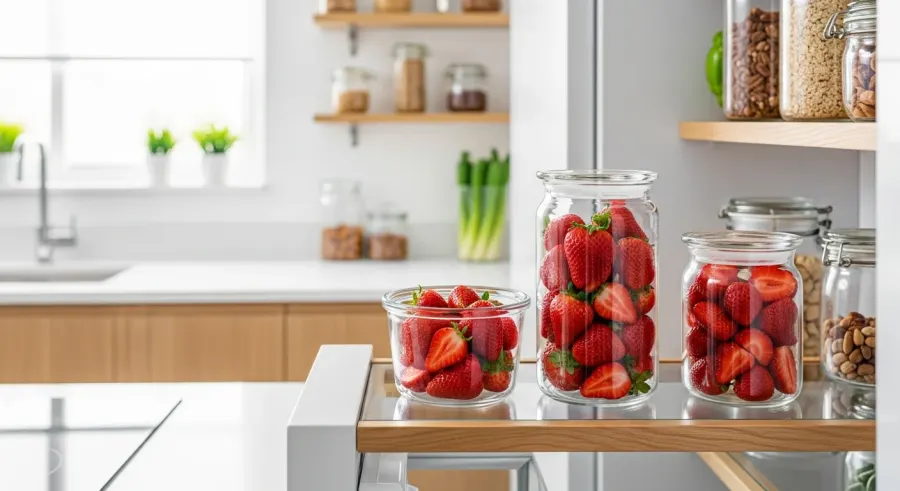
You know the exact drill. You buy an expensive plastic clamshell of ruby-red strawberries, set them proudly on the kitchen counter, and by Tuesday morning they are wearing a grey fur coat. It is maddening. But the hard truth is that strawberries do not just mysteriously “go bad” overnight—they are actively suffocating and eating their own sugars the moment they leave the vine. If you want to stop throwing your grocery money straight into the compost bin, you need to stop treating delicate berries like sturdy apples.
The 24-Hour Room Temperature Death Sentence
Strawberries do not ripen after they are picked. Zero percent. Leaving them on your kitchen counter to "soften up" is actually just letting them rot in real-time. According to the USDA, strawberries survive at room temperature (around 68°F to 72°F) for a maximum of 24 hours [1.2.4]. After that, their respiration rate skyrockets. Think of a harvested strawberry as a living, draining battery. It breathes in oxygen, burns its own stored sugars, and releases heat and moisture. If your kitchen is warm, you might not even get a full day before they turn soft and unappetizing. The rule is absolute: if you are baking a pie this afternoon, leave them out. If you want them for your cereal on Thursday, chill them the second you walk through the door. The only time they should sit on the counter is an hour before eating, purely because the fruit tastes sweeter and more fragrant when the refrigerator chill is knocked off.
The Viral Vinegar Hack is Lying to You
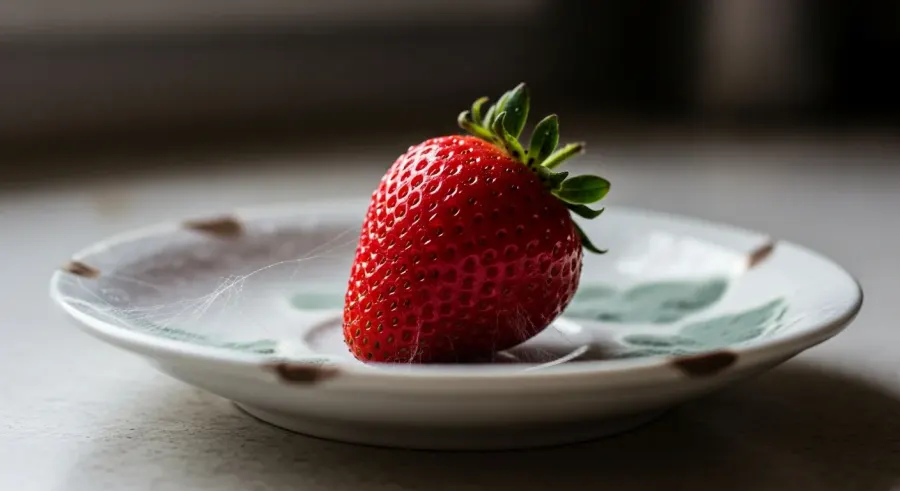
Social media is obsessed with the aesthetic of soaking fresh berries in a bubbly, acidic bath. And yes, a 1-to-3 ratio of white vinegar to water does obliterate mold spores on contact. But here is the critical failure point that influencers ignore: strawberries are incredibly porous. They do not have the thick, waxy armor of a blueberry. They act like tiny red sponges, immediately soaking up that vinegar water into the microscopic crevices surrounding their seeds. You might kill the initial surface mold, but now you have injected raw moisture straight into the core of the fruit. Unless you dry them with surgical precision—which usually involves rolling them in multiple layers of paper towels and risking severe mechanical bruising—that trapped moisture will breed new mold faster than if you had done nothing. Water is the ultimate enemy of shelf life. Never wash your strawberries until your hand is literally reaching for a bowl to eat them.
The 32°F Fridge Strategy
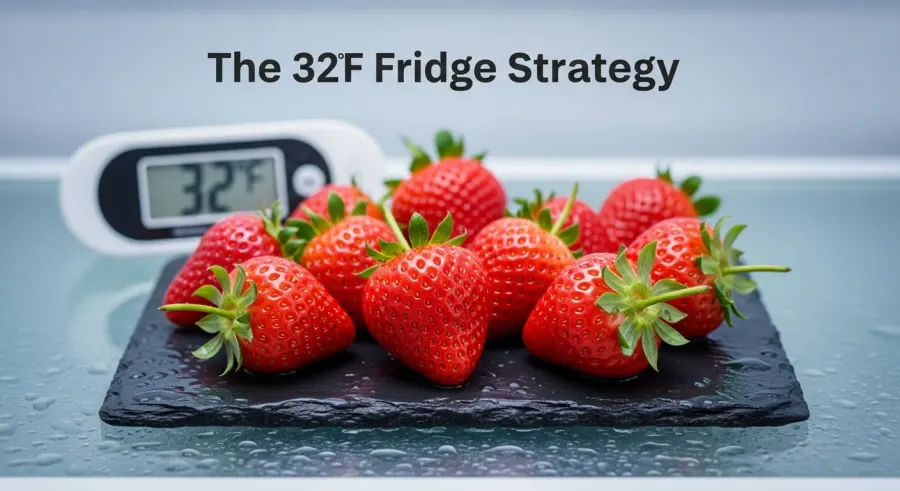
To figure out how to store strawberries for up to a week, you have to master two competing variables: you need high humidity so they don't shrivel, but absolute dryness on the skin so they don't rot. The optimal storage temperature for strawberries is an icy 32°F to 36°F (0°C to 2°C) with 90% to 95% humidity. First, discard the original plastic clamshell. While it is great for surviving the delivery truck, it traps the carbon dioxide the berries exhale, creating a humid microclimate that mold loves. Instead, grab a wide, shallow glass container. Line the bottom with a dry, unbleached paper towel. This paper towel acts as a moisture sink, pulling excess condensation away from the fruit's delicate skin. Place the unwashed berries in a single, uncrowded layer. Stacking them causes microscopic bruising, which accelerates decay. Leave the lid slightly cracked—or use a vented container—to allow just enough airflow to release trapped gases, then slide the container onto the middle shelf of your fridge. Keep them far away from pungent foods like onions, which strawberries will easily absorb.
The Ruthless Quarantine Protocol
Have you ever noticed how one single fuzzy berry seems to take down the entire batch overnight? That isn’t bad luck. Moldy berries weaponize their decay. They release volatile organic compounds (VOCs) that act as an invisible chemical alarm, signaling surrounding fruit to break down faster. In delicate berry environments, a single compromised piece increases the spoilage risk for the entire batch by up to 300% through rapid cross-contamination and VOC signaling. When you unpack your groceries, you need to be ruthless. Inspect every single strawberry. If one is soft, leaking juice, or showing even a microscopic speck of white fuzz, throw it in the trash immediately. Do not just move it to the side of the container. Do not slice off the bad part and put the rest back. You have to remove the threat entirely to protect the remaining fruit.
The Freezer Pivot: Avoiding the Ice Block
Sometimes, you simply buy more than you can eat. If you realize you aren't going to finish the container within five days, you need to transition to freezer storage. But if you just toss the plastic clamshell into the freezer, you are going to pull out a solid, unblendable brick of strawberry ice. To do it right, you need to individually quick-freeze (IQF) them. First, wash the berries thoroughly. (This is the one and only time washing before storage is acceptable, because the surface water will freeze solid rather than breeding mold). Cut off the green leafy calyx, and dry the berries completely with a towel. Spread them out on a parchment-lined baking sheet so no two berries are touching. Place the sheet in the freezer uncovered for two hours. Because strawberries possess a high water content, they begin to freeze at exactly 30.6°F. This fast, isolated chilling locks their cellular structure in place without letting them fuse together. Once they sound like hard marbles when you tap them, transfer the berries into an airtight freezer bag, squeezing out as much oxygen as possible. They will easily last 6 to 12 months, allowing you to grab exactly three perfect berries for a smoothie without needing to chisel them apart.
Bottom Line
Walk over to your kitchen counter right now. Take your newly bought strawberries out of that suffocating plastic clamshell, pick out any bruised casualties, and lay the survivors flat on a dry paper towel in a glass container. Crack the lid, push it into the fridge, and watch them survive the week.