
In Short
Store summer squash unwashed in a perforated plastic bag in the fridge crisper, but plan to cook it within four days. Standard refrigerators are actually a few degrees too cold for these thin-skinned vegetables, which causes watery pits to form on the skin over time.
I always used to bring yellow squash home from the farmers market and just abandon it in the bottom of my fridge. By Wednesday, it would be covered in weird watery dents. It turns out this vegetable has a very specific preference for how it wants to be treated, and standard kitchen appliances are basically its natural enemy.
The Refrigerator Temperature Trap
Most of us simply toss our produce straight into the vegetable drawer without a second thought. But summer squash has a narrow thermal comfort zone. According to the USDA Food and Nutrition Service, the optimal storage temperature for these thin-skinned varieties is between 41°F and 50°F (5°C to 10°C). The problem is that modern home refrigerators are typically set around 37°F (3°C) for food safety. When summer squash sits at that colder temperature for more than a few days, it develops what agricultural scientists call chilling injury.
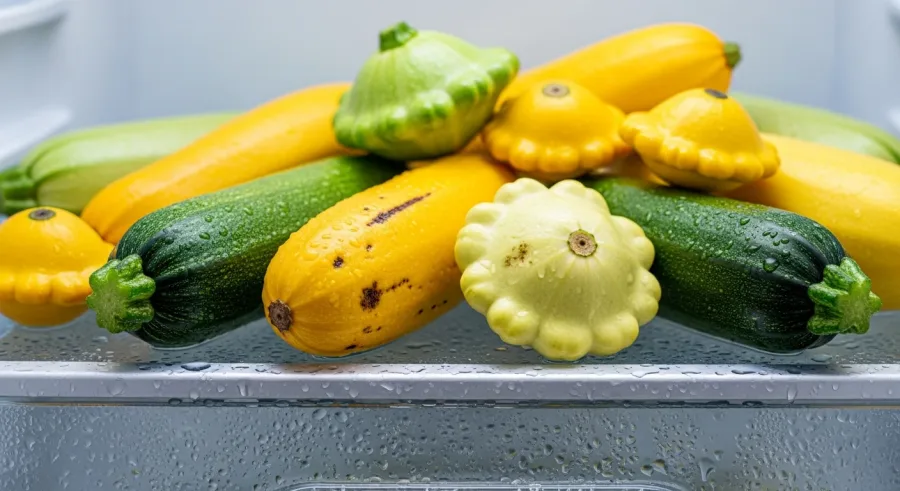
This low-temperature damage shows up as sunken, watery pits on the skin and a rapid browning of the internal flesh. It is a slow cellular breakdown that completely compromises the texture before the vegetable actually rots.
Countertop vs. Crisper Drawer
Because maintaining a perfect 45-degree sweet spot is difficult in a standard kitchen, a choice has to be made between the counter and the fridge. Room temperature environments (typically 68°F to 72°F) are far too warm for long-term holding. A squash left in a fruit bowl begins to soften and shrivel within a day or two as it loses water to the dry air.
The crisper drawer remains the best practical option for everyday storage. Unwashed summer squash will survive in the fridge for about four to five days before chilling injury sets in. If you happen to have a dedicated wine cooler or a root cellar naturally resting at 45°F, you can easily stretch that shelf life to a full two weeks.
The Perforated Bag Trick
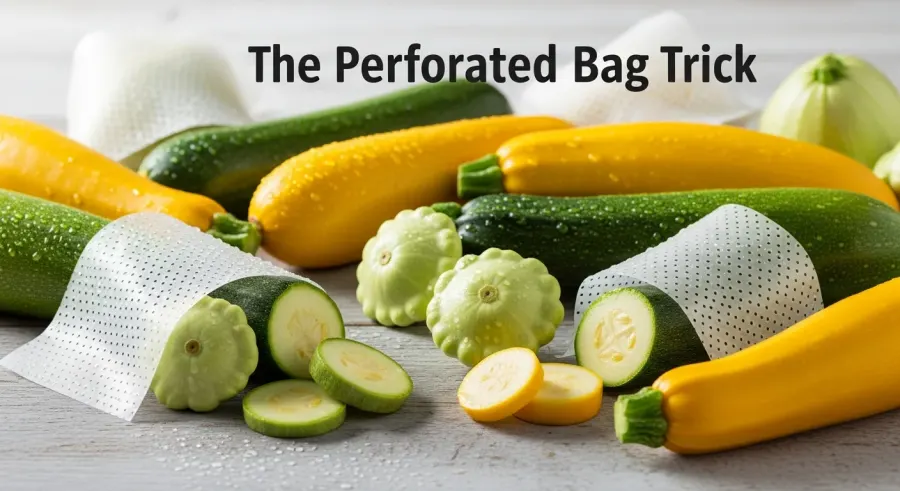
A solid plastic bag will suffocate the vegetable. Summer squash thrives in high humidity—ideally around 95%—but it also desperately needs to breathe. Trapping it in a tightly knotted grocery bag creates condensation, which invites immediate mold and decay.
A better approach is slipping the unwashed squash into a plastic bag and poking several small holes in the material before placing it in the warmest part of your fridge. This single adjustment helps balance the humidity and often extends the crispness by a day or two. It is also wise to keep the squash far away from apples, cantaloupes, or avocados. Summer squash is highly sensitive to the ethylene gas those fruits produce, which triggers premature yellowing and softening.
Saving the Excess for Winter
Forty zucchini on the vine usually means turning to the freezer. However, raw summer squash turns into a watery, mushy mess when frozen because its cell walls burst as ice crystals expand. To fix this, the vegetable's natural enzyme activity must be stopped first with heat.
The National Center for Home Food Preservation recommends water-blanching sliced summer squash for exactly three minutes. For grated squash intended for winter baking projects, a quick one- to two-minute steam blanch works perfectly. Plunging the hot squash into an ice bath immediately after stops the cooking process. Once drained and packed tightly into freezer bags, this blanched squash maintains its quality for 10 to 12 months in a deep freeze.
Spotting the Point of No Return
Fresh summer squash should feel dense and heavy for its size. When it starts to lose moisture, the shiny skin turns visibly dull, and shriveling at the stem end serves as an early warning sign that the vegetable is declining. Once dark, sunken pits appear or a slimy texture develops on the rind, decay has firmly taken hold. Squash that smells sour or feels hollow has crossed the line and belongs in the compost.
Bottom Line
A beautiful summer squash is simply not built for the long haul. Treating it like a delicate, temporary visitor in your kitchen usually leads to the best results on the plate.