In Short
Keep sweet cherries unwashed with their stems attached in the coldest part of your fridge. Moisture and room temperature are their biggest enemies—why the traditional fruit bowl spells disaster in less than 48 hours is explained below.
You just brought home a massive bag of fresh sweet cherries. They look glossy and perfect sitting in a bowl on the kitchen counter. Unfortunately, that bowl is exactly where they are going to lose their crunch.
Why the Fruit Bowl is a Trap
Peaches, bananas, and tomatoes get softer and sweeter sitting on the counter. Cherries do not. They belong to a category of non-climacteric fruits, which means they stop ripening the exact second they are plucked from the branch. Leaving them out at room temperature won't deepen their flavor or develop their natural sugars. It just ages them.
When left on the kitchen counter, they immediately begin losing water through their skins. At a typical room temperature (around 68 to 72°F or 20 to 22°C), fresh sweet cherries have a shelf life of about 24 to 48 hours before the decline becomes obvious. The glossy skins lose their taut finish and start to visibly wrinkle. The flesh gets soft and yielding.
Commercial growers understand this urgency. They store harvested cherries in massive industrial facilities hovering right around 30 to 32°F (-1 to 0°C) with 90 to 95% humidity. They keep the fruit practically freezing to halt the aging process. Your kitchen counter, with its fluctuating warmth and dry air, is a hostile environment by comparison. Eating the entire bag today means leaving them out in a bowl is totally fine. Otherwise, getting them into the refrigerator immediately is your best defense against food waste.
Skip the Sink for Now
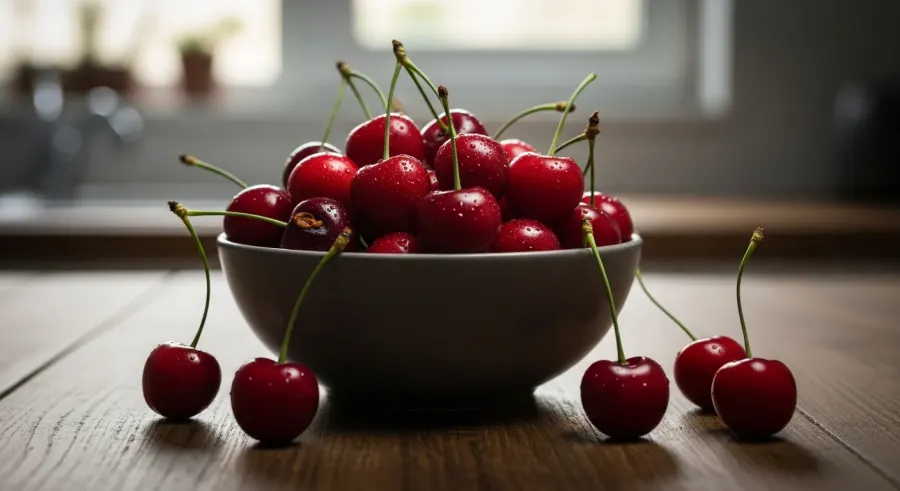
Washing produce as soon as you unpack the groceries feels like a solid habit. For cherries, it actually speeds up the rotting process. Water is the fastest way to ruin a fresh batch.
The shape of a cherry creates a natural little indentation at the top where the stem meets the fruit. When washed and immediately placed in the fridge, water pools in that tiny bowl. It just sits there. In the cool, dark environment of your refrigerator, that trapped moisture acts as an open invitation for gray rot and mold.
Keeping them completely dry makes a massive difference. Waiting to rinse them under cold water until the exact minute you are ready to eat is the smartest approach. If you bought them at a warm farmer's market and they have a little condensation on them from the drive home, taking a second to pat them gently with a paper towel will help them last much longer.
The Argument for Keeping Stems
Many people find it tempting to pull all the stems off right away so the bowl is ready for mindless snacking. Doing so creates a completely avoidable problem.
The stem acts like a biological plug. Yanking it out creates a tiny open wound at the top of the fruit. That tear breaks the protective barrier of the shiny skin. Suddenly, airborne bacteria and microscopic mold spores have a direct highway into the soft, sugary flesh inside.
Cherries with their stems intact hold onto their internal moisture better and resist shriveling. The stem itself is also your best built-in freshness indicator. A bright green, flexible stem means the cherry was picked recently. Once the stem turns brown and snaps like a dry twig, the fruit inside is actively losing its fight against time.
Setting Up the Fridge
Your goal is an environment that is cold and slightly humid, but never wet.
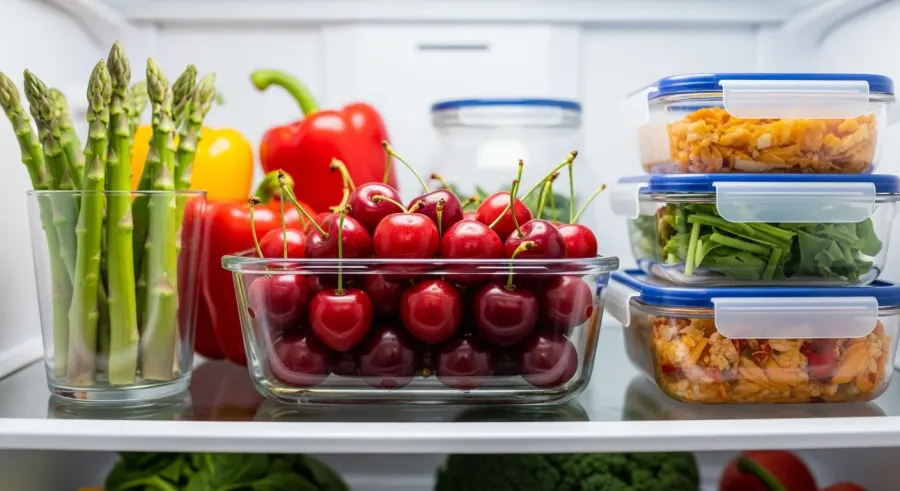
Refrigerators usually sit around 37 to 40°F (3 to 4°C). The absolute best spot for sweet cherries is the back of the lowest shelf or inside the crisper drawer. These areas are naturally cooler, and the temperature fluctuates the least when you open and close the door looking for a snack.
Instead of tossing them loose into the drawer or leaving them in a flimsy grocery bag, keeping them in a loosely sealed plastic container lined with dry paper towels is ideal. Those paper towels are doing important work behind the scenes. They absorb any stray condensation that builds up inside the container as the fridge cycles on and off. You want a little bit of airflow to prevent a swampy environment, so avoiding a perfectly airtight seal is best. Leaving the lid slightly cracked or using a perforated bag works perfectly.
Under these conditions—unwashed, stems on, dry, and cold—your sweet cherries will comfortably last between 5 and 7 days. Starting with very fresh fruit straight from an orchard or farmers market might even push that shelf life to 10 days.
(A quick note on what happens inside: Fresh sweet cherries contain about 63 calories and 16.01g of carbohydrates per 100g, mostly from natural sugars (USDA). As they sit in the fridge and slowly lose trace amounts of water over a week, those sugars concentrate slightly. They aren't actually developing more sugar, just becoming denser.)
Freezing for the Off-Season
Sometimes you miscalculate and buy five pounds of fruit. When you simply cannot finish them in a week, you might want to freeze sweet cherries for later.
Tossing the original plastic bag directly into the freezer is a mistake. The moisture between the fruits will freeze them together into a solid, impenetrable boulder.
This is the one time breaking the washing rule makes sense. Washing the cherries thoroughly and drying them completely is step one. Pulling the stems off and pitting them at this stage is highly recommended. Trying to remove the pit from a frozen cherry is a messy task that most people only try once.
Laying the pitted, dried cherries out in a single layer on a parchment-lined baking sheet and sliding the tray into the freezer for two or three hours allows them to flash freeze. Because they aren't touching each other, they freeze into individual pieces.
Once they are solid, transfer them to a heavy-duty freezer bag. Squeezing out as much air as possible before sealing helps prevent freezer burn. They will hold their quality for 10 to 12 months in a standard freezer (which should be set to 0°F or -18°C).
Just know what to expect when they thaw. Freezing expands the water inside the fruit, which ruptures the cellular walls. They won't have that satisfying fresh snap anymore. They will be soft, making them perfect for smoothies, baking, or reducing into a sauce.
Do They Play Well With Others?
Produce storage involves a lot of anxiety over ethylene gas. Apples, bananas, and tomatoes are heavy ethylene producers. They emit this invisible, naturally occurring ripening gas that causes nearby sensitive fruits to soften rapidly. It is the reason a green avocado turns black when left next to a ripe banana.
Sweet cherries are wonderfully low-maintenance in this department. They are not highly sensitive to ethylene, and they produce almost none of it themselves. You don't need to overthink their placement in the crisper drawer. They will happily share space with an apple or a pear without melting into a mushy disaster.
Odors, however, are a completely different story. Cherries have a porous quality that makes them prone to absorbing the ambient smells around them in the fridge. Storing fresh cherries unsealed right next to half a raw onion, a pungent block of blue cheese, or last night's leftover garlic pizza means your fruit is going to pick up some very strange flavor notes. Keeping them in their own container helps block these transferred smells.
Spotting the Bad Ones
Even with perfect temperature control and moisture management, time wins eventually.
Cherries almost always start to spoil from the top down. The first place you should check is the small cavity where the stem attaches. Seeing fuzzy mold starting to bloom—whether it is thin white threads, gray fuzz, or the sky-blue mold common on citrus and stone fruits—means that cherry is done for. Fungal spores spread quickly in small spaces.
Texture is your next sensory clue. A fresh cherry is firm, dense, and offers a little resistance when you bite into it. A spoiled cherry is unpleasantly squishy. If it is leaking dark juice into the bottom of the container or feels like a deflated water balloon in your fingers, it has passed its prime.
You might also notice a fermented, overly sour smell when you open the bag. That happens when naturally occurring yeasts start feeding on the sugars inside the fruit. Tossing any cherries that show these early signs of decay is crucial. One moldy, leaking cherry resting against a healthy one will spread the rot through the rest of the batch faster than you might expect.
Bottom Line
Fresh cherries represent a brief, specific window of summer. Treating them a little more like delicate flowers—keeping them cold, dry, and structurally intact—protects their crisp texture, ensuring they stay vibrant long after they leave the orchard.