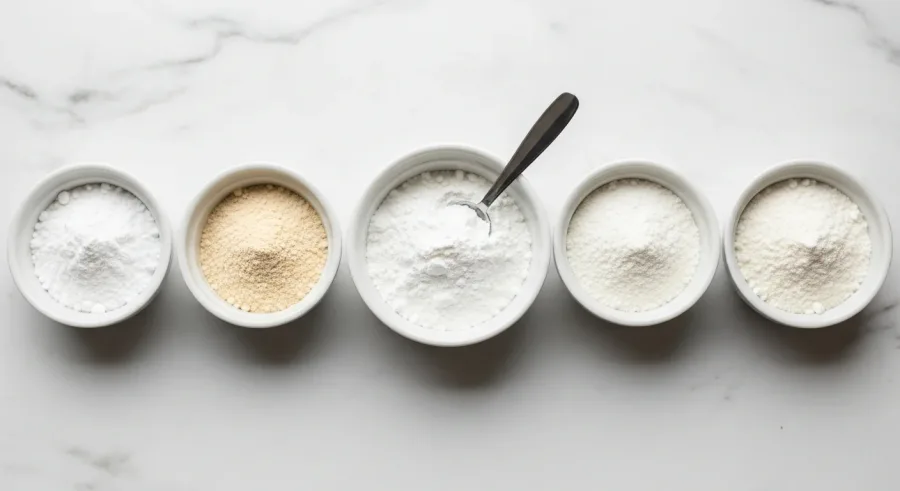
In Short
Arrowroot powder and potato starch are your best 1:1 swaps, while all-purpose flour works if you double the amount. But choosing the wrong one can turn a glossy fruit pie into a stringy mess—here is exactly when to use each.
You are halfway through making a stir-fry or fruit pie when you realize the box of cornstarch is completely empty. It is just a white powder, but it does heavy lifting in the kitchen by absorbing liquid and swelling into a smooth gel. Without it, your gravy stays runny and your pie filling turns into soup. The good news is that your pantry probably holds at least one alternative that behaves almost exactly the same way.
Arrowroot Powder Is Your Best Bet
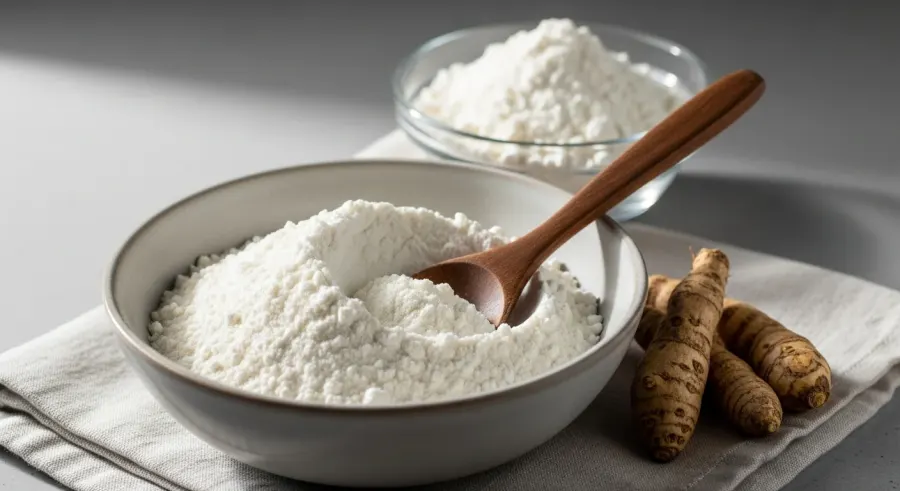
Arrowroot powder is a starch extracted from tropical tubers, and it mimics cornstarch beautifully. You use it in a straight 1:1 ratio. If your recipe calls for one tablespoon of cornstarch, you just use one tablespoon of arrowroot mixed with an equal amount of cold water to form a slurry.
What makes arrowroot special is how quickly it acts. Arrowroot starch has a lower gelatinization temperature than cornstarch. That means it starts thickening your sauce before it even reaches a rapid boil. It creates a clear, glossy finish that makes fruit pie fillings and stir-fry sauces look professional.
Do not use arrowroot in dairy-based sauces like macaroni and cheese or puddings. It interacts poorly with dairy proteins and creates a texture that feels slimy. It also breaks down if you boil it for too long, losing its thickening power entirely, so you should always stir it in during the final two minutes of cooking.
Tapioca Starch Survives the Freezer
When you are making a big batch of teriyaki sauce to freeze for later, this is what you want. Tapioca starch (often labeled as tapioca flour) comes from the cassava root. You need twice as much of it to match cornstarch, so the ratio is two tablespoons of tapioca for every one tablespoon of cornstarch.
Cornstarch sauces can turn spongy and separate when they thaw. Tapioca starch holds its structure beautifully in the freezer. It also gives a lovely, slightly chewy texture to baked goods and a glossy sheen to fruit desserts. Like arrowroot, it is naturally gluten-free and nearly flavorless.
There is a catch when cooking with it, though. If you subject tapioca to a hard, rolling boil for too long, it gets stringy. The texture shifts from a smooth gel to something resembling melted cheese. Just bring your liquid to a gentle simmer, whisk in your tapioca slurry, and pull it off the heat as soon as it thickens.
When to Reach for Potato Starch
Sometimes you just need a thick, hearty soup or gravy without any fuss. Potato starch is a powerful thickener that you can swap in using an exact 1:1 ratio. It is completely flavorless, so it will never muddy the taste of a delicate broth.
Potato starch creates a uniquely silky mouthfeel that works wonders in savory applications. Because it has larger starch granules, it absorbs water rapidly and thickens liquids fast.
The downside is its fragility under high heat. While cornstarch can tolerate simmering for a while, potato starch will literally break down and turn watery if you boil it too aggressively. For the best results, take your soup off the heat entirely, stir in your potato starch slurry, and let the residual heat do the work.
The Old Reliable All-Purpose Flour
Almost everyone has a bag of wheat flour sitting in a cupboard. It works well as a thickener, but it behaves very differently from pure starches. You will need a 2:1 ratio here, meaning two tablespoons of flour replace every one tablespoon of cornstarch.
Cornstarch is pure carbohydrate—specifically, about 91.3 grams of carbs per 100 grams, with almost zero protein or fat, according to the USDA. All-purpose flour contains protein (gluten), which changes how it thickens. Instead of a glossy, translucent gel, flour creates an opaque, matte finish. This is perfectly fine for country gravies, beef stews, or creamy soups, but it will make a bright berry pie look cloudy.
You also have to cook the raw flavor out of it. If you just whisk a flour slurry into a hot sauce and immediately serve it, the dish will taste like raw dough. Let the liquid simmer for at least three to four minutes after adding the flour so the starches can fully hydrate and the raw wheat taste cooks away.
Rice Flour Wins for Frying
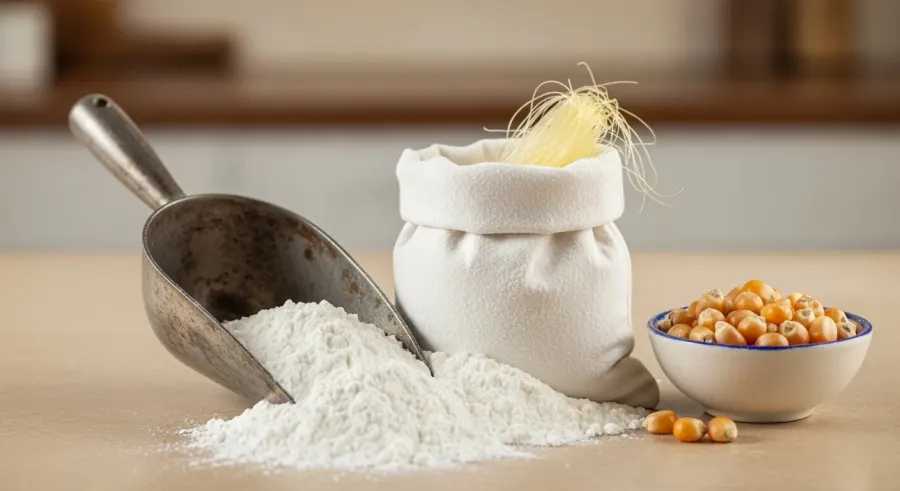
If your recipe uses cornstarch as a coating for crispy tofu or fried chicken, grab rice flour. Used in a 2:1 ratio (two tablespoons for every one tablespoon of cornstarch) for thickening liquids, it is just okay. It requires a longer cooking time to prevent a gritty texture and leaves a cloudy finish.
But for frying, it shines. Rice flour fries up light and crisp, and it absorbs less oil than wheat flour. It is a staple in Asian cooking for tempura batters and crispy coatings.
For puddings and custards, sweet rice flour (glutinous rice flour) is actually a better choice than standard white rice flour because it mimics the smooth consistency of cornstarch more closely. Standard rice flour can sometimes feel slightly heavy or grainy if not simmered thoroughly.
A Tiny Pinch of Xanthan Gum
A tiny pinch goes a very long way.
Xanthan gum is a popular ingredient in keto and low-carb cooking because it provides structure and thickness without adding starch. The ratio is tiny: use just 1/8 teaspoon of xanthan gum to replace a full tablespoon of cornstarch.
It works differently than everything else on this list. You do not need to heat it at all. It will thicken cold liquids just as effectively as hot ones, making it great for stabilizing salad dressings or blending into smoothies.
The danger with xanthan gum is the texture. If you accidentally add a quarter teaspoon instead of an eighth, your sauce will not just be thick—it will turn into a bizarre, gummy paste. Sprinkle it lightly and whisk vigorously, as it has a tendency to clump up instantly when it hits liquid.
Bottom Line
Cooking without your usual ingredients often feels like a guessing game, but starches are surprisingly forgiving once you know their individual quirks. Whether you are leaning on arrowroot for a clear glaze or just using flour to save a Sunday gravy, matching the substitute to the specific cooking temperature and desired finish is the only trick you really need.