In Short
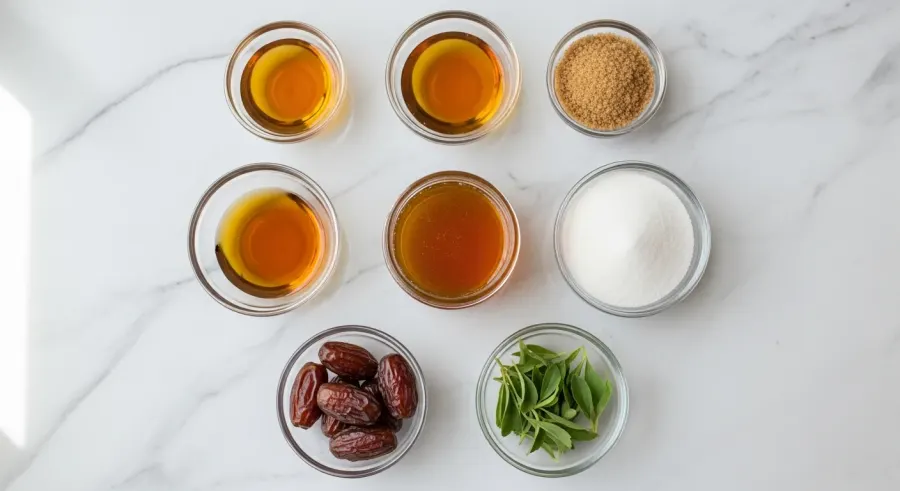
Maple syrup is the best 1:1 substitute for moisture and flavor, while agave nectar perfectly matches honey's sweetness and consistency. Why each alternative behaves differently in the oven (and the British pantry staple that guarantees chewy cookies) is detailed below.
So you are halfway through measuring ingredients and just realized the honey jar is completely empty. Replacing this ingredient in a batter or dough requires matching moisture, acidity, and how the sweetener behaves when exposed to heat. The ideal swap is never about just matching sweetness on the tongue, but understanding how the substitute manipulates water and structure inside the oven.
Maple Syrup Is Your Easiest Swap
Maple syrup is usually sitting right there in the fridge door, making it the most reliable substitute you can grab for standard baking. While honey brings an exact structural blueprint—packing 304 calories, 82.1g of sugar, 82.4g of carbohydrates, and 0.3g of protein per 100g (USDA FoodData Central)—maple syrup sits slightly lower at around 260 calories and 60g of sugar per 100g. This slight dip in sugar concentration means maple syrup contains more water. Honey hovers around 17% water, whereas maple syrup is closer to 32% water. This difference directly impacts hydration in your mixing bowl.
You can swap them in an exact 1:1 ratio. Because of the extra water in maple, if a recipe calls for a full cup of honey, holding back one tablespoon of milk or water from the rest of the batter helps balance the final hydration. Extra water in a batter allows for more gluten development, meaning that an unadjusted recipe might yield a slightly tougher muffin or a cookie that spreads just a fraction wider on the pan. Taking away a tiny splash of additional liquid keeps the flour from over-hydrating.
Flavor plays a massive role in this swap. Maple brings a distinctive woodsy, caramelized profile rather than the floral, pollen-heavy notes of raw honey. It tastes phenomenal in spiced goods where warm notes are already present. Gingerbread, pumpkin bread, oatmeal cookies, and bran muffins all benefit from the depth of maple. The darker the syrup, the more aggressive the flavor, so a delicate amber grade will blend more seamlessly into your batter than a robust dark grade.
Maple syrup falls short in delicate recipes. Bakes like a light vanilla sponge, a citrus-forward lemon cake, or a classic shortbread will end up dominated by the maple flavor. The higher water content also causes issues in structural bakes like homemade caramels or nougat, where boiling off the extra moisture takes significantly longer and can easily throw off the precise temperature stages required for sugar work.
Agave Nectar Matches the Texture
Agave nectar sits on the grocery shelf looking like a lighter, thinner honey, and from a chemical standpoint, it behaves quite similarly. Extracted from the starchy core of the agave plant through enzymatic hydrolysis, this industrial syrup is highly refined. According to the USDA FoodData Central, 100g of agave syrup packs 310 calories and 68g of sugar. What makes it structurally unique is the type of sugar present. Agave can be composed of 70% to 90% fructose, whereas honey is roughly an even split of fructose and glucose.
You use it in an exact 1:1 ratio. The moisture levels between the two syrups are nearly identical, so you do not need to adjust the wet ingredients in your bowl. Because it is highly hydroscopic—meaning it actively grabs ambient moisture from the air—agave does a fantastic job of keeping cakes and quick breads moist for days on the counter. A pound cake baked with agave will stay noticeably sticky and soft long after a sugar-sweetened cake has dried out.
The flavor profile is exceptionally neutral. It provides pure, unadulterated sweetness without adding any competing floral or woodsy notes. This makes it a brilliant substitute for fruit tarts, almond cakes, or simple buttery shortbreads where you want the primary ingredients to shine without interference. It simply sweetens the dough and gets out of the way.
The primary drawback involves your oven temperature. Fructose browns significantly faster than sucrose or glucose via the Maillard reaction. Because agave is heavily skewed toward fructose, cakes and cookies baked with it will develop a dark crust rapidly. Baking at a standard 350°F often results in scorched edges before the center has time to set. Dropping the oven temperature by 25°F and extending the baking time by a few minutes prevents the outside from burning while the interior fully cooks.
Golden Syrup Fixes Chewy Cookies
British bakers have kept this ingredient in their pantries for over a century, while American bakers are just starting to discover its structural benefits. Golden syrup is an invert sugar syrup created by breaking down sucrose into its component parts of glucose and fructose using acid and heat. It rings in at 298 calories and 79g of sugar per 100g. Because it is a fully inverted sugar, it perfectly replicates the exact hydroscopic properties of honey, retaining water and preventing dryness in baked goods.
Substituting golden syrup is simple. You use an exact 1:1 ratio. It acts as a direct structural replacement, mimicking the viscosity and weight of honey almost flawlessly. Unlike raw honey, golden syrup is completely sterile and has a water activity level around 0.79. This specific hydration level means it sits well below the threshold required for microbial growth, making it exceptionally stable on the shelf and very consistent when mixed into a dough.
The flavor lacks the slight enzymatic tang of raw honey, but it brings a rich, buttery caramel warmth that is undeniably delicious. It is the absolute best choice for flapjacks, sticky toffee puddings, and any recipe that requires a deep, lingering chew. The invert sugar forcefully resists crystallization, which is the mechanical process that makes cookies turn brittle. Using golden syrup ensures your cookies will have that perfect, bakery-style bend.
Golden syrup struggles in traditional yeast breads. Recipes for honey-wheat loaves or soft dinner rolls often rely on the raw, unpasteurized enzymes in honey to feed the yeast at a specific, aggressive clip. Because golden syrup is boiled and refined, it lacks those active enzymes, meaning your dough might take slightly longer to rise. It still provides sugar for the yeast to consume, but the initial burst of fermentation is noticeably slower.
When to Rely on Corn Syrup
Light corn syrup has a complicated reputation, but in the realm of pastry arts, it is an undeniable structural workhorse. Produced by breaking down cornstarch into simple sugars, commercial light corn syrup contains roughly 293 calories per 100g and is predominantly made of glucose. It has a water content hovering around 24%, making it slightly wetter than honey but thick enough to mimic its pouring consistency.
You can substitute light corn syrup 1:1 for honey, but you will notice an immediate difference in sweetness. Glucose registers as physically less sweet on the human tongue than the fructose found in honey. If you use corn syrup in a cake or cookie, the final bake will taste noticeably less sugary. Most brands add a touch of vanilla extract and salt to give the syrup some dimension, but it remains essentially a blank slate that won't interfere with your spices or extracts.
This substitute is magnificent for candy making, marshmallows, glazes, or pecan pies. Corn syrup is famously effective at physically getting in the way of sucrose molecules, stopping them from linking together and forming crystals. If a recipe uses honey specifically to keep a glaze smooth or a candy soft, corn syrup will perform that exact job even better than honey does.
Corn syrup is a poor choice for breads and traditional baked goods where crust appearance matters. Honey accelerates crust browning beautifully because its fructose content triggers the Maillard reaction at lower temperatures. Corn syrup requires much higher heat to brown. Your breads, rolls, and cookies will likely emerge from the oven looking pale and unfinished, even when fully baked inside.
Brown Rice Syrup Works for Granola
If you pull brown rice syrup from the cupboard, you need to know you are working with an entirely different family of sugars. Produced by treating cooked rice with specific enzymes, the starches break down into complex carbohydrates and maltose. It contains zero fructose. Because maltose is only about half as sweet as standard table sugar or honey, it fundamentally changes the flavor balance of whatever you are mixing it into.
Using brown rice syrup requires a volume adjustment. You need to use 1.25 cups of syrup for every 1 cup of honey your recipe calls for to achieve a similar level of sweetness. Because you are adding more physical volume to the bowl, you should reduce your other liquids by a couple of tablespoons to prevent the dough from turning to liquid. The syrup itself is extraordinarily thick and sticky—much stiffer than room-temperature honey.
The flavor is distinctive, carrying toasty, almost nutty notes that pair gorgeously with oats, seeds, and whole wheat flours. This is your ultimate weapon for homemade granola bars, flapjacks, and energy bites. The sheer viscosity of the syrup acts like an edible glue, binding loose grains and heavy nuts together flawlessly without making the bars taste cloyingly sweet.
This syrup performs poorly in delicate cake batters and light sponges. The lack of fructose and the presence of heavier complex carbohydrates alter the crumb structure during baking. The syrup is simply too thick to aerate properly during the creaming stage, often resulting in a dense, heavy sponge that feels leaden rather than light and airy.
The Emergency Sugar and Water Trick
Sometimes you have absolutely zero syrups in the house, and running to the grocery store mid-recipe is not an option. You can force white granulated sugar to behave somewhat like honey by mechanically mimicking its hydration and acidity. Honey is essentially an 82% sugar solution. You can replicate this environment on your stovetop with a quick reduction.
Mix 1 cup of white sugar with 1/4 cup of warm water in a small saucepan. Heat it gently just until the sugar is completely dissolved, being careful not to let it boil vigorously, which would evaporate the water you just measured. Add one teaspoon of lemon juice or white vinegar. Honey is naturally acidic, with a pH often around 3.9. Adding this acid does two things: it helps activate the baking soda in your recipe just like honey would, and it partially inverts a small amount of the sucrose, helping to prevent immediate crystallization.
Once the syrup has cooled to room temperature, use it as a 1:1 replacement. It provides the exact hydration and sweetness level your batter needs to come together. It works perfectly in emergency quick breads, muffins, and basic cakes where the primary goal is simply getting the batter into the pan with the right moisture content.
This hack fails completely in recipes where texture is paramount. Granulated sugar is pure sucrose. Even when dissolved into a syrup, it desperately wants to return to its rigid crystalline state once it cools down. If you use this trick in a recipe where honey is responsible for the texture—like chewy gingerbread, soft drop cookies, or caramels—the sugar will recrystallize after baking. Your soft cookies will inevitably turn unpleasantly gritty and brittle the next day.
Bottom Line
Baking relies so heavily on precise chemistry that losing a core ingredient often feels like a guaranteed disaster. Yet the exact function of honey—providing moisture, preventing sugar from crystallizing, and encouraging a deeply browned crust—is a mechanical role that other syrups can play just as well. The best alternative is never just about matching the sweetness on your tongue. It is about matching the environment inside the oven, and knowing exactly how those sugars will behave when the heat hits the pan.