In Short
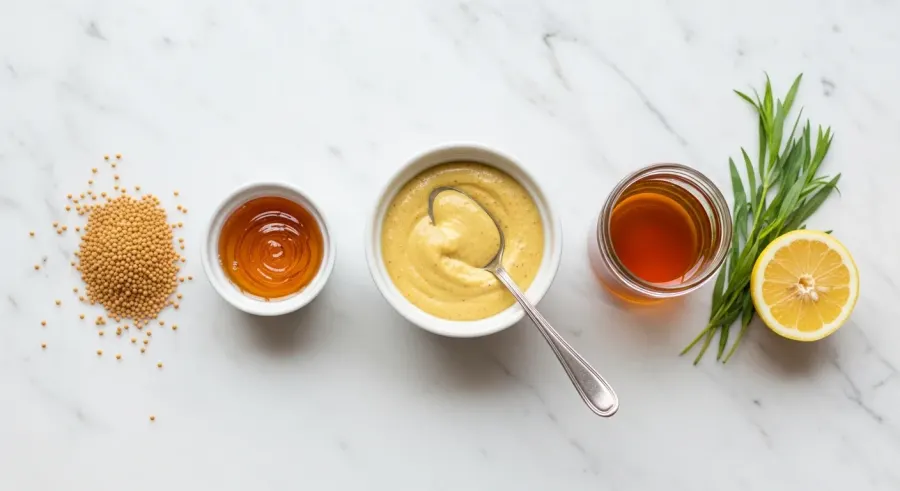
Stone-ground mustard is the best 1:1 replacement because it uses the same brown seeds, but standard yellow mustard spiked with white wine vinegar is the most reliable pantry hack. Why certain substitutes ruin smooth pan sauces while others perfectly stabilize vinaigrettes comes down to the science of seed mucilage.
You are halfway through a recipe for a rich pan sauce when you realize the jar of Dijon in the fridge is empty. Finding the best substitute for dijon mustard is not just about matching the heat; it requires replicating the exact acidity and texture. Depending on what you are cooking, the standard yellow mustard in your door might save you, or it might make your delicate cream sauce taste like a hot dog stand.
Stone-Ground Mustard Usually Wins
If you need a simple 1:1 substitute for dijon, stone-ground mustard is your closest match. Traditional Dijon and stone-ground mustards are both made from the exact same primary ingredient: brown mustard seeds (Brassica juncea).
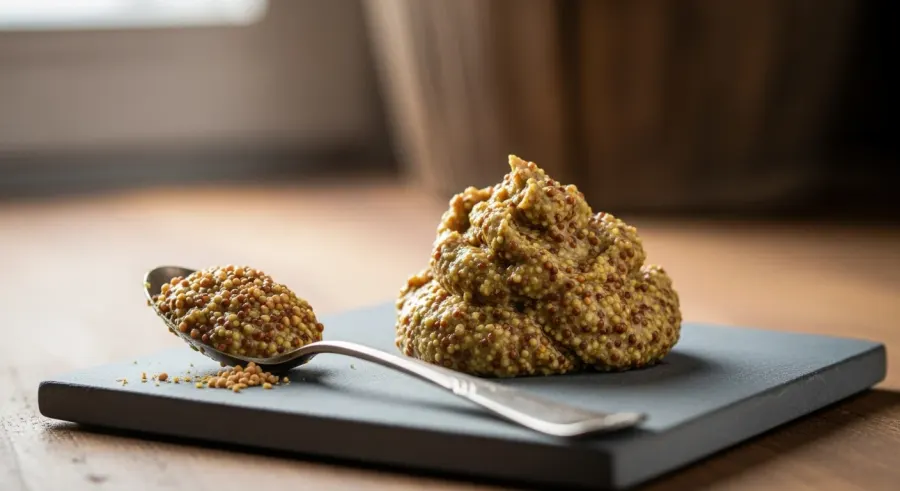
The only real difference is the milling process. Dijon is ground into a smooth paste and sieved to remove the seed hulls, resulting in a pale yellow, creamy finish. Stone-ground mustard skips the fine sieving, leaving those broken seed hulls intact. This gives it a rustic, speckled appearance and a slightly milder bite, but the underlying flavor profile is almost identical.
You can apply the exact same amount of stone-ground mustard as your recipe requires for Dijon. It shines in marinades, meat rubs, and hearty salad dressings where a little extra texture is welcome. You even get the same emulsifying benefits. The mucilage found in the outer coating of the mustard seed hull is a powerful binding agent that forces oil and water to mix into a stable emulsion. If you need a dijon substitute in dressing, stone-ground is the most reliable option.
This swap falls short only in delicate, velvety sauces—like a classic hollandaise or a smooth cream pan sauce. The gritty texture of the whole seed hulls breaks the illusion of a perfectly strained sauce.
Tweaking Standard Yellow Mustard
When a pantry search yields nothing but a squeeze bottle of bright yellow mustard, finding a workaround is still possible. With a slight modification, this becomes a highly practical replacement.
Standard yellow mustard is made from white mustard seeds (Sinapis alba). These seeds are inherently milder than the brown seeds used in Dijon. They also lack the distinct acidity of white wine or verjuice (unripe grape juice) that gives Dijon its signature sophisticated tang. Yellow mustard relies heavily on turmeric for color and standard white vinegar for its acid, which is why it runs a very low 60 calories per 100 grams (USDA FoodData Central). Dijon, packed with more fat-rich seeds and wine, sits closer to 160 calories per 100 grams.
Bridging the flavor gap requires stirring a half-teaspoon of white wine vinegar into one tablespoon of yellow mustard. This cuts through the flat turmeric flavor and mimics the sharp, wine-forward profile of a true Dijon.
This DIY blend works nicely in baked goods, casseroles, and heavy mayonnaise-based dressings like potato salad. It falters as a standalone condiment on a charcuterie board. Without the complex aging process of real Dijon, a standalone smear still tastes like a backyard cookout.
Spicy Brown Mustard Has The Bite
Deli-style spicy brown mustard is one of the more robust dijon mustard alternatives, especially if you are cooking heavy meats. Like Dijon, it uses the sharper brown mustard seeds. It delivers a similar nasal heat, but the underlying flavor is earthier and less refined.
Spicy brown mustard is usually formulated with less water than standard yellow mustard and leans on sharper vinegars rather than white wine. The fat content is typically lower than Dijon's 10 to 11 grams (USDA FoodData Central).
This works as a 1:1 replacement for beef stew, a heavy pork marinade, or a robust sandwich spread. It holds up beautifully to heat and fat.
It is far less successful in delicate vinaigrettes. The harsh, earthy vinegar bite easily overpowers a mild olive oil or delicate herbs, throwing your entire salad out of balance. It really is better suited for heavy cooking.
Whole Grain Mustard Changes The Texture
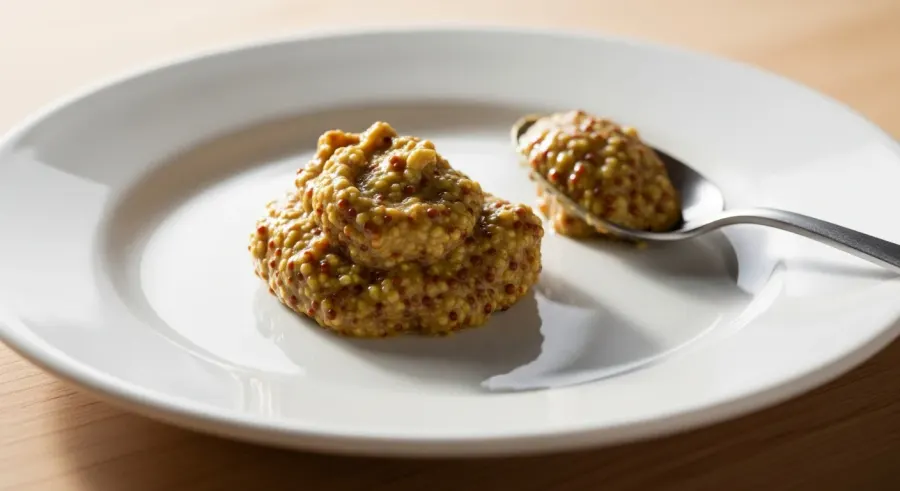
Whole grain mustard is essentially Dijon's rustic cousin. In many cases, the ingredient list is identical: brown mustard seeds, water, white wine, and salt. The divergence happens entirely in the processing plant. Instead of crushing the seeds into a smooth paste, the seeds are left entirely whole and suspended in the liquid.
Because the flavor match is nearly perfect, a 1:1 ratio works well in recipes where texture is not an issue. It provides a wonderful visual appeal when brushed onto a roasted pork tenderloin or folded into mashed potatoes. The whole seeds burst in the mouth, offering little pops of acidity and heat.
There is one major failure case for whole grain mustard. It fails completely as an emulsifier for dressings. Because the seeds are unbroken, the crucial mucilage remains locked inside the seed coat. Whisking oil and vinegar together using whole grain mustard as a binder will result in the liquids stubbornly separating within minutes.
Rehydrating Dry Mustard Powder
If the condiment shelf is bare, dry mustard powder is an effective substitute if you know how to activate it.
Mustard powder contains a specific enzyme called myrosinase. In its dry state, myrosinase does absolutely nothing. When mixed with cold liquid, a chemical reaction occurs that produces allyl isothiocyanate—the exact compound responsible for mustard's pungent heat.
Creating a Dijon substitute requires mixing 1 teaspoon of dry mustard powder with 1 teaspoon of cold water and a half-teaspoon of white wine vinegar. Allowing this paste to sit for about 10 minutes gives the heat time to fully develop. This yield replaces 1 tablespoon of prepared Dijon. It works beautifully in macaroni and cheese, dry rubs, and baked beans.
Cold liquid is mandatory for this process. Hot water permanently destroys the myrosinase enzyme. Instead of a sharp, spicy paste, the result is a flat, bitter sludge. The activated paste can be safely added to a hot dish later, but the initial hydration must happen cold.
Horseradish Works In A Pinch
When you are completely out of mustard in any form, you can look to horseradish for salvation. While they seem completely different, horseradish and mustard belong to the same botanical family (Brassicaceae). Crushing a horseradish root releases the exact same defense chemical—allyl isothiocyanate—that gives mustard its bite.
Prepared horseradish is extremely lean, containing virtually no fat (about 0.6 grams per 100 grams, per USDA FoodData Central) compared to the fat-rich mustard seed. It lacks acidity and smoothness, but it delivers a massive punch of heat.
A half-teaspoon of prepared horseradish easily helps replace dijon mustard in a 1 tablespoon ratio when your condiment drawer is entirely empty. This swap is ideal for beef dishes, sour cream dips, and Bloody Marys where that sharp, nasal kick is required.
Horseradish cannot function as an emulsifier or a primary flavor base in a mild sauce. It lacks the abundant mucilage of mustard seeds, meaning it cannot reliably bind oil and water, and the aggressive heat easily tramples subtle ingredients.
Bottom Line
Replacing Dijon is rarely about finding a magic ingredient that behaves exactly the same way across the board. The trick is simply knowing what job the Dijon was supposed to do in the first place. If a binder is needed for a vinaigrette, the yellow mustard hack works beautifully. If heat is the only requirement for a dry rub, mustard powder is ready to go. Understanding the mechanics of the seeds makes it much easier to rescue a recipe with whatever happens to be sitting on the shelf.