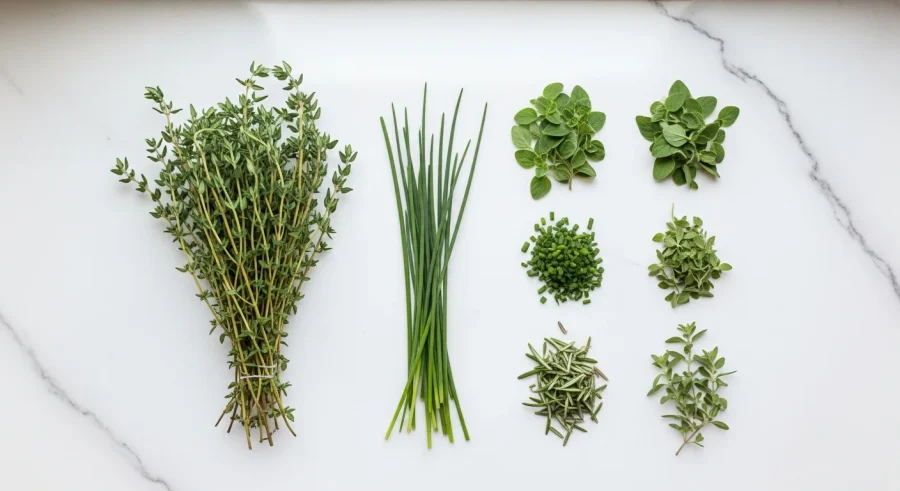
In Short
Dried thyme is your most accurate swap, using one-third the amount of fresh. If you need a fresh herb, oregano works brilliantly in heavy dishes, while marjoram is much better suited for delicate sauces.
You hit that crucial step in the recipe, look in your fridge drawer, and realize the plastic clamshell is completely empty. It happens to all of us. The good news is that replacing fresh thyme is actually a straightforward process once you understand the flavor compounds you are trying to replicate.
What Makes Thyme Taste Like That?
Before tearing apart your spice cabinet, it helps to know what you are actually trying to replace. Fresh thyme has a very specific earthy, slightly medicinal, and subtly floral flavor.
That signature taste comes directly from a volatile essential oil called thymol. Thymol, alongside a similar compound called carvacrol, provides that sharp background note that cuts through heavy fats and rich stocks. When we look for the best substitute for fresh thyme, we are generally looking for other plants in the mint family that naturally produce these same chemical compounds.
Nutritionally, fresh thyme is mostly water, carrying about 101 calories, 5.56g of protein, 1.68g of total fat, and 24.45g of carbohydrates per 100 grams (USDA FoodData Central). But you are never eating 100 grams of thyme. You are using a few sprigs to extract those fat-soluble oils. Your goal with any substitute is to match that oil profile without accidentally introducing flavors that will clash with your dish.
The Dried Version You Already Have
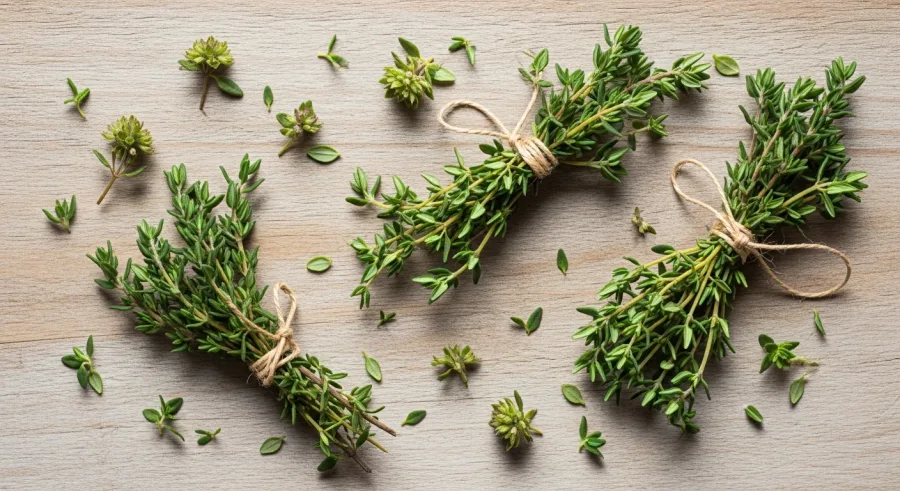
One teaspoon. That is the golden ratio when you need to replace a tablespoon of fresh thyme leaves.
Dried thyme is almost always your most accurate flavor match because it is literally the exact same plant. The dehydration process simply removes the water weight, leaving those earthy oils highly concentrated. Because the moisture is gone, dried thyme requires a little bit of time and liquid to properly wake up and release its flavor into your food.
The Ratio: Use 1/3 the amount of fresh thyme called for. (So, 1 teaspoon dried for every 1 tablespoon fresh).
Why it works: You are introducing the same thymol compounds to the dish, just in a dormant state.
Best uses: This is perfect for slow-cooked applications. Soups, heavy beef stews, braised chicken, and marinades give the dried leaves plenty of time to hydrate. If you bloom the dried thyme in a little warm butter or olive oil early in the cooking process, the fat will extract the flavor beautifully.
When NOT to use it: Never use dried thyme as a raw garnish. If a recipe asks you to sprinkle fresh thyme over a finished salad, a piece of baked brie, or a slice of avocado toast, skipping the herb entirely is a better choice than eating dry, dusty leaves.
Swapping In Fresh Oregano
Ever notice how oregano smells quite a bit like thyme, just slightly louder? That is because they are botanical cousins.
Both herbs produce thymol and carvacrol, meaning they provide a similar sharp, earthy flavor profile. Oregano simply produces higher concentrations of carvacrol, giving it a much punchier, pepper-forward bite. It lacks the subtle floral notes of thyme, replacing them with a robust earthiness that stands up well to heavy cooking.
The Ratio: Use a 1:1 swap. If the recipe needs a tablespoon of fresh thyme, use a tablespoon of fresh oregano.
Why it works: The shared chemical structure means oregano effortlessly bridges the flavor gap in savory dishes.
Best uses: Fresh oregano is phenomenal in tomato-based sauces, roasted potatoes, grilled vegetables, and heavy pork braises. The acidity of tomatoes actually balances oregano's aggressive nature quite well.
When NOT to use it: Skip fresh oregano if you are making a delicate lemon butter sauce for white fish or seasoning a light vegetable consommé. Oregano is a bully. It will completely overpower fragile ingredients and make your dish taste distinctly like a pizza parlor.
When You Only Have Dried Oregano
Sometimes the fresh herb drawer is a lost cause entirely. If you are staring down a row of dry spices, dried oregano is a highly reliable backup.
Because it is dried, the volatile oils are extremely concentrated. A 100-gram serving of dried oregano packs 265 calories and 68.9g of carbohydrates (USDA FoodData Central), reflecting how dense the plant material becomes when dehydrated. You need to use a very light hand to keep it from dominating your recipe.
The Ratio: Use 1/2 the amount of the fresh thyme called for. (So, 1/2 teaspoon of dried oregano to replace 1 teaspoon of fresh thyme).
Why it works: It provides the deep, savory baseline your recipe is expecting.
Best uses: Works perfectly in chili, heavy meat ragùs, and robust salad dressings where the other bold flavors can hold their own against the oregano.
When NOT to use it: Be very careful with classic French recipes. If you are making a traditional chicken fricassee or a subtle potato gratin, dried oregano will drag the flavor profile heavily toward Italian cuisine. The dish will still taste good, but it will not taste French.
Marjoram Is The Polite Alternative
Marjoram is often overlooked in modern kitchens, which is a shame. It sits perfectly on the flavor spectrum between the aggressive bite of oregano and the woodsy calm of thyme.
Marjoram shares the same savory family tree, but its essential oil profile features more terpinene-4-ol, which gives it a distinctly sweeter, almost citrusy and pine-like delicacy. It brings warmth to a dish without demanding center stage.
The Ratio: Use a 1:1 swap of fresh marjoram for fresh thyme.
Why it works: It mimics the gentle, aromatic qualities of thyme without introducing the peppery harshness of oregano.
Best uses: Marjoram shines brightly in poultry dishes, cream-based sauces, mushroom sautés, and light egg dishes like quiches or frittatas. It plays exceptionally well with butter.
When NOT to use it: Do not use marjoram in long, aggressive braises. Its delicate oils evaporate quickly under prolonged heat. If you put marjoram into a slow cooker for eight hours, you will taste absolutely nothing by the time dinner is served. If you must use it in a stew, stir it in during the final ten minutes.
Using Winter Or Summer Savory
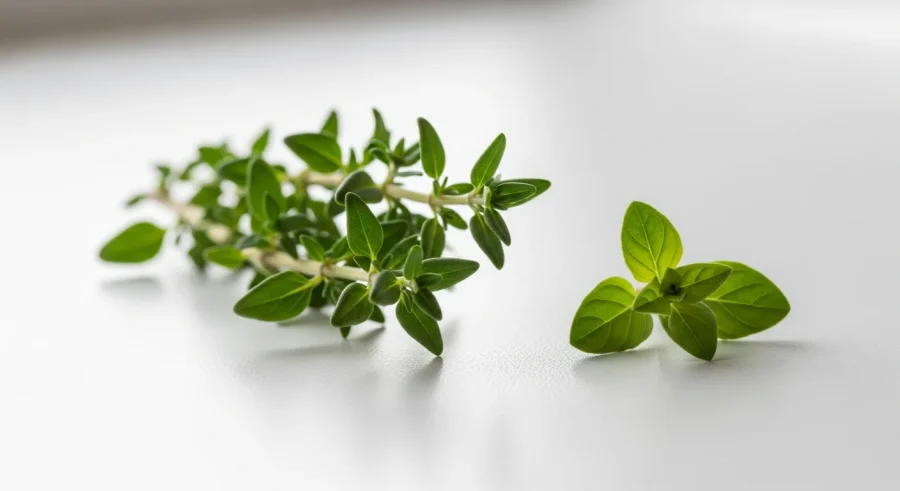
Long before thyme became the default herb in European kitchens, cooks relied heavily on savory. If you happen to grow it or have it on hand, you have an excellent substitution ready to go.
There are two main types to know about. Winter savory is a tough, woody perennial with a sharp, peppery bite that closely mimics thyme. Summer savory is a tender annual that tastes significantly sweeter and lighter.
The Ratio: Use a 1:1 swap for either fresh variety.
Why it works: Savory naturally bridges the gap between thyme and mint, providing that complex herbal background note that elevates heavy proteins.
Best uses: Winter savory is a powerhouse with beans, lentils, and rich roasted meats. Summer savory is beautiful tossed with fresh green beans or whisked into a simple vinaigrette.
When NOT to use it: Summer savory can be entirely lost if used as a rub for heavily smoked or charred meats. It is too fragile to survive the aggressive flavor of a charcoal grill.
Raid The Spice Blends
Reaching for a pre-mixed spice blend might feel like taking a shortcut, but it is often the smartest move you can make when your pantry is bare.
Standard poultry seasoning usually contains a mix of dried thyme, sage, marjoram, and sometimes a hint of nutmeg. Herbes de Provence traditionally features thyme heavily, alongside savory, marjoram, rosemary, and lavender. Italian seasoning is largely oregano, basil, and thyme.
The Ratio: Use 1/2 the amount of the fresh thyme called for.
Why it works: You are getting actual thyme incorporated into the dish, just accompanied by complementary flavors that are designed to work together.
Best uses: Poultry seasoning is flawless for breadings, stuffing, and roasted chicken. Italian seasoning is great for tomato sauces. Herbes de Provence excels on roasted root vegetables and lamb.
When NOT to use it: Avoid Herbes de Provence if you are cooking Mexican or Asian-inspired dishes. The floral lavender notes will violently clash with ingredients like cumin, chili powder, soy sauce, or sesame oil.
Why Rosemary Is A Risky Swap
Fresh rosemary is stunning, but it requires a very careful hand.
Nutritionally, fresh rosemary contains about 131 calories and 5.86g of fat per 100g (USDA FoodData Central). From a culinary perspective, it is a dominant, fiercely strong herb. Its oils taste heavily of pine, wood, and eucalyptus. While it belongs to the same broad family as thyme, it lacks any of thyme's polite subtlety.
The Ratio: Use 1/4 the amount of fresh rosemary to replace fresh thyme, and chop it exceptionally fine.
Why it works: It provides a necessary woody, savory backbone to heavy dishes when no other herbs are available.
Best uses: It works well with robust ingredients that can fight back. Heavy lamb chops, thick cuts of steak, and dense potatoes roasted in animal fat can handle the piney assault of rosemary.
When NOT to use it: Never use large sprigs in a quick pan sauce, and keep it far away from delicate fish or eggs. Rosemary needles are physically tough and resinous. If you do not chop them into a fine dust, your guests will feel like they are chewing on a Christmas tree.
Bottom Line
Cooking rarely demands absolute perfection. While fresh thyme has a specific delicate woodiness, borrowing from its botanical cousins usually just creates a slightly different, but equally delicious, version of whatever you were planning to eat.