In Short
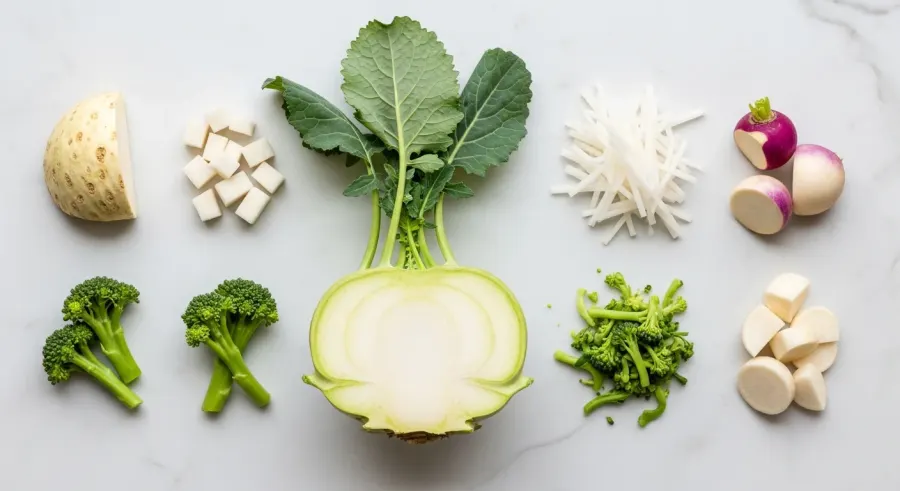
Broccoli stems provide the closest textural match for raw crunch, while turnips and rutabagas work best for roasting and mashing. How you plan to cook the vegetable dictates the perfect swap, and the exact ratios are below.
Kohlrabi looks a bit like an alien spaceship, but its flavor is wonderfully terrestrial. It sits right between a radish and a cabbage stem. When your grocery store is out of it, replacing it is just a matter of matching its signature watery crunch or its sweet cooked density.
Broccoli Stems Actually Work
Most people chop off the broccoli floret and throw the thick stalk directly into the compost bin. You can save those stalks, as they belong to the same species as kohlrabi. Both are simply cultivars of the exact same plant.
Use them in an exact 1:1 ratio by weight or volume.
If you compare their profiles, kohlrabi provides 27 calories and 1.7g of protein per 100g. Raw broccoli stems are slightly denser, containing 34 calories and 2.8g of protein (USDA). They share similar sulfur-based aromatic compounds, which means the structural crunch feels perfectly familiar when you bite into it.
The flavor difference is minor but noticeable. Broccoli tastes distinctly greener and slightly sweeter. It completely lacks the faint peppery bite that you usually find in a fresh piece of raw kohlrabi.
They shine when cut into matchsticks for slaws, shredded for salads, or sliced thin for a quick stir-fry.
The failure case happens before you even start cooking. You must peel them aggressively. The outer skin of a broccoli stem is exceptionally woody and stringy (a vegetable peeler usually is not enough; you need a sharp paring knife). Cutting away that dark green skin reveals a pale, tender center that looks identical to kohlrabi flesh. If you leave the skin on, the exterior will remain tough even after boiling, completely ruining the delicate, uniform texture you expect.
Turnips for the Hot Dishes
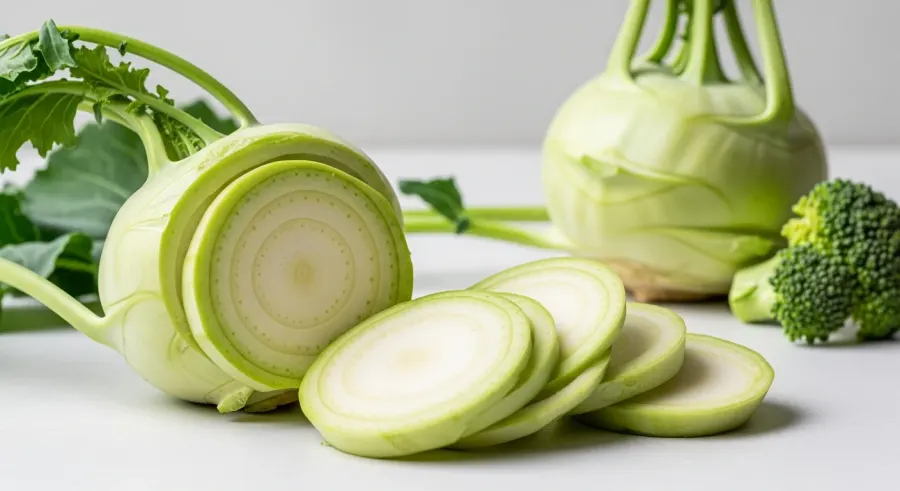
Are you planning to roast, boil, or mash your vegetables? Turnips step in beautifully when heat is involved.
Substitute them in a 1:1 ratio for cooked dishes. You can dial it back to 3/4 cup per 1 cup of kohlrabi for raw applications if you are sensitive to spice.
Nutritionally, they are remarkably close. Turnips sit at 28 calories and 0.9g of protein per 100g, offering 6.4g of carbohydrates (USDA). This mirrors kohlrabi's 27 calories and 6.2g of carbs almost perfectly.
They work because they share a similar root-vegetable earthiness and behave exactly the same way under heat. Raw turnips carry a sharper, radish-like sting, but cooking mellows them into a sweet, slightly nutty profile that mimics cooked kohlrabi flawlessly. The cell walls break down at a similar rate, so your timing does not need to change.
Use them for boiling, mashing, roasting, or tossing into thick winter soups. If you buy store-bought turnips, remember to peel the waxy skin off first.
Avoid using large, mature winter turnips for raw salads. Old turnips can become unpleasantly pungent and spongy in the center. That pithy texture makes for a terrible fresh snack, so stick to baby turnips if you plan to eat them raw.
Daikon Brings the Sharp Bite
Sometimes you just need that sharp, watery snap. Daikon radish provides the exact moisture content you expect from fresh kohlrabi.
You can swap it in a simple 1:1 volume substitution.
Daikon is extremely light on calories. A 100g serving contains just 18 calories, 0.6g of protein, and 4.1g of carbohydrates (USDA). You are mostly eating structured water with a bit of fiber.
It works wonderfully because the crunch is nearly identical, though the flavor leans heavier into a peppery, mustard-like sharpness. Daikon is noticeably wetter than kohlrabi, bleeding moisture when cut.
This makes it perfect for quick pickling, grating into salads, or julienning for fresh spring rolls.
Do not attempt to roast daikon whole or deep-fry it. Its high water content causes it to turn to mush or release excessive liquid into the pan. This ruins the caramelization you would normally get from roasting a denser vegetable. If you are making a slaw, you might even want to salt and drain the daikon first so it does not water down your dressing.
Jicama Is Pure Refreshing Crunch
If your recipe relies entirely on a crisp, apple-like texture, jicama is your best option. It stays crunchy long after being tossed in an acidic dressing.
Use a 1:1 substitution by weight.
Jicama offers 38 calories per 100g, with a solid 4.9g of dietary fiber and 8.8g of carbohydrates (USDA). The fiber content is noticeably higher than kohlrabi's 3.6g.
The flavor profile is entirely missing the cabbage-family sulfur notes. Jicama tastes more like a savory pear crossed with a water chestnut. It works because the structural integrity of the flesh mimics raw kohlrabi without any bitterness. Unlike apples, jicama flesh does not oxidize and turn brown when exposed to air, making it great for meal prep.
Save jicama for fresh slaws, fruit salads with lime and chili, or plain raw snacking. You will need to peel off the thick, papery skin first.
Never try to boil it for a mash or slow-cook it in a stew. Jicama simply does not break down or soften properly in simmering water. It will never yield a creamy texture, remaining stubbornly crisp even after an hour of boiling.
Use the Cabbage Core
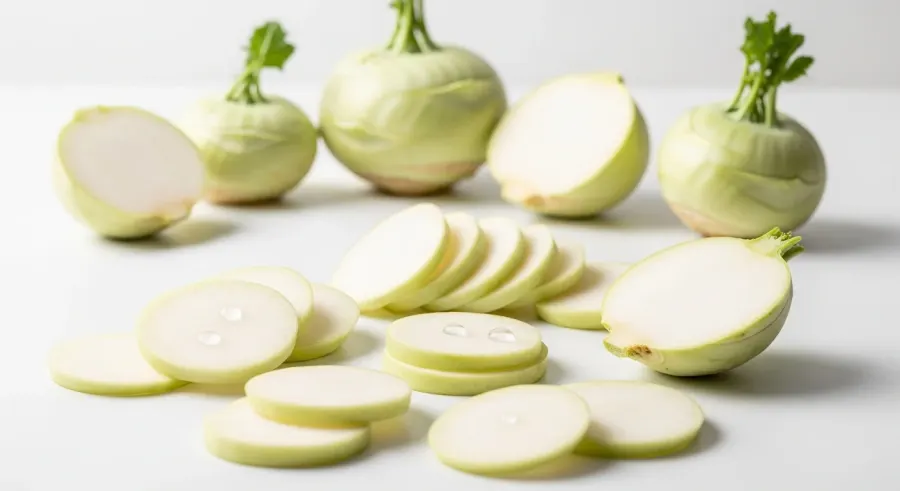
Kohlrabi translates to 'cabbage turnip' in German for a very good reason. The thick, solid core of a standard green cabbage shares the exact botanical DNA as your missing ingredient.
Swap it in a 1:1 ratio by volume. You might need to harvest the cores from two whole cabbages to get enough usable volume for a large recipe.
Raw green cabbage averages 25 calories, 1.3g of protein, and 2.5g of fiber per 100g (USDA).
The flavor is much more concentrated in its specific cabbage notes compared to kohlrabi. It works beautifully because the density of the core provides a similar snappy bite, provided you cut it correctly. Always slice it against the grain to break up the dense fibers.
Shave it paper-thin on a mandoline for coleslaws, or slice it into fine strips for a hot wok.
Avoid cutting cabbage cores into thick, chunky cubes for soups. The dense tissue takes a very long time to soften. Doing this often leaves you with a chewy, rubbery center while the rest of your vegetables turn to mush.
Rutabaga Needs a Slow Simmer
Winter stews demand a vegetable that can hold up to hours of braising. Rutabaga is a cross between a turnip and a wild cabbage, making it a distant relative to kohlrabi that thrives in hot liquid.
Use 3/4 cup of rutabaga for every 1 cup of kohlrabi called for in the recipe.
Rutabagas are significantly denser. A 100g serving offers 37 calories, 1.1g of protein, 8.6g of carbohydrates, and 2.3g of fiber (USDA).
It behaves exactly like kohlrabi when subjected to high heat, absorbing broths and fats effortlessly. The flavor is sweeter, earthier, and richer, featuring a distinct buttery-yellow flesh that darkens as it cooks.
It shines when mashed with cream, diced into hearty beef stews, or roasted slowly with olive oil and thyme. Note that store-bought rutabagas are often coated in food-grade wax to prevent moisture loss, requiring a heavy-duty peeler or chef's knife to remove.
Skip rutabaga entirely for quick stir-fries or raw salads. The flesh is far too tough, dense, and starchy to be eaten raw or flash-cooked. It demands sustained time and heat to become palatable.
Water Chestnuts for Dumpling Fillings
Asian recipes often call for finely diced kohlrabi specifically to add a structural pop to soft meat fillings. Canned water chestnuts step into this role flawlessly.
Substitute them evenly in a 1:1 ratio by volume. Give them a quick rinse under cold water to remove the tinny, metallic flavor of the canning liquid.
Water chestnuts carry a different nutritional footprint entirely. A 100g raw serving packs 97 calories, 1.4g of protein, and a substantial 23.9g of carbohydrates (USDA).
They work purely as a textural replacement. The flavor is exceptionally neutral, lacking the sweetness and mild cabbage notes of kohlrabi. They simply absorb whatever soy sauce, sesame oil, or broth they sit in.
They are ideal for pork dumpling fillings, lettuce wraps, or fast wok dishes where you need a crunch that survives high heat.
Do not use them as a standalone side dish. Because they lack the earthy complexity of fresh kohlrabi, a pile of cooked water chestnuts will taste bland and strictly starchy on their own.
Bottom Line
When you look closely at these alternatives, swapping vegetables stops feeling like a compromise. It becomes a simple lesson in plant families. A broccoli stem and a cabbage core are really just kohlrabi in different shapes, while turnips and jicama mimic its behavior perfectly in the pan or on the plate. Choosing the right one just depends on whether you need a satisfying raw crunch or a tender, roasted bite.