In Short
Lemon juice is the closest 1:1 match, sharing a nearly identical citric acid profile and pH level. But if you are making a savory marinade or a pad thai, white wine vinegar or tamarind paste might actually perform better than citrus.
Running out of limes always seems to happen right when the guacamole is mostly finished, or just before you start shaking a cocktail. Finding the right swap isn't just about reaching for the nearest sour liquid in the fridge. Different acids react differently to heat, sugar, and fat. You would think any tart juice would do the trick, but swapping citrus is actually a delicate balancing act of pH levels and distinct acid types. Some substitutes will tenderize a flank steak beautifully but completely curdle a cream sauce. Others will lock in the bright green color of your avocados without turning them into a watery mess. The secret is matching the specific chemistry of your backup ingredient to the job the lime was supposed to do.
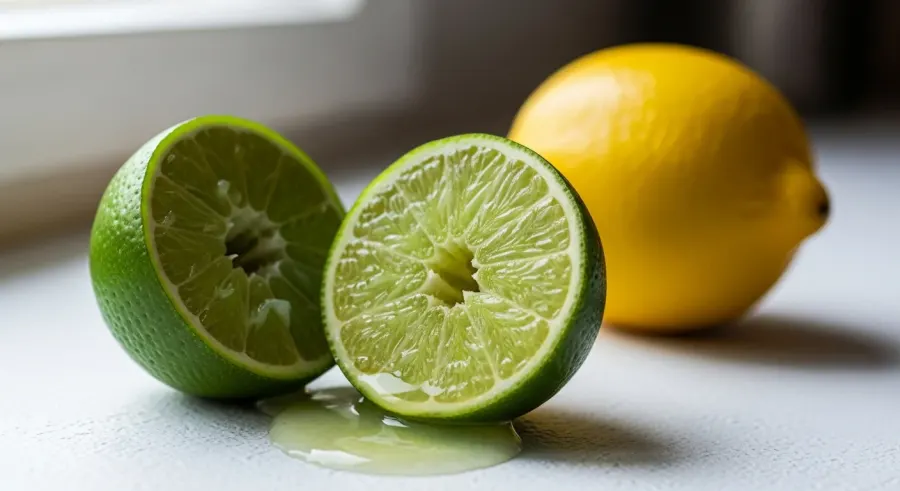
Lemon Juice is Your Closest Match
A simple chemical truth makes this the most reliable swap you can make in your kitchen. Lime and lemon are near twins on the pH scale. Lime juice generally has a pH between 2.0 and 2.8, and lemon juice ranges from 2.0 to 2.6 (FDA). Both fruits rely on citric acid for that sharp, immediate bite on the tongue.
In fact, lemon juice generally contains slightly more citric acid than lime. You will find about 48 grams per liter in lemon juice compared to lime's 45.8 grams (Journal of Endourology, 2008). Because their acid structures are so alike, they behave the same way when interacting with baking soda in a cake batter or denaturing proteins in a quick fish marinade. If you use lemon juice in a chicken marinade, it breaks down the muscle fibers on the surface at a similar rate. You do not have to adjust your marinating time at all.
Use a 1:1 ratio. If your recipe needs two tablespoons of lime, pour in two tablespoons of lemon.
Flavor-wise, lemon hits the palate straight on with a bright, sunny tartness. Limes contain a bit of malic acid alongside the citric, plus complex floral oils in the skin that often make their way into the juice. Lemons lack that subtle bitterness. Nutritionally, it is an even trade. Lime juice contains 25 calories and 8.42 grams of carbohydrates per 100 grams (USDA FoodData Central), and lemon closely mirrors these numbers.
The only time lemon stumbles is in highly specific regional dishes. A classic key lime pie or a traditional caipirinha will taste fundamentally different with lemon, even if the chemistry holds up perfectly.
Calamansi Juice Brings Floral Notes
Finding calamansi might require a trip to a local Asian market, but it is entirely worth keeping in your rotation. The calamondin fruit is a hybrid of a mandarin orange and a kumquat. It is heavily utilized across Southeast Asia as a primary souring agent.
While lime offers a sharp, almost aggressive green note, calamansi brings a deeply floral, aromatic sourness. It still provides the low pH necessary to balance heavy coconut curries or salty soy sauces. Imagine the tartness of a lime crossed with the fragrance of an orange blossom. It smells sweeter on the nose, though the juice itself remains quite tart and acidic.
You can substitute this at a 1:1 ratio. It works wonders in noodle dishes, heavy marinades, and dipping sauces.
Avoid using calamansi in Mexican salsas or classic margaritas. The distinct mandarin-like flavor clashes heavily with cilantro, jalapeño, and agave spirits. It also has a slightly higher natural sugar content than the 1.69 grams of sugar found in 100 grams of lime juice, which can alter the balance of very dry, spirit-forward cocktails.
The Dry Trick With Citric Acid
Sometimes you need the sour impact of a lime, but you cannot afford to add any extra liquid to your dish. This is where dry citric acid powder becomes highly useful.
Often found in the canning aisle or at specialty baking shops, it is the exact compound that gives limes their tartness, isolated into a shelf-stable powder. In candy making, adding liquid lime juice to a boiling sugar syrup can throw off the temperature stages, preventing the sugar from reaching the hard crack stage. Citric acid powder solves this entirely. You get all the tartness of lime without adding a single drop of water.
A standard conversion is one-quarter teaspoon of citric acid dissolved in one tablespoon of water to replace one tablespoon of fresh lime juice. If you are baking, you can simply whisk the dry powder directly into your flour and sugar.
It delivers a pure, unadulterated sour punch. Because there are no essential oils or trace sugars, it lacks the aromatic complexity of fresh fruit. It is just pure acid.
Do not use this in drinks where the volume and mouthfeel of the juice are important. A margarita made with water and citric acid powder will taste thin, hollow, and entirely unappealing.
White Wine Vinegar for Savory Dishes
You do not always need a citrus fruit to do the heavy lifting. Vinegars operate on an entirely different chemical compound. Instead of citric acid, white wine vinegar is built on acetic acid.
Acetic acid is created during fermentation, giving white wine vinegar a pH generally resting between 2.6 and 2.8. It hits the back of the throat rather than the front of the tongue, providing a sharper, more lingering sourness. If you are making a lime-cilantro mayonnaise or an avocado crema, white wine vinegar is highly effective at stabilizing the emulsion. The acetic acid provides the necessary structure to keep the oil and water components from separating.
Because acetic acid tastes more pungent to the human palate, start by using half the amount. If a dressing calls for one tablespoon of lime juice, use half a tablespoon of white wine vinegar. You can always adjust upward.
There is zero fruitiness here. You are adding pure, savory tartness without any botanical oils. With only 0.07 grams of fat and 2 milligrams of sodium per 100 grams (USDA FoodData Central), lime juice does not alter the fat or salt balance of a dish. White wine vinegar acts in a similar way, making it a very safe structural swap.
Never use vinegar in baking recipes that rely on lime for flavor. While the acid will activate your baking soda, your muffins will smell vaguely like salad dressing.
Apple Cider Vinegar Adds Earthiness
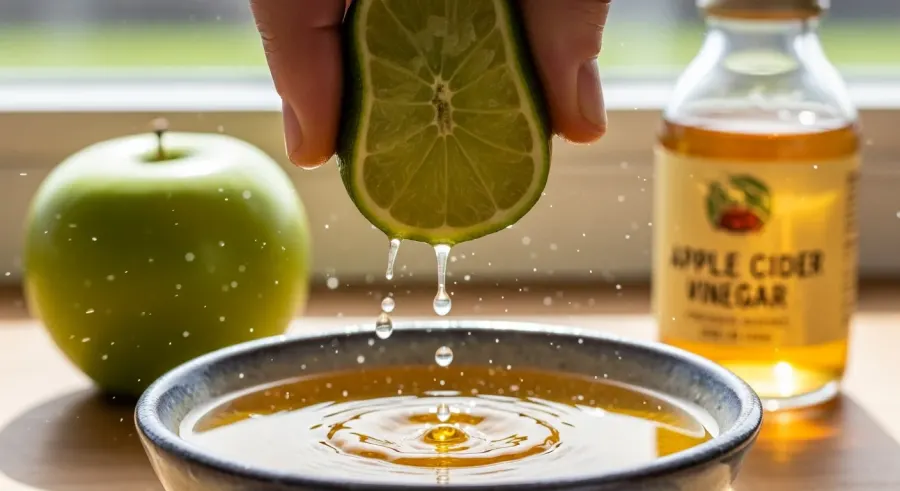
Your pantry likely holds a bottle of this right now. Apple cider vinegar brings a combination of acetic acid and malic acid to the table.
Malic acid is the same compound that makes green apples tart. It has a slower, smoother onset than citric acid, meaning it lingers on the palate much longer. This makes apple cider vinegar a surprisingly complex substitute when cooking hearty savory foods. It is distinctly fruity and fermented. The apple notes are usually quite noticeable, which adds a pleasant earthiness to barbecue sauces, slow-cooked pulled pork, or robust chili recipes where lime might normally be used as a finishing acid.
Use half a tablespoon for every tablespoon of lime juice required.
Skip this substitute if you are preparing light seafood dishes. If you are making a delicate scallop ceviche or a light fish taco sauce, the fermented, funky notes of apple cider vinegar will easily overpower the gentle flavors of the seafood. It demands a dish that can stand up to its bold profile.
Tamarind Paste for Deep Acidity
Reaching for a dark, sticky paste to replace a bright green juice feels entirely counterintuitive. Yet, tamarind is a staple souring agent in Thai, Indian, and Mexican cuisines.
Tamarind derives its tartness primarily from tartaric acid. While lime juice is almost entirely water, tamarind paste is dense and highly concentrated. Nutritionally, it is vastly different. It carries significantly more carbohydrates and calories than the 25 calories found in 100 grams of lime juice. Tartaric acid is sharper and more astringent than citric acid, providing a heavy, grounding acidity rather than a bright, lifting one.
Substitute at a 1:1 ratio, but thin the paste with a few drops of warm water first so it integrates smoothly into your sauce or marinade.
Tamarind is earthy, dark, and slightly sweet, resembling a sour molasses. It works perfectly in pad thai, rich curries, and dark meat marinades where you want depth rather than brightness.
Keep this away from anything requiring a clear liquid or a light color. Tamarind will turn a pale vinaigrette muddy brown and completely alter the texture of delicate sauces.
Grapefruit Juice Works in High Volume
Grapefruit shares a lot of nutritional DNA with lime, including a heavy dose of vitamin C and a nearly identical trace amount of fat. The culinary challenge with grapefruit is its mildness.
It is significantly less acidic than lime or lemon, meaning you have to use more of it to achieve a similar level of tartness. It also contains a compound called naringin, which is responsible for its signature bitter aftertaste. Grapefruit has a much higher sugar content than lime. Lime juice has about 1.69 grams of sugar per 100g, while grapefruit juice sits closer to 7 or 8 grams. When used in a hot pan or on a grill, these extra sugars undergo the Maillard reaction much faster. Your marinades will brown and caramelize more quickly.
You will need to use two tablespoons of grapefruit juice for every one tablespoon of lime juice.
Expect a milder, sweeter acid profile followed by a distinct botanical bitterness. This works beautifully in marinades for chicken or pork.
Do not use this in baking recipes with strict hydration ratios. If a cake batter calls for a quarter cup of lime juice, adding a half cup of grapefruit juice to match the acidity will make the batter far too wet. You will end up with a dense, gummy crumb.
Dry White Wine for Pan Sauces
Pan-searing often ends with a quick squeeze of citrus to lift the browned bits off the bottom of the skillet. When you are out of limes for deglazing, a dry white wine like Sauvignon Blanc or Pinot Grigio is an excellent fallback.
Wine has a gentle acidity, typically falling between a pH of 3.0 and 3.4. It introduces a complex, fermented fruit flavor that deepens a savory sauce rather than just brightening it. Because it is much less acidic than lime juice, it provides a rounder, softer finish to a dish.
Use twice the amount of wine as you would lime juice, and allow it to simmer for a full minute to burn off the raw alcohol.
This fails completely in any raw application. Do not pour white wine over a finished taco or into a raw salsa expecting it to taste like lime. It requires heat to cook off the alcohol and concentrate the flavors properly.
Bottom Line
Swapping out ingredients often feels like a compromise, but it is really just an exercise in understanding how your food works. Once you know whether a recipe needs the chemical bite of an acid or just the botanical aroma of a fruit, replacing lime juice stops being a guess and starts becoming a deliberate culinary choice.