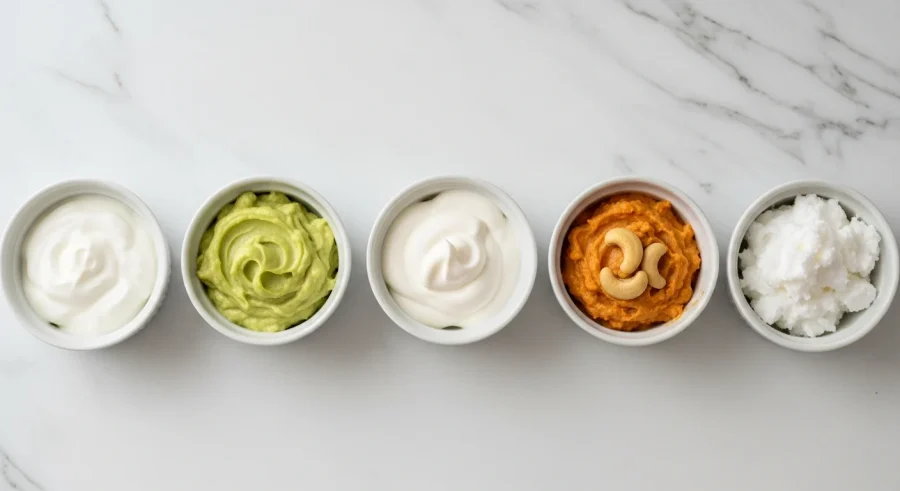
In Short
Full-fat Greek yogurt is your closest match for baking and cold toppings, but you actually need crème fraîche if you are cooking over high heat. The chemistry of dairy fat and lactic acid dictates exactly which substitute will ruin your recipe and which one will save it.
Opening the fridge halfway through a recipe only to find an empty tub of sour cream is a distinct kind of frustration. I have stared down a bowl of half-mixed muffin batter wondering what else I could use. The good news is that your kitchen probably already holds a perfectly functional stand-in. The catch is that dairy behaves differently depending on whether it hits a hot skillet, a mixing bowl, or a baked potato. Finding the right swap is just a matter of matching the fat chemistry to the job at hand.
Full-Fat Greek Yogurt Is Your Safest Bet
Greek yogurt is the undisputed champion of the substitution game. Both products are cultured dairy, meaning they share a very similar acidic bite. They rely on different bacteria for fermentation—sour cream uses Lactococcus, while yogurt relies on Lactobacillus—but the end result is the same lactic acid buildup.
The ratio is a direct one-to-one swap.
Yogurt feels slightly sharper on the palate, and the macro breakdown is quite different. Sour cream carries 19.4 grams of fat and 198 calories per 100g, along with 2.4 grams of protein (USDA FoodData Central, 2019). Whole milk Greek yogurt flips those numbers, dropping down to about 4 to 5 grams of fat and 97 calories, while bringing 9 grams of protein. That extra protein creates a slightly drier, chalkier finish on the tongue when eaten plain.
It is perfect for dips, cold garnishes, and baking cakes. The identical acidity means it activates baking soda with the exact same efficiency.
High heat cooking is where this substitution fails. When you drop a low-fat dairy product into a bubbling pot of beef stroganoff, the milk proteins denature rapidly. Without enough fat to coat and protect them, those proteins clump together, causing your sauce to separate into a grainy mess.
Crème Fraîche Can Handle the Heat
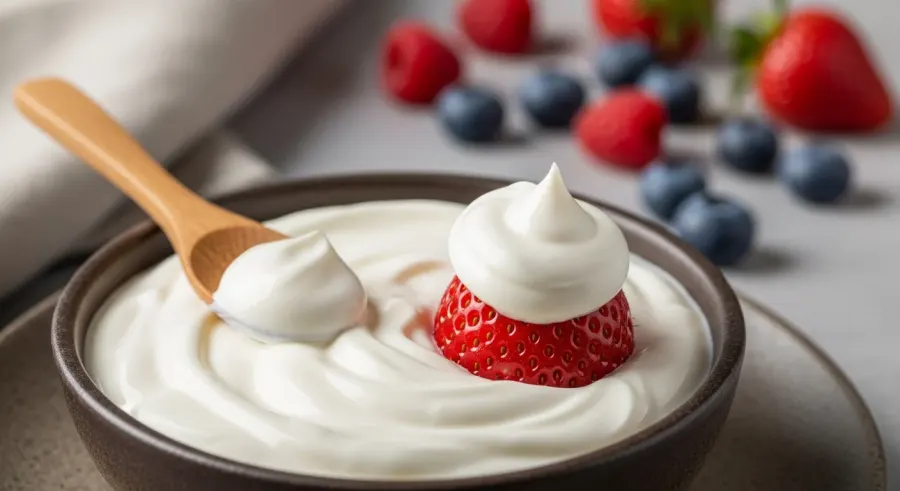
French cooks have relied on this rich dairy staple for centuries. It provides a luxurious texture that regular cultured cream struggles to match.
You can use it in exact equal amounts as your recipe requires.
Crème fraîche boasts around 30 to 40 percent butterfat. This is a massive jump from American sour cream, and it changes how the ingredient behaves on the stove. The dense fat molecules coat the milk proteins, acting as a physical buffer against heat shock. You can boil it aggressively and it will remain silky smooth.
The flavor leans more toward a nutty, buttery profile rather than a sharp lactic bite. This makes it flawless for pan sauces, rich gravies, and hot soups.
Baking with it requires a bit of caution. Because it lacks the sharp acidity of sour cream, it will not tenderize gluten or activate leavening agents quite as effectively. If you swap it into a muffin recipe, the crumb will be noticeably denser. You may want to add a small squeeze of lemon juice to the batter to correct the chemistry.
Blended Cottage Cheese Works Surprisingly Well
Cottage cheese is lumpy curds and liquid whey. That texture is obviously wrong for a taco. Pushing it through a food processor completely changes its physical state, breaking the curds down into a smooth, glossy puree.
A standard full-fat cottage cheese contains roughly 11 grams of protein and just 4 grams of fat per 100g (USDA FoodData Central, 2019).
Because cottage cheese is heavily salted during production, you must dial back the added salt in your recipe by at least a quarter teaspoon. To replicate the missing tang, blend in one teaspoon of white vinegar or lemon juice per cup of cheese.
The ratio is exactly one-to-one after blending. It is excellent for loaded baked potatoes, high-protein dips, and cold spreads.
Do not try to make a delicate pound cake with this. When you subject that much protein to the ambient heat of an oven, the internal structure seizes up. Your baked goods will develop a rubbery, deeply unpleasant texture.
Buttermilk Belongs in the Oven
Sometimes you just need to get a cake in the oven and you only have liquids in the fridge. Traditional baked goods like biscuits and scones rely on buttermilk for a reason. The high acidity breaks down long gluten strands, creating a highly tender crumb.
The lactic tang is arguably the closest match you will find to actual sour cream.
You cannot swap it evenly without throwing off the hydration of your batter. Use 3/4 cup of buttermilk for every 1 cup of sour cream requested. You should also consider shaving off a tablespoon of milk or water elsewhere in the recipe.
Attempting to top a plate of nachos with this is a mistake. Buttermilk is a fluid. It sits at around 1 to 2 percent fat and contains roughly 40 calories per 100g (USDA FoodData Central, 2019). It has zero structural integrity and will simply saturate whatever you pour it over.
The Cream Cheese Rescue Operation
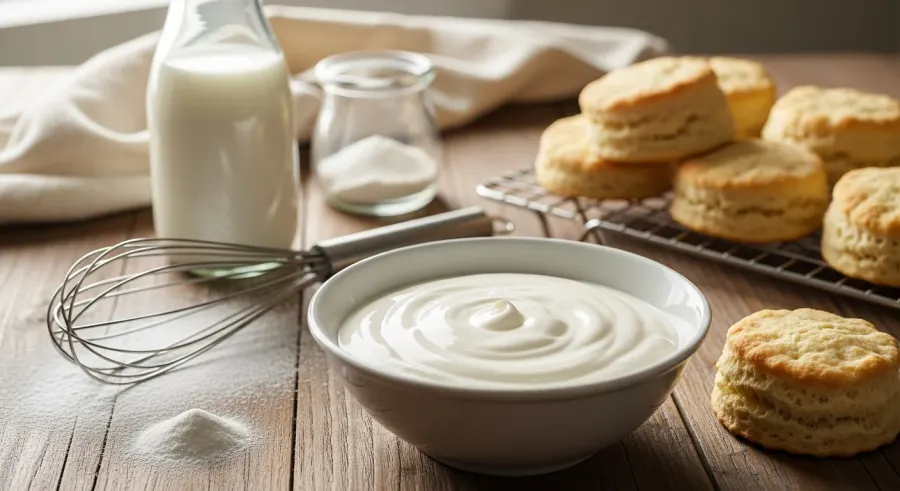
You probably have a foil-wrapped block of this sitting in the back of the fridge right now. The high fat content mimics the mouthfeel you are looking for, but the texture requires an intervention.
Cream cheese is dense and spreadable. You need to physically alter its viscosity. Blend 6 ounces of room-temperature cream cheese with 3 tablespoons of milk. This loosens the structure until it resembles the plop-and-drop consistency of sour cream.
It is significantly sweeter and heavier on the palate, completely missing the fermented tang. You can add a few drops of lemon juice to bridge the gap.
Keep this swap reserved for casseroles, thick dips, and baked pasta dishes where you just need dairy fat to carry the surrounding flavors.
Light, airy cakes will suffer if you use this. Cream cheese brings a massive 34 grams of fat and 342 calories per 100g (USDA FoodData Central, 2019). That much fat physically weighs down the crumb, preventing the batter from rising properly in the oven.
Mayonnaise Is Actually Great for Baking
We need to talk about chocolate cake. The idea of using sandwich condiments in a dessert sounds odd until you look at the actual ingredients. Mayonnaise is just a stable emulsion of oil, egg yolks, and vinegar.
The acid from the vinegar provides the necessary tang, while the oil delivers deep moisture.
Use it as a direct one-to-one swap.
Chocolate cake is the classic application for this trick. The intense flavor of cocoa powder completely masks the savory, slightly eggy notes of the mayo. The fat content provides a lingering moisture that prevents the crumb from drying out for days.
Avoid using this as a cold garnish. Do not put this on a taco. The flavor profile clashes aggressively with cumin and chili powder. Mayonnaise packs around 75 grams of fat and nearly 680 calories per 100g (USDA FoodData Central, 2019), making it far too heavy to serve as a simple dip.
A Dairy-Free Option That Tastes Right
Plant-based swaps usually require a special trip to the grocery store, but cashew cream is easy to make from scratch. Raw cashews soaked in boiling water for thirty minutes become soft enough to puree.
When blended with water, the plant fats and proteins form a stable emulsion that visually mimics dairy fat.
You have to manufacture the sourness yourself. Cashews are neutral and slightly sweet. Adding 1 tablespoon of lemon juice and 1 teaspoon of apple cider vinegar per cup of cashew cream builds a complex acidity that tastes properly fermented.
Swap it in equal amounts for any recipe. It is excellent for vegan chili, tacos, and dairy-free baking.
Dropping it into thin, simmering broths is risky. Without the chemical stabilizers found in commercial dairy, the cashew emulsion struggles under prolonged heat. The oils can separate from the water, leaving a grainy film floating on top of your soup.
Bottom Line
Baking and cooking rely heavily on the hidden mechanics of fat and acid. Once you realize that sour cream is essentially just water, butterfat, and a bit of lactic acid, finding a replacement feels a lot less stressful. You just have to match the chemistry to what you are making, and the rest falls into place.