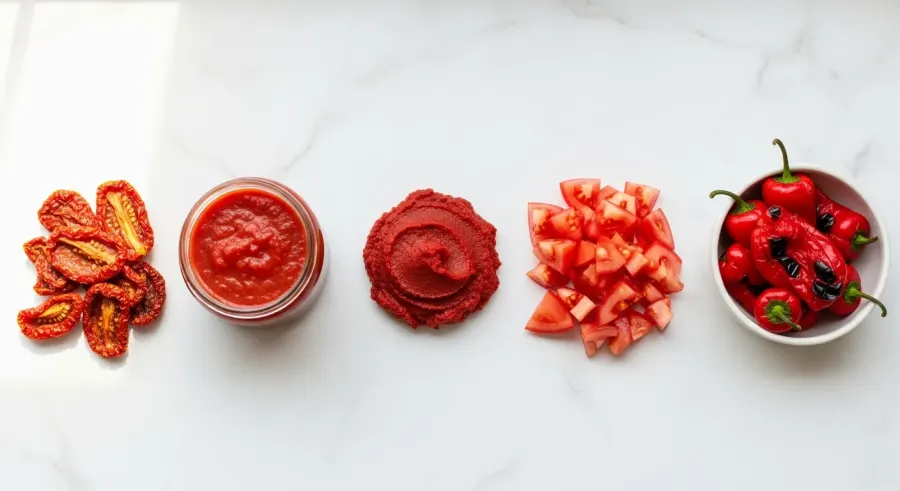
In Short
Tomato purée reduced by half is your closest match, but everyday items like canned sauce, ketchup, or even a splash of soy sauce can save your recipe depending on whether you need thickness, sweetness, or umami. The exact swap ratios (and when not to use them) are broken down below.
You are halfway through a recipe when you realize the tube is empty or the little six-ounce can is nowhere to be found. It happens to everyone. The good news is that you probably have something sitting in your pantry right now that can step in without ruining dinner. If you are wondering what to use instead of tomato paste, swapping it out is mostly just a game of managing moisture and knowing when to add a little extra savory depth.
Tomato Purée Is Your Closest Match
Purée is essentially just tomato paste that hasn't been cooked down yet. When comparing tomato puree vs paste, the raw numbers tell the whole story. USDA FoodData Central notes that 100 grams of tomato paste contains about 82 calories and nearly 19 grams of carbohydrates. The exact same weight of purée drops to just 38 calories and about 9 grams of carbs, while its water content sits significantly higher at roughly 88%. You are literally working with half the tomato solids. That difference completely changes how the ingredient behaves in a hot skillet. Tomato paste sears and caramelizes in oil, building a deep, brick-red fond. Purée will simply boil and sputter until that extra water cooks off.
The standard substitution is 3 tablespoons of purée for every 1 tablespoon of paste. Because you are adding more liquid to the pan, you have two choices. You can either simmer the purée in a separate skillet for a few minutes to evaporate the moisture, or you can add it directly to your dish and reduce the other liquids by about two tablespoons. The flavor match is nearly perfect. Both share the exact same unadulterated tomato essence without any added sugars or herbs. This makes it a seamless swap for almost anything, from a hearty beef stew to a delicate minestrone. The only real failure point is tight glazes or dry rubs. In those highly specific scenarios, the extra liquid from the purée will pool and prevent your meat from getting a proper sear.

Sauce Works But Needs Some Tweaking
At roughly 87% water, canned tomato sauce is one of the thinnest options on the shelf. It is even more diluted than purée, with a 100-gram serving holding only 24 calories and 5.3 grams of carbohydrates (USDA FoodData Central). It also brings a lot more than just tomatoes to the table. Most commercial cans contain added salt, onion powder, garlic, and sometimes basil or oregano. You are actively introducing new flavor variables into your recipe.
A ratio of 3 tablespoons of sauce per 1 tablespoon of paste provides the right amount of background tomato flavor. Just like with purée, that extra water needs to go somewhere. Cooking it down on low heat in a wide pan bridges the texture gap beautifully. As the water evaporates, the sugars in the sauce concentrate, leaving you with a thicker, richer base. The resulting flavor leans noticeably sweeter and more herbaceous than a standard plain paste. This built-in seasoning makes it a natural fit for pasta dishes, lasagna fillings, and rustic Mediterranean stews where garlic and basil are already welcome guests.
You will run into trouble if you try dropping canned sauce into flavor profiles that clash with those herbs. Indian curries, Mexican enchilada sauces, or specific regional Asian dishes are the main exceptions. The lingering taste of Italian seasoning will fight against spices like cumin or turmeric, throwing the entire dish off balance. If your sauce is plain, you have more freedom. Always check the label first.
Wait, Can I Actually Use Ketchup?
It sounds like a desperation move, but it has saved plenty of weeknight dinners. Ketchup shares a remarkably similar thickness and spreadable texture to tomato paste, which makes the physical act of substituting very straightforward. The complications arise entirely from the flavor profile. Ketchup is heavily doctored with vinegar, salt, and a significant amount of sweetener. Data from the USDA FoodData Central shows that a 100-gram serving of ketchup sits at roughly 101 calories with 27 grams of carbohydrates—the vast majority of which are added sugars. A single tablespoon packs around 4 grams of sugar. That is a massive jump from the earthy flavor of concentrated tomatoes.
A direct 1:1 swap provides that same physical body and a concentrated tang. Because the water content is already quite low, you do not need to spend time reducing it in a pan. You can simply stir it straight into your dish. It is a surprisingly reliable substitute for tomato paste in chili, sloppy joes, or homemade barbecue bases. These dishes easily absorb that extra hit of sweet tang without missing a beat.
Delicate recipes will punish this substitution. A classic bolognese, a refined wine reduction, or a savory pan sauce meant for a steak are the wrong places for this swap. The aggressive vinegar notes and artificial sweetness will overpower the subtle savory elements, making the final dish taste like fast food rather than a balanced meal.
Making a Quick Paste From Whole Tomatoes
Sometimes a can of whole peeled or crushed tomatoes is the only thing sitting in the pantry. Transforming them into a solid tomato paste replacement takes a bit of effort but pays off with a remarkably fresh flavor. When you use whole tomatoes, you are starting with something that is roughly 94% water. You have to force that moisture out to get anywhere near the dense, sticky consistency of a commercial tube.
Creating a paste from scratch begins with the blender. Puréeing the tomatoes until completely smooth prevents unwanted chunks from ruining the texture of your final dish. Once blended, pour the liquid into a wide, shallow skillet. The surface area of a wide pan allows water to evaporate much faster than a deep pot. Simmer the liquid over medium-low heat, stirring frequently. Stop when the volume shrinks by more than half and a spoon dragged through the center leaves a clean line. Two tablespoons of this freshly reduced mixture seamlessly replaces one tablespoon of commercial paste.
The taste is much fresher and brighter, lacking the deep, oxidized notes of the store-bought version. This brightness lifts heavy soups and long-simmering meat sauces perfectly. If a recipe requires a perfectly smooth thickening agent and you skipped the blending step, the substitution fails. Unblended crushed tomatoes will leave visible seeds and pulp, altering both the mouthfeel and the visual appeal.
What About Soy Sauce or Miso?
Not every recipe uses tomato paste for its red color or thickening power. Often, a soup or marinade only asks for a tiny spoonful just to build an underlying layer of savory depth. Tomatoes are naturally packed with glutamates, the specific amino acids responsible for creating a rich, meaty taste on the palate. When thickness and a crimson hue simply do not matter, umami-heavy ingredients like soy sauce, tamari, or miso paste can step in.
Half a tablespoon of soy sauce or miso paste easily replaces a full tablespoon of tomato paste. The flavor profile changes dramatically. It shifts to pure earthiness and salt, with absolutely zero tomato sweetness. Soy sauce also shifts the nutritional footprint entirely. While a tablespoon of tomato paste provides mostly carbs and a touch of protein, soy sauce is a sodium powerhouse that delivers about 8 grams of protein per 100-gram serving (USDA FoodData Central). Because these ingredients are fermented, they bring an even more intense savory punch than a raw tomato product. Beef stews, meatloaf mixtures, and dark mushroom gravies benefit heavily from this trick.
This substitution fails entirely if the dish relies on the paste as a primary thickening agent or a source of sweetness. Trying to use soy sauce as a base for a pizza sauce or a creamy vodka pasta will end in disaster. It is a targeted, situational swap designed purely for background flavor.
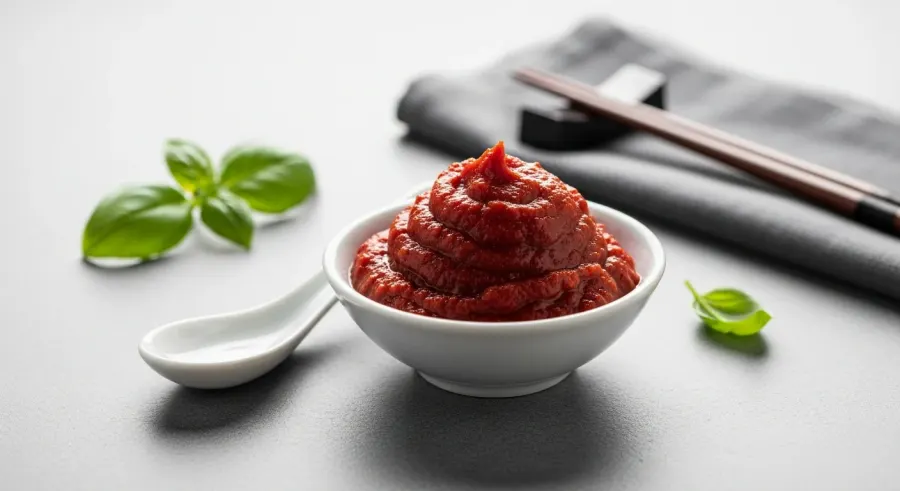
Pivoting the Flavor With Chili Paste
Opening the fridge to find harissa or gochujang offers an interesting alternative for adventurous cooking. Roasted red pepper pastes share the exact same thick, spreadable consistency as concentrated tomatoes. They coat ingredients in the pan exactly the same way, and they bloom beautifully when fried in hot oil before liquids are added.
A straightforward 1:1 substitution ratio keeps the math simple while maintaining the intended texture of the dish. The deep, vibrant red color remains completely intact, ensuring the visual presentation of your meal does not suffer. The flavor, however, takes a sharp turn. Harissa brings a complex blend of garlic, caraway, and significant chili heat. Gochujang offers a fermented, slightly sweet, and funky spice. If you prefer something milder, a simple jar of puréed roasted red peppers adds a gentle bell pepper sweetness without the aggressive kick.
Tagines, spicy braises, shakshuka, and robust meat marinades absorb these pepper flavors incredibly well. They lean into the spice and earthiness naturally. Traditional Italian or delicate French recipes are the obvious failure cases here. Dropping a spoonful of Korean gochujang into a delicate marinara sauce alters the entire identity of the dish, confusing the flavor profile and overwhelming the other carefully balanced ingredients.
How to Skip the Nightshades Completely
Dietary restrictions often rule out tomatoes entirely, leaving a massive gap in recipes that rely on their unique acidity and color. For those navigating strict nightshade allergies or following specific autoimmune protocols, a blend of cooked beets and carrots combined with a splash of balsamic vinegar works surprisingly well. This combination mimics the appearance, the earthiness, and the acidic bite of a traditional tomato reduction without triggering any dietary issues.
The substitution works at a direct 1:1 ratio. Carrots provide a necessary baseline of earthy sweetness, while beets deliver a deep crimson color that looks identical to the real thing bubbling away in a pot. The balsamic vinegar is the secret weapon here, providing the sharp, fruity tang that root vegetables lack on their own. The overall flavor runs a bit earthier and slightly sweeter than a traditional paste, without the distinct savory umami notes of a true nightshade.
Allergy-friendly chilis, compliant stews, and vegetable soups are the ideal applications for this blend. It thickens liquids well and provides a beautiful color. It just won't deliver the exact savory punch required for a traditional Sunday ragù. Without the natural glutamates found in tomatoes, meat sauces made with this alternative will taste slightly flat unless you compensate by adding extra salt or some dried mushrooms.
Olive Tapenade for a Mediterranean Swap
Looking past the usual suspects reveals some highly unconventional options. Olive tapenade is effectively a paste made from crushed olives, capers, and olive oil. While it lacks the red color and the acidity of a tomato product, it completely over-delivers on rich, salty, savory notes. Like tomatoes, olives are naturally high in compounds that trigger umami receptors, making them excellent flavor-builders in a hot pan.
A substitution ratio of half a tablespoon of tapenade per one tablespoon of tomato paste prevents the dish from becoming overly salty. The texture is thicker and slightly chunkier, which dissolves well into hot broths but leaves tiny specks of olive behind. The flavor profile shifts dramatically away from sweet acidity and straight into briny, earthy territory.
Dishes that already lean on Mediterranean flavors handle this swap effortlessly. Fish stews, braised chicken thighs, and roasted vegetable medleys benefit from the salty punch of the olives. This swap falls apart completely in sweet or smooth applications. A chili or a barbecue sauce will taste disjointed with the introduction of briny capers, and a smooth soup will suffer from the grainy texture of the crushed olives.
Bottom Line
Swapping out an ingredient usually feels like a compromise, but with tomato paste, it is really just an exercise in managing moisture and flavor intensity. Whether you choose to simmer down a can of purée or experiment with the salty depth of miso paste, the dish will survive. The empty tube in the recycling bin doesn't mean dinner is ruined. It just requires a slight adjustment to the heat under the pan and a closer eye on the liquid levels.