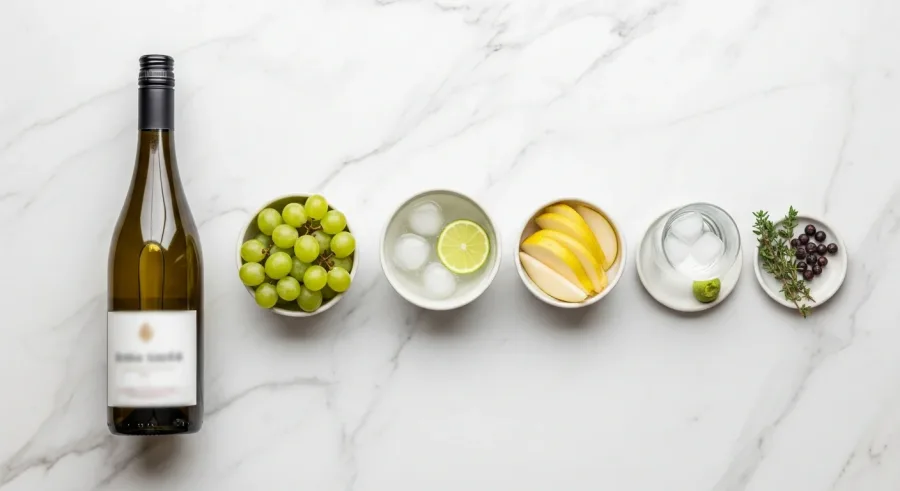
In Short
Verjus is the closest one-to-one match, while diluted white wine vinegar works best for deglazing hot pans. Broth provides the necessary liquid volume for savory braises but requires a final squeeze of lemon to replicate wine's missing acidity.
A recipe calling for a splash of Chardonnay can suddenly halt dinner plans if the bottle is empty or you prefer to cook without alcohol. White wine does two distinct jobs in a pan: it provides liquid volume to prevent burning, and it introduces acid to balance rich fats. Replacing it means looking at your dish and figuring out which of those two jobs matters more. Finding the right swap is just a matter of matching the chemistry of your specific meal.
Wait, What is Verjus?
Chefs keep this ingredient around for a reason. Verjus is the pressed juice of unripe grapes. It delivers a high concentration of tartaric acid, the exact same acid found in wine, but contains zero alcohol. A straight one-to-one swap works perfectly.
To understand why this is effective, you have to look at how grapes grow. Winemakers thin their vines in mid-summer, dropping green, unripe clusters to force the plant to concentrate its energy on the remaining fruit. Instead of throwing these discarded green grapes away, they press them. The resulting liquid has a pH very similar to wine, usually hovering around 3.0. It relies almost entirely on tartaric and malic acids for its structure.
Because it never undergoes fermentation, there is no alcohol to evaporate. When you add standard wine to a hot skillet, the alcohol vaporizes rapidly at 173°F (78°C). This phase change leaves behind water, organic acids, and trace amounts of residual sugars. Verjus skips the alcohol phase entirely and delivers the water and acid directly to your food.
The flavor profile closely mimics a dry Pinot Grigio or a crisp Sauvignon Blanc, just slightly more tart. It lacks the complex, yeasty esters formed during fermentation, but it nails the bright fruitiness. Verjus shines in vinaigrettes, poaching liquids for fish, and delicate butter sauces where you want the complexity of wine without the boozy bite.
The only real downside is availability. You usually have to order it online or find a specialty grocer, and it often costs more than a standard bottle of cooking wine. If you happen to have a bottle sitting around, use it for everything.
Vermouth Works if Alcohol is Fine
Maybe you just drank the last of your Pinot but still have a stocked liquor cabinet. Dry vermouth is a fortified wine steeped with botanicals. Since it is stronger than standard wine (usually hovering around 15 to 18 percent ABV), three-quarters of a cup replaces one cup of white wine.
Alcohol is a unique solvent in the kitchen. It bonds with both water molecules and fat molecules. This means it can extract flavor compounds from aromatics like garlic and onions that water or fat alone cannot reach. Vermouth provides this exact same solvent capability, carrying complex flavors across your palate.
The botanicals in vermouth add an herbaceous layer to the pan. It mimics a slightly oxidized white wine, leaning into savory, earthy notes rather than bright fruit. Vermouth is fantastic for risotto. The alcohol helps release starches from the Arborio rice, while the herbal notes meld perfectly with parmesan and chicken stock. It also excels at deglazing a roasting pan after cooking a chicken.
Vermouth does not belong in delicate sauces like a vanilla-scented beurre blanc, or any sweet application. The wormwood and other bittering agents that make vermouth essential for a martini will overpower subtle flavors.
The White Wine Vinegar Trick
A mixture of half a cup of white wine vinegar and half a cup of water replaces one cup of wine perfectly. Vinegar brings the same acidic bite as wine, just heavily concentrated. Because standard white wine vinegar runs around 5 to 7 percent acidity (compared to wine's milder 0.7 to 0.9 percent titratable acidity), diluting it is non-negotiable.
Vinegar is primarily acetic acid, which is created when bacteria consume alcohol. White wine, on the other hand, is governed by tartaric and malic acids. Acetic acid is highly volatile. It readily evaporates and hits your olfactory receptors with a sharp, pungent aroma. Tartaric acid is fixed, meaning it stays in the liquid and is tasted on the tongue rather than smelled.
This diluted vinegar mixture works beautifully for deglazing a pan after searing pork chops or chicken. The water creates the physical steam needed to lift the brown bits off the bottom of the pan, while the diluted acetic acid cuts through the residual pan fat.
This swap falls apart in a cream sauce. The concentrated burst of acetic acid drops the pH of dairy too quickly. This causes the casein proteins in heavy cream to unravel and coagulate, turning a smooth sauce grainy.
Apple Cider Vinegar Keeps it Mild
If the sharp bite of white wine vinegar feels too aggressive, apple cider vinegar is a softer alternative. It brings a faint, fruity sweetness alongside the acetic acid. Diluting it is essential. Half a cup of apple cider vinegar mixed with half a cup of water replaces one cup of white wine.
The apple notes mimic the orchard fruit aromas often found in a Chardonnay or a Chenin Blanc. During the fermentation of apple cider, different esters are produced than in grape fermentation, but they belong to the same aromatic family. When the diluted vinegar hits a hot pan, those fruity esters bloom.
This swap is particularly effective in pork dishes. Pork and apples share a natural affinity, and the cider vinegar deglazes a pork chop pan beautifully. It also works well in braised cabbage or hearty winter stews where a slightly sweeter acid is welcome.
The distinct apple aroma clashes with delicate white fish or shrimp. Savory seafood dishes usually require the bone-dry, crisp acidity of grapes or citrus rather than the heavier scent of apples.
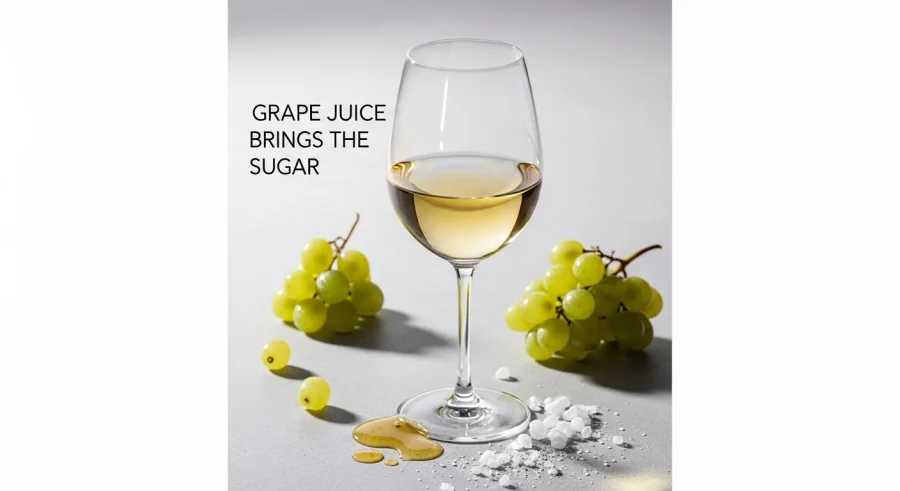
Grape Juice Brings the Sugar
What if your recipe leans sweet? White grape juice offers the raw materials of wine before the yeast does its work. During fermentation, yeast consumes the glucose and fructose in grape juice and excretes alcohol and carbon dioxide.
A standard white wine contains just 0.96 grams of sugar and 2.6 grams of carbohydrates per 100 grams (USDA FoodData Central). In contrast, white grape juice is loaded with simple sugars. You cannot just swap it straight into a recipe without throwing off the balance.
One cup of white grape juice mixed with a tablespoon of white vinegar replaces one cup of wine. The vinegar is mandatory. Without it, the juice is a flat syrup. (The splash of vinegar drops the pH and mimics the acid structure that fermentation normally provides.)
This combination is ideal for sweet and sour glazes, marinades for poultry, and braised root vegetables. It fails completely in bone-dry savory dishes. If you use grape juice in a clam linguine, the high sugar content will caramelize under heat, giving the garlic and clams an unsettling candied flavor.
Broth Needs a Little Help
Most people reach for chicken or vegetable stock when they realize the wine bottle is empty. A straight one-to-one swap provides the liquid volume required for braising, and it adds a savory backbone.
Broth offers umami, primarily through naturally occurring glutamates. It provides a rich depth that wine lacks. White wine is used in cooking to lift a dish; broth anchors it. A standard white wine contains 82 calories and zero fat per 100 grams (USDA FoodData Central). Broth often brings a tiny bit of residual fat and gelatin from the simmering bones, which changes the mouthfeel of the final sauce.
The main issue is that broth lacks acidity entirely. If you use it to replace wine in a pan sauce, the final dish will taste muddy. A good sauce relies on tension, balancing rich fats with a sharp cut of acid.
You can fix this by forcing the tension back into the pan. Stirring in a teaspoon of fresh lemon juice or white wine vinegar right at the end of cooking wakes up the flavors. Broth obviously has no place in poached fruit or anything dessert-adjacent.
When to Just Squeeze a Lemon
Sometimes you just need a quick hit of bright flavor. Lemon juice provides citric acid, which is sharp and immediate. It runs very low on the pH scale, usually sitting between 2.0 and 2.6. That makes it much more acidic than wine, which typically sits around 3.0 to 3.4.
A quarter cup of lemon juice mixed with three-quarters of a cup of water replaces one cup of wine. The high water ratio keeps the citric acid from taking over the entire dish.
The citrus notes pair perfectly with seafood, shrimp scampi, and chicken piccata. It successfully mimics the refreshing bite of a crisp, unoaked Sauvignon Blanc.
This combination struggles in hearty beef stews or red meat braises. The aggressive lemon flavor clashes with the rich, earthy notes of heavy meats. Citric acid also breaks down over prolonged heat, and the volatile aromatic oils in lemon juice will cook off during a long simmer, leaving a hollow flavor behind.
Water and a Splash of Acid
When the pantry is completely bare, you can always rely on the faucet. Water provides the necessary volume to keep aromatics from burning in the pan, though it obviously brings zero flavor.
One cup of water combined with a tablespoon of acid and a pat of butter steps in when options are limited. The water replaces the bulk of the wine. The acid (whether it is a stray lemon or basic white vinegar) replaces the tartness. The extra butter replaces the texture and body that wine usually provides as it reduces.
This emergency swap is highly effective for simple pasta tosses where wine is only a minor supporting player. The starchy pasta water combined with the butter creates an emulsion that mimics a reduced wine sauce.
It falls flat in recipes where wine is the star ingredient. If you are making classic Coq au Vin Blanc or a white wine fondue, water simply will not carry the dish.
Bottom Line
Finding the right replacement for wine just comes down to knowing what the liquid is doing in the pan. If the dish needs sharp acidity to cut through fat, a diluted vinegar steps up. If it requires savory volume for a long braise, broth easily fills the gap. Cooking without wine rarely means sacrificing flavor, as long as the underlying chemistry of the recipe stays balanced.