In Short
Mix ¼ teaspoon of baking soda with ½ teaspoon of cream of tartar (or an acidic liquid like vinegar) to replace one teaspoon of baking powder. Since homemade substitutes react immediately, you must get your batter into the oven right away to avoid a flat bake.
You're halfway through making a cake when you reach into the pantry and find an empty tin. It's a frustrating moment, but baking powder isn't magic. It's just a chemical leavening agent made of a base (baking soda) and an acid that react when wet. If you can recreate that acid-base reaction with things you already have in your kitchen, you can easily save your recipe.
Cream of Tartar is the Golden Rule
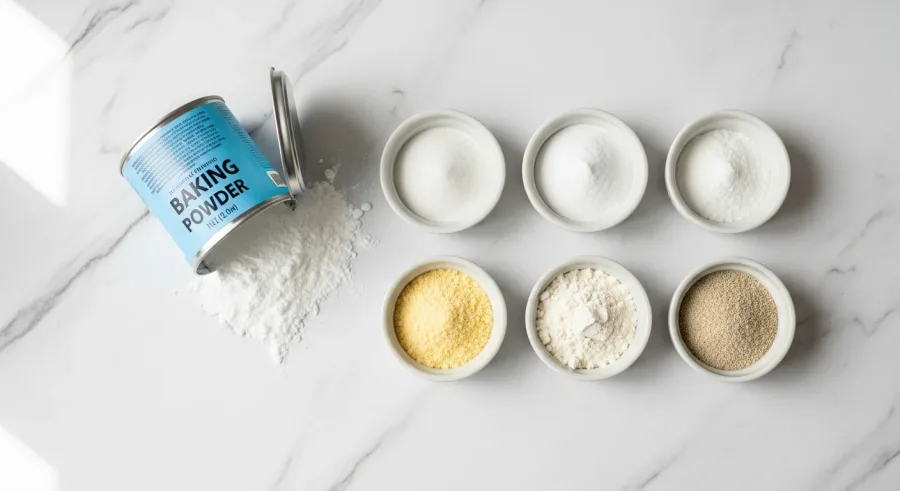
Store-bought baking powder is essentially just baking soda, a powdered acid, and a little cornstarch to prevent clumping. You can recreate this exactly at home.
Ratio: Mixing ¼ teaspoon baking soda with ½ teaspoon cream of tartar replaces 1 teaspoon of baking powder.
Cream of tartar (potassium bitartrate) is a dry acid. When moistened, it reacts with the sodium bicarbonate to release carbon dioxide bubbles. Chemical leavening dictates the specific volume of baked goods, and this precise ratio perfectly mimics commercial single-acting baking powder. You will want to whisk the cream of tartar and baking soda into your dry ingredients thoroughly. If you dump them straight into the wet bowl, you risk clumping, which leads to large, uneven air pockets in your cake.
The flavor difference is zero. It works flawlessly in sugar cookies, vanilla sponge cakes, and delicate pastries.
There is a catch, though. Commercial baking powder is usually "double-acting," meaning it contains a second acid (like sodium acid pyrophosphate) that waits to react until it hits the heat of the oven. This DIY version is single-acting. The moment it gets wet, the clock starts. If you let your pancake batter sit on the counter for an hour before cooking, all the gas will escape and your bake will fall flat.
White Vinegar Actually Works Great
Two of the most common household ingredients can save your bake. While pouring vinegar into cake batter sounds like a recipe for a salad dressing, the chemistry works out perfectly.
Ratio: ¼ teaspoon baking soda plus ½ teaspoon white vinegar equals 1 teaspoon of baking powder.
The acetic acid in the vinegar triggers a vigorous reaction with the baking soda. Once that reaction happens, the acid is neutralized. You won't taste it in the final product. It's ideal for chocolate cakes, red velvet (which traditionally uses this exact chemical reaction anyway), and dense quick breads. Distilled white vinegar has a sharp, clean profile that disappears in the oven. You should avoid balsamic or red wine vinegar entirely, as the sugars and tannins will warp both the color and the taste of your bake.
You'll want to skip this for extremely delicate, unflavored items like shortbread or angel food cake, where the fast liquid reaction might compromise the structure. Apple cider vinegar is a fine alternative if you're out of white, though it leaves a faint fruity note behind.
Lemon Juice for Fruit Bakes
Sometimes you want a little tang anyway. Lemons are loaded with citric acid, which lowers the pH of your batter just enough to wake up the baking soda.
Ratio: A combination of ¼ teaspoon baking soda and ½ teaspoon lemon juice substitutes for every teaspoon of baking powder needed.
Because you're leaving a slight citrus footprint, this swap is perfect for blueberry muffins, lemon loaf, or zucchini bread. The acid level in lemons varies slightly depending on the fruit's ripeness, but a half teaspoon is reliable enough for home baking. Fresh squeezed lemon juice is usually more acidic than bottled concentrate, which often contains preservatives that can interfere slightly with the rise. Always use fresh if you have it.
You should avoid using this in savory recipes like cheddar biscuits or dark chocolate cakes. The bright, sharp note of the lemon will clash with earthy or salty flavors. Again, this is a single-acting reaction, so get the pan into the oven quickly.
The Buttermilk Pancake Trick
Pancakes made with regular milk are perfectly fine, but cultured dairy changes the texture entirely. The fermentation process creates lactic acid, which serves as an excellent trigger for baking soda.
Ratio: Swapping ½ cup buttermilk and ¼ teaspoon baking soda replaces 1 teaspoon baking powder. You must subtract ½ cup of other liquids from your recipe to maintain the right consistency.
USDA FoodData Central notes that whole buttermilk contains about 62 calories, 3.3 grams of fat, and 3.2 grams of protein per 100g. The added fat and protein tenderize the crumb while the acidity provides the lift. It's unparalleled for waffles, cornbread, and Southern-style biscuits. If you use powdered buttermilk, you'll want to mix the dry powder with your flour and the baking soda, then add regular water in place of the liquid. This keeps the acidic reaction from starting before you are ready to mix.
If you're making a stiff dough, this substitute will fail. Adding a half cup of liquid to snickerdoodle or chocolate chip cookie dough will turn it into a puddle. This trick is strictly for batters and loose doughs.
Plain Yogurt Works Too
If you don't keep buttermilk in the fridge, plain yogurt provides the exact same lactic acid profile with a thicker consistency.
Ratio: Half a cup of plain yogurt mixed with ¼ teaspoon baking soda replaces 1 teaspoon of baking powder. Like the buttermilk swap, the recipe's liquid must be reduced by ½ cup.
Yogurt adds dense moisture to baked goods, making it ideal for banana bread, pound cakes, and heavy muffins. If your yogurt is a bit watery, the whey sitting on top actually contains a high concentration of lactic acid. Stir it back in before measuring rather than pouring it down the drain.
Fat-free yogurt can sometimes make a crumb feel a bit rubbery if the recipe was relying on the fat content of whole milk or buttermilk, so it's better to stick to whole milk yogurt if you have the choice. Greek yogurt works as well, but you may need to thin it with a splash of water first so it incorporates smoothly into the dry ingredients.
Molasses Is Surprisingly Acidic
Most people look at a jar of molasses and just see liquid sugar. It actually has a low enough pH (usually around 5.5) to act as the acid in your leavening equation.
Ratio: ¼ cup molasses paired with ¼ teaspoon baking soda replaces 1 teaspoon baking powder. The recipe's liquid should be reduced by ¼ cup.
Molasses is heavy and highly sweet. A 100g serving contains around 290 calories and 75g of carbohydrates, per USDA FoodData Central, meaning you should dial back the regular granulated sugar in your recipe to compensate. Light molasses is sweeter and less acidic, while dark molasses brings more acid to the equation. Avoid blackstrap molasses entirely for this substitute—it is distinctly bitter and can overpower the flavor of your bake.
This substitute belongs in gingerbread, bran muffins, and spice cakes. It will ruin a white cake. The dark syrup will turn the crumb a muddy brown, alter the flavor completely, and likely cause the edges to burn if you don't lower the oven temperature slightly.
Club Soda When You Have Nothing Else
If you have absolutely zero baking soda in the house, you have to look for carbon dioxide bubbles that are already trapped in a liquid.
Ratio: The total amount of liquid in your recipe can be replaced with club soda.
Club soda contains dissolved carbon dioxide gas and a trace amount of sodium bicarbonate. The flavor is completely neutral. The fizz in club soda is mechanical leavening, meaning you are just relying on trapped gas rather than a chemical reaction in the bowl. Fold it in last, right before the batter goes into the oven, just like you would with whipped egg whites. It works beautifully for tempura batters, thin pancake batters, or beer bread (using club soda instead of beer).
This is your absolute last resort for heavy baking. The weak carbonation cannot lift a dense flour matrix like a pound cake or a scone. Furthermore, the bubbles begin escaping the second you crack the bottle open. You must mix with a light hand and bake immediately, or you'll end up with flat, dense food.
Bottom Line
Baking is just chemistry with tastier results. Missing a leavening agent simply means you have to find another way to balance the acid and the base. The next time the tin is empty, you can just reach for the vinegar or the buttermilk to finish your recipe.