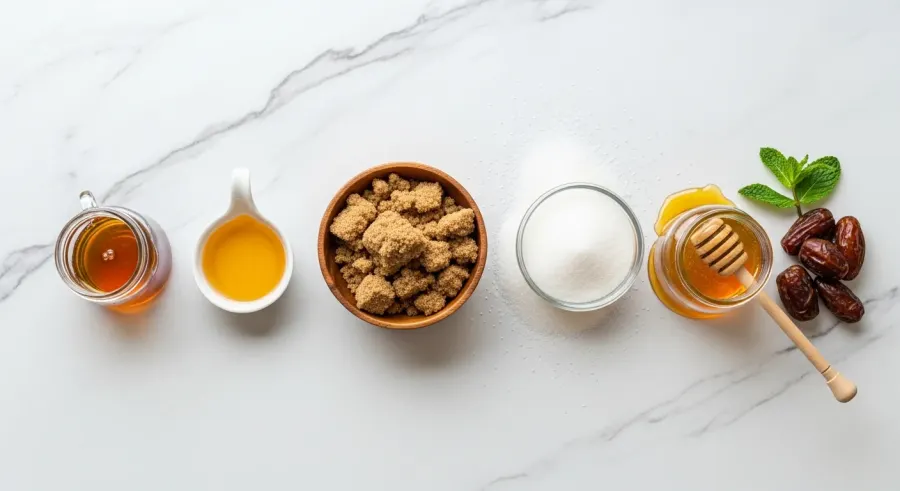
In Short
White sugar mixed with a tablespoon of molasses is the exact chemical equivalent of brown sugar. If you lack molasses, plain white sugar, maple syrup, or coconut sugar all work if you adjust the recipe's liquid levels. Why some swaps make cookies crispy (and exactly how to fix it) is below.
Baking without brown sugar usually feels like a compromised mission before you even preheat the oven. The good news is that replacing it is mostly an exercise in managing moisture and acidity rather than a strict flavor puzzle. You likely have exactly what you need in your kitchen right now to mimic its chemistry perfectly.
Make Your Own With Molasses
You might be surprised to learn that commercial brown sugar is just white sugar with molasses sprayed back onto it. Refineries strip sugarcane down to 99.95 percent pure sucrose, yielding white sugar. The dark, sticky byproduct of that refining process is molasses. To make the brown sugar you buy in bags, manufacturers just mix a little bit of that byproduct back into the white crystals.
You can perform this exact industrial process on your kitchen counter. For every 1 cup (200 grams) of white sugar, add 1 tablespoon (21 grams) of unsulfured molasses to get light brown sugar. If your recipe needs the robust depth of dark brown sugar, use 2 tablespoons.
The kind of molasses you use matters significantly. You want unsulfured, original molasses (sometimes labeled as baking molasses). Avoid blackstrap molasses at all costs for this trick. Blackstrap is boiled three times, making it extremely dark, thick, and highly bitter. If you mix blackstrap into white sugar, your cookies will taste like burnt coffee and ash. The moisture content of standard unsulfured molasses is around 22 percent, which is precisely the hydration level commercial manufacturers rely on when producing the bags you buy at the store.
When you blend the two together, you are creating a product that behaves identically in the oven. The sucrose melts, the molasses provides the invert sugars (glucose and fructose) to hold onto ambient moisture, and your baked goods stay fresh on the counter for days longer than they would with white sugar alone. Best of all, you don't even need to pre-mix it perfectly. If your recipe starts with creaming butter and sugar, just dump the white sugar and the molasses straight into the stand mixer bowl with the butter. The friction and the fat will blend everything seamlessly.
Muscovado for a Deeper Flavor
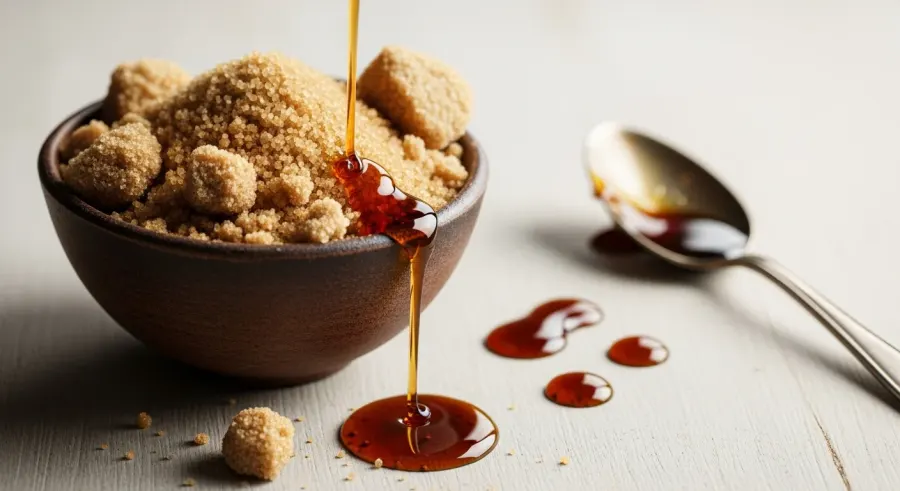
Some bakers actually prefer this unrefined option over the standard grocery store bags. Muscovado is made by evaporating sugarcane juice without spinning it in a centrifuge. Because the natural molasses is never removed, it stays deeply embedded in the sugar crystals rather than just coating the surface.
You can swap muscovado for brown sugar in a straight 1:1 ratio. The main difference you will notice is the moisture level. Muscovado feels almost wet and clumps together very tightly. A cup of muscovado can weigh up to 220 grams if packed tightly, compared to the roughly 213 grams of standard commercial brown sugar. This extra mass and moisture mean your doughs will be slightly stickier.
When making a cookie dough, you might notice it clings to the paddle attachment more aggressively. Don't be tempted to add more flour to compensate, or you will end up with a tough, bready texture. Just let the dough chill in the refrigerator for 30 minutes before scooping. The chilling period allows the flour to hydrate fully from that extra molasses moisture, leading to a perfectly chewy center.
The flavor profile is much more complex than standard brown sugar. It brings distinct notes of toffee, smoke, and a slight bitterness from the complex organic acids left over from the unrefined cane juice. Use this swap for gingerbread, heavy chocolate cakes, or dark chocolate chip cookies where the smoky notes complement the cocoa. Avoid using it in delicate vanilla bakes or pale shortbreads, where the strong molasses flavor will completely mask the taste of the butter. Nutritionally, it behaves exactly like regular sugar, offering about 380 calories per 100 grams (USDA FoodData Central) and identical carbohydrate levels.
Coconut Sugar as a Drier Swap
A straight swap here requires understanding how liquids behave in the oven. Sourced from the boiled sap of coconut palm flowers, coconut sugar looks just like brown sugar. It shares the same amber hue and granular texture, making it tempting to use as a direct replacement.
It works perfectly as a 1:1 swap for sweetness, but it is a terrible swap for moisture. Brown sugar gets its chewiness from the specific invert sugars in molasses, which hold onto water tightly. Coconut sugar lacks these compounds and has a significantly lower moisture content overall. The evaporation process that creates coconut sugar destroys a lot of the natural moisture.
In baking chemistry, moisture isn't just about the liquids you pour into the bowl; it's about how much water the dry ingredients can hold onto during the baking process. Brown sugar excels at this because of the fructose in molasses. Coconut sugar is almost entirely sucrose, which doesn't hold water well. If you are baking a batch of classic chocolate chip cookies with coconut sugar, you will notice they barely spread in the oven. They stay mounded, and the next day, they shatter when you bite into them instead of bending.
To fix this structural issue, you usually need to add one tablespoon of liquid (like milk, water, or even a tiny bit of oil) to your dough for every cup of coconut sugar used. This substitute shines in wet batters like banana bread, muffins, and heavy cakes where the surrounding liquid compensates for the sugar's dryness. It fails in chewy drop cookies or when trying to make a smooth caramel sauce, as the dry crystals resist melting evenly. It provides roughly 15 calories per teaspoon, matching regular sugar almost exactly.
The Maple Syrup Pantry Trick
Digging through the fridge often yields a bottle of maple syrup long before a jar of molasses. If you are out of brown sugar but have white sugar and real maple syrup, you can easily hack the hydration levels of your dough.
Mix 1 cup of white sugar with 1 tablespoon of maple syrup. According to USDA FoodData Central, pure maple syrup is roughly 32 percent water and 68 percent carbohydrates. By adding a tablespoon of this syrup to dry white sugar, you are introducing about 6.5 grams of water back into the mix. This mimics the moisture content of brown sugar beautifully, ensuring your baked goods retain their chewy texture and don't spread out too thinly.
This hack works because you are manually reconstructing the liquid-to-solid ratio of brown sugar. Pure maple syrup is a mild invert sugar. During the boiling process at the sugar shack, some of the sucrose breaks down into fructose and glucose. These are the exact same water-trapping sugars found in molasses, just in lower concentrations. When you rub a tablespoon of maple syrup into a cup of white sugar, the texture will feel slightly clumpier than store-bought brown sugar, but it melts into butter flawlessly.
You must use real maple syrup, however. Pancake syrup is mostly high-fructose corn syrup with artificial flavorings. While corn syrup will add moisture, it lacks the complex flavor compounds and will make your baked goods taste one-dimensionally sweet. Real maple syrup contains dozens of different flavor compounds, which add a subtle roasted depth. The flavor will shift away from the dark bitterness of molasses toward lighter, floral, and woody maple notes. It works exceptionally well in oatmeal cookies, blondies, and pecan pies where maple is a welcome background flavor. The only real failure case is in recipes that rely heavily on baking soda for their rise, as maple syrup is far less acidic than molasses.
When to Just Use White Sugar
What happens if you change absolutely nothing else and just dump in plain granulated sugar? You can do a 1:1 volume swap, but you must accept the architectural changes that happen in the oven.
White sugar is 99.95 percent pure sucrose. It contains zero molasses, meaning it has zero added moisture and a completely neutral pH. Baking is essentially a series of controlled chemical reactions, and removing the molasses removes two vital variables: acidity and hydration. Standard granulated sugar has a pH of roughly 7.0 (neutral), while molasses sits around 5.5 (acidic).
If your recipe uses baking soda (which requires an acid to activate), using plain white sugar means the baking soda will sit dormant. Your cookies will be dense, and you might even taste a slightly soapy, metallic residue from the unreacted sodium bicarbonate. If your recipe uses baking powder (which contains its own acid), you don't need to worry about the rise. But you still have to manage the spread.
Without the water-trapping properties of molasses, the dough melts faster in the oven. The edges will thin out and caramelize into a hard crunch. Because sucrose readily crystallizes as it cools down, the final product will be noticeably crispier with almost no chew. Brown sugar also browns much faster in the oven because the free fructose in molasses undergoes the Maillard reaction at lower temperatures. If you use only white sugar, your cookies will look paler unless you bake them longer.
This swap is ideal when you actually want a crispy texture — like for snickerdoodles, sugar cookies, or the crumb topping on a fruit crisp. It is a poor choice for dense, fudgy brownies or thick chocolate chip cookies. If you are baking something that relies on a soft, dense crumb, plain white sugar will completely alter the identity of the dessert.
Dealing With Turbinado and Demerara
Those large, pale brown crystals look like they should work perfectly right out of the bag. Turbinado and demerara are raw cane sugars that have been spun in a centrifuge just enough to remove most of the molasses, leaving a golden crust on the outside.
You can use them in a 1:1 ratio, but the crystal size is a major hurdle. The large, crystalline structure of raw sugars is fantastic for finishing baked goods because the grains withstand high oven temperatures without melting completely, providing a crunchy crust. But inside a dough, that same heat-resistance is a liability.
During the creaming stage, sugar crystals act like tiny knives, cutting into the solid butter and creating microscopic air bubbles. Turbinado crystals are simply too large and blunt to do this effectively. The butter just smears around them. If you dump large raw sugar crystals into room-temperature butter, they simply will not dissolve. In the oven, those undissolved crystals melt rapidly, causing the cookie to spread aggressively into a greasy, thin puddle with a crunchy, gritty texture.
The fix is entirely mechanical. Pulse the turbinado sugar in a food processor or a clean coffee grinder for about 30 to 60 seconds until the texture resembles fine sand. By grinding them down to a finer powder, you restore their ability to aerate the butter. Once milled down, it performs similarly to light brown sugar. It still has slightly less moisture than commercial brown sugar, so your bakes will still lean slightly toward the crispier side, but the structure will be sound. Ground turbinado is excellent for rustic fruit tarts or streusel toppings.
Swapping for Honey or Agave
Pouring a liquid syrup into a recipe designed for dry, crystalline sugar requires a bit of baking math. You cannot swap honey or agave for brown sugar in a 1:1 ratio without ruining the hydration of your batter.
Honey is roughly 17 percent water and 82 percent carbohydrates (USDA FoodData Central). Replacing one cup of brown sugar with one cup of honey adds nearly a fifth of a cup of unwanted water to your dough. This excess liquid will thin out cookie doughs until they bake into flat wafers, or make cakes dense and soggy. When you substitute a solid for a liquid, you disrupt the entire structural foundation of the recipe. A cake relies on the structural lattice of flour, fat, and sugar. When you replace the sugar with a syrup, you weaken that lattice, making the cake more prone to collapsing in the center.
The standard rule is to use 3/4 cup of honey for every 1 cup of brown sugar. You must then reduce the other liquids in the recipe (like milk or water) by 1/4 cup. Because honey is highly acidic, add 1/4 teaspoon of baking soda for every cup of honey used to help neutralize the acid and assist with the rise.
Honey is extremely high in fructose, which browns much faster than sucrose. You will need to drop your oven temperature by 25 degrees Fahrenheit (about 14 degrees Celsius) to prevent the edges from burning. Agave nectar behaves similarly, though it is slightly thinner than honey and has an even higher fructose content, meaning it will brown even faster. Finally, skip this swap entirely if the recipe requires creaming butter and sugar. You physically cannot aerate solid butter with a liquid syrup.
Bottom Line
Baking is just edible chemistry, and missing an ingredient is rarely the end of the project. Once you know that brown sugar is just sucrose holding onto a little extra moisture and acid, the pantry opens up. You can easily build the flavor back with molasses, lean into the crispiness of plain sugar, or borrow the hydration from maple syrup.