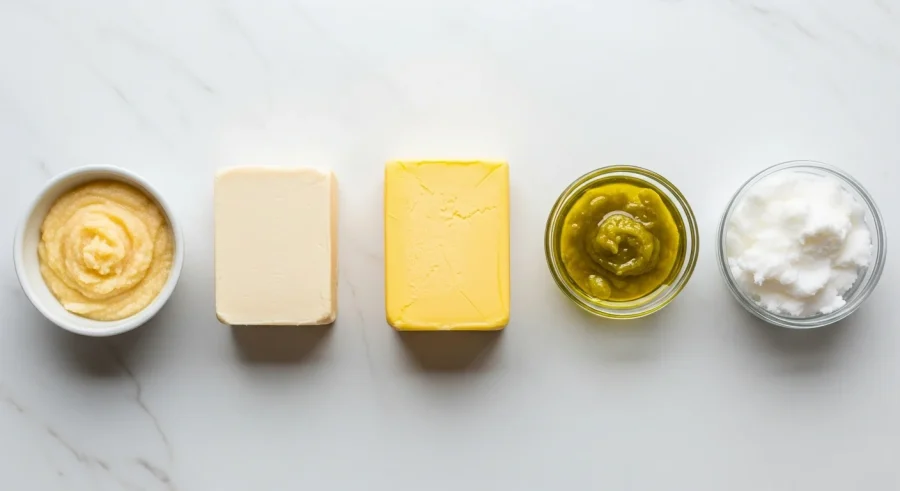
In Short
Coconut oil mimics butter's solid fat structure best for cookies, while applesauce works for muffins if you rely on pectin instead of lipids. The exact swap you need depends entirely on whether the original recipe uses creamed, melted, or cold butter (and how to match the missing 16% water content is below).
You pull out the flour, the sugar, the eggs. You reach into the fridge, and the butter compartment is completely empty. We have all been there. Replacing butter is not just about finding another fat source—it requires matching the specific chemical job that butter was supposed to do in that exact recipe.
Wait, What Is Butter Actually Doing?
Baking is just edible chemistry, and butter is one of the most complex ingredients in the lab. When you are looking for a substitute for butter in baking, you are actually looking to replicate a very specific emulsion of fat and water.
USDA FoodData Central clocks standard butter at about 81.1 grams of fat per 100 grams. The rest is mostly water—about 16 percent—along with a small amount of milk solids. That water content is crucial. When it hits the heat of your oven, it converts to steam. That steam pushes upward, creating lift and flakiness in everything from biscuits to croissants.
Butter also controls gluten. When water hits flour, proteins called glutenin and gliadin link up to form elastic gluten strands. Fat coats these proteins and physically blocks them from linking. This is literally why bakers refer to fats as "shortening"—they shorten the gluten strands to keep the pastry tender.
Any alternative you choose has to manage this delicate balance. If you use a substitute with too much water, you get tough, bread-like cookies. If you use a substitute with zero water, your pie crust might crumble into dust. You have to match the fat to the function.
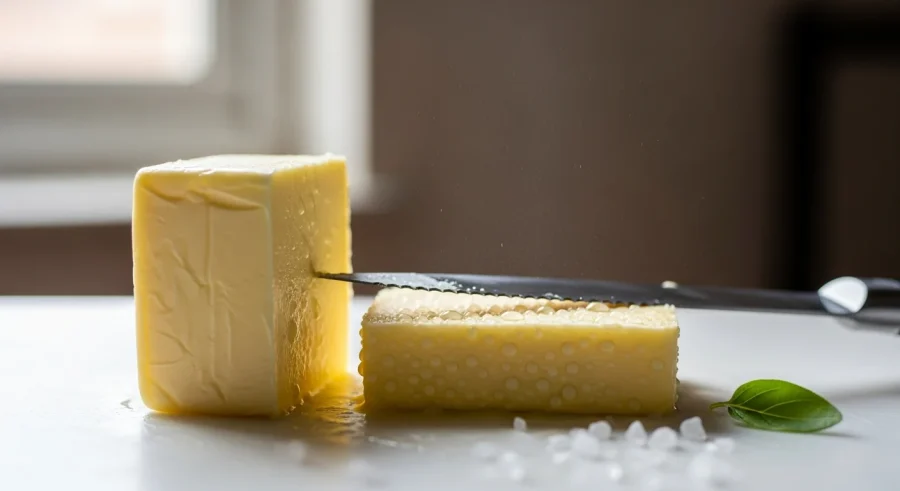
Coconut Oil for Cookies and Cakes
A jar of coconut oil is probably the closest direct swap you have sitting in your pantry right now. Coconut oil is 100 percent fat, and according to the USDA, about 86 percent of that is saturated fat. That high saturated fat content is what allows it to stay solid at room temperature, behaving very much like a dairy fat.
When you are creaming butter and sugar together for cookies, the sharp edges of the sugar crystals carve little air pockets into the solid fat. You can achieve this exact same mechanical aeration with solid coconut oil.
Temperature management is non-negotiable here. Coconut oil melts at around 76°F. Butter holds its structure until about 90°F to 95°F. If your kitchen is warm, your coconut oil will liquefy in the bowl, making it impossible to cream with sugar. You may need to chill your mixing bowl for a few minutes before starting.
For cookies, quick breads, and most cakes, you can use a 1:1 ratio. Since you are missing the 16 percent water that butter normally provides, some bakers like to add a tablespoon of milk or water to the bowl to compensate and aid in gluten development.
Avoid coconut oil if you are attempting laminated doughs. Making croissants or puff pastry requires the fat to remain pliable but distinct between layers of dough. Because of its lower melting point, coconut oil will simply melt into the flour during the rolling process. You will end up with a flat pastry rather than distinct flaky layers.
Vegetable Shortening Makes Flakier Crusts
My grandmother never used butter for her pie crusts. She used a blue can of vegetable shortening, and she was right to do so from a purely structural standpoint.
Vegetable shortening is 100 percent fat with zero water content. What makes it unique is its melting point. Shortening does not melt until it reaches about 115°F. This is significantly higher than butter.
When you put a butter pie crust in the oven, there is always a risk that the butter will melt before the flour matrix has time to set, causing the fat to leak out and pool in the pan. Because shortening stays solid longer in the oven heat, the flour sets firmly around the pockets of fat. When the shortening finally does melt, it leaves behind a perfect, distinct void. That void is what we experience as a flaky layer.
You can substitute shortening for butter at a 1:1 ratio. Because you are missing butter's water content, you should add about one tablespoon of ice water per cup of shortening to ensure the dough comes together.
The main drawback is flavor. Shortening is completely neutral. It lacks the milk solids that brown in the oven to create that rich, nutty dairy flavor. It is excellent for biscuits and pie crusts where texture is the primary goal, but you should skip it for vanilla pound cake where the dairy flavor needs to shine.
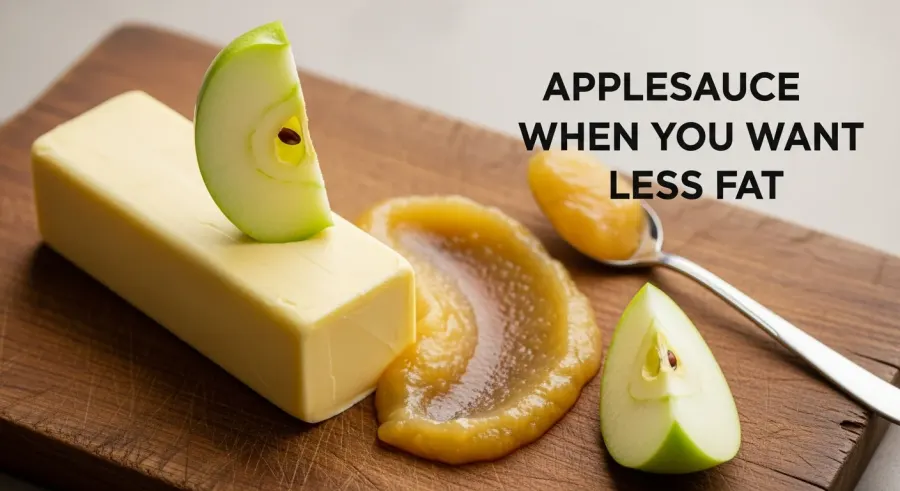
Applesauce When You Want Less Fat
Swapping a rich dairy fat for pureed fruit sounds like it would ruin a recipe immediately. It actually works brilliantly, provided you understand that pectin is doing the heavy lifting.
Pectin is a naturally occurring complex carbohydrate found in apples. Research shows that pectin allows for gel formation with flour in baked goods. This gel network traps moisture and provides structural support to the crumb, doing a very good job of mimicking the physical volume that lipids usually provide.
You will want to use a 1:1 ratio for this substitution, but it is usually safer to replace only half the butter with applesauce and use a neutral oil for the other half. Using 100 percent applesauce removes all the fat from the recipe. Fat coats the tongue and affects how we perceive flavor, so a completely fat-free bake can sometimes taste flat or feel gummy.
Applesauce works best in items that are already soft and moist. Muffins, spice cakes, and banana bread are perfect candidates. The slight fruity sweetness blends right into the background of a heavily spiced batter.
Do not attempt this in cookies. Cookies rely heavily on fat to control how much the dough spreads on the hot pan. The high water content in applesauce will cause the cookies to puff up like little cakes. They will never spread into chewy, crisp-edged discs.
Greek Yogurt Brings the Acidity
Most people think of yogurt as a breakfast food, but it is actually a highly functional baking ingredient. Plain, whole milk Greek yogurt brings a thick, creamy texture to the bowl without the heavy lipid load.
The USDA FoodData Central database shows that a standard 100-gram serving of Greek yogurt provides about 10.2 grams of protein and less than a gram of fat (though full-fat varieties sit closer to 5 grams of fat). By making this swap, you are essentially replacing fat with protein and water.
The real advantage of Greek yogurt is its acidity. The lactic acid in the yogurt reacts forcefully with baking soda, producing extra carbon dioxide bubbles. This gives an aggressive lift to pancakes, waffles, and loaf cakes, making them light and tender.
When substituting, you can use a 1:1 ratio if the original recipe called for melted butter. If the recipe called for softened butter to be creamed with sugar, a straight yogurt swap will fail. You cannot aerate yogurt with sugar crystals. In those cases, use a 50/50 mix of yogurt and oil.
Keep an eye on the crust of your baked goods. The casein and whey proteins in yogurt undergo the Maillard reaction differently than the specific milk solids in butter. This often results in a darker, more deeply browned exterior, so you might need to pull the pan from the oven a few minutes early.
Avocado Hiding in Plain Sight
You can bake with avocado. It feels a bit strange to scoop guacamole ingredients into a mixing bowl, but the physical properties of the fruit make it an exceptional alternative.
A standard avocado is roughly 73 percent water and contains about 15 grams of fat per 100 grams, the vast majority of which is monounsaturated (USDA). This fat profile is softer than butter at room temperature but still provides immense richness to a batter.
To use it, you need to puree the avocado until it is completely smooth. You cannot just mash it with a fork. Any lumps will remain intact during baking, leaving weird, hot green chunks in your final product. Once pureed in a food processor, you can substitute it for butter at a 1:1 ratio.
The obvious drawback is the visual impact. Avocado will turn a classic vanilla cake a slightly sickly shade of green. Because of this, it is exclusively recommended for dark chocolate recipes. In a heavy fudge brownie or a dark chocolate cake, the cocoa powder completely masks the green tint.
The flavor is earthy and slightly grassy before it cooks. Once baked, the cocoa powder easily overpowers it. Your guests will have no idea they are eating a fruit-based brownie unless you tell them.
When to Just Pour in Olive Oil
Sometimes a recipe calls for melted butter, and that changes the entire equation. When butter is melted, it loses its ability to hold air. It is just acting as a liquid fat to coat flour proteins and provide richness.
In these cases, you can simply reach for a bottle of oil. Olive oil is 100 percent fat and contains zero water. Because it lacks that 16 percent water content found in butter, you do not want to use a full 1:1 swap.
The standard rule is to use three-quarters of a cup of oil for every one cup of butter called for in the recipe. This prevents the final bake from becoming overly heavy or greasy.
Extra virgin olive oil will impart a distinct, peppery flavor to your baking. This tastes phenomenal in citrus cakes, pound cakes, or anything heavily spiced with rosemary and thyme. If you want a neutral flavor, canola or grapeseed oil will behave the exact same way chemically without altering the taste.
You cannot use oil if the recipe requires creaming. A liquid cannot hold air bubbles. If you pour oil into a recipe that relies on creamed butter for structure, your cake will turn out dense and flat.
Bottom Line
Baking without butter forces you to pay a little more attention to the texture of your dough before it goes into the oven. You start noticing how moisture affects the crumb, or how a solid fat feels different under your rolling pin. It turns a standard recipe into a small experiment, which is half the fun of baking anyway.