In Short
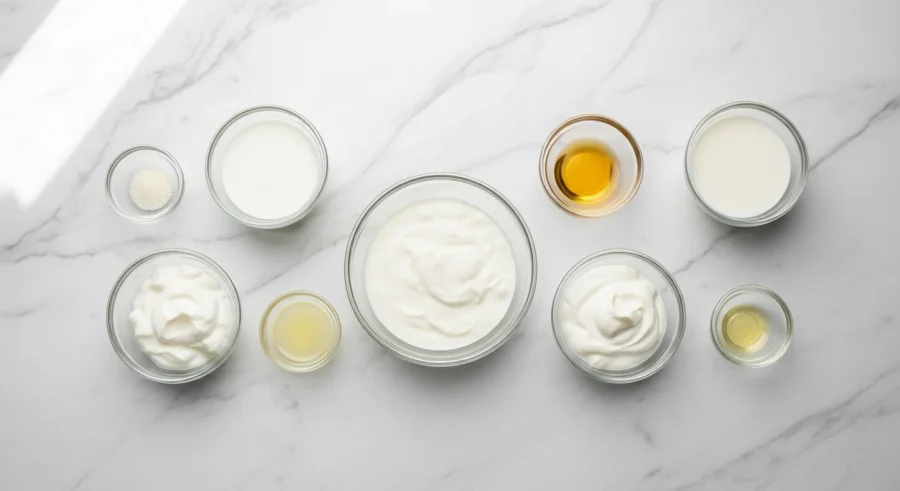
Kefir is the best 1:1 match for real buttermilk, but plain yogurt or sour cream thinned with milk work beautifully for tender cakes and biscuits. The classic milk-and-vinegar trick creates the right chemical reaction for leavening, but lacks the thick texture of cultured dairy.
You are halfway through a recipe, your hands are covered in flour, and you realize you forgot to buy a specific dairy product. Most of us do not keep a quart of cultured dairy in the fridge just waiting for a random Tuesday pancake craving. But you don't need to drop everything and run to the store. Your kitchen is already hiding a few biochemical workarounds that will save your baked goods. Finding a substitute for buttermilk in baking just requires understanding what the original ingredient was supposed to do in the first place.
What Buttermilk Actually Does in Your Batter
Before swapping ingredients, it helps to know what job the original ingredient was hired to do. Buttermilk is not just there to provide moisture to a dry bowl of flour. It acts as a powerful tenderizer. Wheat flour contains proteins that form gluten when mixed with liquid. Gluten is excellent for giving a loaf of sourdough its chewy structure, but it is terrible for fluffy pancakes or tender vanilla cakes. The natural acidity in buttermilk physically breaks down those long, tough gluten strands, keeping the crumb soft.
It also provides essential leavening power. Most baking recipes that call for buttermilk also call for baking soda (sodium bicarbonate). Baking soda is an alkaline powder that remains dormant until it meets an acidic partner. When the lactic acid in buttermilk meets baking soda, they undergo an immediate chemical reaction that releases carbon dioxide gas. Those trapped gas bubbles expand rapidly in the heat of the oven, forcing the heavy batter to rise and become light.
Finally, there is the flavor profile. Cultured dairy has a specific, slightly astringent tang that cuts through the heavy sweetness of sugar and butter. It adds necessary depth to rich chocolate cakes and brightens up simple morning muffins. When you choose an alternative, you are essentially trying to replicate that specific trio of acid, fat, and water.
Kefir Is Basically the Exact Same Thing
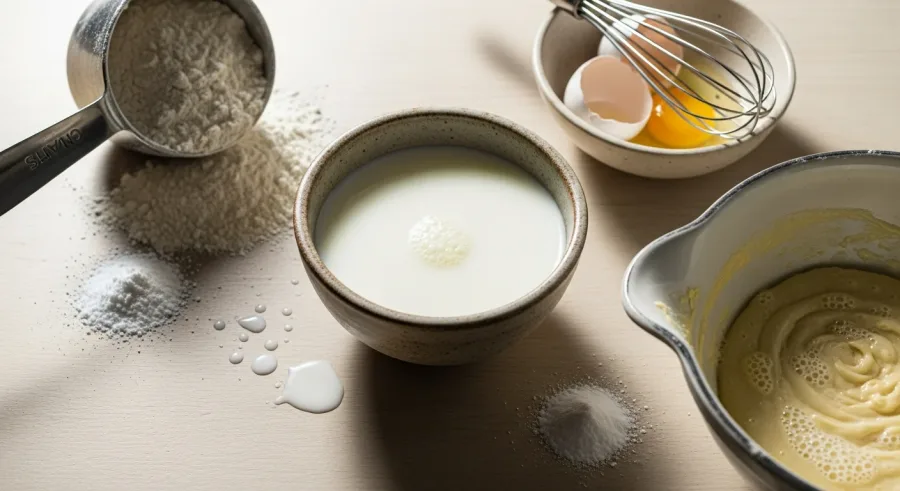
Kefir is essentially drinkable yogurt, and it is the single best alternative you can use. It is a fermented milk product loaded with natural lactic acid bacteria. Real buttermilk sits at a pH of around 4.5, and plain kefir matches that acidity almost perfectly. Because they share that same lactic acid profile, kefir reacts with sodium bicarbonate in the exact same way, creating the carbon dioxide bubbles that give your baked goods their lift.
You can use a strict one-to-one substitution here. If the recipe calls for one cup of buttermilk, simply pour in one cup of plain, unsweetened kefir. You get the exact same complex tang, the same heavy pouring viscosity, and the same underlying macronutrients. According to USDA FoodData Central, both low-fat buttermilk and low-fat kefir sit at around 1% fat and provide about 3.3 grams of protein per 100 grams.
This swap works flawlessly for everything from tall, flaky biscuits to delicate layer cakes. The batter will behave exactly as the recipe author intended.
The only time this fails is if you grab the wrong bottle. Flavored kefirs often contain added fruit juices, purees, or heavy amounts of cane sugar. A strawberry or vanilla kefir will burn much faster on a hot griddle due to the extra sugars, completely ruining the browning process on a batch of pancakes.
Thinning Out Yogurt Works Beautifully
Plain yogurt is just milk cultured with different strains of bacteria at higher temperatures. It still contains the crucial lactic acid you need to trigger your baking soda, but the physical texture is totally wrong. Yogurt is far too thick and holds too much bound water to just drop straight into a cake batter without causing structural issues.
The fix is simple. You whisk three-quarters of a cup of plain yogurt with a quarter cup of regular milk or water. You just stir it until it looks and pours like heavy cream. This thinned-out mixture provides a gorgeous, complex tang that mimics the original ingredient beautifully, while offering the correct hydration level for the flour to absorb.
This method shines in coffee cakes, breakfast muffins, and quick breads where a little extra moisture and a dense, comforting crumb are welcome.
You do need to be careful if you are using Greek yogurt for delicate, airy bakes. Greek yogurt packs a massive protein punch—sometimes up to 10 grams of protein per 100 grams, compared to standard buttermilk's 3.3 grams (USDA FoodData Central). That extra concentrated dairy protein can coagulate heavily in the oven. If you overmix the batter, the combination of developed wheat gluten and dense dairy protein will make a very fine-crumbed cake feel slightly heavy or tough to chew.
When Sour Cream Is Your Best Option
Sour cream brings the same fermented lactic acid magic to the bowl, but it brings a lot more fat to the party. We are talking about 19 grams of fat per 100 grams, while standard low-fat buttermilk hovers all the way down at 1% (USDA FoodData Central).
Fat is a major tenderizer in the baking world. It behaves like a physical barrier, coating the flour proteins and preventing them from absorbing water and forming long, tough gluten networks. Just like with the yogurt method, you need to thin the sour cream out to fix the hydration ratio. Whisk three-quarters of a cup of sour cream with a quarter cup of milk or water until smooth.
This particular swap is perfect for chocolate cakes, traditional pound cakes, and ultra-flaky scones. The added richness makes the baked goods feel wonderfully decadent. The extra dairy fat also helps carry fat-soluble flavor compounds, making vanilla extract and cocoa powder taste much more pronounced on the palate.
However, you should avoid this swap if you are making light sponge cakes, angel food cakes, or any batter that relies entirely on beaten egg whites for its structure. The heavy fat content of the sour cream will coat the delicate protein bubbles of the egg whites, weighing them down and causing the entire cake to collapse into a dense, gummy puck.
The Classic Milk and Vinegar Trick
This is the old standby you have probably heard about or seen in older cookbooks. The method is straightforward. You pour one tablespoon of white vinegar or fresh lemon juice into a liquid measuring cup, then fill it to the one-cup line with regular cow's milk. You give it a quick stir and wait five to ten minutes. The milk will look slightly separated and curdled, with little white flecks floating near the surface.
This works because you are manually dropping the pH of the milk to around 4.6, which is the point where milk proteins clump together. More importantly, this acidic environment gives your baking soda exactly what it needs to create lift in the oven.
But the chemistry is slightly different. You are introducing acetic acid (vinegar) or citric acid (lemon), rather than the lactic acid found in cultured dairy. Lactic acid is milder and lingers on the palate, while acetic acid is volatile and sharp. The resulting flavor is a bit flatter and less complex. It also does not get nearly as thick as cultured dairy, meaning your batters might be slightly runnier than expected.
This trick is ideal for Sunday morning pancakes and casual waffle batters. In a hot skillet, the slightly thinner batter spreads nicely into even circles, and any minor flavor difference is completely masked by a heavy pour of maple syrup.
Skip this method for recipes where the dairy is the star flavor, like a traditional buttermilk pie or a homemade ranch dressing. The flat, thin texture and sharp vinegar bite will stand out in a bad way.
Cream of Tartar in a Pinch
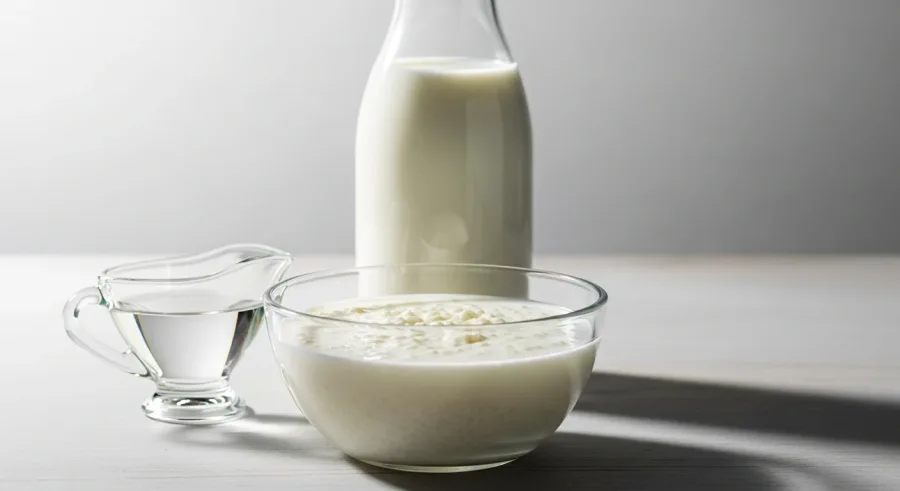
Cream of tartar is a dry acid—specifically potassium bitartrate—that usually lives forgotten in the back of a spice cabinet. It is actually a byproduct of the wine-making process, crystallizing on the inside of wine barrels. It is fantastic for baking because it provides the exact titratable acidity needed for leavening, without adding any strange flavors or throwing off the liquid ratio of the batter.
The ratio is one and three-quarters teaspoons of cream of tartar per one cup of regular milk.
There is a specific way to mix this, though. If you dump the dry powder straight into a cup of cold milk, it will instantly clump up into tiny, stubborn white rafts that refuse to dissolve. Biting into a pocket of raw cream of tartar in a finished cake is an unpleasant, highly metallic experience. Always mix the cream of tartar with just two tablespoons of the milk first to create a smooth, clump-free paste, then whisk in the rest of the milk.
This is a great option for sugar cookies, snickerdoodles, or simple vanilla cakes where you want the chemical leavening reaction but want to maintain a pure, sweet dairy flavor without the tartness of lemon or vinegar.
It is less ideal for savory breads or rustic drop biscuits where you actually want that fermented, sour tang to come through in the final bite.
The Best Dairy-Free Swap for Baking
If you need a vegan substitute, do not just reach for any carton of plant milk in the fridge. The chemistry requires protein for the milk to curdle and thicken properly when acid is introduced.
Almond milk and oat milk have almost zero protein, so they will just sit there looking watery and sad after you add acid. Soy milk, however, contains roughly 3 grams of protein and 2 grams of fat per 100 grams, making its macronutrient profile highly similar to standard dairy milk (USDA FoodData Central).
Mix one tablespoon of apple cider vinegar or lemon juice into one cup of unsweetened soy milk and let it sit for ten minutes. The plant proteins will unravel and bond together, coagulating into a thick, clabbered texture that behaves wonderfully in the oven.
This is the absolute best method for vegan baking where you need the structural thickness of the original dairy to hold the crumb together.
Just remember not to try this trick with rice milk, thin almond milks, or heavily sweetened vanilla milks. They will not thicken at all, and your batter will end up soupy.
Why Powdered Buttermilk Deserves Pantry Space
If you find yourself missing this ingredient frequently, you might want to invest in a tub of buttermilk powder. It is usually just sweet cream buttermilk that has been sprayed into a heated chamber, evaporating the water instantly and leaving behind the dry protein, fat, and lactic acid.
Because it is completely dry, it has a very long shelf life and can sit in your pantry for months. It provides the exact lactic acid profile and the authentic flavor of the real thing, simply because it is the real thing.
The trick is how you use it. Do not try to rehydrate the powder in a glass of water and then pour it into your batter. It clumps terribly and creates a mess. The professional way to use it is to whisk the dry powder directly into your dry ingredients—your flour, baking powder, salt, and sugar. Then, when the recipe tells you to pour in the buttermilk, you simply pour in the equivalent volume of plain water.
This powder is unmatched for homemade dry biscuit mixes or pancake mixes.
It does fall short in applications where you need the heavy, wet viscosity of the fresh dairy to act as a glue, like dipping pieces of chicken for breading before frying.
Bottom Line
Baking is essentially just edible chemistry, and missing a specific dairy product doesn't have to derail the whole process. As long as you match the acid to trigger the leavening and keep an eye on the fat content, the batter will perform exactly how it should. You might even find that you prefer the added richness of the sour cream trick or the convenience of the pantry powder over the original ingredient anyway.