In Short
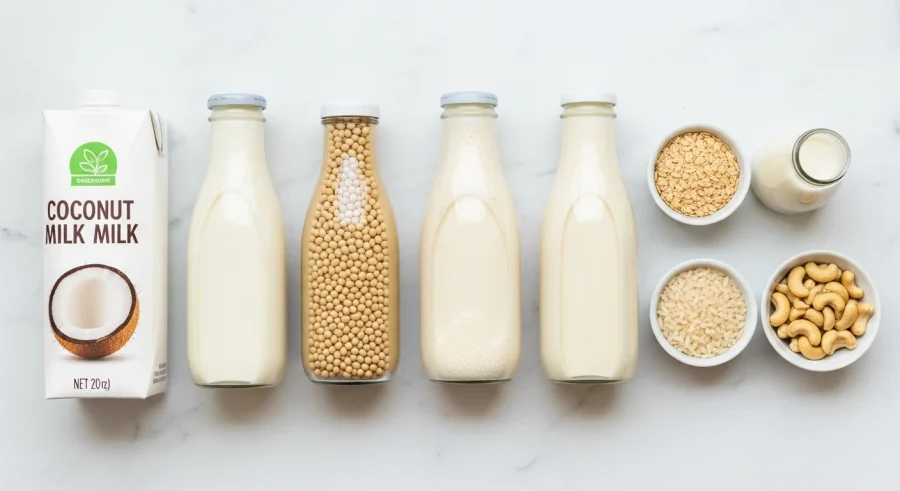
Cashew cream is the closest match for texture and fat, while heavy cream is the most reliable dairy backup. The exact ratios, flavor differences, and which options will curdle in a hot pan are detailed below.
You have all the spices toasted, the vegetables chopped, and the pan hot. Then you realize the pantry is completely devoid of coconut milk. Curry relies heavily on the fat and moisture of its liquid base to carry flavor, but you do not actually need coconut to make it work.
Cashew Cream Is the Closest Match
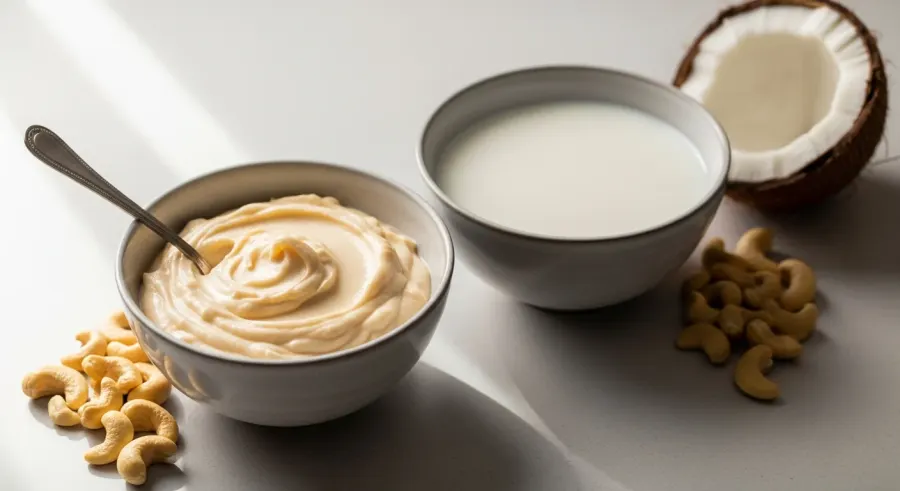
The math on this one is surprisingly elegant. If you soak raw cashews and blend them with an equal amount of water, you get a liquid with about 22% fat. That happens to be almost exactly the fat content of full-fat canned coconut milk, which sits around 24 grams of fat per 100g (USDA FoodData Central).
This structural similarity means you can pour it in as a direct 1:1 replacement. Because the fat content aligns so perfectly, cashew cream behaves identically to coconut milk in a hot pan. The fat coats the tongue and traps the volatile flavor compounds in your spices, carrying the heat of the chilies evenly across your palate. It simmers gently without breaking, thickens the broth naturally as it reduces, and leaves a beautiful glossy sheen on the surface of the sauce.
The flavor profile changes the overall impression of the dish, though. Cashews provide a mild, earthy nuttiness rather than a tropical aroma. It is the perfect swap for robust Indian curries where heavy spices like cumin, coriander, and black mustard seed easily mask the cashew flavor. In a delicate Thai green curry that relies on the bright, floral notes of lemongrass and makrut lime, the earthiness of the nuts might feel a bit heavy or out of place.
Texture is the only real hurdle. A high-speed blender is essential to pulverize the nuts into a completely smooth liquid. When a standard blender struggles, the resulting cream leaves a gritty, sandy residue at the bottom of the bowl. Boiling the cashews for about 15 minutes before blending helps soften them significantly. Buying cashew pieces instead of whole nuts also speeds up the hydration process, ensuring the final cream is silky enough to mimic dairy.
The Dairy Trick That Actually Works
Can you really pour heavy dairy into a Thai green curry? You absolutely can. Heavy cream is a massive fat bomb, boasting 36.1 grams of fat and 2.1 grams of protein per 100g (USDA FoodData Central). That high fat content acts as a structural shield, protecting the dairy proteins from curdling when they hit a boiling pan of acidic curry paste or lime juice.
You have to adjust the substitution ratio slightly to prevent the dish from becoming overly rich. Mixing 3/4 cup of heavy cream with 1/4 cup of water creates the perfect volume to replace 1 cup of coconut milk. This dilutes the heaviness just enough so it does not turn your dinner into a thick chowder, while still providing the necessary fat to carry the fat-soluble flavor compounds of your spices.
The main drawback is the missing aroma. According to the Journal of Food Science (2025), coconut milk contains specific lactones that provide its signature sweet, tropical notes. Heavy cream just tastes like pure, unadulterated dairy. It works beautifully in tomato-based curries like butter chicken or tikka masala, where dairy is already a traditional component. It feels slightly out of place if the recipe relies heavily on bright Southeast Asian aromatics.
Timing matters when cooking with heavy cream. While it resists curdling better than whole milk, holding it at a rolling boil for extended periods can still cause the butterfat to separate and pool on the surface. Adding the cream toward the end of the cooking time and letting it simmer gently yields the best texture.
The Pantry Savior You Forgot About
This sits in the back of most pantries, waiting for pie season. Evaporated milk is simply regular cow's milk that has been gently heated in a vacuum until 60% of its water content evaporates. By law, the whole milk version must contain at least 6.5% milkfat and 23% total milk solids (21 CFR 131.130). This makes it much richer than standard drinking milk but far lighter than cream.
It works flawlessly as a 1:1 swap for coconut milk. Because it is homogenized and canned, evaporated milk is highly stable and melts into a simmering sauce without much fuss. It is a fantastic option for weeknight dinners when you need something shelf-stable and ready to pour immediately, avoiding the soaking time required for cashews.
The canning process cooks the milk at high temperatures, triggering the Maillard reaction. This gives evaporated milk a slightly toasted, faintly caramelized flavor. This darker flavor profile actually complements rich, earthy dishes. It works wonderfully in a Massaman curry or a Japanese golden curry, where the subtle caramel notes enhance the roasted peanuts, root vegetables, and warm spices.
Checking the label is the most critical step here. Sweetened condensed milk looks nearly identical on the shelf but contains massive amounts of added sugar. Grabbing the wrong can by mistake will turn a savory curry into a cloying dessert. The lower fat content compared to coconut milk also means the final sauce will be slightly thinner, though a quick cornstarch slurry can easily correct the viscosity if desired.
When You Need a Tangy Finish
Texture changes everything on the stove. Full-fat Greek yogurt brings a thick, velvety mouthfeel to a sauce, but it requires a very gentle touch. It splits easily. Whole milk Greek yogurt only contains about 5 grams of fat per 100g (USDA FoodData Central). Without a high fat buffer, the dairy proteins are highly unstable when exposed to heat and acid.
Measuring out a 1:1 swap provides the right volume, but technique is everything. Dumping cold yogurt directly into a bubbling skillet usually causes the sauce to split immediately, leaving you with unappetizing white flecks floating in a watery broth. The trick is to temper it first. Stirring a few spoonfuls of the hot curry broth into the yogurt bowl gently raises its temperature. Once it is warm, turning the stove off and stirring the yogurt into the residual heat of the pan ensures a perfectly smooth finish.
The flavor is distinctly tart. Greek yogurt introduces a lactic tang that coconut milk completely lacks. This acidity is brilliant for North Indian-style curries, where the sourness cuts through the heavy spices and rich meats. It clashes with the fish sauce, palm sugar, and sweet basil commonly found in Southeast Asian curries.
The lower fat content also means the final dish will feel much lighter on the palate. If you want to replicate the satiating heaviness of a traditional coconut curry, stirring a tablespoon of butter or ghee into the yogurt before tempering it can help bridge the gap in richness.
The Quick Allergy Friendly Fix
Sometimes you just need to get dinner on the table with whatever is in the fridge. Oat milk on its own is far too watery for a proper curry sauce, containing only about 2.7 grams of fat per 100g (USDA FoodData Central). Pouring it straight into the pan results in a thin, unsatisfying broth that fails to carry the spices.
You can manually reconstruct the missing texture by combining 1 cup of unsweetened oat milk with 1 tablespoon of coconut oil. The oat milk provides the liquid volume and a touch of natural sweetness, while the oil melts in to recreate the missing fat content. The oats naturally contain starches that help thicken the sauce slightly as it simmers, making it behave quite similarly to a traditional coconut base.
If you use unrefined virgin coconut oil, you even get a hint of that signature tropical aroma back in the dish. It is a highly effective workaround for anyone dealing with both dairy and nut allergies who still wants a creamy, comforting bowl of curry.
The only real risk is accidentally grabbing a flavored milk. Vanilla and garlic are a notoriously bad combination. It ruins the whole pot. Even plain oat milks can sometimes contain added sugars, which will throw off the savory balance of your dinner. Checking the ingredient list to ensure it only contains oats, water, and perhaps a neutral oil guarantees the flavor profile stays exactly where it belongs.
Rehydrating Coconut Cream
The easiest solution often hides in plain sight. If a recipe calls for coconut milk but you only have a can of coconut cream in the pantry, you already have exactly what you need. Coconut cream is simply the same ingredient with a much lower water content.
Commercial coconut cream has a much higher fat content than standard coconut milk, making it significantly thicker and richer. Pouring it directly into a curry without modification will result in a sauce that is far too heavy, coating the palate in a thick layer of fat that mutes the spices.
To recreate the proper consistency, mixing 1/2 cup of coconut cream with 1/2 cup of water yields 1 cup of perfectly balanced coconut milk. This restores the baseline fat ratio found in standard cans. It behaves exactly like the original ingredient because it is the exact same emulsion of coconut oil and water, just rehydrated.
There are no flavor compromises here. The sweet, tropical lactones remain completely intact. The only minor failure case occurs if you try to dilute a sweetened cream of coconut by mistake. Cream of coconut is a syrupy product meant for cocktails, and pouring it into a savory panang curry will result in an overly sweet, dessert-like disaster.
Bottom Line
Curry is a remarkably forgiving dish. While coconut milk provides a specific tropical richness, the spices are the actual stars of the meal. Finding a substitute really just means choosing which texture you want to support them.