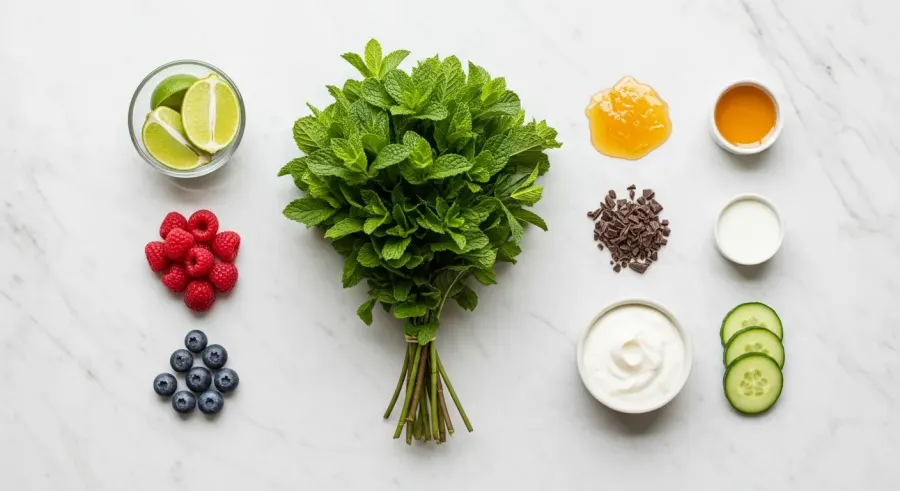
In Short
Dried mint works beautifully for marinades at a 1:3 ratio, while fresh basil steps in perfectly for savory Mediterranean dishes. You'll want to read the flavor profile differences below, though, because swapping peppermint extract into a tzatziki recipe is a fast track to disaster.
Mint is one of those herbs that aggressively takes over a garden, yet you somehow never have it when a recipe demands it. Maybe you are mixing up a quick chutney, or you just wanted a mojito on a Tuesday. Fortunately, you can usually swap it out without running to the store, provided you match the chemical profile of your replacement to the dish.
The Nutrition Reality
Before diving into the swaps, understanding what fresh mint actually brings to the table nutritionally provides a good baseline. A standard 100-gram serving holds 70 calories and 14.89 grams of carbohydrates. You also get 8 grams of fiber, 3.75 grams of protein, and a barely noticeable 0.94 grams of total fat (with just 0.25 grams of saturated fat). It carries zero sugar and a very low 31 milligrams of sodium (USDA FoodData Central, 2019).
While you rarely eat enough of it to alter your daily macros, these low-fat, high-fiber numbers make it a highly efficient flavor enhancer. Any substitute you choose will likely have a similar negligible impact on your diet, unless you lean heavily on alcohol-based extracts or oil-heavy pastes.
Dried Mint for the Pantry
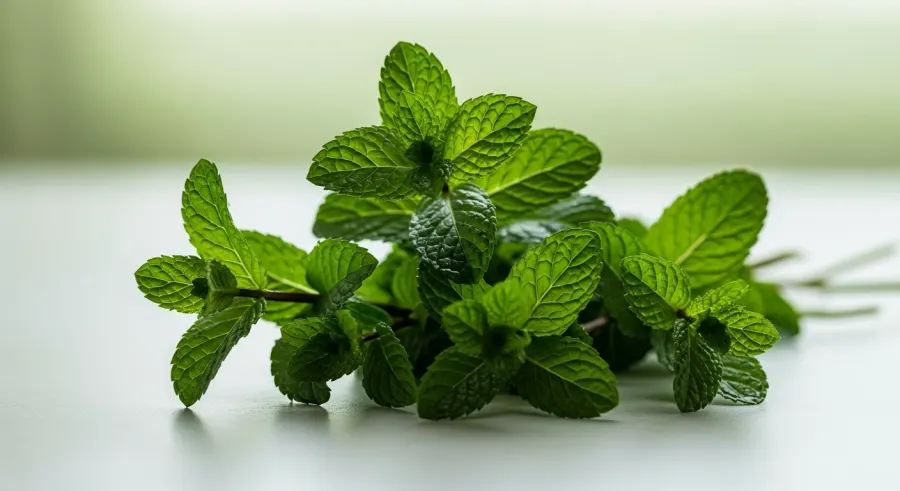
You probably have a dusty jar of this sitting in the back of your spice cabinet. For every 1 tablespoon of fresh mint required, use 1 teaspoon of dried mint.
This substitution ratio works perfectly because it is the exact same plant, just severely dehydrated. The drying process evaporates the water content, leaving behind highly concentrated essential oils trapped in the plant structure. Because of this moisture loss and oil concentration, dried mint tastes significantly more earthy and completely loses that bright, herbaceous snap you get from a fresh leaf.
Dried mint shines brightly in cooked applications. Toss it into lamb rubs, simmer it in lentil soups, or stir it into yogurt-based tzatziki sauces where the ambient moisture will slowly rehydrate the flakes. When it hits warm oil or water, those dormant flavor compounds reactivate and spread evenly throughout the dish.
Skip this entirely if you are making a mojito, a fresh summer fruit salad, or a Vietnamese spring roll. Nobody wants to chew on dry, papery flakes when they are expecting the crisp, refreshing bite of a green leaf. It also fails visually as a garnish, looking more like lawn clippings than a culinary accent.
Extracts for the Bakers
Baking requires chemical precision, and throwing fresh herbs into a batter often introduces too much unpredictable water. Use a few drops of peppermint extract for every tablespoon of fresh mint your recipe calls for.
Extracts are pure, distilled oils suspended in a neutral alcohol base. The massive flavor difference here is rooted deeply in plant chemistry. Most culinary fresh mint you buy at the grocery store is spearmint (Mentha spicata). Spearmint gets its signature flavor from a compound called carvone, which can make up over 50% of its essential oil profile. Peppermint extract, conversely, relies heavily on menthol.
Menthol provides that sharp, icy cooling sensation you instantly associate with candy canes, winter desserts, and chewing gum. The alcohol base also needs heat to evaporate off, which happens naturally in a hot oven. This makes the extract perfect for chocolate chip cookies, fudge brownies, or cooked buttercreams.
Do not put this in savory dishes under any circumstances. Adding raw peppermint extract to a Mediterranean couscous salad or a lamb marinade will make your dinner taste suspiciously like toothpaste, ruining the meal entirely.
Basil as the Savory Twin
If you are cooking a savory meal and realize you are out of mint, sweet basil is often your most reliable and versatile option. You can swap it in using an easy 1:1 volume ratio.
Both mint and basil belong to the Lamiaceae plant family, meaning they share similar botanical structures and leaf textures. However, their chemical profiles diverge sharply. Basil is primarily driven by eugenol (which carries a warm, clove-like flavor) and linalool (which adds a floral note), completely missing the cooling carvone compound found in spearmint. It brings a peppery, slightly sweet warmth to the palate rather than a sharp chill.
This specific chemical makeup makes basil ideal for Thai curries, fresh spring rolls, and tomato-based salads. It bridges the gap seamlessly in savory contexts, mimicking the visual appeal of mint while providing a complementary aromatic lift.
It completely falls apart if you try to use it in sweet fruit salads or sugary desserts. Basil and watermelon can sometimes work if you add a salty element like feta cheese, but basil mixed directly with berries, sugar, and cream is usually a culinary disappointment.
Parsley for Texture and Color
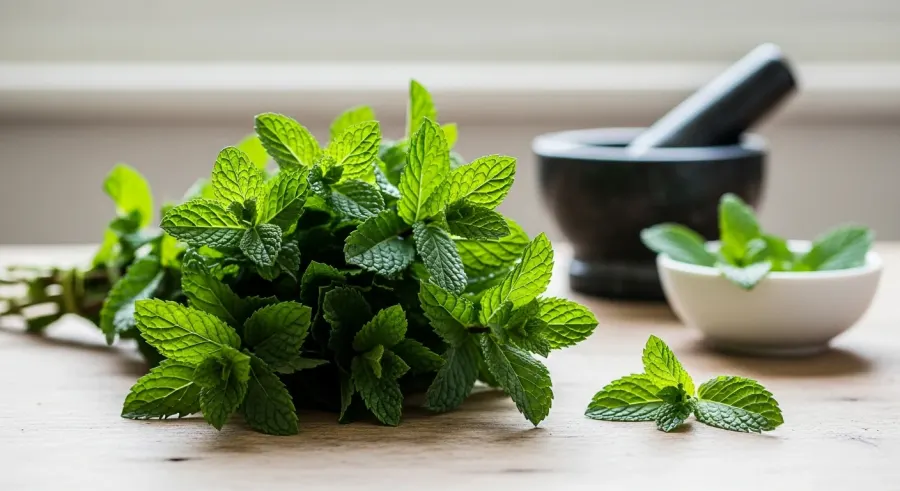
Sometimes a recipe just needs something green, leafy, and fresh to balance out heavy ingredients. Flat-leaf parsley fills this structural void perfectly at a straightforward 1:1 replacement ratio.
The physical leafy visual and the slight, satisfying crunch of the stems are nearly identical to fresh mint. Flavor-wise, parsley is earthy, grassy, and mildly bitter, powered by aromatic compounds like myrcene and apiole. It has exactly zero cooling effect on the tongue, which is perfectly fine if the mint in your recipe was only playing a supporting, textural role.
Use parsley generously in tabbouleh, lamb meatballs, or heavy beef stews where the mint was just providing a fresh bite to cut through the rendered fat. It absorbs dressings well and holds its shape beautifully when chopped.
It will fail miserably if mint is the central star of the dish. Do not use parsley to make a mint jelly, and definitely do not muddle it with sugar and lime for a cocktail, unless you want a drink that tastes like a damp lawn.
Cilantro for Spicy Foods
When you are dealing with heavy spices, chilis, or rich fats, cilantro cuts through the culinary noise with the same efficiency as mint. Swap it at a 1:1 ratio. (If you happen to have leftover bunches, just store them stems-down in a glass of water in the fridge to keep them crisp.)
Cilantro provides a bright, assertive freshness that functions similarly to mint on the palate. It gets its polarizing flavor from aliphatic aldehydes, specifically (E)-2-decenal. To a large portion of the population, it tastes beautifully bright and citrusy, while others detect a harsh, soapy flavor due to genetic differences in their olfactory receptors.
It is entirely seamless in Indian green chutneys, tomato salsas, and Vietnamese pho, where it performs the exact same palate-cleansing duty as mint. It stands up to heavy garlic and raw onions perfectly.
Keep it far away from sweet applications, delicate English pea soups, or any dinner party dish meant for a guest who carries the soap-tasting gene, as there is no culinary trick to mask that specific flavor compound.
Tarragon the Sweet-Savory Bridge
Tarragon is a bit of a niche herb, often relegated to classic French cooking, but it performs a very specific magic trick when swapped for mint at a 1:1 ratio.
The flavor profile of tarragon is heavily dominated by estragole, an organic compound that gives it a distinct anise or subtle licorice note. This specific compound mimics the slight natural sweetness of mint without introducing the heavy, polarizing menthol chill. It is delicate and highly aromatic, especially when used raw or barely heated.
It works exceptionally well in stone fruit salads, cold chicken salads, and certain gin-based cocktails where you want an aromatic, sweet-leaning herb. It provides a sophisticated, slightly herbaceous finish that elevates simple ingredients.
Avoid using tarragon in dishes that already have competing heavy spices, like Indian curries, chili, or robust cooked tomato sauces. The estragole licorice flavor will clash aggressively with cumin or oregano, creating a muddy, confusing taste profile.
Bottom Line
Finding a substitute for fresh mint usually just comes down to diagnosing what the mint was doing in the first place. If it was acting as a sweet cooling agent, extracts or dried versions are your most reliable bet. If it was providing a leafy, savory bite, basil or parsley will fill the gap nicely. You just have to lean into the flavor profile you have available on your counter.