In Short
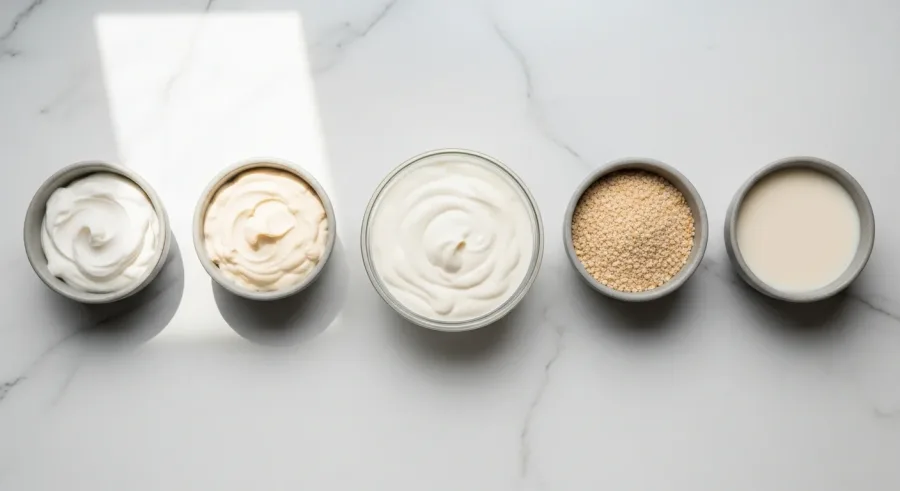
Mascarpone offers the closest texture and fat content to heavy cream, while a blend of half-and-half and butter mimics its exact fat percentage. The secret to a perfect swap lies in matching the 36% milkfat of heavy cream—otherwise, your sauce will split. Keep reading to see which alternative fits your specific recipe.
We have all stared into the fridge mid-recipe, realizing the carton of heavy cream went bad or we just forgot to buy it. Finding a substitute for heavy cream in pasta isn't about just matching the liquid—it comes down entirely to matching the fat. Heavy cream is uniquely stable in hot pans, and swapping it blindly usually results in a sauce that splits into a greasy puddle.
Just Use Mascarpone Instead
If you have a tub of mascarpone sitting around, your problem is already solved. This Italian cream cheese is essentially just heavy cream that has been coagulated with a little bit of acid, making it the most structurally identical substitute you can find.
Heavy cream sits at 36.1g of fat per 100 grams, according to the USDA FoodData Central. Mascarpone clocks in at a dense 43g of fat per 100 grams. Because it actually contains slightly more fat than heavy cream, it melts gorgeously into hot pasta without any risk of curdling or breaking.
You want to use a 1:1 ratio, but mascarpone is solid at room temperature. The trick is to scoop the mascarpone into a small bowl, add two or three tablespoons of hot, starchy pasta water, and whisk it until it resembles a thick liquid. Once it is tempered, you can stir it right into your skillet.
This swap is perfect for a rich Fettuccine Alfredo or a vodka sauce. The flavor is a bit sweeter and more concentrated than standard cream, so you might want to add a generous pinch of salt to balance the profile.
Do not use mascarpone in thin, brothy sauces like a light clam sauce or a white wine garlic reduction. The dense curds need a thicker base to emulsify properly, and dropping mascarpone into a watery broth will just leave you with suspended white clumps.
The Butter And Half-And-Half Trick
The math behind this classic restaurant hack is deeply satisfying. Half-and-half only contains about 11.5g of fat per 100 grams (USDA). Butter is essentially pure milkfat, boasting 81.1g per 100 grams.
By blending the two, you manually reconstruct the high fat content required to coat noodles properly. To replace one cup of heavy cream, melt ¼ cup of unsalted butter over low heat, then whisk in ¾ cup of half-and-half.
This creates a beautiful, velvety liquid that works beautifully in pan sauces, carbonara variations, and creamy tomato bases. Because butter contains toasted milk solids, your final sauce will carry a slightly more savory, nutty background note than it would if you used pure heavy cream.
The failure case here is high heat. Fat destabilization occurs quickly when milk proteins are heated aggressively without enough starch to anchor them. If you bring this butter and half-and-half mixture to a rapid boil, the emulsion will shatter. The butterfat will separate from the milk water, leaving a slick of yellow oil floating on top of your pasta.
Keep the skillet on medium-low, stir constantly, and let the residual heat of the noodles do the work of thickening the sauce.
Blended Cashews Actually Work
Plant-based alternatives often fail in hot pasta sauces, but cashews are the rare exception. Almond milk and oat milk lack the necessary fat, meaning they just evaporate and turn into a thin glaze.
Raw cashews pack 43.9g of fat and 18.2g of protein per 100 grams (USDA). When you blend them with water, they create a thick, stable liquid that acts remarkably like dairy cream.
To make this swap, use a 1:1 ratio by volume. Soak 1 cup of raw cashews in boiling water for 30 minutes, drain them, and blend them with ¾ cup of fresh water until totally smooth. Depending on the power of your blender, this takes between one and three minutes.
A 2008 study in the Journal of Food Science and Technology (Fagbemi, 2008) found that cashew protein solubility creates excellent emulsion properties in hot liquids. When the cashew cream hits the warm pan, the natural starches in the nuts swell and thicken the sauce almost instantly.
It works exceptionally well in vegan mushroom stroganoff or creamy spinach pastas. The flavor is slightly nutty and sweet, which pairs wonderfully with earthy ingredients.
Whatever you do, do not skip the soaking step. Throwing dry cashews into a blender will leave you with a gritty, sandy texture that ruins the mouthfeel of the pasta. You must also ensure you buy raw cashews—roasted cashews will make your dinner taste like a handful of trail mix.
Swapping In Greek Yogurt
Sometimes you want a creamy sauce without feeling like you need a nap afterward. Whole milk Greek yogurt changes the macronutrient profile of your dinner entirely, trading heavy fats for dense proteins.
Whole milk Greek yogurt has about 5g of fat and 9g of protein per 100 grams, compared to heavy cream's 2.1g of protein (USDA).
You can use a 1:1 ratio for this swap, but the technique requires a lot of care. Greek yogurt is highly acidic and very low in fat compared to cream. If you drop Greek yogurt directly into a simmering pan of pasta, the casein proteins will curdle on contact. You will end up with a grainy, separated mess that looks like cottage cheese.
To do this successfully, you have to temper the yogurt. Place your yogurt in a large serving bowl. Add a ladle of warm pasta water and whisk it vigorously until the yogurt warms up and loosens. Then, add your cooked noodles directly to the bowl and toss them off the heat.
The resulting sauce is bright, acidic, and aggressively tangy. It is a terrible fit for heavy red meat sauces, but it sings when paired with lemon zest, fresh dill, roasted garlic, and green peas.
Hiding Silken Tofu In Sauce
A block of silken tofu might seem like a strange addition to Italian food, yet it works brilliantly as a structural base for blended sauces.
At under 3g of fat and around 50 calories per 100 grams (USDA), it is the lightest option on this list by a wide margin. Heavy cream carries nearly 340 calories for the exact same weight.
You will want to puree a 1:1 ratio by volume until it is totally liquid. The high water content and soft soy proteins act as a blank canvas, thickening the liquid without adding any dairy fat.
Because the fat content is so low, you will likely need to build the flavor profile back up manually. Blending the tofu with a splash of olive oil, a handful of nutritional yeast, and roasted garlic helps mimic the richness that you lose by skipping the heavy cream. It shines in blended red pepper sauces, creamy tomato bases, and vegan mac and cheese.
The biggest mistake you can make is using firm or extra-firm tofu. No matter how long you blend firm tofu in a high-speed processor, it will retain a granular, chalky texture. The curds in firm tofu have been pressed too hard, breaking the water matrix. Only the "silken" variety has the proper moisture structure to melt into a pasta sauce.
Melting Down Whole Milk Ricotta
Southern Italian cooking has used this method for centuries before liquid heavy cream became a staple in modern supermarkets. Ricotta naturally melts down into a lush, thick coating when introduced to the starch from hot pasta water.
Whole milk ricotta contains 13g of fat per 100 grams (USDA). You can use it in a 1:1 ratio, but it requires vigorous whisking.
When your pasta is done cooking, push it to one side of the pan. Drop your ricotta into the empty space, stream in a quarter cup of hot pasta water, and whip the cheese with a fork until it froths into a cream. Then toss it with the noodles.
This technique is perfect for baked ziti, weeknight garlic and oil pastas, or a simple lemon-parmesan dish.
Just temper your expectations regarding the texture. Ricotta is composed of fine whey curds, so it will always have a slightly rustic, textured mouthfeel. You should not use it if you are trying to make a glossy, glass-smooth French-style cream sauce. Also, make sure you are using whole milk ricotta (part-skim versions turn rubbery when heated).
Store any leftover ricotta in an airtight container, as it absorbs fridge odors very quickly.
Evaporated Milk Saves The Day
Look in the back of your pantry and you might find a can of this concentrated dairy. Evaporated milk is just regular cow's milk that has been simmered down under a vacuum to remove roughly 60% of its water content.
Because the water is gone, the proteins and sugars are highly concentrated. It contains roughly 7.5g of fat per 100 grams (USDA). You can pour it straight from the can in a 1:1 ratio to replace heavy cream.
It provides a deep, slightly toasted milk flavor and enough protein to stabilize a sauce. Since it lacks the 36% fat of heavy cream, adding a knob of butter or a handful of grated parmesan to the pan helps bridge the texture gap. It is a fantastic backup for macaroni and cheese or creamy chicken pasta skillets.
The single biggest failure case here is confusing it with sweetened condensed milk. They often sit right next to each other on the baking aisle. Opening the wrong can will result in a dessert-sweet pasta sauce that is entirely inedible. Always check the label twice.
Bottom Line
Finding a substitute for heavy cream in pasta rarely means ruining dinner. Whether you reconstruct the fat content with butter and half-and-half, or pivot to the tangy brightness of Greek yogurt, the dish just takes on a slightly different character. Understanding the fat percentages and heat tolerances of these ingredients gives you the flexibility to cook with whatever happens to be sitting on your fridge shelves.