In Short
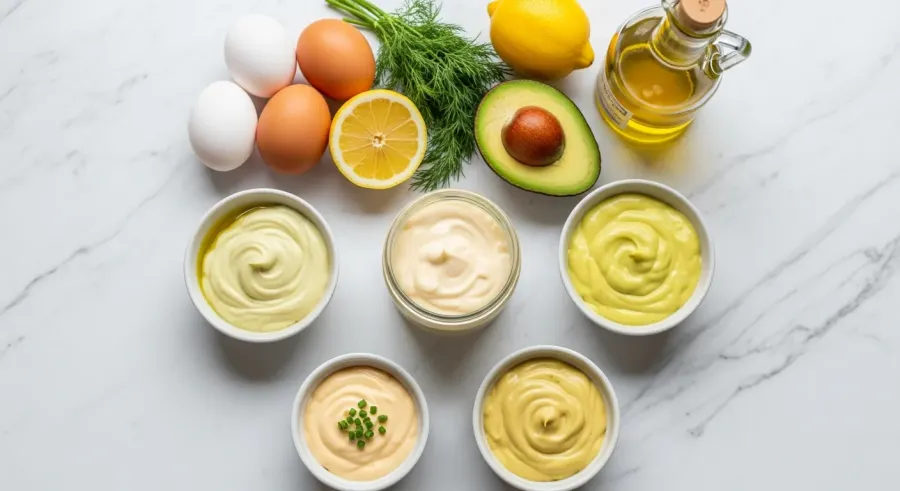
Greek yogurt and sour cream provide the closest texture match for deli salads, while mashed avocado offers a nutrient-dense vegan option. The trick is matching the fat profile to your ingredients—why some swaps work for chicken but ruin potatoes is detailed below.
You know that moment you realize you are out of mayonnaise, and your tuna salad is just sitting there looking dry? It happens. But mayonnaise is just an emulsion of oil, egg, and acid. You do not actually need it to make a salad creamy. There are plenty of things already in your fridge that do the exact same job, sometimes with better macros and a more interesting flavor profile.
The Classic Dairy Swap That Works
A lot of people default to this one, and for good reason. Mayonnaise works mechanically because it is an emulsion—egg yolk lecithin forces oil and water to play nicely together. That suspension creates a heavy, isolating barrier that keeps moisture inside your ingredients. Mayonnaise is extremely calorie-dense, hovering around 75 grams of fat and 680 calories per 100 grams (USDA FoodData Central). Plain whole-milk Greek yogurt offers a completely different structural approach. It relies on strained dairy proteins to create a thick, stable matrix.
At roughly 5 grams of fat, 97 calories, and 9 grams of protein per 100 grams, yogurt takes up the exact same physical space in a mixing bowl but sits much lighter on the palate. The flavor is noticeably tangier than mayonnaise due to the bacterial fermentation. Fats naturally coat the tongue and mute flavors, meaning mayonnaise requires more salt to taste seasoned. Yogurt lacks that heavy fat coating, so you will often need less salt in your recipe. It brightens up celery, red onions, and shredded chicken beautifully.
The Ratio: A direct 1:1 swap works perfectly for cold applications. Stirring in a single teaspoon of olive oil per cup can help round out the mouthfeel and add a hint of richness.
The Catch: This alternative fails entirely in warm dishes like a hot German potato salad. The heat causes the delicate dairy proteins to denature and curdle, leaving a separated, watery mess at the bottom of the bowl.
When You Need That Richness
Maybe you are not worried about protein counts and just want something that replicates the indulgent diner experience. Sour cream fills that gap effortlessly. It clocks in at about 19.4 grams of fat and 198 calories per 100 grams (USDA FoodData Central). That fat content is crucial. It provides a luxurious, heavy mouthfeel that strained yogurt sometimes lacks.
Texture-wise, it binds macaroni and shredded cabbage with the exact same cling as mayonnaise. The dairy fat wraps around the starches, preventing them from drying out in the fridge. Sour cream gets its texture from lactic acid-producing bacteria thickening the cream. This natural acidity interacts with the other ingredients in your salad, softening the sharp bite of raw onions or garlic in a very similar way to an oil-based dressing.
The Ratio: Use a direct 1:1 volume replacement.
The Catch: This choice struggles if your recipe relies heavily on vinegar or lemon juice. Mayonnaise has a muted acidity that balances strong additions. Sour cream brings its own sharp lactic acid to the party. Adding pickles, caper brine, and lemon juice on top of that can push a mild tuna salad into aggressively tart territory.
The Green Trick for Tuna
Have you ever noticed how naturally buttery a ripe Hass avocado feels? That silky texture comes from a dense lipid profile. At 14.7 grams of fat and 160 calories per 100 grams (USDA FoodData Central), it offers a plant-based richness that binds dry ingredients without relying on eggs or dairy.
Avocado acts as a mechanical paste. When you fold it into canned tuna or chopped hard-boiled eggs, the monounsaturated fats coat the proteins similarly to an oil-based emulsion. It provides a creamy, dense mouthfeel that feels substantial and satisfying. Because the flavor is earthy and mild, it absorbs lime juice, cilantro, and jalapeños perfectly, shifting the flavor profile of a standard chicken salad into something brighter.
The Ratio: One medium, thoroughly mashed avocado replaces about half a cup of mayonnaise. Mashing it until absolutely no chunks remain is essential, perhaps thinning it with a few drops of water or citrus juice to achieve a spreadable consistency.
The Catch: The drawback is strictly chemical. Avocado oxidizes rapidly when exposed to oxygen. Prepping an avocado-based chicken salad for a picnic tomorrow guarantees that enzymatic browning will turn the entire bowl an unappetizing shade of gray overnight. It functions strictly as a make-and-eat-immediately alternative.
The Vegan Option Nobody Notices
61 calories. That is the entire energy footprint for 100 grams of silken tofu (USDA FoodData Central). It seems unusual to place a block of soy into a salad dressing context, but silken tofu is essentially a textural blank canvas.
Unlike extra-firm tofu, the silken variety has a high water content locked inside a very delicate gel network. When a blender destroys this network, the water and soy proteins flow freely as a thick, opaque liquid that looks visually identical to commercial mayonnaise. It carries only 3.3 grams of fat and provides 6 grams of protein per 100 grams. This makes it a remarkably light binder for heavy ingredients like cold starches or dense proteins.
The Ratio: Blend one cup of silken tofu with one tablespoon of neutral oil and a splash of vinegar to replace one cup of mayonnaise. The blender is non-negotiable here.
The Catch: Because it brings virtually no flavor of its own, the risk here is severe under-seasoning. A pureed block of tofu stirred into boiled potatoes tastes like wet starch. It requires a generous pinch of salt, a spoonful of Dijon mustard, and acid to replicate the savory tang of a traditional dressing.
Wait, Cheese Actually Does the Job?
It took a wave of social media cooking videos to remind everyone how structurally useful cottage cheese can be. When you buy the 4% whole milk version, you get 4.3 grams of fat, 98 calories, and 11 grams of protein per 100 grams (USDA FoodData Central).
You cannot just dump raw curds into a bowl of chopped eggs. The magic happens entirely in a food processor. Cottage cheese is an acid-set cheese, meaning the milk proteins clump together tightly. The blender blades apply mechanical shear force to tear those clumps apart, aerating the mixture into a dense, whipped creaminess. Once blended, it mimics the volume and spreadability of mayonnaise while offering a massive protein boost. It interacts well with wet ingredients like cucumbers or tomatoes, holding its structure without weeping excess whey.
The Ratio: Use a 1:1 replacement, but only after it has been thoroughly pureed until perfectly smooth.
The Catch: This method falls apart completely if you do not own a blender. Hand-mashing with a fork leaves tiny, firm curds scattered throughout the dressing. This ruins the uniform, comforting texture expected from a classic egg or potato salad.
Choosing Flavor Over Tradition
Sometimes a familiar sandwich filling needs a shift in perspective. Hummus moves the flavor profile away from the American deli counter and straight toward the Mediterranean. It delivers 9.6 grams of fat and 166 calories per 100 grams (USDA FoodData Central), drawing its richness from blended chickpeas, olive oil, and tahini.
This swap saves considerable prep time because the garlic, lemon, and salt are already built into the spread. Chickpeas contain complex starches that gel when cooked and pureed. This starchy gel, combined with sesame oil, creates a very sturdy binder. It handles high-moisture vegetables much better than mayonnaise, which can sometimes break or separate when exposed to too much water.
The Ratio: Because hummus is much thicker than mayonnaise, a 3/4 to 1 volume ratio works best. Thinning it with a spoonful of warm water can help it coat the ingredients evenly.
The Catch: Hummus easily overpowers delicate profiles. The robust roasted sesame notes and raw garlic will completely mask the subtle, quiet flavors of a simple egg salad. It shines best when paired with sturdy ingredients like roasted red peppers or grilled chicken.
The Sesame Shortcut for Slaws
You usually see this drizzled over falafel, but it acts as a phenomenal binder. Tahini is pure, ground sesame seeds. It is a heavy hitter nutritionally, bringing around 53 grams of fat and 595 calories per 100 grams (USDA FoodData Central). Because it is a seed butter, the fat content is high enough to beautifully mimic the richness of an oil-based mayonnaise without any dairy or eggs.
When you whisk tahini with a little cold water and lemon juice, it undergoes a fascinating physical change. The carbohydrates absorb the liquid and swell, causing the paste to become thick and stiff. Adding a bit more water and whisking vigorously inverts the emulsion, turning it into a pale, creamy sauce that clings to shredded cabbage or kale perfectly.
The Ratio: It requires about half the volume of mayonnaise. If a recipe calls for a cup of mayo, half a cup of whipped tahini will coat the salad thoroughly.
The Catch: The distinct, slightly bitter earthiness of sesame clashes terribly with sweet ingredients. If a family recipe relies on sweet pickle relish or a spoonful of sugar, the resulting flavor combination will be jarring and unpleasant.
The Dairy-Free Heavyweight
Soaking nuts in water feels like a culinary trick reserved for professional kitchens. Raw cashews are notably high in fat for a nut, and they lack the fibrous skin of almonds. When soaked and blended, they yield a cream that is remarkably close to heavy dairy. Cashews contain about 44 grams of fat and 553 calories per 100 grams (USDA FoodData Central).
Because they have a unique balance of fats and carbohydrates, blending them with water creates a stable suspension that refuses to separate in the fridge. This is the optimal vegan choice for potato salads or macaroni salads that need to be made days in advance. The high fat content means it coats the starchy ingredients just like mayonnaise, without the risk of splitting that comes with yogurt.
The Ratio: Blend one cup of soaked raw cashews with half a cup of water, a splash of vinegar, and salt. Use the resulting cream in a 1:1 volume swap for mayonnaise.
The Catch: This option fails if you use roasted or salted cashews by mistake. The roasting process alters the starches in the nut, preventing them from blending into a smooth paste. The result is a grainy, peanut-butter-like sludge instead of a silky dressing.
Bottom Line
The right choice ultimately depends on what you want out of the bowl. Finding a substitute is rarely just about dropping calories or avoiding eggs. It often comes down to matching the texture of the main ingredient, whether that is the gentle flake of canned tuna or the starchy bite of a cold potato. Once you start experimenting with the fats already sitting in your fridge, traditional deli salads suddenly feel a lot less restrictive.