In Short
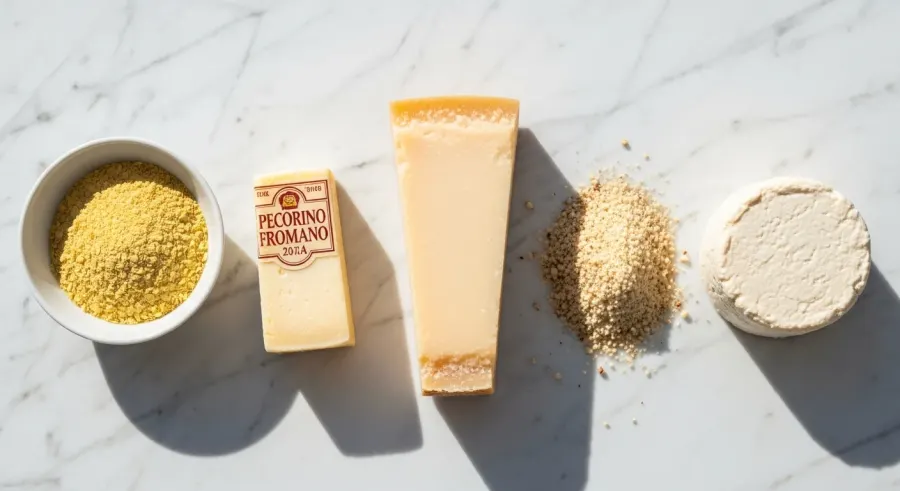
Pecorino Romano is the closest overall match for flavor, while Grana Padano offers a milder, sweeter alternative. If you need a vegan swap, nutritional yeast brings the required umami, but you will need to add your own fat if you want it to behave like a sauce.
Parmesan is the undisputed king of umami in the dairy world. But when you are staring down a recipe that calls for a cup of grated Parm and your fridge is empty, panic tends to set in. The good news is that replacing it is entirely possible, provided you know exactly what role the cheese is playing in your dish. Whether you need a dairy product to melt into a glossy pasta sauce, a salty finish for a salad, or a plant-based powder to dust over roasted vegetables, the right swap exists.
Pecorino Romano Is The Closest Match
You probably already have this sitting right next to the Parmesan at your grocery store. Pecorino Romano is the most natural swap you can make when cooking Italian food. The substitution ratio here is 3/4 cup of Pecorino for every 1 cup of Parmesan.
It works so perfectly because the aging process produces a very similar hard, brittle texture that grates into fine, snowy powders or large, sturdy shards. Visually, it is slightly whiter than the straw-yellow hue of Parmesan, but it behaves exactly the same way when it hits a hot pan. Both cheeses provide a heavy hit of glutamic acid, which translates directly to that savory mouthfeel on your tongue.
The flavor difference comes entirely from the milk. Parmesan uses cow's milk. Pecorino uses sheep's milk. This gives Pecorino a distinctly sharper, tangier bite that can feel almost grassy. It is also exceptionally salty. According to the USDA FoodData Central, hard Parmesan contains around 1530mg of sodium per 100g. Pecorino Romano also contains a significant amount of sodium, typically hovering near 1400mg to 1800mg depending on the brand, but its sharp flavor gives the perception of being much saltier. The protein sits at around 32g (compared to Parm's 35.7g), while the fat is slightly lower at around 27g per 100g.
Because of that flavor concentration, this substitute shines in rich, hearty dishes that can absorb the extra bite. If you are building a carbonara, a heavy bolognese, or a robust tomato sauce, Pecorino cuts through the heavy pork fat and acidity beautifully. When tossing it with roasted potatoes, the sharper tang provides a necessary contrast to the dense starch.
You run into trouble when the recipe is delicate. Do not use this as a 1:1 substitute in a light spring pea risotto or a subtle white wine sauce for fish. The sheep's milk tang will completely mask the subtle ingredients. You also have to physically reduce the added salt in your recipe. If you dump a full cup of Pecorino into a dish that was already seasoned for Parmesan, the final meal will be too salty to eat.
Grana Padano For A Milder Vibe
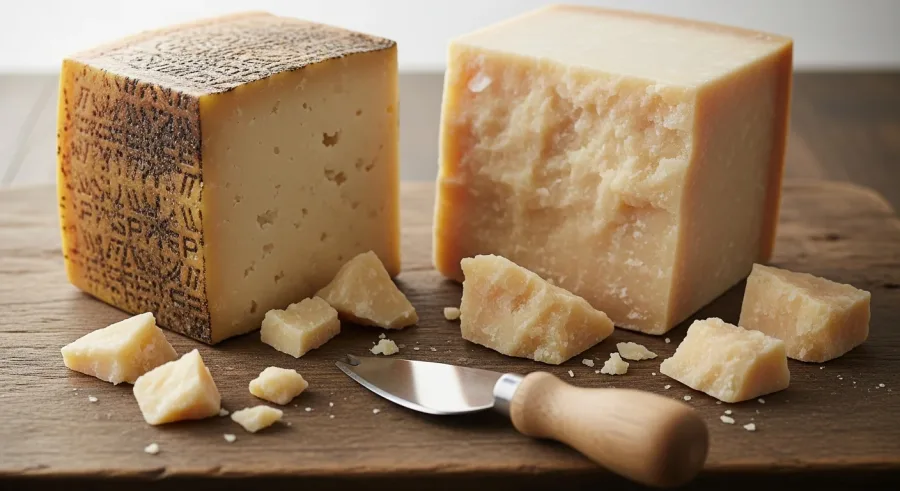
Sometimes you actually want the cheese to take a back seat in your dish. Grana Padano offers the exact same granular texture as Parmesan, but it speaks at a much lower volume. You can use an exact 1:1 ratio for this swap.
Produced just north of the Parmigiano-Reggiano region in Italy, Grana Padano undergoes a nearly identical production method. It just isn't aged quite as long. That shorter aging time results in fewer tyrosine crystals—those little white crunchy bits you find scattered throughout an old wheel of Parm. The texture is slightly more cohesive as a result, making it very easy to grate into long, even strands.
The flavor is noticeably sweeter and more mellow. It lacks the aggressive, acidic punch of older cheeses. Nutritionally, it remains quite similar to its famous neighbor. The USDA lists Grana Padano at 33g of protein and 29g of fat per 100g, with 398 calories. The sodium is noticeably lower at roughly 700mg per 100g.
This is your best option when you are making pesto. Basil and pine nuts have delicate, aromatic oils that easily get bullied by strong cheeses. Grana Padano provides the necessary binder and umami without competing with the herbs. It also works beautifully when breading chicken cutlets or mixing into meatballs. The slightly softer texture adheres nicely to ground beef and provides moisture during the cooking process without turning the meat overly salty.
Skip this substitute if you are relying on a tiny dusting of cheese to provide the entire flavor profile of a dish. If you are serving plain buttered noodles and want the cheese to do all the heavy lifting, Grana Padano might taste a bit too flat and subtle on its own.
Aged Asiago Melts Better Anyway
Around 29 grams of fat per 100g is what makes this option behave differently in a hot pan. Aged Asiago (specifically Asiago d'allevo, not the fresh stuff) brings a completely different textural dynamic to the table. Use a 1:1 ratio when substituting it.
It works as a swap because the moisture content, while slightly higher than Parmesan, is still low enough to allow for easy grating. The rind is usually quite thick, and the interior is dotted with small, irregular holes. Because of the specific fat-to-moisture ratio, it melts into a smooth, cohesive layer much faster than a drier cheese would.
The flavor is distinctly nutty. It tastes almost like toasted yeast or brown butter. It contains about 24g to 30g of protein and around 390 calories per 100g (USDA). It lacks the sharp, acidic bite of Parm, favoring a rounder, softer flavor profile that coats the mouth.
Use aged Asiago when baking is involved. If you are topping a baked ziti, a French onion soup, or a loaf of garlic bread, Asiago will blister and brown beautifully in the oven without separating into pools of grease. It also blends smoothly into macaroni and cheese bases, providing a complex nutty note that elevates standard cheddar.
The failure case here is entirely about buying the wrong version at the store. Asiago pressato is the fresh version of this cheese, and it is spongy, milky, and wet. If you try to grate fresh Asiago over a plate of hot spaghetti, it will just turn into a stringy, rubbery clump. Always check the rind to ensure you are buying the aged, hard version.
Nutritional Yeast For The Vegan Route
Can a yellow powder really replace a deeply aged dairy product? Plant-based cooks have been leaning on nutritional yeast for decades, and the food science actually backs up the practice. You should use 1/2 cup of nutritional yeast for every 1 cup of grated Parmesan called for. (It is highly concentrated, so a little goes a long way).
The reason it works comes down to amino acids. A 2016 study in the Journal of Agricultural and Food Chemistry noted that Parmesan's specific "kokumi" (a Japanese term for mouthfulness or heartiness) is heavily driven by γ-glutamyl peptides and free glutamic acid. Nutritional yeast naturally contains vast amounts of this exact same glutamic acid, delivering an almost identical savory signal to your brain without any animal products.
The flavor difference is mostly textural. It tastes deeply savory, toasted, and slightly cheesy, but it completely lacks dairy fat. The nutritional profile is totally flipped. The USDA reports that nutritional yeast boasts around 53g of protein per 100g (usually measured as 8g per 15g serving), but only 3.3g of fat. It also contains practically zero sodium and sits at just 400 calories per 100g.
This is the perfect substitute for dry applications. Dust it heavily over popcorn, massage it into kale chips before baking, or use it as a dry rub for roasted cauliflower. When making vegan cream sauces out of blended cashews, nutritional yeast provides the necessary savory depth.
You cannot use it to build a traditional cheese sauce on its own. If you try to toss nutritional yeast with hot pasta water, it will not emulsify. Without that 28% dairy fat that Parmesan provides, it just turns into a cloudy, savory broth. You must manually pair it with an external fat like olive oil or vegan butter if you want it to cling to food.
Cotija Brings The Same Salty Crunch
Mexican cuisine already perfected the art of the savory, crumbly cheese finish. Aged cotija shares a surprising amount of culinary DNA with Italian hard cheeses, even if the geographic origins are oceans apart. You can use a 1:1 ratio, provided you adjust the salt elsewhere in the pan.
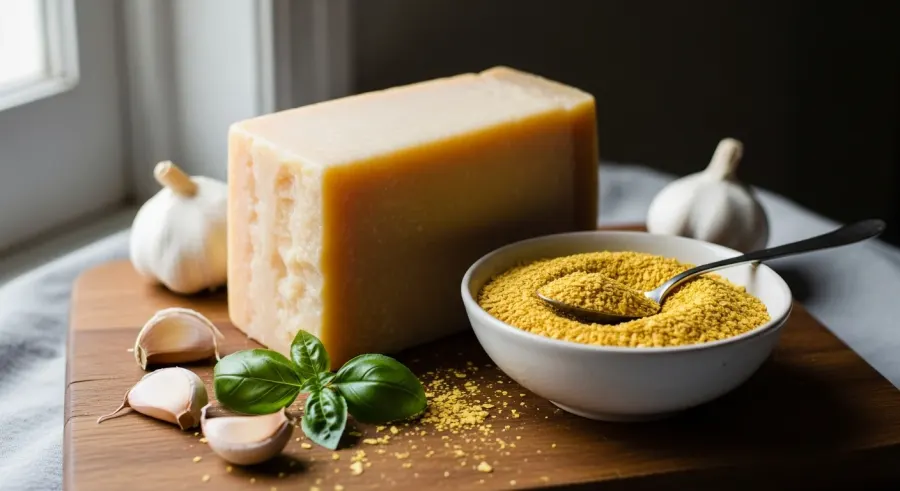
Cotija works as a substitute because it undergoes an aging process that leaves it dry, brittle, and highly grateable. Instead of shredding into long ribbons, it fractures into salty little pebbles that distribute evenly across a dish.
The flavor is heavily briny and sharp. It does not have the complex, fruity, or nutty undertones of European cow's milk cheeses, but it delivers the exact same aggressive savory spike. Nutritionally, it is slightly lighter in protein. The USDA logs cotija at around 20g of protein, 28g of fat, and roughly 360 calories per 100g. The sodium is high, typically hovering around 1400mg per 100g.
This is an excellent option for finishing dishes. It shines when crumbled over roasted root vegetables, black bean chilis, or heavy meat stews. The sharp saltiness cuts right through dense, starchy foods. It also pairs exceptionally well with acid. If your dish includes heavy squeezes of lemon or lime juice, cotija holds its own beautifully.
The major limitation of cotija is its melting point. It basically refuses to melt. If you attempt to whisk grated cotija into a warm béchamel or a delicate cream sauce, it will remain entirely intact. You will be left with a smooth sauce filled with stubborn, gritty cheese rocks.
Manchego Works If You Avoid Heat
Sheep's milk naturally contains more fat than cow's milk, which changes the entire texture of the final wheel. Aged Manchego (look for labels saying curado or viejo) usually lives on a charcuterie board, but it handles substitution duties quite well. Use a 1:1 ratio.
The firm, slightly waxy texture makes it easy to shave or grate. Just make sure to remove the inedible, waxy rind before you start prepping it. Because of the sheep's milk, it has a grassy, piquant flavor that feels a bit more rustic and robust than Parmesan.
The biggest difference is the fat content. Manchego sits at around 32g of fat per 100g, with 25g of protein and roughly 400 calories (USDA). That extra fat gives it a much richer, almost buttery finish on the palate. It lacks the dry, crystalline crunch of Parm, opting instead to coat your mouth.
This swap works best in cold or room-temperature applications. Use a vegetable peeler to shave large ribbons of Manchego over an arugula and lemon salad. The fat coats the bitter greens perfectly and holds up well against heavy dressings like balsamic vinaigrettes. It also performs well when folded into savory pastry doughs or empanada fillings, where the extra fat actually helps tenderize the crust during baking.
Avoid using Manchego in fast, hot emulsions. If you try to make an Alfredo sauce or a traditional cacio e pepe with it, the high fat content works against you. The cheese will often break under high heat, leaving a slick pool of grease at the top of your skillet rather than a creamy sauce.
Bottom Line
When you understand what Parmesan actually does in a recipe—providing fat, salt, and a massive dose of savory umami—swapping it out becomes less of a gamble and more of a deliberate choice. You just have to match the substitute to the cooking method. Sometimes the best meals happen precisely because you didn't have the exact ingredient your recipe demanded.