In Short
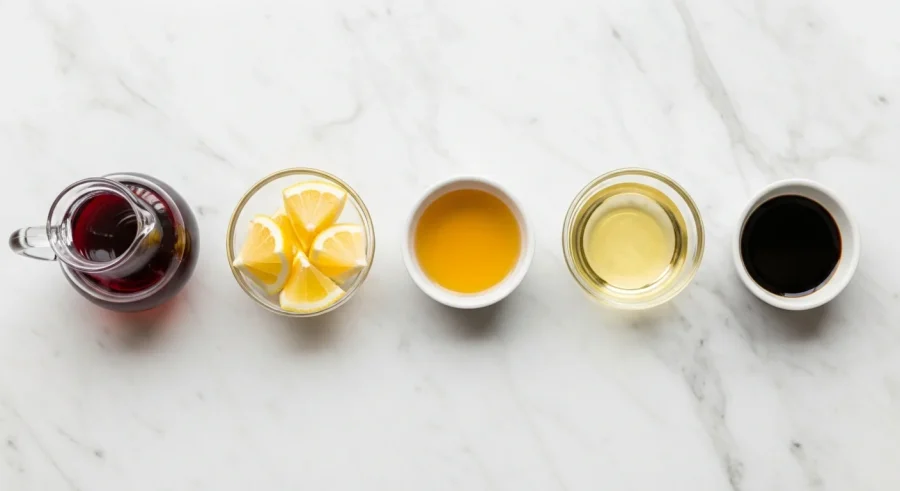
The fastest swap is white wine vinegar at an exact 1:1 ratio. Need that distinct grape flavor? Mixing actual red wine with standard white vinegar works flawlessly. The full ranking of substitutes, including exactly when they fail, is below.
You reached into the pantry for red wine vinegar, and your hand closed around thin air. It happens. The good news is you probably have several perfectly viable replacements sitting on the same shelf. Replacing vinegar is mostly just an exercise in matching acidity levels without clashing with the rest of your ingredients.
White Wine Vinegar Is the Closest Match
According to commercial standards, both red and white wine vinegars hover between 5% and 7% acetic acid. That makes white wine vinegar a direct 1:1 swap in almost any recipe. You don't have to do any complex math to make it work.
You get the same sharp bite and very similar wine undertones. The main thing you lose is the color. Because white wine vinegar isn't fermented with the dark grape skins, it lacks the subtle tannins and pinkish hue of its red counterpart. Tannins add a slight astringency to food—that dry feeling on your tongue—but in the small amounts used for a splash of vinegar, you will rarely notice the absence.
This is your absolute best bet for pan sauces, vinaigrettes, and marinades. The only time it fails is if you are making a recipe where that specific magenta color was visually important. If you are making a vibrant batch of pickled red onions, white wine vinegar will leave them looking a bit pale. Otherwise, it is a flawless swap.
Apple Cider Vinegar Works in a Pinch
Apple cider vinegar sits right at a 5% acidity level. It has the necessary strength to emulsify with heavy olive oil or tenderize cuts of meat. You can substitute it at a direct 1:1 ratio.
Since it comes from fermented apples rather than grapes, it carries a mild, fruity sweetness on the finish. The fermentation process for apple cider vinegar creates distinct volatile aroma compounds that smell unmistakably like autumn.
It really shines in marinades for pork and chicken, where a little apple flavor naturally complements the meat. It is also a great choice for sweet-and-sour sauces or barbecue glazes.
I wouldn't use it in a delicate vinaigrette meant for a Mediterranean dish, though. The apple notes tend to clash awkwardly with savory herbs like oregano, basil, and feta cheese. If your recipe leans heavily on Italian or Greek flavor profiles, skip the apple cider vinegar and look for something more neutral.
Mixing Red Wine With White Vinegar
Sometimes you actually need that distinct red grape flavor, but you only have basic pantry staples. You can just recreate the profile yourself.
Mix one tablespoon of red wine with two tablespoons of distilled white vinegar. This yields three tablespoons of a highly convincing substitute.
The wine brings the fruit notes, the dark color, and the tannins. The distilled vinegar provides the pure acetic acid punch that unfermented wine lacks. If you want to get technical, the primary acid in wine is tartaric acid, while the primary acid in vinegar is acetic acid. By combining the two liquids, you are building a complex acid profile that tricks the palate into thinking it is tasting a fully fermented red wine vinegar.
You can use whatever red wine you have open. A bold Cabernet Sauvignon will give you a heavier, more robust vinegar substitute, while a Pinot Noir will keep things light and fruity.
Skip this method if you are cooking for someone avoiding all alcohol. The residual alcohol in the wine won't entirely cook off in raw applications like salad dressings or cold sauces.
When to Reach for Lemon Juice
Vinegar relies on acetic acid to provide its sour punch. Lemons rely on citric acid.
Fresh lemon juice contains around 5% to 6% citric acid, which makes it a surprisingly close match in pure sourness. You can use it in a 1:1 ratio for most cooking applications.
You miss out on the complex fermentation notes that vinegar brings, but you gain a bright, fruity aromatic profile. This swap is perfect for Mediterranean recipes, anything involving seafood, or bright green salads. It cuts through fat just as effectively as vinegar does.
There is one major failure case for lemon juice. Do not use it if you are making a recipe that requires long-term preservation, like home canning or pickling. The acidity and pH of fresh lemons vary too much from fruit to fruit. Commercial vinegar is standardized to a guaranteed acidity level to prevent bacterial growth. Lemons simply don't offer that same mathematical guarantee.
Handling Balsamic Vinegar Carefully
Balsamic vinegar shares the same grape origin, but it behaves completely differently in a recipe.
According to the USDA FoodData Central, a single tablespoon of balsamic vinegar contains about 2.4 grams of sugar. Red wine vinegar contains zero. That sugar content changes the entire dynamic of how the vinegar cooks and tastes.
Balsamic is also much thicker, darker, and heavily aged. If you swap it 1:1, your dish will turn out noticeably sweeter and heavier. It completely changes the profile of a bright, herbaceous sauce like a classic chimichurri.
If you want to use it as a substitute, try cutting it. Mix half balsamic and half regular distilled white vinegar or water. This dilutes the sugar concentration and brings the sharp acidity back up to where it needs to be for a savory recipe.
It works beautifully as a substitute in roasted vegetable glazes or beef stews where the sugars have a chance to caramelize in the heat. Just keep it out of delicate, raw applications.
The Richness of Sherry Vinegar
Sherry vinegar is an excellent upgrade if you happen to have a bottle hidden in the back of your cupboard.
It is fermented in wooden barrels, which gives it a nutty, complex flavor profile that standard red wine vinegar simply doesn't possess. It usually sits at a 7% to 8% acidity level, so it holds its own perfectly as a direct 1:1 replacement.
Because of the aging process, sherry vinegar has a rounded, savory depth. It works exceptionally well in rich beef stews, tomato-based sauces, or heavy meat glazes. It can make a simple pan sauce taste like it took hours to develop on the stove.
The main failure case is light, bright summer cooking. Sherry vinegar can taste a bit too heavy and woody when you just wanted a quick, clean snap of acid on some fresh cucumbers or tomatoes.
Rice Vinegar for a Softer Bite
Rice vinegar is noticeably milder than Western vinegars. Commercial varieties usually sit at around 4% acidity, compared to the 6% you expect from a wine vinegar.
It brings a gentle, round sweetness to the table. You can substitute it 1:1, but because the acid concentration is strictly lower, you might find yourself needing an extra splash at the end of cooking to get the same level of tang.
It blends seamlessly into stir-fry sauces, cabbage slaws, and quick vegetable pickles. The mild nature of rice vinegar means it will rarely overpower a dish.
I usually avoid it when making heavy beef marinades. It simply doesn't have the acidic strength to break down tough muscle fibers the way a stronger acid liquid would. Make sure you are using unseasoned rice vinegar, too. Seasoned rice vinegar has added salt and sugar for sushi rice, which will completely throw off the balance of your recipe.
Can You Just Use Regular White Vinegar?
You probably have a massive jug of distilled white vinegar under your sink or in your pantry. It is very cheap and easy to find.
Distilled white vinegar is essentially pure acetic acid diluted to 5% with water. It lacks the buffering compounds—like trace minerals, amino acids, and leftover fruit sugars—that soften the bite of wine vinegars.
Because it is so pure, it tastes much harsher and more aggressive. The pH of distilled white vinegar often sits as low as 2.4. If you smell it directly from the bottle, it practically burns your nose.
You can use it as a substitute for red wine vinegar, but you should not use it at a 1:1 ratio. If a recipe calls for one tablespoon of red wine vinegar, use three-quarters of a tablespoon of distilled white vinegar, and maybe add a tiny pinch of sugar to mimic the missing fruit notes.
It is perfectly fine for baking projects or heavy stews where the harshness will cook out. It is a terrible choice for a raw vinaigrette. Your salad will just taste like cleaning supplies.
Bottom Line
Replacing an ingredient is rarely about finding an identical twin. It is usually just about figuring out what the original ingredient was doing in the first place. Red wine vinegar is there to provide an acidic punch and a little bit of fruitiness. Once you know that, it is easy to see why a splash of white wine vinegar or a squeeze of lemon does the exact same job. You don't need a perfectly stocked pantry to make a good dinner. You just need to know how your ingredients work.